
# One Great Central European Trip: Prague, Vienna, Budapest, and the Places Between
Central Europe makes much more sense when you stop treating each country as a separate holiday. On one recent trip, I moved from Prague to Vienna, Bratislava, and Budapest by train, and the journey felt less like ticking off capitals and more like following one long cultural conversation.
The architecture changes, the languages shift, and each city has its own personality, but the connections are clear: old imperial streets, excellent coffee, grand railway stations, hearty food, thermal baths, riverfront walks, and a shared history that crosses today’s borders. That is why tourism leaders increasingly talk about marketing Central Europe as one destination. For travelers, the idea is refreshingly practical.
## The Vibe and When to Go
Central Europe feels elegant without being too polished. You can spend the morning in a grand museum, eat a very ordinary-looking but delicious lunch in a neighborhood café, and end the day beside a river with locals carrying takeaway beers.
The region is especially enjoyable in **spring and early autumn**. Days are usually comfortable for walking, although I always pack a light rain jacket because showers can arrive quickly. Spring brings flowering parks and longer evenings; September and October offer cooler air, warm colors, and fewer tour groups. Summer is lively but can be hot, particularly in Budapest and Vienna. December is magical for Christmas markets, though hotel prices rise and the most famous squares become crowded.
Bring comfortable shoes. The prettiest streets often have uneven cobblestones, and you will probably walk much farther than planned.
## Must-See Stops: My Favorite Central European Highlights
### 1. Prague Beyond the Castle Route
Prague’s Charles Bridge and Old Town are beautiful, but they are not the whole story. I prefer visiting the bridge early, before the souvenir stalls are fully open and the crowds begin to move in. From there, wander toward Kampa Island, where the paths are quieter and the river views are lovely.
Later, I like crossing into the Vinohrady neighborhood for leafy streets, small wine bars, and cafés that feel more local than touristy. The view from Letná Park is another favorite. You can see the bridges lined up across the Vltava River, and the beer garden is a relaxed place to pause.
**Practical tip:** Prague’s center is compact, but trams are excellent. Buy a time-based public transport ticket rather than paying for individual rides.
### 2. Vienna’s Grand Sights and Ordinary Pleasures
Vienna can feel formal at first, with its palaces, opera houses, and immaculate boulevards. I enjoy it most when I balance the grand attractions with small daily rituals.
Visit Schönbrunn early, then spend an afternoon in the MuseumsQuartier or walking around the narrow lanes near the Spittelberg district. A traditional coffeehouse is part of the experience, but you do not need to choose the most famous one. Order a melange, stay for a while, and resist the urge to rush.
My favorite low-cost Vienna experience is taking the tram along the Ringstrasse. You pass the Opera House, Parliament, City Hall, and several grand museums without paying for a sightseeing bus. For dinner, look beyond the center toward Neubau or the Naschmarkt area.
**Practical tip:** Vienna’s public transport is reliable and easy to understand. A day pass usually pays off if you plan several rides.
### 3. Bratislava for a Slower Day
Bratislava is smaller and quieter than its better-known neighbors, which makes it a good place to slow down. I found the old town easy to explore in a few hours, with colorful buildings, courtyards, and plenty of casual cafés.
Climb up to Bratislava Castle for views over the Danube, then walk down through the old streets toward Michael’s Gate. For something less polished, take a walk along the river or head toward the Blue Church, one of the city’s most charming little landmarks.
Bratislava works particularly well as a day trip from Vienna, but I enjoyed staying overnight. Once the day-trippers leave, the center becomes much calmer.
**Practical tip:** Do not judge the city by its tiny historic core alone. Give yourself time for the riverfront and residential streets beyond the main tourist route.
### 4. Budapest: Baths, Bridges, and Big Views
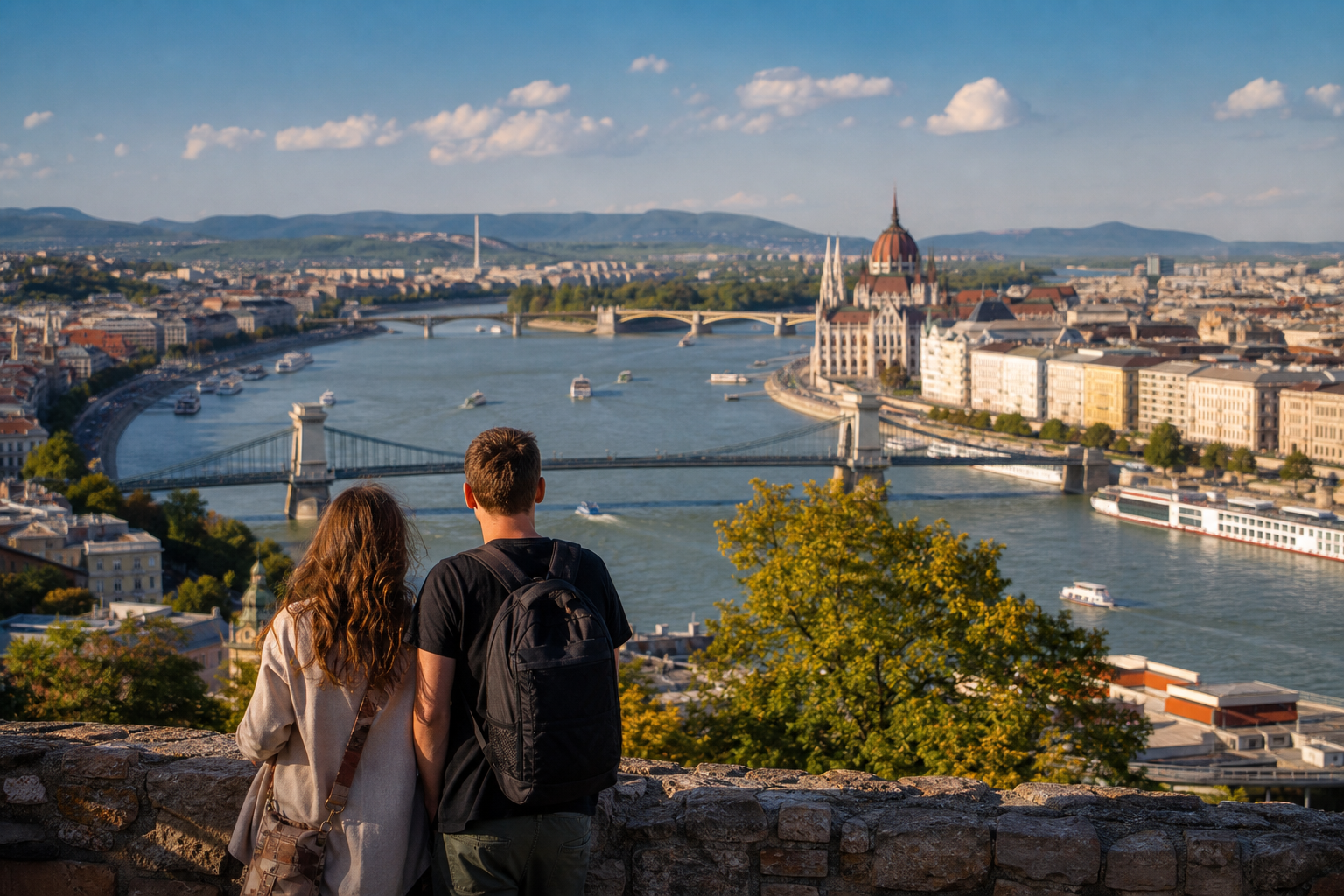
Budapest has more energy and edge than Vienna, and I found it especially memorable at night. Walk across the Chain Bridge around sunset, then look back toward the illuminated Buda Castle and Parliament.
The thermal baths are a major part of the city’s character. Széchenyi is the famous choice, but it can be busy. Gellért Baths are beautiful, while Rudas offers a more historic atmosphere and excellent rooftop views. Check opening times before visiting, since some bathing schedules vary by day.
I also recommend exploring the Jewish Quarter during the day, when you can see its courtyards, bakeries, and small design shops without the late-night crowds. For a quieter view, walk up Gellért Hill or take the chairlift toward the Buda hills.
**Practical tip:** Budapest is spread out, so use the metro and trams. The riverside looks close on a map, but crossing between Buda and Pest can take longer than expected.
## Getting There and Visa Advice
Most travelers enter Central Europe through **Vienna, Prague, or Budapest**, all of which have major airports and good rail connections. If fares are high, compare flights into nearby cities such as Bratislava, Kraków, Munich, or Berlin. An open-jaw ticket—flying into one city and home from another—can save you from backtracking.
For many visitors from the United States, Canada, the United Kingdom, Australia, and several other countries, short tourist trips within the **Schengen Area** do not require a visa, usually for up to 90 days in any 180-day period. Your passport generally needs to be valid for at least three months after your planned departure and issued within the previous ten years.
Rules depend on your nationality, so check the official government or embassy websites before booking. Carry proof of accommodation, onward travel, and travel insurance if requested at the border.
The Czech Republic, Austria, Slovakia, and Hungary are all part of Schengen, so there are usually no routine passport checks when traveling between them. Keep your passport with you anyway.
## Where to Stay
– **Prague:** Old Town is convenient but busy. Stay in Vinohrady for cafés and a more residential feel, or Malá Strana for beautiful historic streets.
– **Vienna:** Neubau and Josefstadt are good for restaurants, museums, and public transport. The Innere Stadt is ideal for first-time visitors who want to walk everywhere, but prices are higher.
– **Bratislava:** The old town is easiest for a short visit. Stay just outside the center if you want lower prices and a quieter night.
– **Budapest:** District V is central and polished. District VII suits travelers who want nightlife and restaurants, while District XIII is calmer and good for longer stays.
For a multi-city trip, I usually book small hotels or apartments near a tram or metro line rather than paying extra to sleep directly beside the main square.
## Getting Around
The best way to connect the major cities is by **train**. Prague to Vienna takes roughly four hours, Vienna to Bratislava is about an hour, and Vienna to Budapest is around two and a half to three hours depending on the service.
Book ahead for the best fares, especially on Friday afternoons and Sunday evenings. Keep larger bags in the luggage racks near the carriage entrance and a smaller day bag with your valuables.
Inside the cities:
– Walk whenever possible; the central districts are rewarding on foot.
– Use trams in Prague and Vienna.
– Use the metro and trams in Budapest.
– Bratislava’s center is small enough to cover mostly on foot.
– Official taxi apps and local rideshare services are safer than accepting offers outside stations. Bolt is widely used across the region, though availability can vary.
– Validate or activate paper tickets where required. Inspectors do check.
## Realistic Daily Costs
Prices change with the season and exchange rates, but these are reasonable estimates for one person, excluding international flights.
### Budget travel: €45–€75 per day
– Hostel bed or basic room: €20–€40
– Bakery breakfast or simple café meal: €5–€10
– Casual lunch or street food: €7–€12
– Public transport: €3–€7
– One inexpensive dinner and a drink: €12–€20
Bratislava and Budapest are usually easier on the wallet than Vienna. Prague can be affordable if you move a few streets away from the Old Town.
### Mid-range travel: €100–€180 per day
– Comfortable hotel or private apartment: €60–€120
– Breakfast and two sit-down meals: €30–€55
– Transport, coffee, and one paid attraction: €15–€30
Vienna tends to sit at the higher end, especially during festival season and December. Budapest can offer excellent value for food, accommodation, and thermal baths.
## Money, Tipping, and Small Ways to Save
The **euro** is used in Austria and Slovakia. The Czech Republic uses the **Czech koruna**, and Hungary uses the **forint**. Card payments are common, but carry a small amount of local cash for markets, public toilets, smaller cafés, and older ticket machines.
Tipping is appreciated but not extreme. Around **5–10%** is normal in restaurants if service is good. In cafés, rounding up is fine. Check whether a service charge has already been added.
A few tricks made my trip noticeably cheaper:
– **Buy lunch menus:** Many restaurants offer a weekday set lunch that costs much less than dinner.
– **Use grocery stores for breakfast:** Yogurt, fruit, pastries, and coffee from a supermarket can save a surprising amount.
– **Avoid currency exchange desks at stations:** Use a bank ATM when possible, and decline the machine’s offer to convert the charge into your home currency.
– **Book trains early:** Last-minute tickets between major cities can cost far more than advance fares.
– **Eat one street away from the landmark:** The food is often better, and the bill is usually lower.
– **Choose city passes carefully:** They can be useful if you plan several museums, but they are poor value if you mainly want to walk and enjoy cafés.
## Why This Region Works as One Trip
The real pleasure of Central Europe is the contrast. Prague feels storybook and compact; Vienna is composed and grand; Bratislava is easygoing; Budapest is dramatic and lively. You can experience all four without long flights, difficult border crossings, or a completely different travel rhythm each time.
I would plan at least eight or nine days for the route, with two nights in Bratislava and three nights in either Prague, Vienna, or Budapest. If you have more time, add smaller places such as Brno, Český Krumlov, Sopron, or the Wachau Valley.
Traveling through Central Europe as one connected destination gives you more than a list of famous cities. It lets you notice the links between them—and gives you plenty of reasons to linger between the major stops.
KEYWORDS: Central Europe