
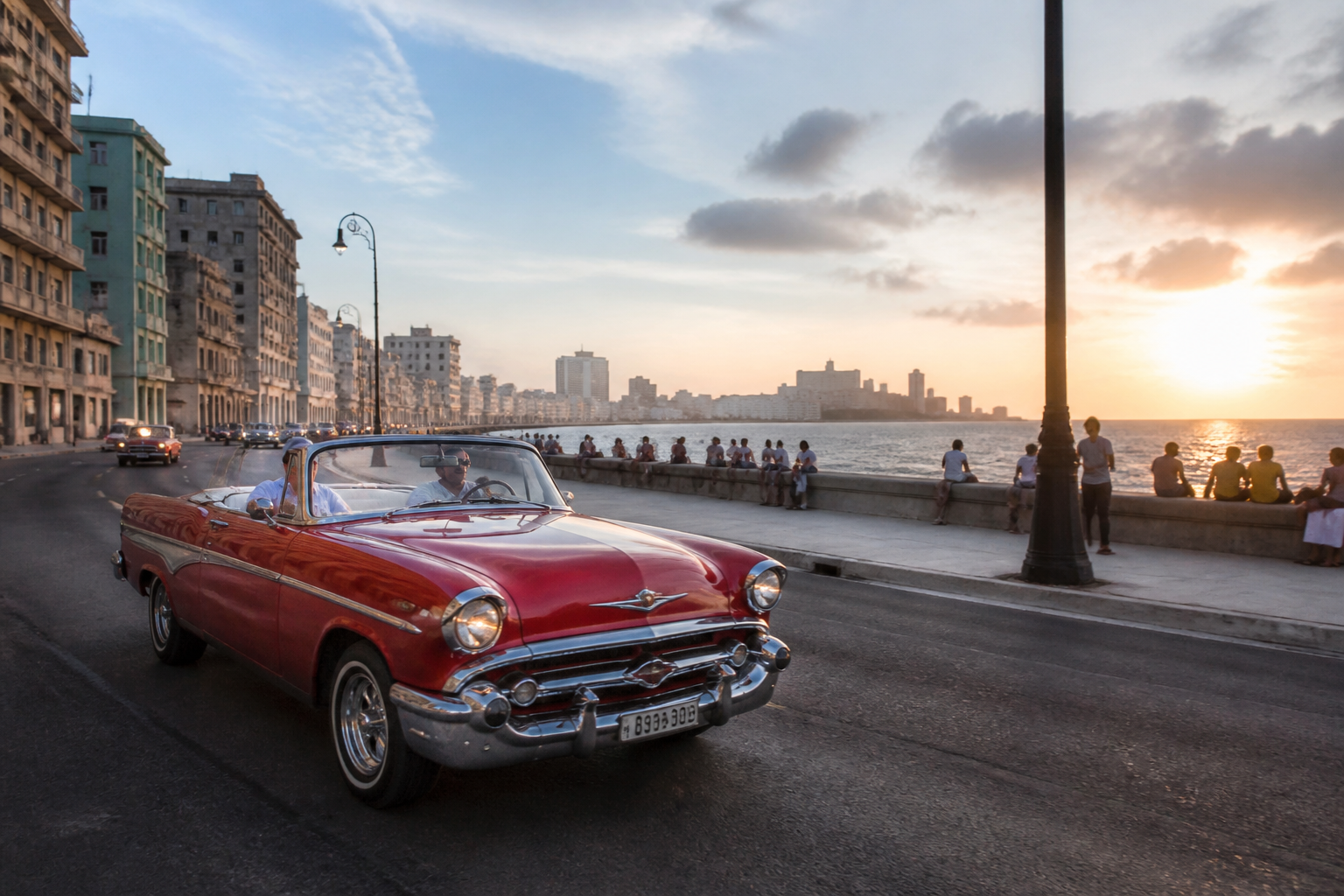
# Cuba Then and Now: Havana Streets, Classic Cars, and the Reality Behind the Romance
Cuba has always carried two images at once. There’s the Cuba of 1950s postcards—chrome-heavy American cars, glamorous hotels, smoky jazz clubs, and Havana nightlife—and there’s the Cuba of today, where power cuts, empty shelves, fuel shortages, and aging infrastructure shape everyday life.
Traveling there now can still be deeply rewarding, but it asks for patience and a little humility. You’ll see beautiful colonial buildings beside crumbling facades, hear music spilling from a doorway while a neighborhood waits for the electricity to return, and meet people who remain funny, welcoming, and remarkably resourceful despite very difficult conditions.
## The Vibe & When to Go
Havana feels cinematic, but not polished. The Malecón is still a wonderful place to sit at sunset, yet behind the colorful facades are homes and businesses coping with shortages and frequent blackouts. Classic cars still cruise the streets, although many are working vehicles rather than museum pieces. Their owners keep them running with ingenuity and hard-to-find parts.
The best months to visit are generally **November through April**, when the weather is warmer and drier. December to March brings comfortable evenings, while April can feel hot and humid. The hurricane season runs from June through November, with the highest risk usually in September and October.
Power cuts can happen at any time, and schedules may change quickly. Bring a charged power bank, a small flashlight, and some patience. Hotels and larger guesthouses often have generators, but not every restaurant or private rental does.
Cuba is worth visiting now if you want to experience its music, architecture, landscapes, and everyday culture without pretending the country is frozen in the 1950s. Talk with local hosts, eat at privately run restaurants, and remember that tourism exists alongside real economic hardship.
## Must-See Spots: My Top Picks
### 1. Havana Vieja, Early in the Morning
Old Havana is at its most enjoyable before the tour groups arrive. Start near Plaza de la Catedral, then wander through the smaller side streets toward Plaza Vieja and Plaza de Armas. I prefer getting lost here a little rather than following a strict checklist.
Look for the details: a barber working from a narrow doorway, neighbors chatting from balconies, laundry strung between buildings, and old interiors that reveal more than the restored squares do. Callejón de Hamel, in Centro Habana, is another colorful stop, especially on Sunday afternoons when rumba musicians often perform.
Have lunch at a privately run paladar instead of relying only on hotel restaurants. Menus and prices can change, so ask before ordering. A rooftop drink at sunset is lovely, but you’ll often get a more memorable evening simply sitting in a plaza with a cold local beer.
### 2. The Malecón at Sunset
The Malecón is not a single attraction so much as a daily gathering place. Locals fish, talk, play music, and meet friends along the seawall. The light on the old buildings across the road is beautiful, but the real pleasure is watching Havana’s social life unfold.
Bring water and avoid walking too far after dark if you’re alone. The road can be busy, and some stretches become quiet. A short taxi ride to the western end near Vedado gives you a different feel from the busier central section.
### 3. Viñales Valley
Viñales is an easy change of pace from Havana. The valley is known for its dramatic limestone hills, tobacco farms, and red soil. I recommend spending at least one night rather than squeezing it into a rushed day trip.
A guided walk through the countryside is the best way to understand the area. Farmers may explain how tobacco is grown and rolled, though remember that the polished “cigar tour” version can simplify a complicated local economy. Buy only what you genuinely want, and ask clearly about prices before taking photos or joining demonstrations.
The town itself is small and walkable. Casa particulares—private guesthouses—are common, friendly, and often better value than formal hotels. Morning walks are cooler, and the valley is especially peaceful before the day-trip buses arrive.
### 4. Trinidad and the Valle de los Ingenios
Trinidad’s cobbled streets and pastel buildings are beautiful, but the town can feel busy around the main square. Walk a few blocks outward and you’ll find quieter lanes, small family restaurants, and musicians playing in less crowded spaces.
The nearby Valle de los Ingenios gives context to the region’s wealth and beauty. The sugar industry depended on enslaved labor, and that history should not be treated as a decorative backdrop. A local guide can help explain what you’re seeing beyond the plantation ruins and viewpoints.
Trinidad is hilly and the cobblestones are uneven, so comfortable shoes matter. At night, Casa de la Música is popular for live music, though you may enjoy a smaller bar or courtyard venue just as much.
## Practical Travel Advice
### Getting There and Visa Requirements
Most visitors need some form of tourist authorization, but the rules depend on your passport and departure country. Check the Cuban embassy or consulate in your country before booking because requirements and procedures change.
For many travelers, entry involves:
– A valid passport, often with at least six months remaining
– A Cuban tourist card or e-visa
– Proof of travel insurance
– A return or onward ticket
– A completed health or arrival form, when required
Travelers from the United States face additional rules. U.S. citizens and residents generally cannot visit Cuba purely for ordinary tourism and must travel under one of the permitted categories, such as “Support for the Cuban People.” The paperwork and airline requirements should be checked through official U.S. and Cuban sources before departure.
Direct flights to Havana are available from several international cities. If you’re connecting through another country, leave extra time between flights and keep printed copies of your booking, insurance, and accommodation details. Internet access can be unreliable when you need it most.
### Where to Stay
**Old Havana:** Best for first-time visitors who want architecture, plazas, restaurants, and nightlife close by. It can be noisy, and some streets are poorly lit at night.
**Centro Habana:** More worn-in and local, with easier access to the Malecón and Old Havana. It offers a stronger sense of daily life but fewer polished accommodation options.
**Vedado:** My favorite base for a longer stay. It has wider streets, leafy residential blocks, cinemas, restaurants, and a calmer atmosphere. It’s also convenient for the Malecón and central Havana.
**Miramar:** Quieter and more spacious, with larger homes and some embassies and upscale restaurants. It’s less convenient if you want to walk everywhere.
Private guesthouses are often the best choice. A good host may help arrange taxis, explain blackout schedules, recommend trustworthy restaurants, and tell you where to exchange money safely.
### Getting Around
Havana is very walkable in sections, especially Old Havana, Centro Habana, and Vedado. The distances between neighborhoods are longer than they appear on a map, and the heat can be tiring.
For longer trips:
– Use official taxis or arrange rides through your accommodation.
– Shared taxis, called **almendrones**, are cheap but operate on informal routes.
– Viazul buses connect some major destinations, though schedules and seats can be limited.
– Private drivers are convenient for Viñales and Trinidad, but agree on the full price before leaving.
– There is no dependable Uber network in Cuba.
– Public buses are inexpensive but crowded, unpredictable, and difficult without local help.
Always confirm whether a quoted taxi price is in **Cuban pesos or U.S. dollars**. That one question prevents a lot of confusion.
## Real Costs and Local Tips
Prices change quickly in Cuba, especially because of inflation and the gap between official and informal exchange rates. Treat the following as rough estimates rather than fixed figures.
### Approximate Daily Budgets
**Budget traveler: around $35–60 per person**
– Casa particular: $15–30
– Simple meals and snacks: $10–20
– Local transport: $3–10
– Occasional entrance fees or drinks: $5–10
**Mid-range traveler: around $80–140 per person**
– Comfortable private room or small hotel: $40–80
– Restaurant meals: $25–40
– Taxis and activities: $15–30
– Coffee, drinks, and small purchases: $10–20
Carry enough cash for your entire trip, plus an emergency reserve. International cards issued by U.S. banks generally do not work, and card machines may be unavailable even when cards are accepted in theory.
Cuba’s official currency is the **Cuban peso, or CUP**. You may hear people discuss other exchange rates, and businesses sometimes quote prices in dollars. Ask which currency is expected before paying. Exchange money only through legitimate channels or trusted accommodation hosts—street offers can be risky and confusing.
Tipping is appreciated in restaurants, taxis, and by musicians or guides. A small tip in a useful currency can mean more than a large gesture made casually. If you tip in pesos, make sure the recipient can actually use them.
### A Few Tips That Made My Trip Easier
– **Bring basic supplies.** Pack medication, toiletries, sunscreen, snacks, and a reusable water bottle. Shortages mean familiar items may be hard to find.
– **Download everything before arrival.** Save offline maps, accommodation addresses, booking confirmations, and translation tools. Internet access can be slow or unavailable during blackouts.
– **Use small restaurants and guesthouses.** They often provide warmer service and better food than large state-run venues, while putting more money directly into private households.
– **Carry small bills and coins.** Taxi fares, public toilets, cafés, and small shops may not have change.
– **Don’t photograph people without asking.** Especially avoid treating hardship, queues, or blackouts as tourist scenery.
– **Keep plans flexible.** A museum may close, a bus may be canceled, or a restaurant may run out of ingredients. The less tightly packed your itinerary, the less stressful Cuba feels.
Cuba today is not a preserved postcard from the 1950s. It is a living country dealing with a long economic crisis, unreliable electricity, and difficult choices. The music, humor, architecture, and hospitality remain powerful, but they shouldn’t distract from the reality people are facing. Travel thoughtfully, spend locally when you can, and let the country be complicated.
KEYWORDS: Havana Cuba