
# Nepal Feels Welcoming Again: Safe Travels, Mountain Views, and My Favorite Local Stops
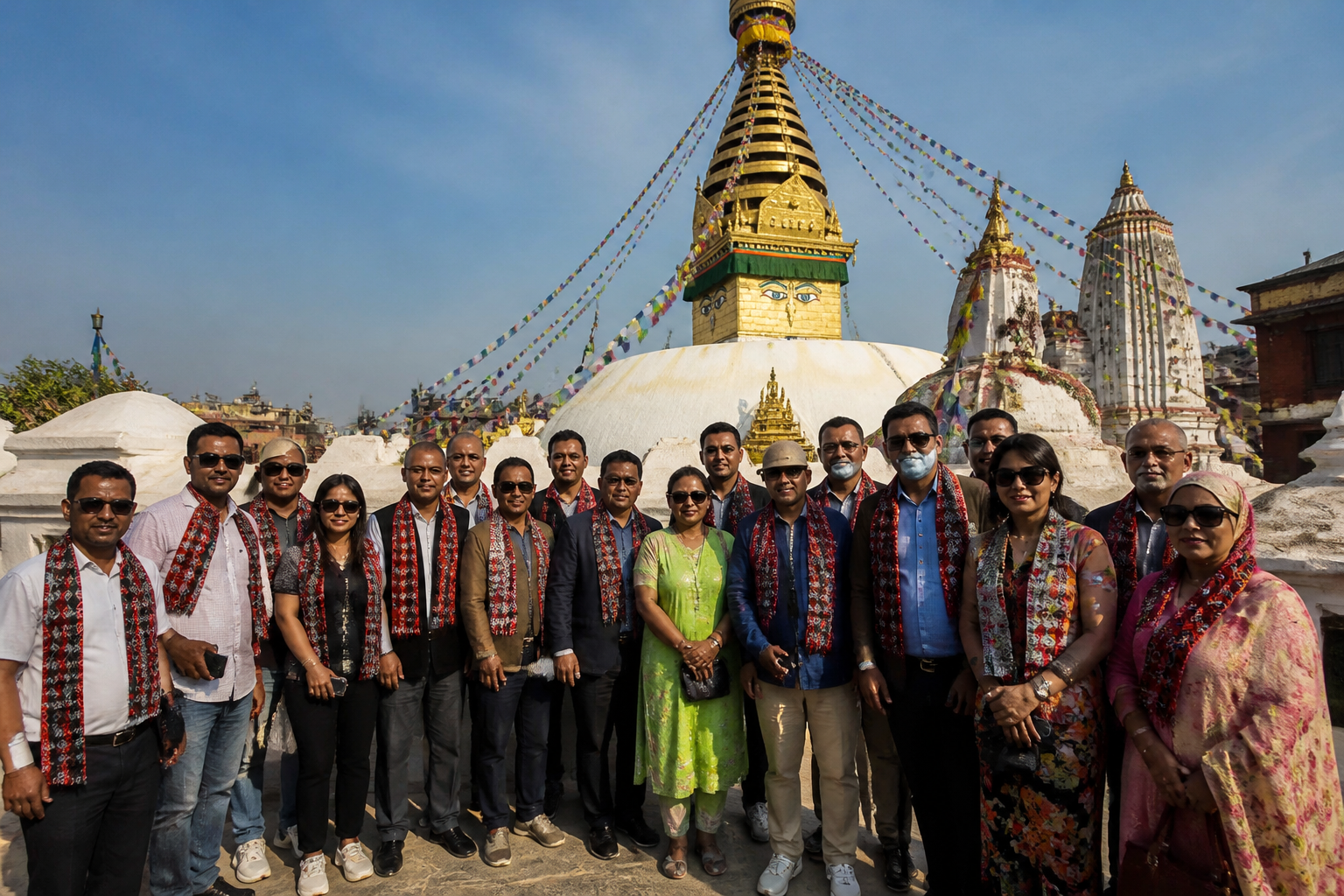
Nepal has been receiving fresh reassurance from tourism representatives from Sri Lanka and Bangladesh, who recently visited and affirmed that the country is safe for tourism. After spending time there myself, that matches what I felt on the ground: people were friendly, streets were lively, and the main visitor areas were operating normally.
Nepal is not polished in a resort-town kind of way. Roads can be dusty, traffic is noisy, and travel often takes longer than the map suggests. But there is a warmth here that stays with you—especially in a small tea shop, a quiet temple courtyard, or a mountain village where someone insists you have another cup of chai.
## The Vibe and When to Go
Nepal feels spiritual, energetic, and wonderfully unhurried once you get outside Kathmandu. Prayer flags flutter above trekking paths, incense drifts through temple courtyards, and the smell of garlic soup follows you through mountain lodges.
The most comfortable travel seasons are:
– **October to November:** Clear skies, cool temperatures, and excellent mountain views. This is one of the busiest periods.
– **March to May:** Mild spring weather, blooming rhododendrons, and generally good conditions for sightseeing and trekking.
– **June to September:** Monsoon rains bring greener landscapes, but flight delays, muddy roads, and cloudy mountain views are common.
– **December to February:** Crisp and often clear in Kathmandu and Pokhara, though mornings and nights can be very cold at higher elevations.
If you are visiting during the current spring or autumn travel window, pack layers and expect warm afternoons with cooler mornings. Mountain weather can change quickly, so even a sunny forecast does not mean you should leave your rain jacket behind.
Nepal feels especially inviting now for travelers from South Asia. Flights are relatively convenient from Dhaka and Colombo, and the country offers a very different kind of escape without requiring a long journey.
## Must-See Spots: My Top Picks
### 1. Kathmandu’s Old City and Boudhanath
Kathmandu can be overwhelming at first. The traffic is loud, sidewalks are uneven, and the air is not always kind to your lungs. Give it a day or two, though, and the city begins to reveal its softer side.
I liked wandering around **Ason Market**, where spice stalls, brassware shops, vegetable sellers, and tiny local eateries fill the lanes. It is busy, but it feels more genuine than spending the entire day around souvenir shops in Thamel.
For a calmer afternoon, visit **Boudhanath Stupa**. Walk clockwise around the stupa with the locals, listen to the low hum of prayers, and stop at one of the rooftop cafés for tea. Early morning is peaceful; late afternoon has more energy and better people-watching.
**My tip:** Wear comfortable shoes. Many of Kathmandu’s best corners are reached through narrow lanes rather than broad streets.
### 2. Pokhara and the Lakeside Morning
Pokhara is where I usually tell first-time visitors to slow down. The city is gentler than Kathmandu, and **Phewa Lake** gives the whole place a relaxed rhythm.
Rent a boat for an hour, paddle toward the small island temple, and watch the hills change color in the morning light. If the sky is clear, wake before sunrise and take a car or taxi to **Sarangkot**. The view of the Annapurna range can be unforgettable, although clouds sometimes decide otherwise.
I also enjoyed walking away from the busiest part of Lakeside. The side streets have small bakeries, family-run restaurants, and quieter guesthouses. Try a plate of momos, but also order **dal bhat** at least once—it is filling, comforting, and often comes with refills.
**My tip:** Do not plan Pokhara as a rushed one-night stop. Three nights gives you time for the lake, Sarangkot, the World Peace Pagoda, and a short hike.
### 3. Chitwan National Park
Chitwan feels completely different from the mountain towns. The air is warmer, the landscape is flat and green, and the forests are home to rhinos, deer, monkeys, crocodiles, and—if luck is on your side—tigers.
A jeep safari is the easiest option, but I also enjoyed a guided nature walk and a canoe ride. The quiet moments are often the best: a rhinoceros appearing between the trees, birds calling from the riverbank, or a local guide pointing out fresh tracks in the mud.
Stay in or near **Sauraha**, where there are plenty of lodges and restaurants. Avoid expecting a luxury safari experience at every property; the charm here is in the guides, wildlife, and peaceful surroundings.
**My tip:** Go early for wildlife activities. The heat builds quickly, and animals are usually more active in the morning.
### 4. A Short Trek Near Kathmandu or Pokhara
You do not need to commit to a two-week Himalayan expedition to experience Nepal’s mountain trails. A short trek around **Nagarkot**, **Australian Camp**, or the **Ghandruk area** can give you mountain scenery, village life, and a taste of trekking culture.
For longer routes, check permits, weather, transport, and altitude carefully. The mountains are beautiful, but altitude sickness is not something to ignore. Walk slowly, drink plenty of water, and tell your guide if you feel dizzy, unusually tired, or sick.
**My tip:** Use a registered guide for unfamiliar routes, especially if you are traveling alone or during quieter months.
## Practical Travel Advice
### Getting There and Visa
Most international visitors arrive at **Tribhuvan International Airport in Kathmandu**. There are regular connections through regional hubs such as Dhaka, Colombo, Delhi, Doha, Dubai, and Kuala Lumpur, depending on the season and airline.
For many nationalities, Nepal offers a **tourist visa on arrival** at Kathmandu airport. Bring:
– A passport valid for at least six months
– Passport-sized photos, just in case
– Your hotel address
– A return or onward booking if requested
– A card or cash for the visa fee
Citizens of **Bangladesh and Sri Lanka are generally eligible for a gratis, or free, tourist visa for up to 30 days once per visa year**, under Nepal’s South Asian regional arrangements. Rules can change, so check Nepal’s Department of Immigration or the nearest Nepalese embassy before booking. Some nationalities must apply in advance and cannot use visa on arrival.
The arrival process is usually manageable, though the airport can feel crowded. Complete the online visa form beforehand if the official system is available, and keep screenshots of your confirmation.
### Where to Stay
– **Thamel:** Best for first-time visitors, restaurants, trekking shops, travel agencies, and nightlife. Convenient but busy.
– **Boudha:** Quieter and more atmospheric, with monasteries, cafés, and the stupa nearby.
– **Patan:** A good choice for architecture, local restaurants, and a slower city feel.
– **Lakeside, Pokhara:** Easy for lake activities, cafés, tours, and short hikes.
– **Sauraha, Chitwan:** Choose a lodge with good reviews and ask whether safari transport is included.
For Kathmandu, I prefer staying slightly away from the loudest part of Thamel. You can still walk there, but you will sleep better.
### Getting Around
Kathmandu is walkable in small sections, but not as one continuous walking city. Traffic, dust, and narrow roads make short distances surprisingly tiring.
For local rides, try **Pathao** or **inDrive** where available. They are often easier than negotiating with a taxi, although drivers may still call to confirm the pickup point. Traditional taxis are everywhere; agree on the fare before leaving if the meter is not being used.
Buses are cheap but crowded and slow. Tourist buses between Kathmandu, Pokhara, and Chitwan are more comfortable, though road conditions can make the journey much longer than advertised. Domestic flights save time, but mountain weather can cause delays, so avoid scheduling an important international connection too closely afterward.
## Real Costs and Local Tips
Nepal is fairly affordable, though prices rise in Thamel, Lakeside, and during peak trekking season.
### Typical daily budgets
**Budget traveler: NPR 3,500–6,000 per day**
– Simple guesthouse or hostel
– Local meals and tea
– Buses, shared rides, and occasional taxis
– Basic sightseeing
**Mid-range traveler: NPR 8,000–16,000 per day**
– Comfortable hotel
– Restaurant meals
– Private taxis or app-based rides
– Entrance fees and a few guided activities
These figures exclude international flights, major trekking permits, safari packages, and expensive adventure activities.
Nepal uses the **Nepalese rupee (NPR)**. Cards work at many hotels and established restaurants, but cash is still essential for local eateries, taxis, temples, small shops, and rural areas. ATMs are common in Kathmandu and Pokhara, though some charge fees or occasionally run out of cash.
Tipping is not compulsory, but it is appreciated. Rounding up at cafés or leaving around **5–10%** in a good restaurant is polite. Guides, porters, and drivers usually appreciate a separate tip, especially after a trek or safari.
### A few things that saved me money
– **Eat where office workers eat.** A busy local restaurant usually serves better-value dal bhat, thakali meals, and momos than a quiet tourist café.
– **Carry small notes.** Taxi drivers and small shops often struggle to provide change.
– **Compare trekking and safari prices.** Ask what is included—permits, transport, meals, guide fees, and park entry can change the final cost considerably.
– **Do not buy mountain gear too quickly.** Thamel has plenty of shops, but prices vary widely. Walk around, check quality, and bargain politely.
– **Keep buffer time for road journeys.** Saving a little on a bus is not useful if you miss a flight or an important tour.
– **Use bottled or filtered water.** Refillable bottles are easy to fill at hotels and trekking lodges, but avoid drinking untreated tap water.
Nepal felt safe to me in the ordinary, practical sense: I still kept an eye on my belongings, avoided isolated lanes late at night, and checked local conditions before heading into the mountains. The bigger travel concerns are usually road safety, weather, altitude, and changing transport schedules rather than serious trouble with local people.
The recent visits by Sri Lankan and Bangladeshi tourism delegations reinforce what many travelers are finding firsthand: Nepal is open, welcoming, and ready for visitors. Come with patience, comfortable shoes, and a little flexibility. The country may not always make travel effortless, but it gives back plenty in return.
KEYWORDS: Nepal mountains, Kathmandu Nepal