
# Egypt Beyond the Pyramids: My Favorite Stops, Local Flavors, and Honest Travel Tips
## The Vibe & When to Go
Egypt is one of those places that can feel wonderfully overwhelming. Cairo is noisy, dusty, funny, and full of life. One minute you’re sipping mint tea in a quiet courtyard; the next, a chorus of car horns reminds you that the city never really pauses.
The recent news that the **Egyptian Tourism Authority has joined the World Travel & Tourism Council (WTTC)** feels fitting. Egypt has been working to strengthen its tourism industry, improve visitor experiences, and bring more attention to places beyond the classic pyramid-and-beach itinerary.
For comfortable sightseeing, I’d choose **October through April**, when Cairo and Luxor are pleasantly warm during the day and cooler after sunset. The Red Sea stays inviting for much of the year. From late spring into summer, Egypt becomes seriously hot, especially in Luxor, Aswan, and the desert. Cairo can feel hazy and heavy, while the coast is easier to handle thanks to the sea breeze.
If you go during the cooler months, pack light layers, sunglasses, sunscreen, and a scarf for sun and dust. Even in winter, the midday sun can be stronger than you expect.
## Must-See Spots: My Top Picks
### 1. The Pyramids of Giza, Early in the Morning
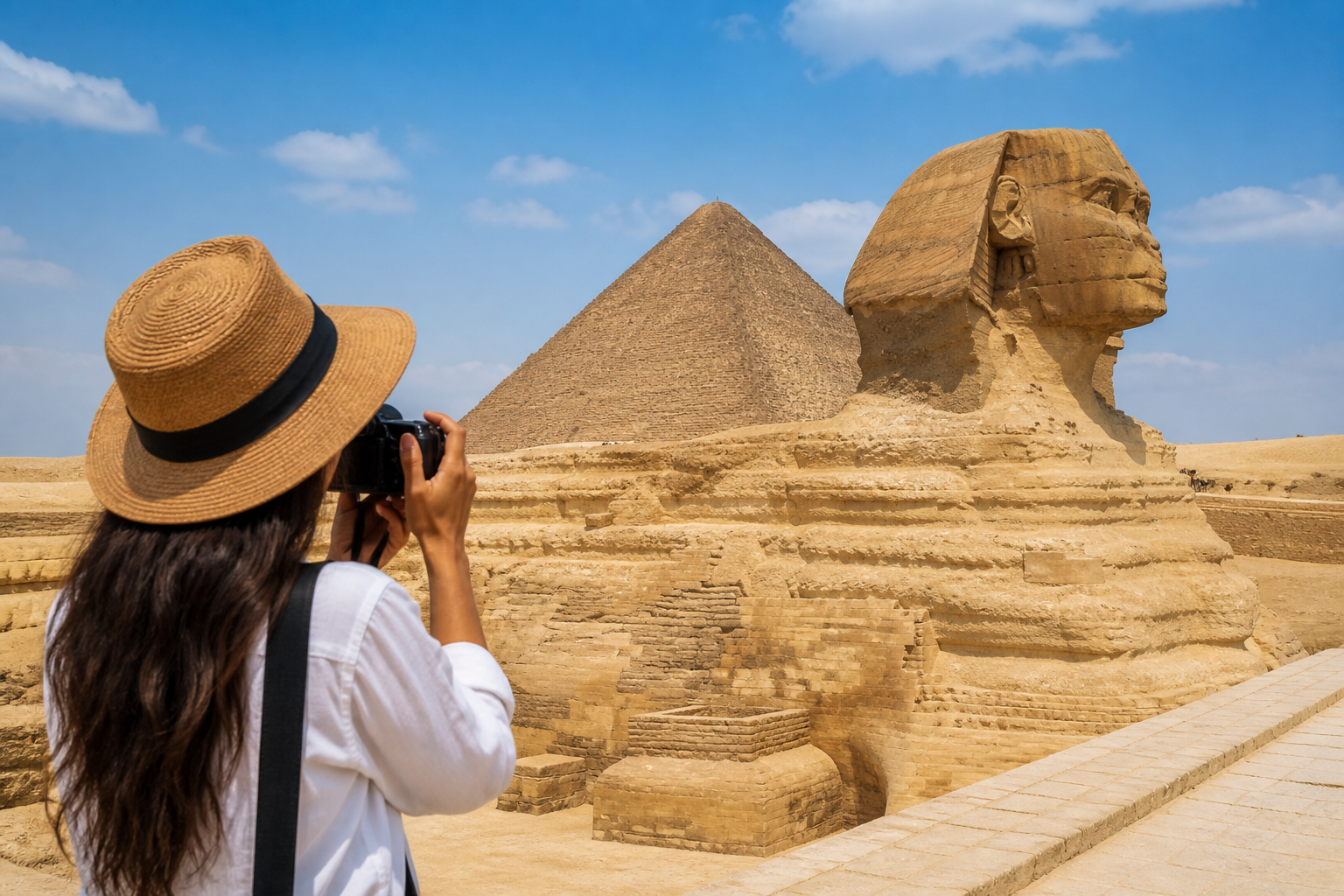
Yes, the pyramids are busy and heavily photographed, but seeing them in person still gave me goosebumps. They are much larger and more imposing than pictures suggest.
Go as early as you can, ideally close to opening time. The light is softer, the air is cooler, and you’ll have a better chance of enjoying the plateau before the crowds and persistent sellers arrive. Walk away from the main entrance and spend time looking back at the skyline rather than rushing straight to the most obvious photo stop.
A camel ride can be fun, but agree on the full price and duration before getting on. Some visitors find the animals uncomfortable, so a simple walk around the plateau is just as rewarding.
### 2. Islamic Cairo and Al-Muizz Street
This was one of my favorite parts of Cairo. Around Al-Muizz Street, old stone buildings, carved doorways, mosques, workshops, and tiny cafés create a much more intimate experience than the grand scale of the pyramids.
Visit the area in the late afternoon, when the heat begins to fade. Step into the historic mosques where permitted, but dress modestly and remove your shoes when required. The nearby Khan el-Khalili market is lively and crowded, though I preferred browsing the side lanes to buying souvenirs from the busiest stalls.
For a peaceful break, look for a traditional coffeehouse and order tea, Turkish coffee, or a cold hibiscus drink. Don’t expect fast service—this is a place to sit and watch the neighborhood move around you.
### 3. Luxor’s Temples and the West Bank
Luxor feels calmer than Cairo, although the sellers and guides can still be persistent. The East Bank is home to **Karnak Temple** and Luxor Temple, while the West Bank has the Valley of the Kings, tombs, and the impressive temple of Hatshepsut.
I found the West Bank easiest to enjoy with a hired driver or trusted guide because the sites are spread out. Go early, especially for the Valley of the Kings. The tombs are surprisingly small in places, and the heat builds quickly.
You usually receive access to a limited number of tombs with the standard ticket, while some famous tombs, such as Seti I, require extra payment. Ask which tombs are open that day before deciding what to buy.
A sunrise hot-air balloon ride is popular and gives you a beautiful view of the Nile Valley, but check the operator’s safety record carefully. The experience depends heavily on wind and visibility.
### 4. Aswan and a Slow Nile Evening
Aswan has a softer rhythm. The Nile is wide and calm here, and the city feels less frantic than Cairo or Luxor. I enjoyed taking a short boat ride around the islands, visiting a Nubian village, and watching the sun drop behind the river.
The Nubian villages are colorful and welcoming, but visits arranged through tour operators can sometimes feel staged. A local guide recommended by your hotel usually makes the experience more natural.
If you have time, consider a few nights on a Nile cruise between Luxor and Aswan. Cruises vary hugely in quality, so read recent reviews and inspect the boat photos carefully. A shorter cruise is often enough; you don’t need a week on the river to get a feel for it.
## Practical Travel Advice
### Getting There and Visa
Most international visitors fly into **Cairo International Airport**, although Luxor, Hurghada, and Sharm El Sheikh also receive direct seasonal flights from Europe and the Middle East.
Visa rules depend on your passport:
– Many travelers can obtain a **visa on arrival** at major airports.
– Citizens of eligible countries can apply for an **Egypt e-Visa** before traveling.
– Some nationalities need to arrange a visa through an Egyptian embassy in advance.
– Passport validity requirements and permitted stay lengths can change, so check the official Egyptian e-Visa portal or your nearest Egyptian consulate before booking non-refundable plans.
A tourist visa is commonly issued for 30 days, but do not rely on that without checking your own nationality’s rules. Keep a digital and printed copy of your passport, visa, hotel booking, and onward travel details.
For flights, compare Cairo with nearby regional hubs such as Doha, Dubai, Abu Dhabi, Istanbul, and Amman. If you plan to visit both Cairo and the Red Sea, an open-jaw ticket can save time—for example, flying into Cairo and home from Hurghada.
### Where to Stay
**Cairo**
– **Downtown:** Central, lively, and convenient for museums and older city areas. Hotels range from basic to grand, but traffic noise is common.
– **Zamalek:** A greener island neighborhood with restaurants, cafés, galleries, and a more relaxed evening atmosphere.
– **Garden City:** Quieter and more residential, with some attractive historic hotels.
– **Giza:** Handy for early pyramid visits, though less convenient for exploring central Cairo.
**Luxor**
Stay on the **East Bank** for restaurants, transport, and easy access to Karnak and Luxor Temple. The **West Bank** is more peaceful and rural, with guesthouses and gardens, but you’ll cross the river for many activities.
**Aswan**
The Corniche is practical for first-time visitors. If you want something quieter, look at guesthouses on Elephantine Island or along the river, keeping in mind that boats may be needed for access.
**Red Sea**
Hurghada suits travelers who want resorts, diving, and easy airport transfers. Sharm El Sheikh is also convenient for beaches and organized excursions, while Dahab has a more laid-back, independent-traveler feel.
### Getting Around
Cairo is not very walkable over long distances. The metro is cheap and useful on the routes it covers, but it can be crowded. For short trips, I usually use **Uber or Careem**, which are easier than negotiating with taxis.
In Luxor and Aswan, taxis, hotel drivers, and tuk-tuks are common. Agree on the fare before setting off. For several attractions in one day, hiring a driver for a fixed amount is often less stressful than arranging separate rides.
Domestic flights save time between Cairo and the southern cities, while trains are useful for travelers who prefer an overnight journey. The sleeper trains can be convenient, but quality varies, so check recent reviews before booking. Between Luxor and Aswan, a cruise or private car usually makes more sense than trying to piece together local transport.
## Real Costs and Local Tips
Prices change quickly in Egypt, especially with currency fluctuations, but these are reasonable rough budgets per person:
### Budget travel: around **US$30–55 per day**
This could cover:
– A simple hostel or basic guesthouse
– Local meals such as koshari, falafel, shawarma, and ful
– Public transport and occasional ride-hailing
– A few low-cost sightseeing tickets
### Mid-range travel: around **US$80–150 per day**
This usually allows for:
– A comfortable hotel or well-reviewed guesthouse
– Restaurant meals
– Private transfers or occasional guided visits
– Several major attractions
Luxury hotels, private guides, Nile cruises, diving trips, and domestic flights can raise the daily total quickly.
Egypt uses the **Egyptian pound (EGP)**. Carry small notes for taxis, cafés, bathrooms, and tips. Card payments are common in larger hotels and restaurants, but small businesses may accept only cash. ATMs are available in cities and tourist areas, though it’s wise to use machines attached to banks when possible.
Tipping, or **baksheesh**, is part of everyday life. A small amount for hotel staff, drivers, porters, and bathroom attendants is normal. In restaurants, check whether a service charge has already been added, then leave a little extra for good service if you wish. You never need to tip every person who speaks to you, offers unsolicited help, or points out something you already know.
### A few tricks that made my trip easier
– **Use ride-hailing apps whenever possible.** They reduce arguments over fares and make it easier to see where you’re going.
– **Carry coins and small bills.** Asking for change from a large note can turn a simple purchase into a surprisingly long negotiation.
– **Book guides through your hotel or a reputable company.** At major sites, unofficial guides may approach you with attractive prices, then add extras later.
– **Ask for prices before photos, rides, or help.** This applies to camels, horse carriages, boats, luggage assistance, and sometimes even seemingly casual favors.
– **Eat where local families eat.** Koshari shops and busy neighborhood restaurants are usually inexpensive, filling, and more reliable than empty tourist restaurants.
– **Keep a scarf or light shirt handy.** It helps with sun, dust, chilly evenings, and visiting religious sites.
Egypt rewards patience. Roads can be chaotic, schedules may shift, and a quick errand can take much longer than expected. But when you stop trying to control every minute, the trip becomes more enjoyable: tea with a shopkeeper, a quiet felucca ride, or an unexpected conversation can end up being more memorable than the attraction you planned around.
KEYWORDS: Cairo Egypt