
# Portugal in 2026: My Favorite Places, Local Flavors, and Honest Travel Tips
Portugal has been nominated as **Europe’s Leading Destination 2026** at the World Travel Awards, and I can understand why. It’s the kind of country that rewards slow mornings, long lunches, and getting slightly lost on a quiet side street.
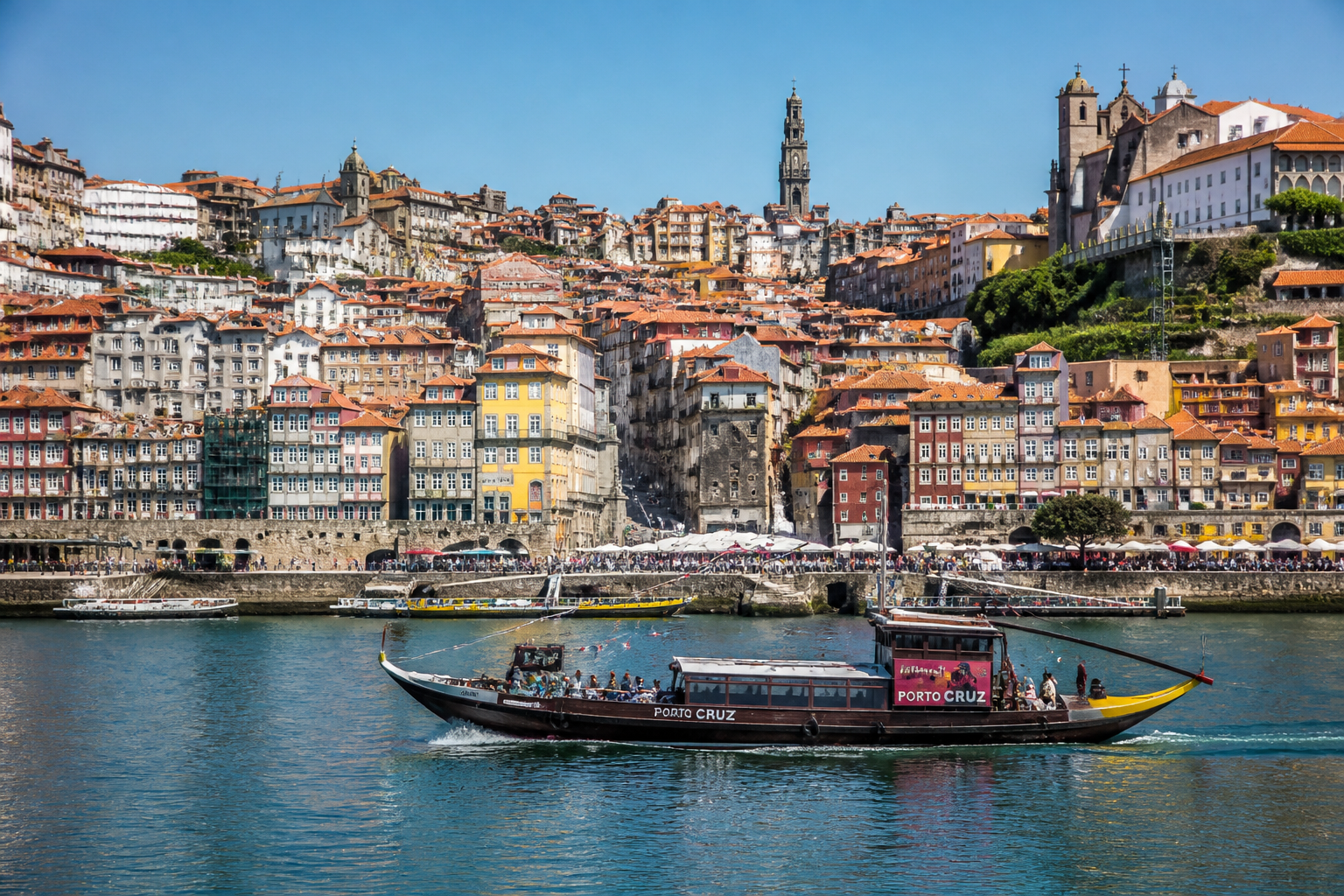
You can spend one day wandering tiled lanes in Lisbon, the next tasting port beside the Douro River, and a few days later swimming off the Algarve coast. Portugal feels relaxed without being sleepy, polished without losing its everyday charm.
## The Vibe & When to Go
Portugal is friendly, sunny, and wonderfully unhurried. Even in busy cities, life tends to revolve around coffee at the counter, fresh bread, neighborhood bakeries, and late dinners that stretch well past sunset.
The weather depends heavily on where you go:
– **Spring, from March to May:** Mild and green, with comfortable sightseeing temperatures. April showers are possible, but the countryside and gardens look beautiful.
– **Summer, from June to August:** Hot and dry, especially inland and in the Alentejo. Coastal areas are more comfortable, though the Algarve gets busy and prices rise.
– **Autumn, from September to November:** One of my favorite times to visit. The sea is still pleasant in early autumn, the crowds thin out, and food markets fill with grapes, figs, and chestnuts.
– **Winter, from December to February:** Generally mild in Lisbon and the Algarve, though northern Portugal can be rainy. It’s a good season for city breaks and lower hotel prices.
If you’re planning a trip now, pack layers rather than relying on a single weather forecast. Lisbon can feel warm in the sun and surprisingly cool when the wind comes off the river. The north is wetter, while the Algarve is usually brighter and drier.
## Must-See Spots: My Top Picks
### 1. Lisbon Beyond the Tram 28 Route
Lisbon’s famous yellow trams are fun, but I prefer exploring on foot. Start in **Alfama**, where laundry hangs between old buildings and tiny staircases lead to unexpected viewpoints. Go early in the morning before the streets fill with tour groups.
My favorite kind of Lisbon afternoon is simple: coffee and a pastel de nata in Graça, a wander through Mouraria, and sunset from **Miradouro da Senhora do Monte**. The view over the rooftops is much calmer than some of the city’s better-known lookout points.
A practical warning: Lisbon is steep, and the cobblestones can be slippery. Comfortable shoes matter more here than fashionable ones.
### 2. Porto’s Riverside Charm
Porto feels moodier and more intimate than Lisbon. I love crossing the **Dom Luís I Bridge** on foot, then taking time to explore the narrow streets around Ribeira and Miragaia.
On the Vila Nova de Gaia side, you’ll find port lodges with tastings and river views. Book a tour if you want the history, but you don’t need to visit five cellars. One thoughtful tasting is plenty, especially if you’re also planning a day trip into the Douro Valley.
For a quieter view, walk toward **Jardim do Morro** or take the cable car down and wander along the river. Porto’s hills are manageable if you take your time, but they can be tiring after a full day.
### 3. The Algarve Away From the Biggest Resorts
The Algarve is more than bright beaches and resort hotels. I’d base myself in **Lagos, Tavira, or Carvoeiro** rather than staying only around Albufeira if I wanted a calmer trip.
Lagos is good for dramatic cliffs, boat trips, and a lively old town. Tavira has a slower, more traditional feel, with elegant streets and access to long sandy islands by ferry. Around Carvoeiro, the coastal paths are beautiful, especially in the morning before the heat builds.
Bring water and avoid walking cliff paths too close to the edge. Some viewpoints have no barriers, and the rocks can be loose.
### 4. Madeira for Mountain Scenery
If you have extra time, Madeira adds a completely different side of Portugal. The island is green, steep, and dramatic, with mountain roads, black-rock beaches, and levada walks through forests.
I especially enjoy the early-morning walks, when the clouds hang low over the hills. Funchal makes a comfortable base, but renting a car is useful if you want to explore beyond the capital. Roads can be narrow and winding, so drivers should be confident.
The weather changes quickly in the mountains. Even on a sunny day in Funchal, take a waterproof layer for higher trails.
## Practical Travel Advice
### Getting There & Visa
Portugal has major international airports in **Lisbon, Porto, and Faro**, with Funchal serving Madeira. Lisbon usually has the widest range of direct flights, while Faro is especially convenient for the Algarve.
For entry:
– Portugal is part of the **Schengen Area**.
– Travelers from countries such as the United States, Canada, the United Kingdom, Australia, and New Zealand can generally visit visa-free for up to **90 days in any 180-day period**.
– Other nationalities may need to apply for a Schengen visa before traveling.
– Your passport normally needs to be valid for at least three months after your planned departure and issued within the previous ten years.
– Check Portugal’s official immigration guidance before booking, as electronic travel authorization rules for visa-exempt visitors may change.
For flights, compare Lisbon and Porto rather than assuming one will be cheaper. A useful arrangement is flying into Lisbon and leaving from Porto, especially if you plan to travel north by train.
### Where to Stay
**Lisbon**
– **Baixa and Chiado:** Convenient for a first visit, shopping, restaurants, and major sights.
– **Alfama:** Beautiful and atmospheric, though hilly and sometimes noisy.
– **Príncipe Real:** Good restaurants, independent shops, and a more residential feel.
– **Estrela or Campo de Ourique:** Quieter neighborhoods with excellent local cafés and markets.
**Porto**
– **Ribeira:** Gorgeous river views, but busy and more expensive.
– **Cedofeita:** Creative, walkable, and full of cafés and small restaurants.
– **Bonfim:** A good choice for lower prices and a more local atmosphere.
– **Vila Nova de Gaia:** Great views across the river, especially if port tastings are a priority.
**Algarve**
Choose Lagos for beaches and atmosphere, Tavira for a quieter cultural stay, or Albufeira if you want nightlife and lots of organized excursions.
### Getting Around
Lisbon and Porto are easy to explore without a car, although both involve hills. Use the metro, buses, trams, and trains, and remember that contactless payment is increasingly accepted but not universal on every route.
Portugal’s national train company, **CP**, connects Lisbon, Porto, Coimbra, Faro, and other major destinations. Alfa Pendular trains are faster and more comfortable, so book ahead for popular travel days.
For short rides, **Uber and Bolt** are widely used. In some cities, Free Now is also available. Always check the car and driver details before getting in.
A car helps in the Algarve, Alentejo, and Madeira, but I wouldn’t rent one for a Lisbon or Porto city break. Parking is limited, streets are narrow, and public transport is usually easier.
## Real Costs & Local Tips
Portugal is still manageable for many European travelers, but Lisbon, Porto, and the Algarve are no longer ultra-cheap, especially in July and August.
### Typical Daily Budgets
**Budget traveler: €45–€70 per person**
– Dorm bed or simple guesthouse: €20–€40
– Bakery breakfast or café meal: €3–€7
– Casual lunch: €8–€14
– Public transport and a few inexpensive sights
**Mid-range traveler: €110–€180 per person**
– Comfortable double room shared by two people: roughly €70–€140
– Sit-down meals and wine: €25–€50 per day
– Trains, taxis, museum tickets, and occasional tours
Expect to spend more in the Algarve during summer and in central Lisbon on weekends. Portugal uses the **euro (€)**.
Tipping isn’t compulsory in the same way it is in the United States. If the service is good, leaving **5–10%** is kind, or simply rounding up at a café. Check your bill before adding anything, particularly in tourist-heavy restaurants.
### A Few Tips That Saved Me Money
– **Eat lunch like a local.** Many restaurants offer a prato do dia, or dish of the day, with good value compared with dinner menus.
– **Look for bakeries away from major squares.** A coffee and pastry can cost noticeably less just a few streets from the main attraction.
– **Don’t automatically accept every starter.** Bread, olives, cheese, or pâté may be placed on the table and charged if you eat them. If you don’t want them, politely ask for them to be removed.
– **Book popular trains and tours ahead in summer.** Last-minute fares and availability can be frustrating, especially between Lisbon and Porto.
– **Carry a little cash.** Cards work in most hotels and restaurants, but small cafés, market stalls, and rural businesses may prefer cash.
– **Skip restaurants with aggressive touts.** The best meals I’ve had usually came from modest places filled with local families, not menus waved at pedestrians.
Portugal’s nomination for Europe’s Leading Destination 2026 may bring even more attention, but the country still feels best when you slow down. Order the grilled fish, take the longer train route, sit in the shade after lunch, and leave room for one more pastel de nata.
KEYWORDS: Portugal travel