
# Nepal Beyond the Headlines: Safe Streets, Mountain Air, and the Places I’d Return To
After hearing that more than 150 Sri Lankan travel agents had publicly described Nepal as safe for tourism, I found myself thinking about what “safe” really feels like on the ground. For me, it wasn’t a polished, worry-free bubble. It was being able to walk through Thamel after dinner, ask for directions without feeling awkward, and find people generally willing to help when I looked lost.
Nepal still demands common sense. Roads can be chaotic, mountain weather changes quickly, and Kathmandu’s air is not always kind to your lungs. But for ordinary sightseeing, food, culture, and well-organized trekking, I found Nepal welcoming and manageable.
## The Vibe & When to Go
Kathmandu is noisy, dusty, spiritual, and completely alive. One minute you’re stepping around traffic and construction, and the next you’re standing in a quiet temple courtyard listening to bells and pigeons. Pokhara feels slower, with lakeside cafés, clear mountain mornings, and a softer rhythm.
For a spring visit from **March to May**, Kathmandu and Pokhara are usually pleasantly warm during the day, although afternoons can bring haze or short showers. Mountain views are often clearest in the morning. Autumn, especially October and November, remains the most reliable season for trekking, with crisp skies and comfortable temperatures.
Nepal is a good choice right now if you want:
– A culturally rich trip without spending a fortune
– Short hikes rather than a serious expedition
– Welcoming local food and cafés
– A destination where you can combine temples, mountains, and slow travel in one journey
I would pack a light jacket, comfortable shoes, sunscreen, a reusable water bottle, and a good mask for dusty Kathmandu streets.
## Must-See Spots: My Top Picks
### 1. Patan Durbar Square and the Back Streets of Lalitpur
Patan Durbar Square is one of the most beautiful places in the Kathmandu Valley, but the real pleasure comes after seeing the main temples. I liked wandering through the nearby courtyards, metal workshops, tiny shrines, and quiet lanes where daily life carries on almost unchanged.
Look for a small Newari restaurant and try **bara**, a savory lentil pancake, or **yomari**, a sweet steamed dumpling filled with molasses and sesame. Patan feels calmer than central Kathmandu, especially in the morning.
**Practical tip:** Go early, before the tour groups arrive. The ticket area can be confusing, so keep your pass with you if you plan to move between the square and nearby heritage sites.
### 2. Boudhanath at Sunset
The enormous white stupa at Boudhanath is busy, but it never felt merely touristy to me. Monks, families, pilgrims, shopkeepers, and travelers all circle the stupa in the same clockwise direction. Prayer flags move overhead, butter lamps flicker in small shrines, and the cafés on the upper floors offer a peaceful view.
I enjoyed visiting late in the afternoon and staying until the lights came on. Walk the full circuit rather than stopping for a quick photograph.
**Practical tip:** Dress respectfully and walk clockwise around the stupa. Keep your voice low around worshippers, and ask before photographing people closely.
### 3. Pokhara and the Morning View from Sarangkot
Pokhara is the place where I finally slowed down. The lakeside area has plenty of restaurants and souvenir shops, but the lake itself gives the city its charm. A short boat ride on Phewa Lake is relaxing, especially early in the day when the water is still.
For mountain views, I’d arrange a trip to **Sarangkot before sunrise**. The drive is usually easier with a pre-booked car or guide, and arriving early gives you a better chance of seeing the Annapurna range before clouds gather.
Pokhara also works well as a base for short walks to the World Peace Pagoda or a few days of trekking.
**Practical tip:** Don’t pack every day with activities. Leave room for a quiet café morning, a lakeside walk, or simply watching paragliders drift over the hills.
### 4. Swayambhunath, the Monkey Temple
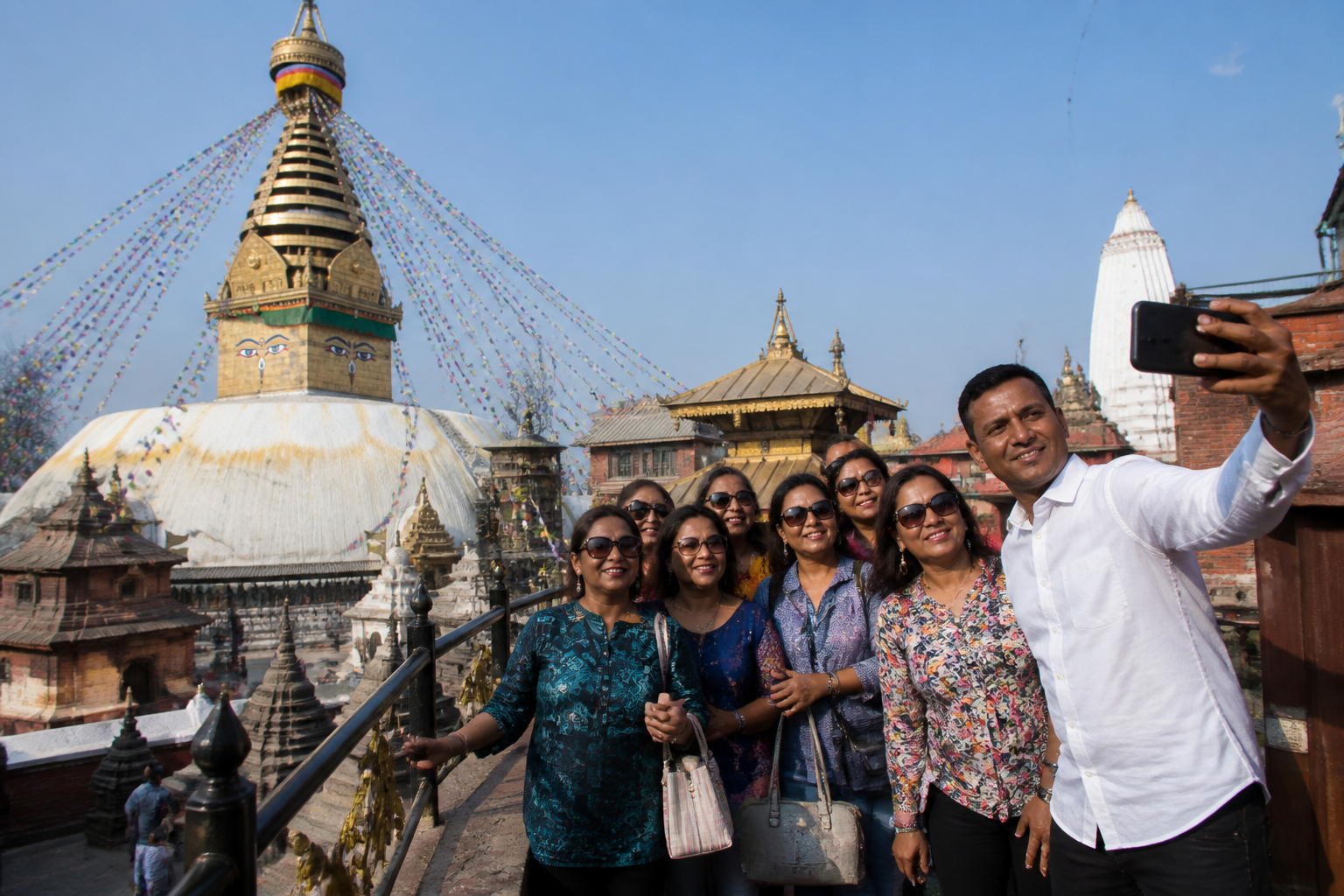
Swayambhunath sits on a hill above Kathmandu and offers one of the best city views. The climb includes plenty of steps, monkeys, prayer wheels, and small shrines tucked into corners.
I enjoyed visiting in the late afternoon when the city looked softer through the haze. Keep food and loose items inside your bag—the monkeys are quick and surprisingly confident.
**Practical tip:** There are two approaches. The long staircase is atmospheric but tiring; a taxi can take you closer to the upper entrance if you’d rather save your energy.
## Practical Travel Advice
### Getting There and Visa
From Sri Lanka, flights to Kathmandu may be direct on certain schedules or involve a connection, commonly through cities such as Delhi, Doha, or Dubai. Compare the total journey time rather than choosing only by the cheapest fare. A low-cost ticket with a very long overnight layover can make the first day miserable.
Nepal generally offers **visa on arrival** at Tribhuvan International Airport for eligible travelers. Sri Lankan passport holders are commonly eligible for a **30-day gratis visa under Nepal’s SAARC arrangement**, though conditions can change and may depend on previous use during the visa year. Before flying, check the latest guidance from the Nepalese embassy or official immigration website.
Carry:
– A passport valid for at least six months
– A passport-sized photo, just in case
– Proof of onward travel if requested
– Your hotel address
– Travel insurance, especially if trekking
– Copies of important documents stored offline
If you’re heading into the mountains, check whether your route needs a trekking permit, a TIMS card, or a licensed guide. Rules vary by region and can change.
### Where to Stay
**Thamel:** Best for first-time visitors, restaurants, trekking shops, nightlife, and easy access to tour operators. It can be noisy, so ask for a room away from the main street.
**Patan:** A better choice if you want heritage buildings, local cafés, and a quieter atmosphere. It’s especially pleasant for travelers who prefer walking around without being surrounded by souvenir shops.
**Boudha:** Ideal for a peaceful stay near the stupa, Tibetan restaurants, monasteries, and rooftop cafés. The neighborhood feels calmer than Thamel.
**Lakeside, Pokhara:** Convenient for boat rides, cafés, travel agencies, and short excursions. The north end is generally quieter; the central strip is livelier and more social.
For trekking, I’d book at least the first night in Kathmandu and avoid committing to every hotel in advance. Mountain plans often shift because of weather, transport delays, or a sudden decision to stay somewhere longer.
### Getting Around
Kathmandu is walkable in small sections, but crossing major roads can be stressful. For longer trips:
– Use **Pathao** or **inDrive** where available for app-based rides.
– Taxis are common, but agree on the fare before getting in if the meter is not being used.
– Local buses are cheap but crowded and confusing for visitors.
– Tourist buses between Kathmandu and Pokhara are more comfortable than local buses, though journeys can still take much longer than expected because of traffic and road conditions.
– Domestic flights save time, but delays and cancellations are possible, particularly around mountain weather.
In Pokhara, walking works well around Lakeside. Taxis and hired cars are useful for Sarangkot, the Peace Pagoda, and viewpoints outside town.
## Real Costs and Local Tips
Nepal is still affordable compared with many popular Asian destinations, though prices rise in Thamel, Pokhara’s Lakeside, and during peak trekking months.
### Approximate daily budgets
**Budget traveler: NPR 3,000–5,000 per person**
– Basic guesthouse or dorm bed
– Local meals and tea
– Walking and occasional shared rides
– Free temples, markets, and neighborhood wandering
**Mid-range traveler: NPR 8,000–15,000 per person**
– Comfortable private room
– A mix of local restaurants and cafés
– App taxis or private day transport
– Entrance fees and a few guided activities
Trekking, domestic flights, rafting, paragliding, and private guides will raise the budget considerably.
Nepal uses the **Nepalese rupee (NPR)**. Keep small notes for taxis, snacks, temple donations, and small restaurants. Card payments are accepted in many hotels and established cafés, but cash is still essential in local eateries and rural areas.
Tipping is appreciated but not compulsory. In restaurants, check whether a service charge has already been added. If not, leaving around **5–10%** for good service is reasonable. Guides, porters, and drivers should receive a separate tip when they’ve done a good job.
### Small tricks that saved me money
– **Eat where office workers eat.** A local thali or momo shop is usually cheaper and tastier than a restaurant aimed only at tourists.
– **Compare trekking prices.** Ask at two or three agencies and confirm exactly what is included—permits, transport, guide, meals, and accommodation.
– **Don’t exchange all your money at the airport.** Change a small amount there and compare rates in the city.
– **Carry toilet paper and hand sanitizer.** Public facilities are unpredictable, and this small preparation saves a lot of discomfort.
– **Buy bottled water only when necessary.** In cities, use a refill station or a filtered-water service at your hotel. On treks, ask about safe refill points and purification.
– **Avoid rushing on the roads.** A journey that looks short on a map can take hours, especially around Kathmandu and on the road to Pokhara.
My overall impression was that Nepal felt safe in the practical, everyday sense: people were approachable, tourist areas were easy to navigate, and I never felt I had to be constantly on guard. Still, I’d avoid isolated walks late at night, keep valuables secure in crowded areas, and check local conditions before heading to remote regions.
Nepal rewards travelers who leave a little space in the itinerary. The best memories may come from an unplanned tea stop, a temple courtyard you almost walked past, or a mountain view that appears for only five minutes between the clouds.
KEYWORDS: Nepal mountains