
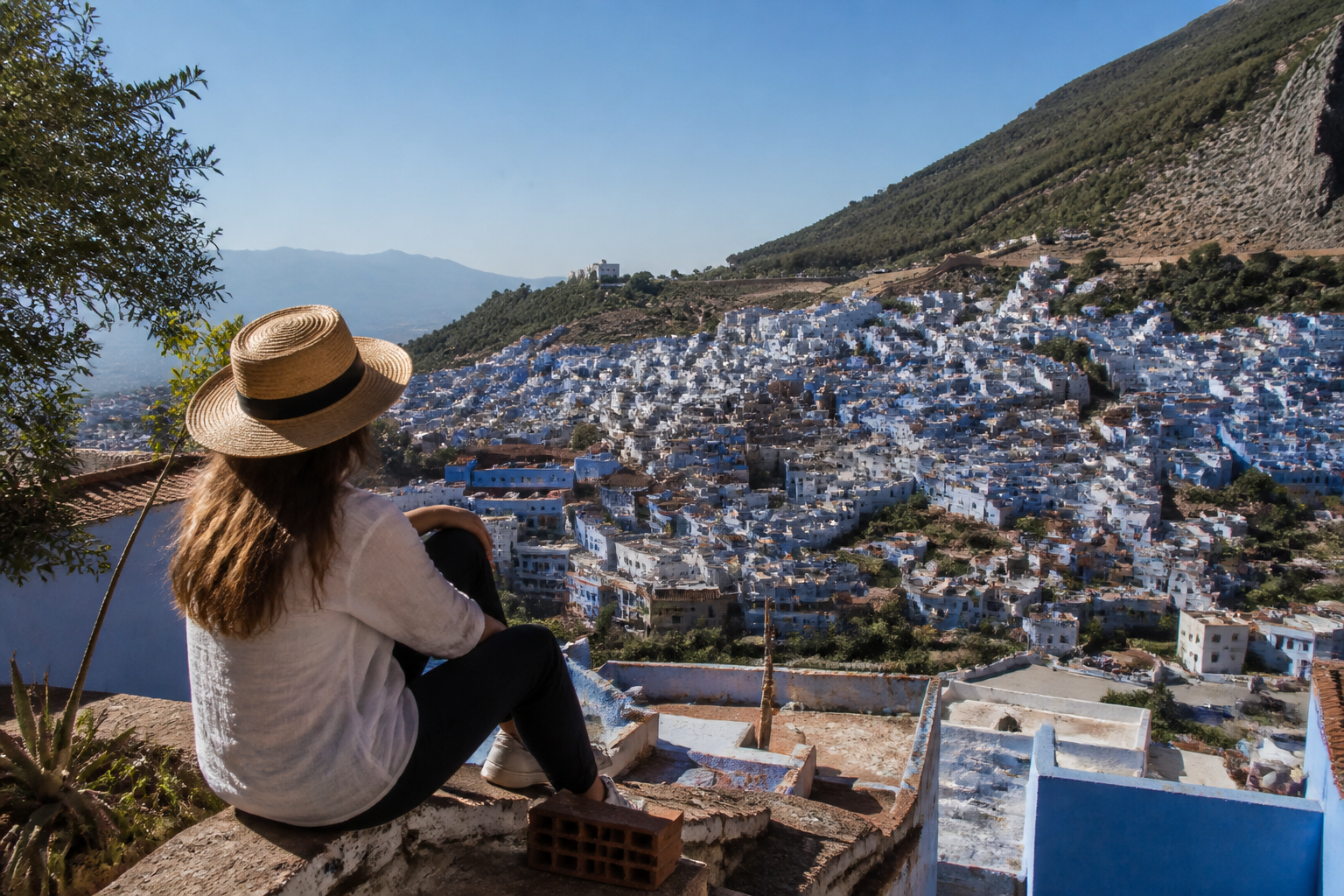
# Morocco Beyond the Headlines: My Favorite Places, Local Flavors, and Honest Travel Tips
Morocco is having a big moment. Tourist arrivals are expected to reach **14 million by August 2026**, and after traveling through the country, I can understand why. Morocco gives you a lot in a relatively small area: red-walled cities, Atlantic beaches, mountain villages, desert skies, and food that makes even a simple lunch memorable.
The country can be busy, noisy, and occasionally confusing. That is part of its character. You may get lost in a medina, negotiate over a taxi, or sit through a long dinner while the waiter brings one more plate of bread. I found that the best experiences came when I stopped trying to control every minute.
## The Vibe & When to Go
Morocco feels both familiar and completely different, depending on where you are. Marrakech is energetic and colorful, Fes is more atmospheric and old-world, Essaouira is breezy and relaxed, and the High Atlas feels wonderfully quiet after the cities.
The best times to visit are generally **March to May** and **September to November**. Days are warm without being exhausting, and the evenings are comfortable for wandering and eating outdoors. Summer can be very hot in Marrakech, inland towns, and the desert, though the Atlantic coast stays milder. Winter is pleasant in cities such as Marrakech and Agadir, but mountain nights can be cold.
If you are visiting in **August 2026**, expect popular places to be busy, especially Marrakech, Chefchaouen, and the desert routes. Book riads and domestic flights early. I would also plan slower mornings, carry water, and avoid long sightseeing walks in the middle of the afternoon.
## Must-See Spots: My Top Picks
### 1. Marrakech: Go Beyond Jemaa el-Fnaa
Jemaa el-Fnaa is chaotic, fascinating, and impossible to ignore. I enjoy passing through at sunset when the food stalls begin filling the square and the air smells of grilled meat, orange juice, and spices. Still, I would not spend your entire Marrakech visit there.
The side streets of the medina are where I found some of the best moments: small bakeries selling warm bread, tiny spice shops, and quiet courtyards hidden behind plain doors. The **Bahia Palace** is beautiful in the morning, before the larger groups arrive. The **Maison de la Photographie** is another favorite, with old images that give you a better sense of Morocco’s people and landscapes.
For a calmer afternoon, visit the **Majorelle Garden** and the nearby Yves Saint Laurent Museum. Buy tickets online when possible, since entry times can sell out during busy periods.
**My tip:** Stay inside or just outside the medina for the atmosphere, but choose a riad on a lane that taxis can reach. Dragging luggage through narrow streets is not fun.
### 2. Fes: Let Yourself Get Lost
Fes el Bali, the old medina, is one of those places where a map becomes nearly useless. The lanes twist, shopkeepers call out from doorways, and donkeys sometimes have the right of way. I found it easier to accept getting turned around instead of constantly checking my phone.
Look for the **Bou Inania Madrasa**, the tanneries, and the quiet lanes around the **Kairaouine Mosque**. You do not need to rush from one sight to another. Some of my favorite memories were sitting with mint tea on a rooftop and watching the city move below.
A local guide can help you understand what you are seeing, especially if this is your first visit. Agree on the price and duration before starting, and do not feel pressured to visit shops you are not interested in.
**My tip:** Wear shoes with good grip. The old streets can be uneven, slippery, and crowded.
### 3. Essaouira: A Welcome Change of Pace
Essaouira was where I went to slow down. The white-and-blue medina is much easier to navigate than Marrakech or Fes, and the Atlantic wind keeps the air cooler. I liked walking along the sea wall in the late afternoon, watching fishing boats return, then having grilled seafood near the port.
The town is also a good place to browse for handmade woodwork, woven bags, and small art pieces without the same intensity found in larger markets. Prices are still negotiable, but the mood usually feels more relaxed.
The beach is broad and windy, making it popular with kite surfers. Even if you are not getting in the water, it is a pleasant place for a long walk.
**My tip:** Bring a light jacket, even in warmer months. Essaouira’s wind can surprise you after sunset.
### 4. The High Atlas and Sahara: Choose the Experience Carefully
A trip through the High Atlas can be more rewarding than rushing directly to the desert. Villages around **Imlil** offer mountain walks, while the **Dades Valley** and **Todgha Gorge** have striking landscapes and quieter roads.
If you continue toward the Sahara, many tours stop at **Merzouga**, where you can ride camels and spend a night in a desert camp. The scenery is beautiful, but the quality of tours varies widely. Some camps are comfortable and peaceful; others feel crowded and heavily scheduled.
Ask exactly what is included: transport, meals, guide, camel ride, camp type, and whether the trip is private or shared. A two-night route is usually less tiring than trying to cover everything in one long drive from Marrakech.
**My tip:** The desert can be cold after dark, even when the daytime temperature is high. Pack a warm layer and a scarf for blowing sand.
## Practical Travel Advice
### Getting There and Visa Requirements
Most international visitors fly into **Marrakech, Casablanca, Agadir, or Fes**. Casablanca has the largest airport and often offers the widest choice of international connections. Marrakech is convenient for first-time visitors who want to begin with the medina and nearby day trips.
Visa rules depend on your nationality. Citizens of many countries, including the United States, Canada, the United Kingdom, Australia, and much of the European Union, can usually visit Morocco for up to **90 days without a visa**. Your passport should generally be valid for the duration required by Moroccan authorities, and airlines may check that you have blank pages and onward travel details.
Before booking, check the Moroccan consulate or official government immigration website for your passport. Rules can change, and airline staff—not just border officers—may ask questions about your plans.
For flights, compare Casablanca and Marrakech rather than searching only one airport. Flying into one city and leaving from another can save a long return journey.
### Where to Stay
– **Marrakech Medina:** Best for atmosphere, traditional riads, and evening walks. Expect noise and narrow streets.
– **Gueliz, Marrakech:** More modern, with cafés, restaurants, and easier taxi access.
– **Fes Medina:** Ideal for history and old-city charm. Choose a riad with clear directions and staff who can meet you at the entrance.
– **Essaouira Medina:** Walkable, relaxed, and close to restaurants and the port.
– **Agdal or Hivernage, Marrakech:** Better for pools, larger hotels, and a quieter night.
– **Kasbah area, Rabat:** A good choice for a calmer city break near historic sights and the coast.
Riads can be wonderful, but read recent reviews carefully. Some are gorgeous inside yet difficult to reach with luggage. I prefer booking a place that offers airport pickup for the first night, especially in a large medina.
### Getting Around
Morocco is very walkable once you are inside the central areas. In medinas, cars cannot reach many streets, so you will often walk the final few minutes with your bags.
For longer trips:
– **Trains:** Comfortable and useful between Casablanca, Rabat, Fes, Tangier, and Marrakech. Book first-class seats for more space on busy routes.
– **Buses:** CTM and Supratours connect many towns not served directly by trains.
– **Grand taxis:** Shared cars used for travel between cities. They are cheaper when full but less comfortable.
– **Petit taxis:** Local city taxis, usually metered in theory. Ask the driver to use the meter, or agree on a price before moving.
– **Ride-hailing:** inDrive and Heetch operate in some Moroccan cities, though availability changes. I used them when possible to avoid unclear taxi prices.
– **Driving:** Fine for confident drivers outside the major cities, but I would avoid renting a car for the medinas or central Marrakech.
## Real Costs and Local Tips
Morocco can suit different budgets, but prices rise during festivals, summer holidays, and major events.
### Approximate Daily Budgets
**Budget traveler: 350–600 MAD per day**
– Simple guesthouse or hostel: 100–250 MAD
– Local breakfast: 20–40 MAD
– Casual lunch or dinner: 40–90 MAD
– Shared taxi, bus, or occasional small entrance fee
**Mid-range traveler: 900–1,700 MAD per day**
– Comfortable riad or hotel: 500–1,000 MAD
– Restaurant meals and cafés: 200–400 MAD
– Taxis, attractions, and occasional guided visits: 150–300 MAD
These figures exclude international flights, private desert tours, and luxury hotels. In popular neighborhoods, a meal with a view can cost much more than eating two streets away.
The local currency is the **Moroccan dirham (MAD)**. Cards are accepted in many hotels, modern restaurants, and shops, but you will need cash for taxis, small cafés, markets, and rural areas. ATMs are common in cities. Keep small notes and coins handy.
Tipping is appreciated but not mandatory. I usually leave around **10 percent** in restaurants when service is not already included, round up taxi fares, and give a small amount to hotel staff, guides, or luggage handlers.
### A Few Tricks That Saved Me Money
– **Eat where local workers eat.** A busy sandwich shop or small neighborhood restaurant often beats a menu aimed at tourists.
– **Ask for the price before accepting a taxi ride.** In cities with working meters, request the meter. If not, settle the fare before leaving.
– **Do not accept the first guide or shop invitation in a medina.** A polite “no, thank you” is enough. You are not required to enter a store.
– **Carry your own water bottle.** Refill it at your accommodation and avoid buying several small bottles each day.
– **Book desert trips after comparing details, not just prices.** The cheapest tour may involve long drives, crowded camps, and extra fees.
– **Keep some cash in two places.** Morocco is generally easy for travelers, but losing your wallet in a crowded market can quickly ruin an afternoon.
Morocco’s growing popularity means some places will feel busier by 2026. Even so, the country is easy to enjoy if you build in breathing room. Stay a few nights instead of racing through, learn a handful of French or Arabic phrases, and leave time for the unplanned moments—the tea invitation, the bakery stop, or the wrong turn that leads somewhere unexpectedly beautiful.
KEYWORDS: Morocco travel