
# Downtown Nashville Beyond Broadway: Local Corners, Everyday Life, and Honest Travel Tips
## The Vibe & When to Go
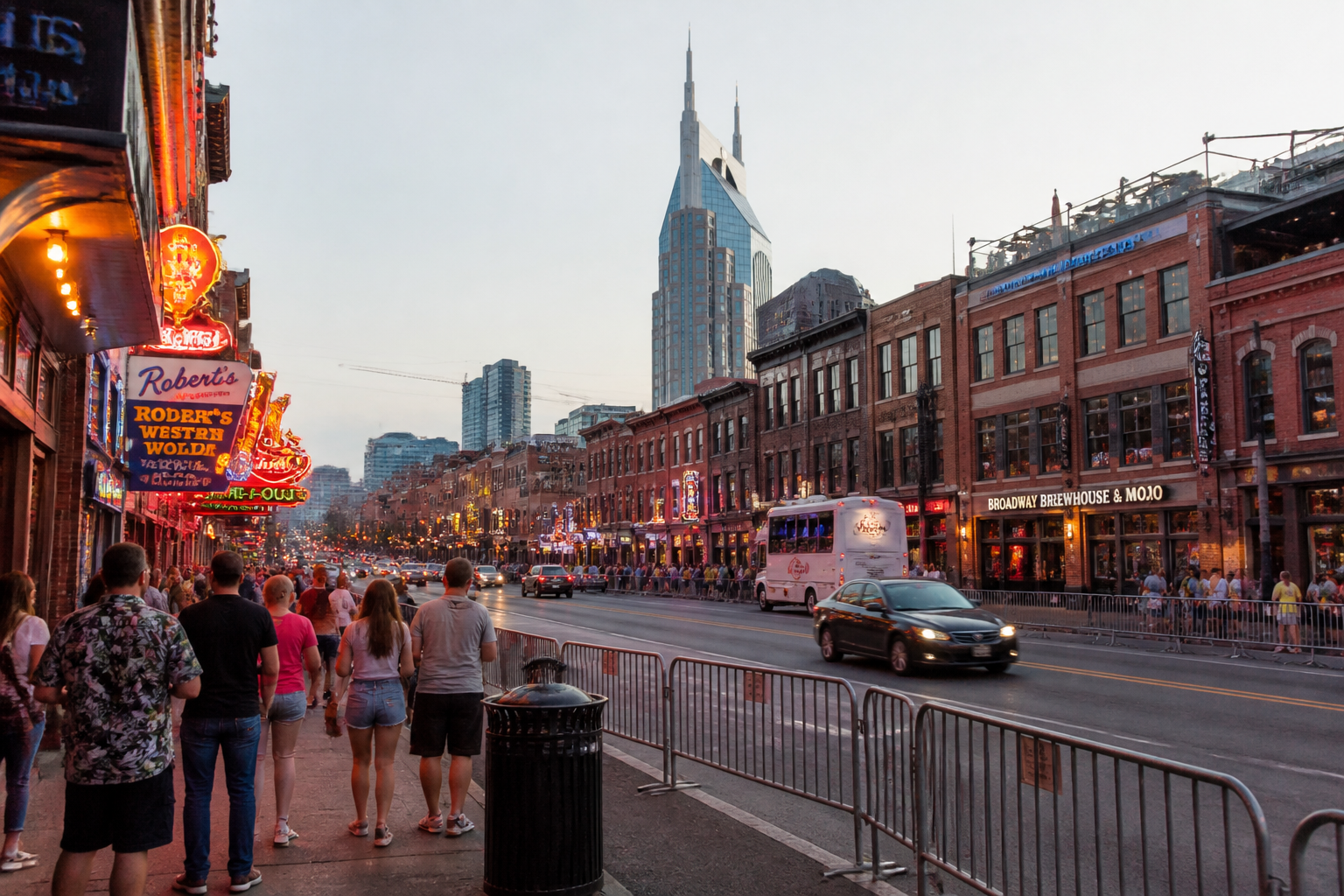
Downtown Nashville is louder, busier, and more polished than it used to be—but it still has plenty of ordinary life tucked between the neon signs. In the same few blocks, you’ll see bachelorette groups in cowboy boots, office workers grabbing lunch, musicians carrying guitars, and residents trying to pick up groceries before heading home.
Broadway gets most of the attention, but downtown is not only a party strip. People live here, work here, walk dogs along the river, wait for buses, shop for essentials, and deal with the everyday frustrations of a busy tourist district: expensive parking, late-night noise, limited full-service grocery options, and streets that can feel very different after the crowds disappear.
Nashville is generally warm and humid in late spring and summer, with sudden thunderstorms and plenty of sunshine between showers. Fall brings cooler evenings and comfortable walking weather, while winter is mild but unpredictable. I especially like visiting in **April–May or October**, when you can walk for hours without melting and outdoor patios are still pleasant.
If you come during a major concert, football weekend, or festival, expect hotel prices to jump. A quieter weekday visit gives you a better feel for the downtown neighborhoods—and a much easier time finding a table.
## Must-See Spots: My Top Picks
### 1. Broadway, but on your own terms
You should see Broadway at least once, even if honky-tonk bars are not your usual thing. The music pours out of open doors all day, and many bars do not charge a cover. I prefer going in the late morning or early afternoon, when the crowds are lighter and the musicians have room to breathe.
Walk a few blocks rather than staying in one bar. Listen for the smaller bands playing upstairs, then leave before the evening crowds become overwhelming. Friday and Saturday nights can feel more like a moving street party than a relaxed music outing.
A small warning from experience: drinks on Broadway are pricey, and the rooftop bars often add extra charges. Check the menu before ordering and keep an eye on your tab.
### 2. The Ryman Auditorium
The Ryman is one of the places that made me slow down. The worn wooden pews and soft light give it a feeling that the newer entertainment venues cannot quite copy. Even if you do not attend a show, the daytime tour is a good way to see the building without committing to a concert ticket.
The acoustics are excellent, and the schedule includes much more than country music. If a favorite artist is playing, book early. For a less expensive experience, look for weekday shows or smaller performances.
### 3. Bicentennial Capitol Mall State Park and the Farmers’ Market
When downtown starts to feel too loud, I walk north toward Bicentennial Mall. The broad paths, fountains, Tennessee flags, and view toward the Capitol make it a welcome change from Broadway’s flashing signs.
The nearby Nashville Farmers’ Market is useful for more than sightseeing. You can grab a reasonably priced breakfast, pick up fruit, browse local food stalls, or find a casual lunch when restaurant prices begin to add up. Residents use it as an everyday stop, although the selection and atmosphere vary by day.
This area also gives you a better sense of the city beyond the tourist core. Bring water in warm weather—there is less shade than you might expect.
### 4. The riverfront and quieter downtown corners
The Cumberland River does not have Nashville’s most dramatic skyline view, but the riverfront is a pleasant place to escape the traffic. Walk near Cumberland Park, cross the pedestrian bridge for city views, or sit for a while and watch the boats.
For a calmer wander, explore the blocks around Printer’s Alley during the day, then continue toward the Capitol area. Some corners are more appealing in daylight than at night. I would not plan to roam aimlessly alone through every downtown side street after midnight; stay on active, well-lit routes and use a rideshare if you feel uncomfortable.
## Practical Travel Advice
### Getting There and Visa Requirements
Nashville International Airport, or **BNA**, is about 8 miles from downtown. It has many direct flights within the United States and a smaller number of international connections.
For entry into the United States:
– Travelers from Visa Waiver Program countries usually need an approved **ESTA** and can visit for up to 90 days for tourism.
– Travelers from other countries generally need a tourist visa.
– Your passport should meet U.S. validity and security requirements.
– Check the official U.S. Department of State and ESTA websites before booking, since rules can change.
From BNA, Uber and Lyft are usually the simplest options. A taxi is also available, and airport rental cars make sense if you plan to explore places outside Nashville. Downtown parking can be expensive, so I would not rent a car just for the city center.
### Where to Stay
**Downtown:** Best if you want music venues, attractions, and nightlife outside your door. It is convenient, but hotels can be expensive and street noise is part of the package.
**SoBro:** Just south of Broadway, SoBro offers a slightly calmer base while keeping you close to the action. It is a good choice for first-time visitors who want to walk most places.
**The Gulch:** Modern hotels, restaurants, coffee shops, and a polished feel. It is convenient but not the most budget-friendly neighborhood.
**Germantown:** A pleasant choice for food, historic streets, and a quieter evening atmosphere. You can walk or take a short rideshare downtown.
**East Nashville:** Better for a local, creative neighborhood feel, with independent bars and restaurants. It is farther from downtown, so plan on rideshares or buses.
For families or light sleepers, I would avoid booking directly above Broadway bars. Read recent reviews carefully—some rooms are much quieter than others even within the same hotel.
### Getting Around
Downtown itself is fairly walkable, especially between Broadway, the Ryman, the Country Music Hall of Fame, the riverfront, and Bicentennial Mall. Comfortable shoes matter more than people expect; sidewalks can be crowded, uneven, or blocked by construction.
Nashville’s **WeGo Public Transit** buses are useful on some routes, but the system is not as simple or frequent as those in larger U.S. cities. Check the current routes and schedules before relying on them late at night.
Uber and Lyft are widely used and practical, particularly after concerts or when traveling between neighborhoods. Electric scooters and bikes may be available, but I avoid them on busy nightlife streets. Nashville drivers can be impatient, and downtown traffic becomes messy during events.
## Real Costs and Local Tips
Nashville uses the **U.S. dollar**. Credit and debit cards are accepted almost everywhere, though I like carrying a little cash for tips and small food stands.
### Typical daily budgets
**Budget traveler: $90–$140 per person, excluding flights**
– Hostel or basic shared accommodation: $35–$70
– Casual meals: $25–$40
– Public transit and occasional rideshare: $10–$25
– One modest attraction or free activities
**Mid-range traveler: $180–$300 per person, excluding flights**
– Hotel room shared between two people: roughly $100–$180 per person
– Restaurant meals and coffee: $60–$100
– Rideshares, attractions, and drinks: $30–$70
Downtown hotel prices can push either budget much higher during big events.
Tipping is standard in the United States. I usually leave **18–22%** at sit-down restaurants, around $1–$2 per drink at a bar, and a few dollars for hotel housekeeping or luggage help. Check your receipt for an included service charge, especially in busy tourist areas.
### A few ways to spend less and feel less like a tourist
– **Eat away from Broadway.** Walk toward Germantown, the Farmers’ Market, or nearby residential areas for better-value meals.
– **Visit bars during the day.** You can often hear excellent live music without paying a cover, and drinks may be cheaper than during the evening rush.
– **Use the market for breakfast or lunch.** It is an easy way to avoid spending $20 or more on every meal.
– **Ask about parking before you arrive.** Some hotels charge surprisingly high daily rates, and event parking prices can change by the hour.
– **Carry water and sunscreen.** Nashville’s heat and humidity can sneak up on you, especially when walking between venues.
– **Give yourself a quiet morning.** Downtown does not really wake up at the same pace as the nightlife. A slow breakfast and a walk by the river can make the whole trip feel more balanced.
Downtown Nashville is not a perfectly convenient residential neighborhood, and residents are right to point out the gaps: groceries can be limited, costs are rising, and entertainment sometimes takes priority over everyday services. Still, that tension is part of what makes the area interesting. Look beyond the party buses and rooftop signs, and you’ll find a working downtown with real people, useful local spots, and enough small corners to make your visit feel personal.
KEYWORDS: Nashville skyline, Broadway Nashville