
# The Philippines Right Now: Manila Energy, Island Escapes, and Honest Travel Tips
The Philippines has been getting better at welcoming travelers, and I could feel the difference on my latest trip. Airports are improving, more destinations have better transport links, and local tourism businesses are becoming easier to find and book. Manila is still wonderfully chaotic, but it now feels more connected to the country’s beaches, mountains, food towns, and heritage cities.
You’ll still need patience—traffic can be intense, ferry schedules may shift, and weather can change plans—but that’s part of traveling here. The reward is huge: kind people, excellent food, warm seas, and landscapes that never seem far from the next turn.
## The Vibe & When to Go
The Philippines feels lively, friendly, and slightly unpredictable in the best way. One minute you’re eating grilled chicken beside a busy road; the next, you’re on a quiet island with nothing but palms, fishing boats, and the sound of water.
The cooler, drier months from **December to February** are usually the most comfortable for city exploring and beach trips. **March to May** can be hot, especially in Manila and the central islands, but the sea is often beautifully clear. The rainy season generally runs from **June to October**, with typhoons possible, particularly in the northern and eastern parts of the country.
I’d plan around **January to April** if you want a good balance of sunshine and manageable heat. Always check the forecast before booking ferries or small domestic flights, since weather can affect island travel quickly.
## Must-See Spots: My Top Picks
### 1. Manila’s old streets and modern neighborhoods
Manila is easier to enjoy when you don’t try to see everything in one day. I like starting in **Intramuros**, where the old stone walls, quiet lanes, and Spanish-era buildings give you a break from the city’s noise. Go early in the morning before the heat builds. San Agustin Church and Casa Manila are popular, but I also enjoyed wandering the less-busy side streets and stopping for a cold drink.
For sunset, head toward **Roxas Boulevard** or **Manila Bay**. The view is not always perfectly polished, but watching the sky turn orange above the water while locals gather along the promenade feels very real.
If you want cafés, restaurants, and a more relaxed evening, stay around **Makati**, **Poblacion**, or **Bonifacio Global City**. These areas feel very different from Intramuros and show Manila’s modern side.
### 2. Palawan: lagoons, limestone, and slow mornings
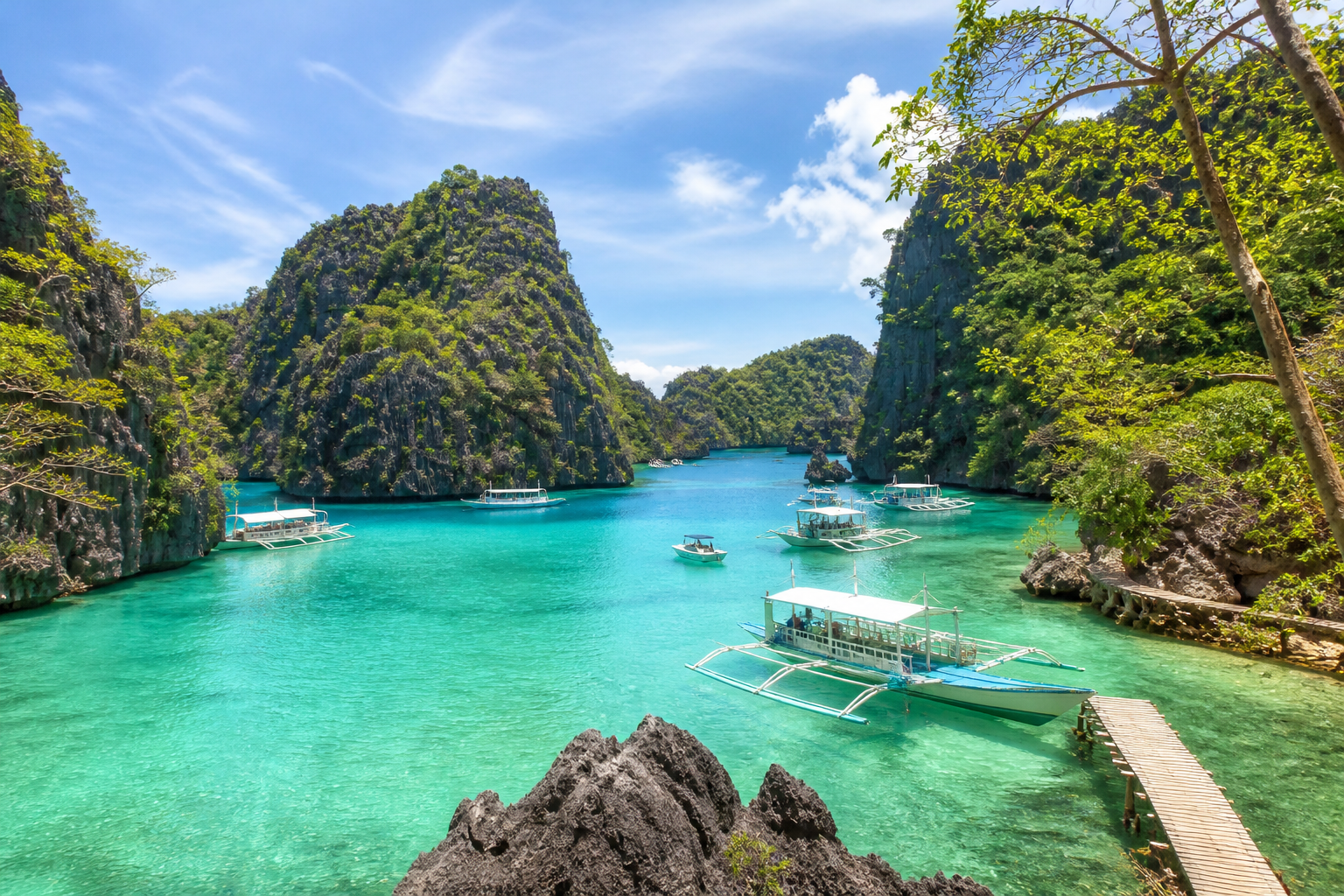
**El Nido** is famous for a reason. The limestone cliffs and bright blue lagoons are genuinely beautiful, especially on an early boat trip before the busiest hours. I preferred joining a small-group tour rather than paying for a private boat, but I asked the operator about departure times and group size first.
**Coron** has a different personality, with dramatic island scenery, clear lakes, and excellent wreck diving. The boat rides can be bumpy, so bring a dry bag and take motion-sickness medicine if you need it.
For a quieter experience, look at **Port Barton**. It has fewer restaurants and less nightlife, but that is exactly the appeal. I spent one afternoon there doing very little besides swimming, reading, and watching the boats return before dark.
### 3. Bohol beyond the Chocolate Hills
The **Chocolate Hills** are worth seeing, but Bohol has more to offer than the famous viewpoint. I enjoyed renting a scooter with a local guide and stopping at small villages, roadside fruit stalls, and the quiet beaches around **Panglao**.
The **Loboc River** is another pleasant stop. Instead of rushing through a packaged lunch cruise, consider visiting the river area early and asking about smaller local activities. The **tarsier sanctuary** is also worth visiting, provided you choose a responsible center where the animals are not handled or disturbed.
Bohol is a good choice for first-time visitors because it combines beaches, countryside, wildlife, and straightforward accommodation in one relatively manageable trip.
### 4. Siargao for surf, cafés, and island life
**Siargao** has changed quickly, but it still has a warm, easygoing feel. The main town is full of cafés, surf shops, small restaurants, and scooter rentals. Even if you don’t surf, you can take a beginner lesson at **Cloud 9**, visit the mangroves, or book an island-hopping trip to Naked Island, Daku Island, and Guyam Island.
I liked Siargao most when I left a little space in the schedule. The best moments were often simple ones: breakfast after a rainy morning, a motorbike ride along palm-lined roads, or dinner at a small local restaurant rather than a highly rated place packed with tourists.
## Practical Travel Advice
### Getting There and Visa
Most international travelers arrive through **Ninoy Aquino International Airport in Manila**, though Cebu and Clark also receive international flights. Manila has several terminals, so check your terminal carefully and allow extra time for transfers.
Visa rules depend on your passport. Many visitors, including citizens of the United States, Canada, the United Kingdom, Australia, and much of Europe, can enter visa-free for up to **30 days**, usually with:
– A passport valid for at least six months
– An onward or return ticket
– A completed **eTravel declaration**
– Proof of accommodation, if requested
Rules can change, so check the Philippine Bureau of Immigration or your nearest Philippine embassy before flying. If you plan to stay longer, extensions are commonly available, but arrange them properly rather than assuming you can simply remain in the country.
For flights, compare Manila, Cebu, and Clark instead of searching only one airport. Domestic flights are often inexpensive when booked early, but luggage fees can add up. Leave a generous buffer if you have an international connection after a domestic flight.
### Where to Stay
– **Intramuros or Ermita:** Best for history, museums, and easy access to Manila’s older landmarks.
– **Makati:** A convenient base with restaurants, malls, cafés, and plenty of hotels in different price ranges.
– **BGC:** Cleaner, modern, and comfortable, though it can feel less traditionally Manila.
– **Poblacion:** Good for nightlife, bars, and independent restaurants. It can be noisy at night.
– **Panglao:** The practical choice for Bohol beach stays and tours.
– **El Nido town:** Convenient for boat trips, but busy and sometimes loud.
– **Port Barton:** Better for a slower, less commercial island break.
– **General Luna in Siargao:** The easiest place for cafés, surf lessons, and island tours.
On popular islands, I’d book the first few nights ahead of time, then decide whether to extend. This gives you flexibility without arriving exhausted and searching for a room in the heat.
### Getting Around
Manila is not very walkable over long distances because of traffic, heat, and wide roads. Use **Grab** for cars and motorbike rides where available. It is usually easier and safer than negotiating fares on the street.
Jeepneys are cheap and part of everyday life, but routes can be confusing if you’re new to the city. Ask your accommodation staff before trying one. Buses and modern trains can save time, although the MRT and LRT may be crowded during rush hour.
On islands, you’ll mainly use:
– Tricycles for short rides
– Motorbike rentals for independent exploring
– Vans for airport transfers
– Ferries between nearby islands
– Domestic flights for longer distances
Always ask about the full price before taking a tricycle. On many islands, the quoted fare is per vehicle rather than per person, but this is not always clear.
## Real Costs and Local Tips
The Philippine peso is written as **PHP** or **₱**. Prices vary widely between Manila, major beach destinations, and smaller towns.
### Approximate daily budgets
**Budget traveler: ₱1,800–₱3,000 per day**
– Hostel or simple guesthouse
– Local meals and street food
– Public transport or shared tricycles
– Occasional low-cost activities
**Mid-range traveler: ₱4,500–₱8,000 per day**
– Comfortable hotel or private room
– Restaurant meals mixed with local food
– Grab rides and occasional tours
– Island-hopping or entrance fees
These figures do not always include long-distance flights, and island tours can raise your daily spending quickly.
Tipping is not strictly required, but it is appreciated for good service. In restaurants, check whether a service charge has already been added. For guides, drivers, and hotel staff, a small tip is a kind gesture rather than an obligation. Round up taxi or tricycle fares when the service is good.
### A few money-saving tricks
– **Eat where office workers and locals eat.** Small carinderias often serve filling rice meals for much less than tourist restaurants.
– **Bring cash outside major cities.** ATMs can be unreliable on smaller islands, and some businesses add card fees.
– **Book boats locally, but compare first.** Walk around the port or town and ask two or three operators about departure time, group size, and what is included.
– **Avoid packing every island into one trip.** Transfers cost money and eat up entire days. Two destinations done well usually feel better than five rushed stops.
– **Carry a refillable water bottle.** Many hotels and cafés have refill stations, which saves money and reduces plastic waste.
– **Use Grab airport transfers when available.** It makes the first arrival less stressful and gives you a recorded fare.
The Philippines is not a perfectly smooth destination, and that is part of the honest picture. Roads can be slow, schedules can move, and popular places may be more developed than you expect. Still, the country has an unusual ability to make small moments memorable: a shared table at a roadside eatery, a boatman pointing out dolphins, or a stranger helping you find the right jeepney.
That warmth, along with better connections and growing tourism services, is why the Philippines feels like one of Asia’s most promising destinations right now.
KEYWORDS: Philippines beaches, Manila skyline