
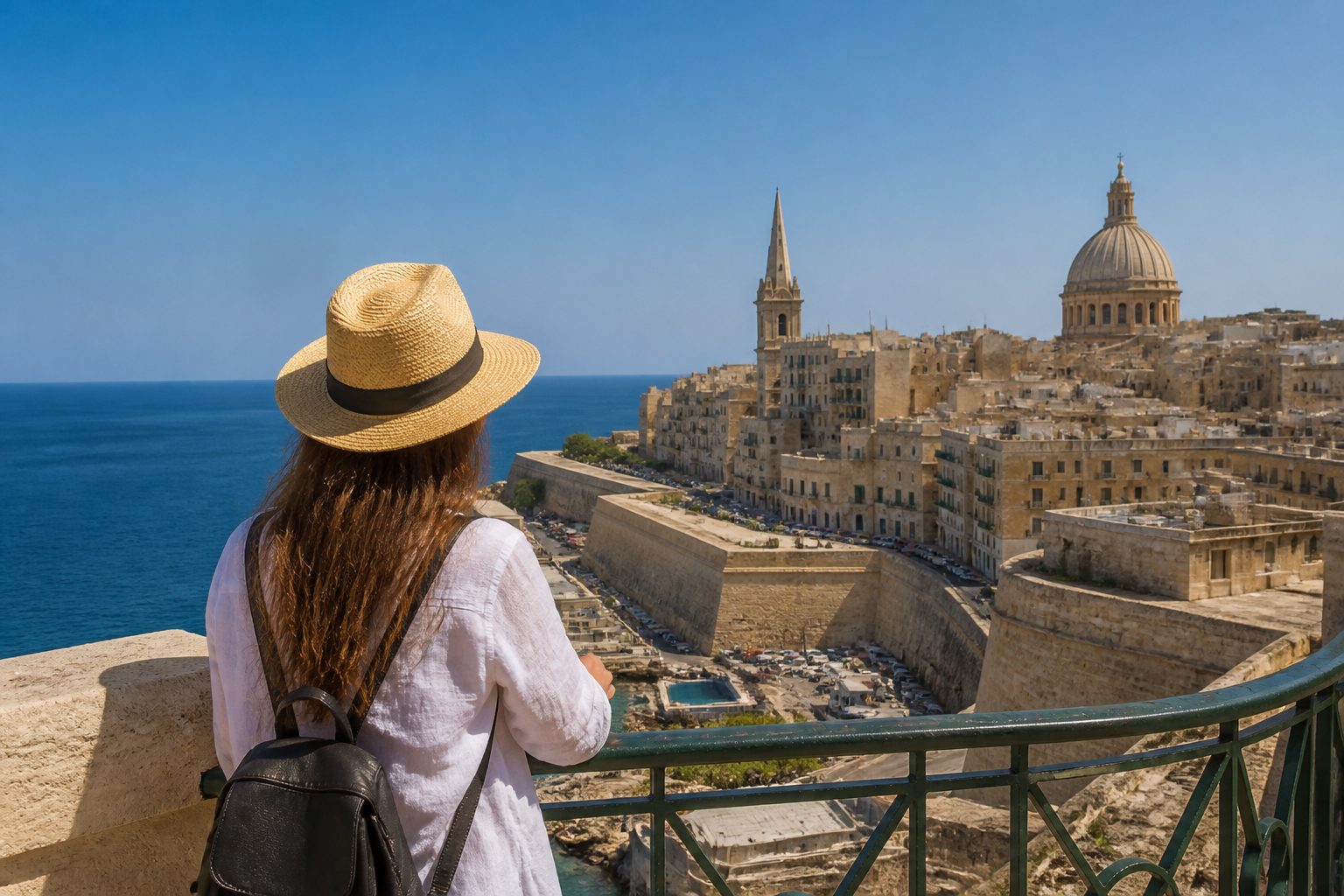
# Malta Beyond the Postcard: My Favorite Streets, Swim Spots, and Honest Travel Tips
Malta has a way of surprising you. You arrive expecting sunny beaches and old stone buildings, then find yourself eating pastizzi in a quiet village square, swimming from a rocky ledge, or watching fishing boats return to Marsaxlokk as the light turns honey-colored.
That variety is part of why VisitMalta has been putting more effort into helping North American travel advisors understand how to sell the island well through new AI-powered training. Malta is not just a quick stop on a Mediterranean cruise. It rewards travelers who stay a few days, slow down, and explore beyond Valletta.
## The Vibe & When to Go
Malta feels compact, lively, and wonderfully sun-worn. The limestone buildings glow in the afternoon, church bells mark the day, and the sea is never far away. English is widely spoken, which makes things easy for first-time visitors, but you still get the pleasure of hearing Maltese in cafés, markets, and on the bus.
Late spring is one of my favorite times to visit. Days are usually warm and bright, but not yet fiercely hot, with temperatures often in the low to mid-20s Celsius. The sea can still feel brisk, though that never stopped us from swimming. September and October are also excellent: the water is warmer, the crowds thin out, and evenings remain pleasant.
July and August bring the strongest heat and busiest beaches. If you visit then, plan sightseeing early in the morning and keep the middle of the day for a long lunch, a swim, or a siesta.
## Must-See Spots: My Top Picks
### 1. Valletta Before the Cruise Crowds
Valletta is small enough to explore on foot, but it has enough corners to keep revealing itself. I like starting near the City Gate and wandering downhill through the steep streets without following a strict route.
St. John’s Co-Cathedral is the major stop, especially for Caravaggio’s dramatic painting, but don’t spend the whole day indoors. Walk toward the Upper Barrakka Gardens for harbor views, then continue through the quieter streets around Strait Street and Old Bakery Street.
For a calmer view, take the short ferry across to the Three Cities. The ride gives you a beautiful look back at Valletta, and the waterfront in Birgu is much quieter than the capital’s busiest lanes.
**My tip:** Arrive in Valletta before 9 a.m. if you want peaceful streets and cooler walking weather. Cruise passengers usually arrive later in the morning.
### 2. Mdina at Sunset
Mdina, the old capital, feels almost dreamlike after the day-trippers leave. Its honey-colored walls, narrow lanes, and quiet courtyards make it one of the most atmospheric places in Malta.
I enjoyed visiting in the late afternoon, when the stone began to change color and the views across the island became hazy and soft. Walk along the bastions, peek into the side streets, and stop for a coffee or a small glass of wine rather than rushing through in half an hour.
Nearby Rabat is less polished and more lived-in. It is a good place for a simple lunch, especially if you want to try local snacks away from the main tourist route.
### 3. Gozo for a Slower Day
Gozo feels greener, quieter, and a little more relaxed than Malta’s main island. The ferry from Ċirkewwa takes around 25 minutes, and the crossing itself is easy.
Victoria, also called Rabat, is the island’s main town. Climb to the Citadel for wide views, then spend the rest of the day exploring villages, small bays, and countryside roads. Ramla Bay is one of the prettiest beaches, with distinctive reddish sand. For swimming and sunsets, Wied il-Għasri and Xlendi are both memorable, though Xlendi can get busy in summer.
You can take buses around Gozo, but renting a car or hiring a driver makes the day much more flexible. I would avoid trying to see every corner in one day. Choose two or three areas and leave time for a long lunch.
### 4. The Blue Grotto and Marsaxlokk
The Blue Grotto is best visited early, when the water is usually calmer and the sunlight brings out the deep blue color beneath the cliffs. Boat trips depend on sea conditions, so keep your plans flexible.
Afterward, head to Marsaxlokk, a fishing village known for its colorful boats and Sunday market. The waterfront restaurants are pleasant, but prices can rise right beside the harbor. Walk a few streets inland before choosing where to eat.
For a quieter coastal experience, consider Għar Lapsi or the Dingli Cliffs. The cliffs are not a beach stop, but the open views and strong sea air make them a lovely change from Malta’s busy urban areas.
## Practical Travel Advice
### Getting There & Visa
Malta International Airport is the country’s only airport. Most travelers from North America will connect through a major European hub such as London, Frankfurt, Paris, Rome, Amsterdam, or Istanbul. Booking one ticket for the full journey is safer than piecing together separate flights, especially if you are checking luggage.
Malta is part of the Schengen Area:
– **U.S. and Canadian passport holders** can generally visit visa-free for up to 90 days within a 180-day period.
– Your passport should normally be valid for at least three months beyond your planned departure from the Schengen Area and issued within the previous 10 years.
– Travelers from countries requiring a Schengen visa should apply before departure through the proper consulate or visa center.
– The ETIAS travel authorization is expected to apply to visa-exempt travelers once introduced, so check the official EU website before booking.
Requirements can change, so I always check Malta’s government travel information and my airline’s entry page before flying.
### Where to Stay
**Valletta:** Best for history, restaurants, and a walkable city break. Hotels can be expensive, and the streets are hilly, but the atmosphere is hard to beat.
**Sliema:** A practical choice with plenty of restaurants, shops, waterfront walks, and ferry connections to Valletta. It feels more modern and busy.
**St. Julian’s:** Good for nightlife and a wide range of hotels. Paceville is loud, so choose carefully if you want quiet evenings.
**Mellieħa:** A better base for beaches, Gozo ferry access, and a slower pace. It is farther from Valletta but more relaxed.
**Gozo:** Ideal for couples, hikers, and anyone who wants peaceful evenings. A farmhouse stay with a pool can be a wonderful change from the busier main island.
### Getting Around
Malta is small, but traffic can make journeys much slower than they look on a map.
– **Walking:** Excellent in Valletta, Mdina, Birgu, and parts of Sliema. Bring comfortable shoes; the pavement can be uneven and the hills are real.
– **Buses:** The public bus network covers most of the island and Gozo. It is inexpensive, though buses can be crowded and delayed during summer.
– **Ferries:** The Valletta ferries to Sliema and the Three Cities are quick, scenic, and often more pleasant than taking a road route.
– **Rides:** Bolt and eCabs are widely used. I found them especially useful when buses were full or late.
– **Car rental:** Handy for Gozo and remote beaches, but driving can be stressful in dense towns. Malta drives on the left, and parking is not always easy.
## Real Costs & Local Tips
Malta uses the **euro (€)**. Prices vary greatly depending on where you stay and whether you eat beside a major attraction.
### Typical daily budgets per person
**Budget traveler: €55–€85**
– Hostel or simple guesthouse: €25–€45
– Casual meals, bakery snacks, and supermarket food: €20–€30
– Buses and occasional ferry: €5–€10
– Free sights and low-cost attractions
**Mid-range traveler: €120–€190**
– Comfortable hotel or private apartment: €75–€120
– Restaurant meals and drinks: €35–€55
– Local transport, taxis, and entrance fees: €15–€30
A sit-down dinner in a tourist-heavy area can easily cost €25–€40 per person, while a filled ftira, pastizzi, or simple local lunch may cost only a few euros.
Tipping is not compulsory, but rounding up or leaving around 5–10% for good service is appreciated. Check whether a service charge has already been added.
### A Few Tricks That Saved Me Money
– **Use the ferry instead of a taxi between Valletta and Sliema or the Three Cities.** It is cheaper, faster during traffic, and gives you a great view.
– **Buy snacks from bakeries.** Pastizzi, qassatat, and ftira make excellent inexpensive breakfasts or lunches.
– **Do not judge restaurants by the waterfront alone.** Walk a few minutes inland, compare menus, and look for places busy with local residents.
– **Carry water and sun protection.** Malta’s streets offer less shade than you might expect, and buying drinks repeatedly at attractions adds up.
– **Book popular boat trips early in the day.** The sea is often calmer, and you may avoid both the heat and the largest groups.
– **Leave room for delays.** A journey that looks like 20 minutes on a map can take much longer in summer traffic.
Malta is easy to underestimate. It is not only a beach destination, not only a historic capital, and not only a convenient cruise stop. Give it several days, explore at a slower pace, and you will find a place with excellent food, dramatic coastlines, deep history, and plenty of ordinary moments that stay with you long after the trip.
KEYWORDS: Malta coastline