
# Exploring Mahabharata Anubhav Kendra in Kurukshetra: Mythology, Quiet Corners, and Practical Travel Tips
## The Vibe & When to Go
Kurukshetra feels different from most North Indian destinations. It is not a place you rush through with a checklist. The town has a devotional, reflective mood, especially around its ancient ponds, temples, and the Jyotisar site where Lord Krishna is believed to have shared the Bhagavad Gita with Arjuna.
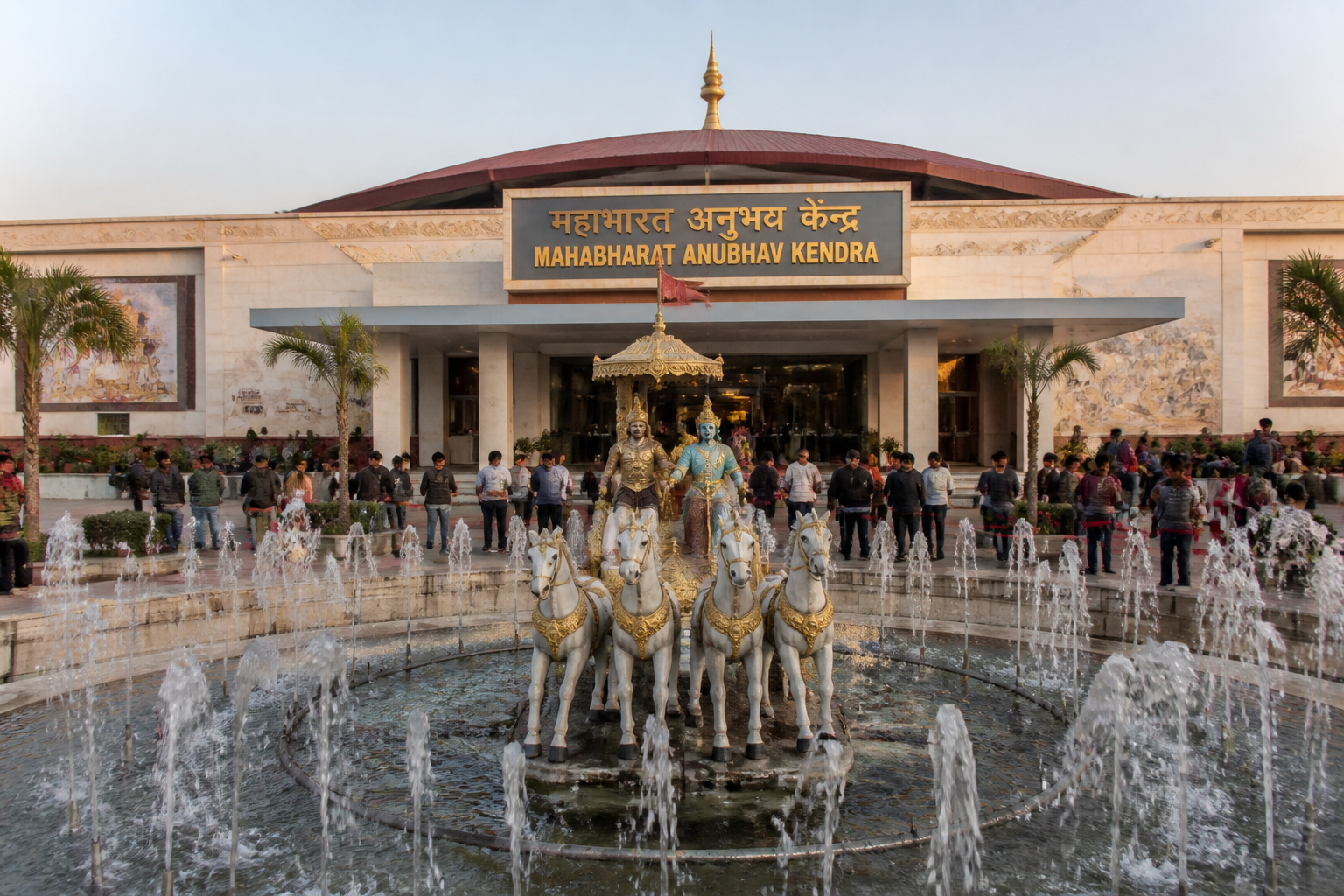
The new **Mahabharata Anubhav Kendra** at Jyotisar is expected to add a more modern, immersive side to that experience. Haryana Chief Minister Nayab Singh Saini has spoken about developing it into a major tourist attraction, and the wider area is being planned as a stronger cultural and pilgrimage destination. Depending on when you visit, some parts may still be developing, so check the latest opening hours and visitor arrangements before setting out.
The best time to visit is from **October to March**, when the days are pleasant enough for walking between the main sights. December and January can be chilly in the mornings, while April to June is often very hot. The monsoon brings greener surroundings, but sudden rain can make outdoor sightseeing less comfortable.
I would plan at least one full day for Kurukshetra, or two days if you want to see the museums, temples, and nearby holy sites without hurrying.
## Must-See Spots: My Top Picks
### 1. Mahabharata Anubhav Kendra, Jyotisar
This is the main reason many travelers will soon be adding Kurukshetra to their itinerary. The center is being developed to present the Mahabharata through modern displays, visual storytelling, interactive exhibits, and cultural interpretation rather than relying only on traditional temple visits.
What I like about the idea is that it can make the epic easier to understand for visitors who did not grow up with the story. Instead of simply hearing that Kurukshetra was the battlefield, you get more context about the characters, places, and moral questions behind the war.
Give yourself time here rather than treating it as a quick photo stop. If the immersive shows are operating during your visit, ask about show timings first; many attractions like this run on fixed schedules.
### 2. Jyotisar and the Sacred Banyan Tree
The Kendra is close to **Jyotisar**, one of the most important places associated with the Bhagavad Gita. The site is marked by an old banyan tree, and local tradition identifies this area as the place where Krishna gave the Gita’s teachings to Arjuna.
The atmosphere changes in the early morning and evening. During the middle of the day, tour groups can make it busy, but at quieter times you can sit for a few minutes and take in the surroundings. There is also a large Krishna-Arjuna chariot installation and a light-and-sound presentation at certain times.
Dress modestly and keep the visit respectful. This is an active religious site, not just a historical monument.
### 3. Brahma Sarovar
Brahma Sarovar is one of those places that is best experienced slowly. The broad water tank, long pathways, temples, and rows of lamps create a peaceful setting, especially around sunset.
I enjoyed walking along the edge and watching families, pilgrims, and local visitors go about their evening routines. During festival periods, the area can become much livelier, with religious events and large crowds.
Bring water, wear comfortable shoes, and avoid visiting only in the afternoon heat. The morning and evening are much more pleasant.
### 4. Kurukshetra Panorama and Science Centre
For a clearer visual explanation of the Mahabharata battlefield, this museum is a useful companion to Jyotisar. Its panoramic presentation depicts scenes from the epic, while the science section gives the visit a more family-friendly angle.
It is particularly good if you are traveling with children or with someone who prefers museums to temples. The exhibits may feel a little old-fashioned compared with a new immersive center, but they still help connect the stories with the landscape around Kurukshetra.
If you have extra time, also visit **Sthaneshwar Mahadev Temple**, associated with the Pandavas and Lord Shiva. It is a smaller, more intimate stop than the major attractions.
## Practical Travel Advice
### Getting There and Visa
Kurukshetra is in Haryana, around **160 kilometres from Delhi** and roughly **100 kilometres from Chandigarh**, depending on your route.
– **By train:** Kurukshetra Junction has regular connections with Delhi, Chandigarh, Amritsar, and other northern cities. This is usually the easiest option.
– **By road from Delhi:** A taxi or bus takes about 3.5 to 5 hours, depending on traffic. The route via NH44 is straightforward.
– **By air:** Delhi’s Indira Gandhi International Airport offers the widest choice of flights. Chandigarh Airport can also work if you find a convenient connection.
– **Local arrival:** From Kurukshetra station, auto-rickshaws and app-based cabs may be available, though availability can vary.
International visitors generally need a valid passport and an Indian visa. Many nationalities can apply for an **Indian e-Visa online**, but eligibility, permitted airports, and visa rules change, so check the official Indian government visa website before booking. Indian citizens and travelers already legally in India do not need a separate entry permit for Kurukshetra.
The Mahabharata Anubhav Kendra may have changing visitor hours while development work continues. Confirm timings locally or through official Haryana tourism channels before traveling.
### Where to Stay
**Thanesar and central Kurukshetra** are the most convenient areas for first-time visitors. You will be closer to the main temples, Brahma Sarovar, restaurants, and transport.
– **Budget travelers:** Choose a simple guesthouse or lodge near Kurukshetra Junction or Thanesar.
– **Families:** Look for a mid-range hotel with parking and an on-site restaurant.
– **Pilgrims:** Dharamshalas near the major religious sites can be affordable, though facilities are basic and rules may be stricter.
– **Quieter stay:** Hotels around Pipli or on the outskirts can offer more space, but you will need a taxi or auto-rickshaw for sightseeing.
I would avoid booking only by the lowest online price. Check recent reviews for cleanliness, hot water, parking, and whether the hotel accepts international guests if that applies to you.
### Getting Around
Kurukshetra is spread out, so walking alone will not cover the main attractions.
– Auto-rickshaws are useful for short rides, but agree on the fare before getting in.
– E-rickshaws can be inexpensive around the town center and railway station.
– App-based taxis may be available, but do not depend on them late at night or around the more remote sites.
– Hiring a car and driver for half a day is practical if you want to visit Jyotisar, Brahma Sarovar, the museums, and Sthaneshwar Mahadev without negotiating every ride.
A good sightseeing order is **Brahma Sarovar in the morning, the museums around midday, and Jyotisar in the late afternoon**. You avoid the harshest heat and get a better chance of seeing the area in a calmer light.
## Real Costs and Local Tips
The local currency is the **Indian rupee (INR)**. Cash is still useful for autos, small food stalls, temple donations, and some modest guesthouses, although UPI and card payments are common in hotels and larger shops.
### Approximate daily budgets
**Budget trip: ₹1,500–₹2,500 per person**
– Basic room or shared accommodation: ₹700–₹1,300
– Simple meals and tea: ₹300–₹600
– Local transport: ₹300–₹500
– Small entry fees and snacks: ₹100–₹300
**Mid-range trip: ₹3,500–₹6,500 per person**
– Comfortable hotel: ₹2,000–₹4,000 per room, depending on occupancy
– Meals at decent restaurants: ₹700–₹1,200
– Local taxi or hired auto: ₹600–₹1,200
– Museums and other visits: usually a modest extra cost
Prices can rise during religious festivals, public holidays, and large events. Confirm the current ticket prices at the venue, especially while the new Kendra is being completed or upgraded.
### A few things that made my visits easier
– **Start early.** The sun becomes strong quickly, and religious sites are more peaceful before tour groups arrive.
– **Carry small notes and coins.** Auto fares, shoe storage, bottled water, and small offerings are easier to pay for in cash.
– **Do not overpay for a “special guide.”** Ask the ticket counter or hotel for the official guide rate before agreeing to anything.
– **Eat simply near busy attractions.** Fresh parathas, thali meals, samosas, and lassi are usually better value than packaged food sold right beside the sightseeing gates.
– **Keep festival dates in mind.** Events such as the International Gita Mahotsav can bring a wonderful atmosphere, but rooms and transport become harder to find.
– **Be careful with photography.** Ask before photographing worshippers, priests, or ceremonies, and follow signs at temple and museum sites.
Kurukshetra is not trying to be a fast-paced city break. Its appeal comes from the combination of ancient stories, living pilgrimage traditions, museums, and the quiet scale of Haryana’s landscape. With the Mahabharata Anubhav Kendra taking shape, Jyotisar may soon become the place that introduces a much wider audience to the history and ideas behind the Mahabharata. For now, the best way to visit is with patience, comfortable shoes, and enough time to look beyond the main photo stops.
KEYWORDS: Kurukshetra India