
# Riding Vietnam’s Luxury Train: Heritage Stops, Great Food, and Practical Travel Tips
## The Vibe & When to Go
Central Vietnam has a slower, more thoughtful rhythm than Hanoi or Ho Chi Minh City. The old imperial city of Hue feels quiet and ceremonial, Da Nang is bright and easygoing, Hoi An glows with lanterns after sunset, and Quy Nhon still feels pleasantly under-visited compared with the country’s famous beach towns.
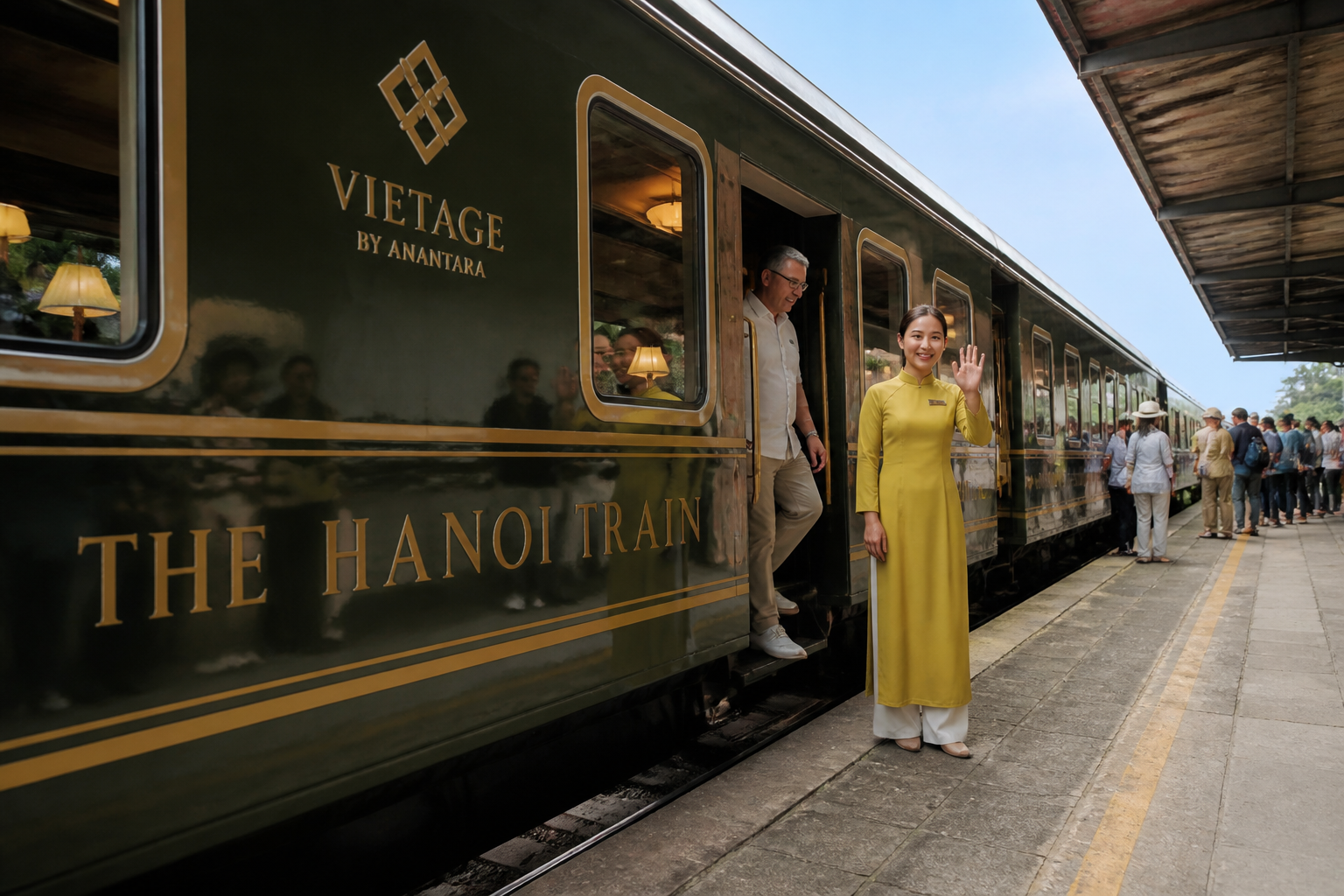
The luxury train experience I’m talking about is **The Vietage by Anantara**, a beautifully restored carriage that runs between **Da Nang and Quy Nhon**. It turns what could be a long rail journey into a relaxed half-day experience, with comfortable seats, a proper meal, drinks, and even massage treatments on board. It is not a private train carrying you from one hotel door to another, but it is a memorable way to connect central Vietnam’s coast and heritage-rich stops.
For the most comfortable trip, I’d choose **February to April**. Days are generally warm without being brutally hot, and the skies are often clear. May to August can be sunny and humid, while September through January brings more rain to Hue and central Vietnam. October and November can be especially wet, with occasional storms affecting roads, flights, and train schedules.
## Must-See Spots: My Top Picks
### 1. Hue’s Imperial City
Hue is best explored slowly. I like arriving early at the Imperial City, before the heat settles over the stone courtyards and tour groups fill the main gates. The complex is grand, but the small details are what stayed with me: faded dragon motifs, moss on old walls, and incense smoke drifting through quiet temple corners.
Give yourself at least half a day here. Afterward, take a riverside walk or visit one of the royal tombs outside town. **Tu Duc Tomb** is leafy and atmospheric, while **Khai Dinh Tomb** is more dramatic, with elaborate mosaics and a darker, theatrical style.
For lunch, look for Hue specialties such as **bun bo Hue**, a spicy beef noodle soup, or small steamed rice cakes called **banh beo**. They are inexpensive, filling, and far more satisfying than eating only in hotel restaurants.
### 2. Da Nang’s Coast and Marble Mountains
Da Nang is an easy place to pause for a few nights. The long beach is pleasant at sunrise, when locals exercise and fishermen bring in their catch. The city itself is modern and practical, with good coffee, seafood restaurants, and broad roads that make getting around less stressful than in Hanoi.
The **Marble Mountains** are a short ride away. Wear proper shoes—the stone steps can be slippery—and bring water. The caves and pagodas are beautiful, but the midday heat can make the climb uncomfortable. I prefer going early, then stopping for a cold drink in a small neighborhood café afterward.
If you have time, drive over the **Hai Van Pass** toward Hue instead of taking the tunnel. The mountain road offers wide ocean views and plenty of places to stop for photographs. A private car or motorbike with an experienced driver is the safest choice, especially if you are not used to Vietnamese traffic.
### 3. Hoi An After Dark
Hoi An is about 30 minutes from Da Nang by car, depending on traffic. The old town is charming, but it is also busy, so I enjoy it most in the early morning and again after dinner, when the lanterns come on.
Walk beyond the busiest riverfront streets. You will find quieter lanes, small family cafés, old wooden houses, and tailors working behind open doors. A boat ride can be pleasant, though I would skip any operator who pressures you into a package with several add-ons.
Try **cao lau**, Hoi An’s chewy noodle dish, and **white rose dumplings**. For a calmer evening, stay outside the old town near the rice fields or An Bang Beach, then take a taxi in for dinner.
### 4. Quy Nhon’s Quiet Coast
Quy Nhon is the place I would choose when I wanted a few peaceful beach days without the crowds of Da Nang or Nha Trang. The waterfront is broad and relaxed, and seafood restaurants are plentiful.
Spend a morning at **Ky Co Beach** or visit the **Cham towers at Banh It**, which sit on a hill with wide countryside views. The towers are less crowded than the better-known sites around My Son, and the setting feels wonderfully open.
The journey from Da Nang to Quy Nhon on The Vietage is part of the attraction. The carriage has a small number of seats, polished wood details, large windows, and a calm dining atmosphere. Book well ahead, especially during holidays. Check the current departure days and boarding instructions directly with the operator, since schedules can change.
## Practical Travel Advice
### Getting There and Visa
Most international travelers fly into **Da Nang International Airport**, which is the easiest arrival point for Hue, Hoi An, and the luxury train route. You can also begin in Hanoi or Ho Chi Minh City and travel south or north by train and domestic flight.
Vietnam offers electronic visas to citizens of all countries and territories, generally allowing stays of up to **90 days**, with single-entry and multiple-entry options available. Apply through the official Vietnamese immigration website rather than a random visa agency. Your passport should usually have at least six months’ validity remaining and blank pages for entry stamps.
Before flying, check:
– Your name and passport number on the e-visa
– The exact entry airport
– Whether you selected single or multiple entry
– Your onward travel and hotel details
Da Nang has direct flights from several Asian cities, while connections through Hanoi, Ho Chi Minh City, Bangkok, Singapore, or Kuala Lumpur are common.
### Where to Stay
Choose your base according to the mood you want:
– **Hue:** Stay near the Perfume River or within easy reach of the Imperial City. This is best for history, local food, and a quieter evening.
– **Da Nang:** My Khe Beach is convenient for the sea, restaurants, and airport access. The city center is better if you prefer cafés, markets, and a more local feel.
– **Hoi An:** Stay just outside the old town for more peace and better-value rooms. An Bang Beach suits travelers who want a slower, beach-focused stay.
– **Quy Nhon:** The waterfront area is convenient for restaurants and morning walks. Choose a resort farther out if you want a proper beach escape.
For The Vietage, Da Nang is usually the simplest place to board. Ask your hotel to confirm the station transfer and departure time the day before.
### Getting Around
In Da Nang and Quy Nhon, walking works well around the beach and central areas. Hue and Hoi An are also easy to explore on foot, though the heat can make short distances feel longer.
For longer rides, use **Grab** for cars and motorbikes. Prices are shown before you confirm, which helps avoid awkward fare negotiations. Traditional taxis are also common; Mai Linh and Vinasun are usually reliable choices where available.
A few practical points:
– Use a private car for Hue’s royal tombs and the Hai Van Pass.
– Avoid renting a motorbike unless you have the correct license and real road experience.
– Hoi An’s old town restricts vehicle access at certain times, so expect to walk the final stretch.
– Domestic train stations can be chaotic, so arrive early and keep your ticket and passport easy to reach.
## Real Costs and Local Tips
Vietnam can still be very affordable, though luxury rail travel and high-end beach resorts change the total quickly. These are comfortable estimates per person, excluding international flights and The Vietage ticket.
### Daily budgets
**Budget traveler: around 700,000–1,200,000 VND per day**
– Simple guesthouse or hostel
– Local breakfasts and street food
– Buses, Grab rides, and occasional entrance fees
– Basic activities
**Mid-range traveler: around 1,800,000–3,500,000 VND per day**
– Comfortable hotel or boutique stay
– Restaurant meals and good coffee
– Private car rides shared with a companion
– Museums, sightseeing, and a few nicer experiences
The Vietage is a special splurge rather than a budget transport option. Prices depend on the route, date, and booking conditions, so check the current rate before building it into your plans.
Vietnamese currency is the **dong (VND)**. Cards are accepted in hotels, larger restaurants, and modern cafés, but small eateries and taxis may require cash. Keep smaller notes for snacks, entrance fees, and short rides.
Tipping is not compulsory. In a nicer restaurant, rounding up or leaving around 5–10 percent for genuinely good service is appreciated. A small tip for a helpful driver or guide is also kind, but nobody should pressure you into a large payment.
### A few things that saved me money
– **Eat where local office workers eat.** Busy lunchtime restaurants usually have quick service, fresh food, and fair prices.
– **Book trains and airport transfers through official channels or your hotel.** Unofficial middlemen may add unnecessary fees.
– **Carry small cash notes.** It avoids confusion at markets and makes short taxi or café payments easier.
– **Buy bottled water from supermarkets, not hotel minibars.** Convenience stores are also fine, but prices at major sights are noticeably higher.
– **Ask for the price before ordering seafood.** At some restaurants, fish and shellfish are priced by weight, and the final bill can surprise you.
– **Travel with a light jacket or scarf on trains.** Air-conditioning can be strong even when it is hot outside.
The luxury train is not the cheapest way to cross central Vietnam, but it offers something a regular transfer cannot: time to look out of the window, eat well, and arrive without feeling worn out. Pair it with Hue’s history, Da Nang’s easy beaches, Hoi An’s lantern-lit streets, and Quy Nhon’s quieter coast, and you have a very satisfying route through one of Vietnam’s most rewarding regions.
KEYWORDS: Vietnam luxury train, central Vietnam heritage