
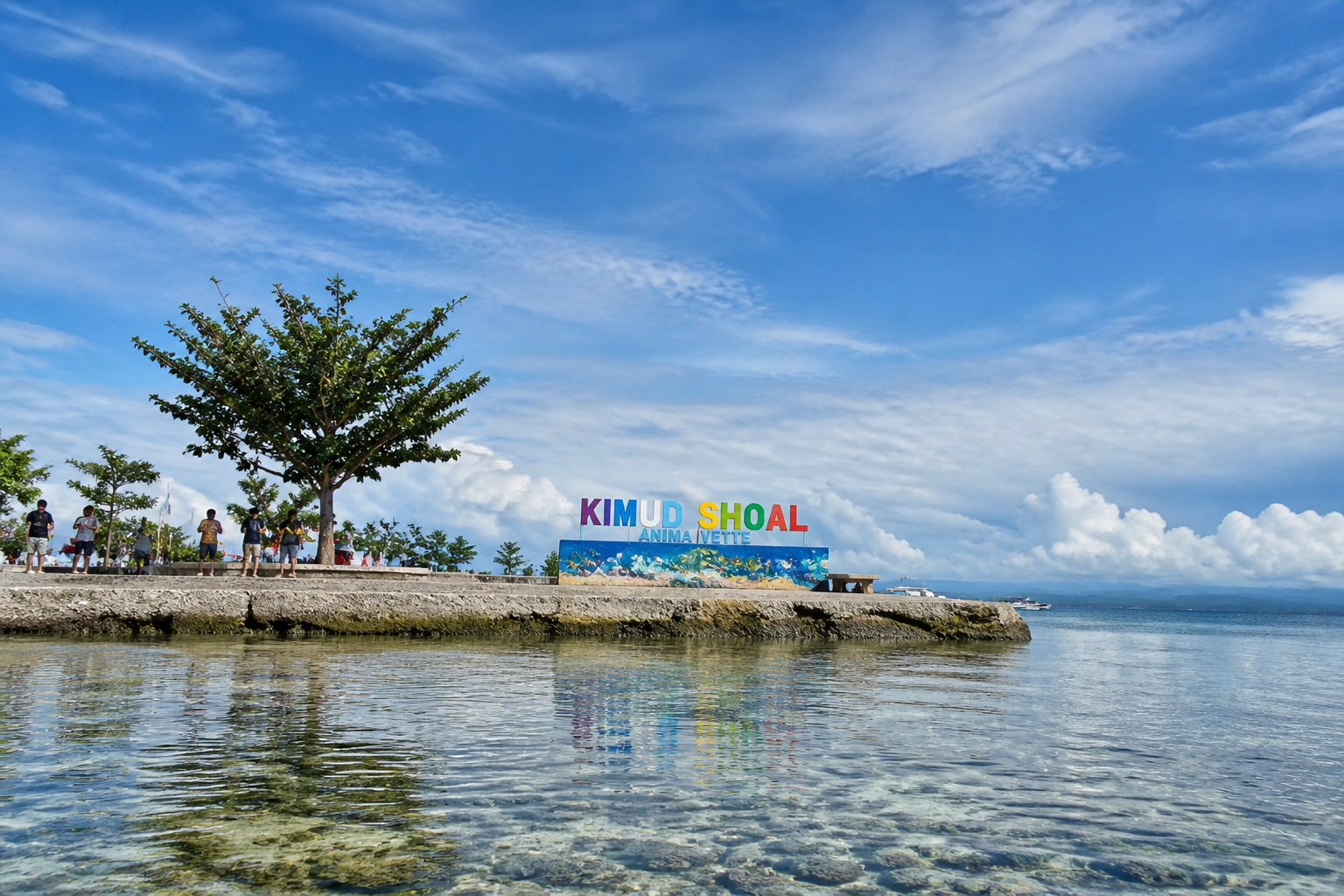
# Kimud Shoal, Leyte: A Quiet Philippine Dive Trip With Big Underwater Surprises
## The Vibe & When to Go
Kimud Shoal is the kind of place that still feels like a local secret. There are no rows of souvenir shops or busy resort strips—just fishing boats, sleepy coastal villages, warm conversations, and a wide stretch of sea that hides a remarkable underwater world.
From the shore, the area can look almost ordinary. Then you board a small banca, leave the coastline behind, and the water changes from bright turquoise to deep blue. That was my favorite part: the contrast between the simple, unhurried life on land and the dramatic seascape below.
The best time to visit is generally **December to May**, when the weather is drier and boat trips are more likely to go ahead. April and May can be especially hot on land. The wet season, usually from June to November, brings more unsettled seas, although conditions can still vary from week to week. Always ask the local dive operator for a sea and weather check before confirming your trip.
Kimud Shoal is worth visiting now because it offers something many better-known Philippine dive areas have gradually lost: space. You may not see crowds of divers at the site, and your day often feels more like a community outing than a packaged holiday.
## Must-See Spots: My Top Picks
### 1. Kimud Shoal itself
The main attraction is the shoal’s underwater terrain—rocky formations, coral growth, drop-offs, and open blue water that make each descent feel a little different. Visibility depends heavily on the season and recent weather, but on a good day the water is clear enough to watch schools of fish move across the reef before you even reach the bottom.
I would not treat Kimud Shoal as a casual snorkeling stop. It is an offshore dive site, so go with a licensed local operator and follow the briefing carefully. Currents can change, and the boat crew will know which section is safe for the day.
Bring a surface marker buoy if you have one, and do not forget reef-safe sunscreen for the boat ride. There is very little shade once you are out on the water.
### 2. The coastal villages and boat launch area
Before or after the dive, spend time around the community where the boats leave. This is where you get a better feel for Leyte than you would from a resort lobby. Fishermen repair nets, children wave from the roadside, and someone is usually preparing coffee or a simple seafood meal nearby.
I enjoyed walking slowly rather than trying to fill every hour with activities. Ask permission before photographing people, especially fishermen and children. A friendly greeting in Waray or Cebuano—or simply a smile and “good morning”—goes a long way.
The exact launch point can depend on the operator and the day’s sea conditions, so arrange transport in advance rather than assuming you can arrive and find a boat immediately.
### 3. Nearby reef and coastal dive sites
Local dive groups often combine Kimud Shoal with other nearby reef sites when conditions and schedules allow. These can be gentler, shallower dives with more time to look closely at coral, nudibranchs, reef fish, sea turtles, and small creatures hiding in the rocks.
Ask the dive shop to create a balanced day instead of booking only the deepest or most dramatic site. One exciting offshore dive followed by a relaxed reef dive is much more enjoyable than spending the whole day fighting current and fatigue.
### 4. Leyte’s quiet inland scenery
If you have a spare day, rent a motorbike with a driver or arrange a local car to explore beyond the coast. The roads pass through coconut plantations, rice fields, small markets, and villages where daily life continues at its own pace.
Do not expect a neatly signposted sightseeing circuit. That is part of the appeal, but it also means you should ask locals where the road goes and avoid wandering onto private land. A simple roadside lunch can be one of the nicest memories of the trip—especially if it includes grilled fish, rice, and a cold bottle of soda.
## Practical Travel Advice
### Getting There & Visa
Most international travelers reach Leyte through **Tacloban’s Daniel Z. Romualdez Airport**, which has domestic connections from Manila and other major Philippine cities. Depending on the location of your dive operator, you may then need several hours by van, bus, or private vehicle.
If your trip is based farther south in Leyte or Southern Leyte, **Maasin Airport** may occasionally be useful, although flight schedules are more limited. Check the route carefully before booking accommodation.
For entry into the Philippines:
– Many nationalities can enter visa-free for up to **30 days**, provided they have a passport valid for at least six months and an onward or return ticket.
– Some travelers can extend their stay through the Bureau of Immigration.
– Rules vary by nationality, so check the official Philippine immigration website or your nearest Philippine embassy before flying.
– Keep digital and paper copies of your passport, insurance, flight booking, and dive certification.
For flights, I usually leave a generous buffer between the international arrival and the domestic connection. Delays happen, and missing a small regional flight can create a very expensive problem.
### Where to Stay
Your best base depends on how much comfort and convenience you want.
– **Tacloban:** Best for the widest choice of hotels, restaurants, ATMs, and transport connections. It is practical if you are combining Leyte with other parts of Eastern Visayas.
– **Maasin or nearby coastal towns:** Better for a slower trip and easier access to southern dive areas, depending on the operator.
– **Small coastal homestays:** The most atmospheric choice. Expect basic rooms, limited hot water, and fewer restaurants, but you will be closer to the boats and local communities.
– **Padre Burgos and nearby dive bases:** A sensible option if your itinerary includes several Southern Leyte dive sites, though the exact distance to Kimud Shoal should be confirmed with your chosen operator.
Book at least one night before and after your dive trip. You do not want to rush straight from a long bus ride into the water, and flying immediately after diving is unsafe because of decompression concerns.
### Getting Around
There is no dependable rideshare network in most coastal parts of Leyte. Plan on using:
– **Tricycles** for short trips around town
– **Habal-habal motorcycles** for narrow or rural roads
– **Jeepneys and buses** for cheaper longer-distance travel
– **Vans or private cars** when moving between towns with luggage
– **Motorbike rentals** only if you are confident on Philippine roads
Walking works well in small town centers, but distances between beaches, dive shops, and accommodation can be surprisingly long. Ask your hotel to arrange a trusted driver, and agree on the fare before leaving.
## Real Costs & Local Tips
The Philippine peso is written as **PHP** or **₱**. Prices in Leyte are usually lower than in major beach destinations, but dive trips are a separate expense because they include boats, tanks, guides, permits, and equipment.
### Typical daily budgets
**Budget traveler: ₱1,500–₱2,500 per day**
– Simple guesthouse or homestay
– Local meals and street food
– Public buses, jeepneys, and tricycles
– Little or no paid sightseeing
**Mid-range traveler: ₱3,500–₱6,000 per day**
– Comfortable hotel or private room
– Restaurant meals mixed with local food
– Private transfers or occasional hired vehicle
– A few entrance fees and activities
A guided dive day can add roughly **₱3,000–₱6,000 or more**, depending on whether you rent equipment, need transport from another town, and book one or two dives. Confirm exactly what is included before paying a deposit.
Tipping is not compulsory, but it is appreciated. For dive guides and boat crews, a small group tip is welcome when the service has been good. In restaurants, rounding up or leaving around 5–10% is fine if there is no service charge.
### A few tricks that saved me money
– **Carry cash.** ATMs are not always available or reliable in smaller towns, and card payments are uncommon at local eateries and homestays.
– **Book the boat through a registered local operator.** The cheapest informal offer may not include safety equipment, permits, or a qualified dive guide.
– **Eat where local workers eat.** Look for busy carinderias rather than restaurants aimed only at visitors. Meals are cheaper and usually fresher.
– **Ask about transport fares before boarding.** Tricycle prices can change depending on distance, luggage, and whether you are hiring the whole vehicle.
– **Bring a reusable water bottle and dry bag.** Buying bottled drinks repeatedly on boat days adds up, and your phone will be much safer in a dry bag.
– **Do not schedule a flight immediately after diving.** Give yourself the proper surface interval and follow your dive computer or instructor’s guidance.
Kimud Shoal is not a place I would recommend to someone looking for nightlife, polished resorts, or an effortless weekend package. It is better suited to travelers who enjoy early boat rides, modest coastal towns, and the pleasure of seeing a destination before it becomes crowded.
The underwater scenery is the reason to come, but the quiet rhythm of Leyte—the roadside meals, the local boat crews, and the long views over the water—is what made me want to stay a little longer.
KEYWORDS: Kimud Shoal, Leyte Philippines