
# Ireland and Malta in 2026: Two Very Different Islands, One Brilliant European Trip
The latest EU tourism figures, with **1.32 billion overnight stays reported for 2026**, reflect something I’ve felt on the ground: travelers are looking beyond the usual city-break circuit. Ireland and Malta are both drawing serious attention, but for completely different reasons.
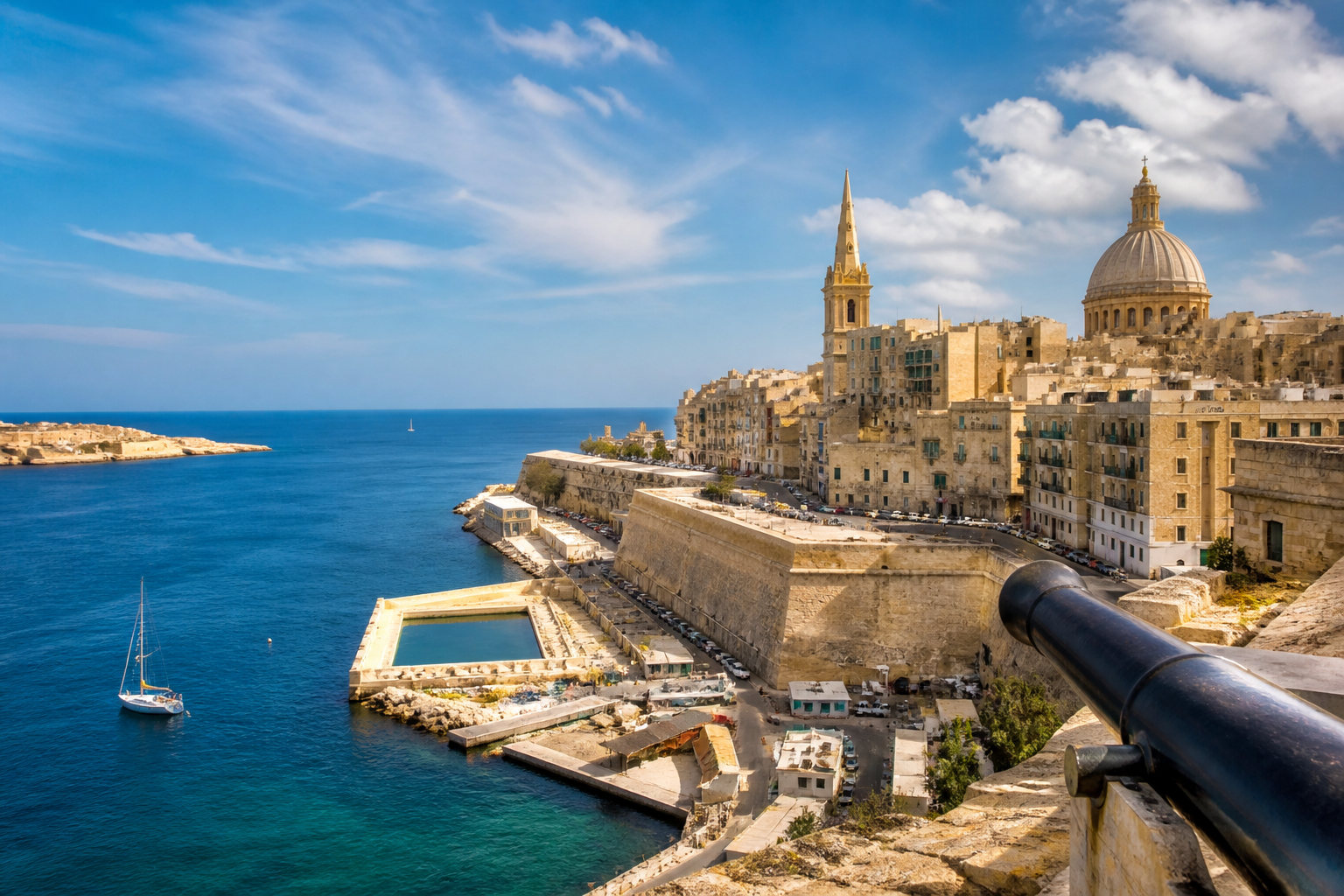
Ireland gives you green hills, smoky pubs, wild Atlantic weather, and conversations that last longer than planned. Malta offers honey-colored limestone streets, clear blue water, late dinners, and a compact island that is easy to explore in a few days.
I wouldn’t try to rush both into one short weekend. Give each at least four days, or combine them over ten days if you’re happy taking a short flight between them.
## The Vibe and When to Go
Ireland feels moody in the best possible way. One minute you’re walking under a gray sky, and ten minutes later sunlight is pouring over a field of sheep. The weather changes quickly, so I always carry a waterproof jacket, even when the forecast looks promising.
Malta is almost the opposite. It has bright stone buildings, dry hills, warm evenings, and a Mediterranean rhythm. Summer can be extremely hot and crowded, especially around Valletta, Sliema, and the beaches. The sea is wonderful then, but sightseeing in the afternoon can feel like hard work.
My favorite months are:
– **Ireland:** May, June, September, and early October
– **Malta:** April to June and September to November
Spring and autumn offer more comfortable temperatures, lower accommodation prices, and fewer cruise-day crowds. If you visit Malta in winter, expect mild days but occasional wind and rain. Ireland is cooler year-round, with summer temperatures often sitting somewhere between 15°C and 20°C.
## Must-See Spots: My Top Picks
### 1. Galway and the Connemara coast, Ireland
Galway is lively without feeling too polished. I like wandering around the Latin Quarter early in the day, before the streets fill up, then stopping for coffee near the Spanish Arch. By evening, the pubs usually have live music, but you don’t need to chase the most famous venue. Some of my favorite nights have happened in small bars where a local musician simply started playing.
From Galway, drive west toward Connemara. The landscape becomes rougher and quieter, with stone walls, lakes, and empty stretches of road. Give yourself more time than the map suggests. You’ll want to stop often.
**Practical tip:** If you’re driving, don’t plan a packed itinerary. Irish country roads can be narrow, and scenic stops have a way of turning a two-hour trip into a full afternoon.
### 2. The Cliffs of Moher, Ireland
The Cliffs of Moher are popular for good reason, but arriving at midday in peak summer can make the experience feel more crowded than wild.
I prefer going early in the morning or later in the afternoon. Walk beyond the main viewing areas if the weather is safe, and bring proper shoes—the wind can be strong and the ground slippery. The visitor center is useful, but the cliffs themselves are the main event.
If you have time, combine them with a drive through **The Burren**, a strange, rocky landscape that feels almost lunar. Stop at a small village pub afterward for soup, brown bread, or seafood chowder.
### 3. Valletta and the Three Cities, Malta
Valletta is compact enough to explore on foot, but it rewards slow wandering. I like the early hours, when the narrow streets are quiet and shopkeepers are opening their doors. Visit St. John’s Co-Cathedral, then take a break in one of the small cafés around Strait Street.
For a calmer afternoon, take a short ferry across the harbor to **Birgu, Senglea, and Cospicua**, collectively known as the Three Cities. Birgu is especially enjoyable at sunset, when the limestone buildings turn a deep golden color and the waterfront becomes peaceful.
**Food to try:** pastizzi, rabbit stew, ftira, and fresh fish. Pastizzi are cheap, filling pastry snacks, usually stuffed with ricotta or mushy peas.
### 4. Gozo, Malta
Gozo feels slower and more rural than the main island. I’d spend at least one night there if your schedule allows, rather than treating it as a rushed day trip.
Victoria’s citadel is a good starting point, but I enjoyed the smaller villages, coastal walks, and quiet swimming spots more. Ramla Bay has beautiful reddish sand, while the area around Dwejra is better for dramatic coastlines and sunset views.
The ferry from Malta is straightforward, but queues can grow in summer. Travel early, especially if you’re bringing a rental car.
## Practical Travel Advice
### Getting There and Visa Requirements
Ireland and Malta are both in the EU, but they do not have the same border arrangements.
– **Ireland is not part of the Schengen Area.**
– **Malta is part of Schengen.**
– EU, EEA, and Swiss citizens can generally travel to both with a valid passport or national ID card.
– Visa rules for other nationalities depend on your passport.
– Visa-exempt visitors entering Malta may need an **ETIAS travel authorization once the system is operational**.
– ETIAS does not apply to Ireland, although other entry permissions may apply depending on your nationality.
– UK citizens benefit from the Common Travel Area for Ireland, but should still carry appropriate identification and check the latest rules.
I’d check the official immigration websites for both countries before booking non-refundable flights. Rules can change, especially for longer stays, remote work, and visitors carrying residence permits from another country.
Dublin, Cork, Shannon, and Knock are Ireland’s main international gateways. Malta International Airport is the country’s only airport and has frequent connections across Europe. If you’re combining the two, compare flights from Dublin, Cork, or London rather than assuming the most obvious route will be cheapest.
### Where to Stay
**Ireland**
– **Dublin city center:** Best for a first visit, museums, restaurants, and nightlife. It is expensive, especially around Temple Bar.
– **Stoneybatter or Smithfield:** More relaxed and local-feeling, with good cafés and pubs.
– **Galway’s Latin Quarter:** Convenient and lively, though noisy at night.
– **Killarney:** Useful for exploring national parks and the Ring of Kerry, but prices rise quickly in summer.
– **West Cork or Doolin:** Better for a quieter coastal trip and smaller guesthouses.
**Malta**
– **Valletta:** Best for history, architecture, and evening walks. Accommodation can be stylish but limited.
– **Sliema:** Practical for restaurants, ferries, shopping, and transport. It feels busier and more modern.
– **St. Julian’s:** Good for nightlife, but not where I’d stay for a peaceful holiday.
– **Mdina and Rabat:** Beautiful and atmospheric, especially if you enjoy old streets and quiet evenings.
– **Gozo:** The best choice for countryside, swimming, and a slower pace.
### Getting Around
Dublin is manageable without a car. You can walk to many central sights, then use the **Luas tram, DART train, or Dublin Bus** for longer trips. Taxis are common, and apps such as **Free Now** are widely used.
Outside Dublin, a rental car gives you much more freedom. Just remember that Ireland drives on the left, and rural roads can be challenging after dark.
Malta has an extensive bus network, but buses can be crowded and delayed during the summer. Ferries are useful between Valletta, Sliema, and the Three Cities. For trips where buses become inconvenient, locals often use **Bolt, eCabs, or Uber**.
On Gozo, buses cover the main villages, but renting a car or using taxis makes it easier to reach beaches and quieter coastal spots.
## Real Costs and Local Tips
Both countries use the **euro**. Ireland is usually the more expensive destination, particularly for hotels, car rental, and restaurant meals in Dublin or Galway.
### Approximate daily budgets per person
**Ireland**
– **Budget:** €70–€110
– **Mid-range:** €150–€240
**Malta**
– **Budget:** €55–€90
– **Mid-range:** €120–€200
These estimates assume shared accommodation or a modest hotel, casual meals, public transport, and a few paid attractions. Add more for a rental car, guided tours, or summer travel.
Tipping is appreciated but not compulsory. In restaurants, I usually leave around **5–10%** for good service if a service charge has not already been added. In cafés and taxis, rounding up is perfectly normal.
A few ways to keep costs under control:
– **Book Ireland’s accommodation early**, especially for June through September. Prices can jump sharply around festivals and sporting events.
– **Avoid eating every meal in tourist centers.** In Malta, bakeries and small village cafés offer much better-value lunches than waterfront restaurants.
– **Check cruise-ship schedules in Valletta.** On busy port days, visit the Three Cities or Mdina instead of fighting the crowds in the capital.
– **Use supermarkets for breakfast and picnic supplies.** Irish cheese, bread, fruit, and pastries make an excellent road-trip lunch.
– **Look for combination tickets and free museum days.** Dublin’s major attractions add up quickly, while Malta’s churches and historic sites often have separate entrance fees.
– **Don’t underestimate transport time.** A cheap hotel far from the center may cost more once you add taxis and lost sightseeing time.
Ireland and Malta are leading the current European tourism surge for different reasons. Ireland gives you space, weathered landscapes, and evenings that often become stories. Malta gives you history, warm water, and the pleasure of moving slowly between towns without spending hours on the road.
If you want green scenery and spontaneous pub music, choose Ireland. If you want sunshine, swimming, and compact historic towns, choose Malta. If you can manage both, they make a surprisingly good pair.
KEYWORDS: Ireland cliffs, Malta coast