
# Jordan Beyond Petra: My Favorite Stops, Local Flavors, and Honest Travel Tips
Jordan is having a moment. With its tourism industry looking toward Turkey and other new international markets, the country is appearing on more flight routes and travel plans than ever. I understand why. Jordan gives you ancient ruins, desert silence, friendly conversations over sweet tea, and some of the best food in the region—all within a relatively compact trip.
I spent my days moving between busy Amman, rose-colored Petra, and the wide-open landscape of Wadi Rum. The journey was never completely effortless, but that is part of its character. Jordan feels generous, historic, and wonderfully human.
## The Vibe & When to Go
At this time of year, Jordan is moving into its hot, dry summer. Amman can feel warm during the day but usually cools down after sunset. Petra is hotter and more exposed, while Wadi Rum can be intensely sunny by afternoon and surprisingly chilly at night.
If you are visiting during the warmer months, start sightseeing early. Petra and Jerash are far more enjoyable before the midday heat arrives. Bring a hat, refillable water bottle, sunscreen, and shoes with decent grip.
The best months for a longer Jordan trip are generally **March to May** and **September to November**, when walking around ruins and hiking through desert valleys is much easier. Summer still works if you plan around the heat—and if you are happy to spend some time at the Dead Sea or in air-conditioned cafés.
Jordan is especially interesting right now for travelers coming from Turkey. Amman and Aqaba are increasingly being promoted to Turkish visitors, and new tourism partnerships and flight connections may make the country easier to reach from cities such as Istanbul. Still, I would compare airlines carefully because schedules change with the season.
## Must-See Spots: My Top Picks
### 1. Amman: Start with the Citadel and a Long Lunch
Amman is not a city I understood in the first hour. It sprawls over hills, traffic can be lively, and the sidewalks are not always made for relaxed wandering. But after a day or two, its rhythm begins to make sense.
I liked starting at the **Amman Citadel**, especially in the morning when the light spreads over the pale stone rooftops. The Roman Temple of Hercules and the old Umayyad Palace are impressive, but I enjoyed the view just as much as the ruins.
From there, walk or take a short taxi ride down to **downtown Amman**. Visit the Roman Theatre, then stop for falafel at **Hashem Restaurant**. It is simple, busy, and inexpensive. Order falafel, hummus, foul, pickles, and mint tea. You may share a table with strangers, which is part of the experience.
For something quieter, explore the small shops and cafés around **Jabal Al-Weibdeh**. This is one of my favorite areas for an evening stroll, with galleries, bookshops, and relaxed restaurants.
**My tip:** Amman is hilly. Wear comfortable shoes and do not plan to walk everywhere in the summer heat. Careem is useful for short rides between neighborhoods.
### 2. Jerash: Go Beyond the Main Colonnade
Jerash is often visited as a day trip from Amman, and it deserves more than a rushed photo stop. The ancient city is remarkably open and spacious, with long stone streets, arches, theaters, temples, and columns stretching across the hillside.
The famous Oval Plaza is the first scene most visitors photograph, but I preferred wandering farther into the site. Look for quiet corners around the smaller temples and side streets. When tour groups move on, the scale of the place becomes much clearer.
Try to arrive early, particularly in summer. There is limited shade, and the pale stone reflects a lot of heat. A guide can help bring the ruins to life, but even without one, take your time rather than racing through.
Jerash is about an hour from Amman, depending on traffic. A private taxi or organized tour is simplest, though a local bus can cost much less if you are comfortable with less predictable departure times.
### 3. Petra: Give It a Full Day—and Start Early
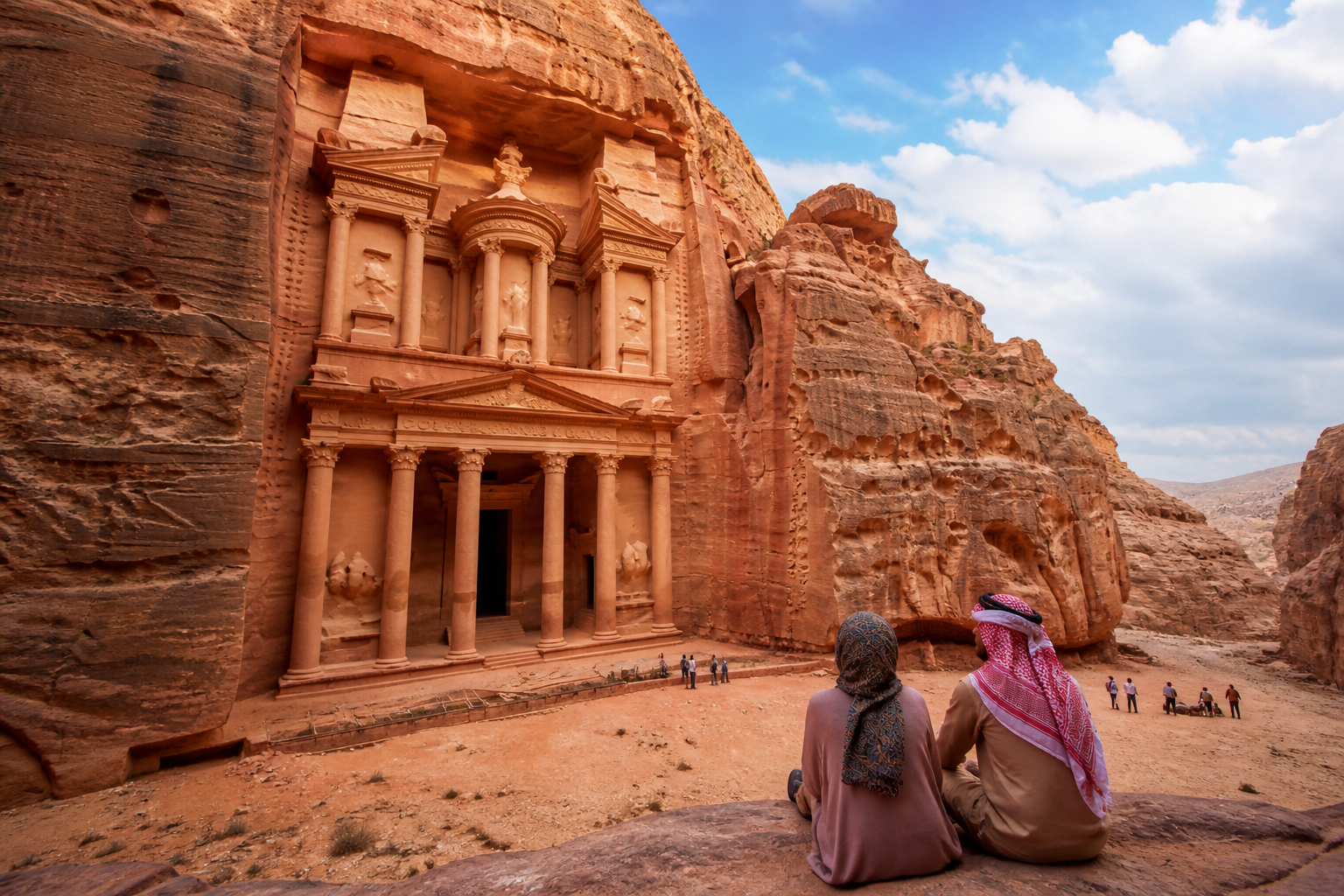
Petra is the reason many people come to Jordan, and yes, the first sight of the Treasury is genuinely moving. Walking through the narrow **Siq**, with its towering sandstone walls, builds the anticipation slowly. Then the Treasury appears almost suddenly, framed by the canyon.
The mistake is treating Petra as a quick visit. The site is huge. After the Treasury, continue toward the Street of Facades, Royal Tombs, Colonnaded Street, and the Monastery if your legs allow it. The climb to the Monastery is long, with hundreds of uneven steps, but the view and the building at the top made it one of my favorite moments in Jordan.
Wear shoes with good soles, carry water, and be cautious with animal rides offered inside the site. You do not need a horse or donkey to see Petra, and prices can become unclear quickly. If you do use a local guide or animal service, agree on the cost before setting off.
Stay in **Wadi Musa**, the town beside Petra. It is not the prettiest place, but it has plenty of hotels, restaurants, and practical services. I recommend staying at least two nights so you can visit Petra early, rest in the afternoon, and return for a second look if you wish.
### 4. Wadi Rum: Sleep Under a Very Big Sky
Wadi Rum feels completely different from the cities and archaeological sites. The desert is vast, quiet, and colored in shades of red, orange, and gold. A 4×4 tour took me across sandy valleys and past enormous rock formations, with stops for tea and short walks.
A night in a Bedouin-style camp is the part I remember most. After sunset, the desert becomes wonderfully quiet. Dinner is often cooked underground in a traditional style, and the stars are far clearer than anything you see in a city.
Choose your camp carefully. Some offer a quiet, traditional setting, while others are more like resorts with large illuminated tents and entertainment. Neither is necessarily wrong, but the atmosphere is very different.
**My tip:** Bring a warm layer even in summer. Desert temperatures drop after dark, and air-conditioning is not guaranteed in every tent.
If you have extra time, add the **Dead Sea** after Wadi Rum. Floating in the salty water is fun, though the experience is more resort-focused than cultural. Do not shave before visiting—the salt will find every tiny cut.
## Practical Travel Advice
### Getting There & Visa
Most international visitors arrive at **Queen Alia International Airport**, about 30–40 minutes south of Amman. From Turkey, check flights from Istanbul first; Turkish Airlines, Royal Jordanian, and low-cost carriers may operate different schedules depending on the season. Comparing baggage fees is important, since the cheapest ticket is not always the cheapest overall.
Visa rules depend on your nationality:
– Many passport holders can obtain a visa on arrival at Queen Alia Airport.
– Some nationalities must arrange a visa in advance.
– Turkish citizens are generally able to enter Jordan without a prior visa for short visits, but check the latest rule before booking.
– The **Jordan Pass** can include entry to Petra and a visa-fee waiver for eligible visitors who stay at least three nights in Jordan.
– The Jordan Pass is not a substitute for checking entry rules, and some nationalities are excluded from its visa benefit.
Your passport should usually be valid for at least six months beyond arrival. Check with the Jordanian embassy or official tourism authorities before traveling, since rules and fees can change.
### Where to Stay
**Amman**
– **Downtown:** Best for budget travelers, local food, markets, and easy access to the Roman Theatre.
– **Jabal Al-Weibdeh:** More relaxed, with cafés, galleries, and small guesthouses.
– **Rainbow Street and Jabal Amman:** Good for restaurants, views, and a more polished evening atmosphere.
– **Sweifieh or Abdali:** Better for modern hotels, shopping, and business-style stays.
**Petra**
Stay in **Wadi Musa**, preferably within walking distance or a short ride from the visitor center. A guesthouse with breakfast can be excellent value, especially if you plan to enter Petra early.
**Wadi Rum**
Choose a desert camp based on the kind of night you want. Read recent reviews carefully and check whether jeep tours, dinner, transfers, and breakfast are included.
**Aqaba and the Dead Sea**
Aqaba suits travelers who want beaches, snorkeling, and a livelier resort atmosphere. The Dead Sea is better for a quiet hotel stay, spa time, and floating in the mineral-rich water.
### Getting Around
Jordan is easiest to explore by a mix of taxis, private drivers, and organized transfers.
– **Careem** works well in Amman and is useful for avoiding taxi-price negotiations.
– Traditional yellow taxis are common, but agree on the fare or insist on the meter before leaving.
– Public buses are inexpensive but can be irregular, especially outside major cities.
– A rental car gives you freedom between Amman, Petra, Wadi Rum, and Aqaba. Driving in Amman can be stressful, and city parking is not always easy.
– For Petra and Wadi Rum, many travelers find it simpler to arrange a driver or hotel transfer rather than manage several buses.
Jordan is not always highly walkable. Amman’s hills, wide roads, and hot weather make short rides worthwhile.
## Real Costs & Local Tips
Jordan uses the **Jordanian dinar**, written as JOD or JD. The currency is strong and is pegged closely to the US dollar: roughly **1 USD = 0.71 JOD**. Credit cards work in many hotels and larger restaurants, but carry cash for taxis, small cafés, markets, and rural areas.
### Typical Daily Budgets
**Budget traveler: around 35–55 JOD per person**
– Hostel or simple guesthouse: 10–20 JOD
– Local breakfast or falafel meal: 2–5 JOD
– Simple lunch or dinner: 4–8 JOD
– Local transport and short taxi rides: 5–12 JOD
– Attractions and entrance fees can add a lot, especially Petra
**Mid-range traveler: around 80–140 JOD per person**
– Comfortable hotel: 35–75 JOD
– Restaurant meals: 8–20 JOD each
– Private transfers or day tours: extra
– Desert camp: often 40–100 JOD or more, depending on the style and inclusions
Petra is the major cost to plan for. A one-day ticket is expensive, while the **Jordan Pass** may save money if you are visiting Petra and several other attractions. Do the calculation before purchasing.
### Tipping Etiquette
Tipping is appreciated but should reflect the service.
– Restaurants: around 5–10% if service is not already included
– Hotel porters: 1–2 JOD per bag
– Local guides: commonly 5–15 JOD or more, depending on the length and quality of the tour
– Drivers: a small tip is welcome for a full-day trip
You do not need to tip every person who opens a door or points you in a direction.
### Small Tricks That Saved Me Money
– **Buy the Jordan Pass before arrival** if your itinerary includes Petra and at least a few other sights. It can be better value than buying separate tickets.
– **Eat where office workers eat.** Downtown Amman’s falafel, hummus, shawarma, and rice dishes are cheaper and often more satisfying than restaurant food aimed at visitors.
– **Carry small notes and coins.** Drivers and small shops may not have change for large bills.
– **Confirm taxi prices before the ride.** Use Careem when possible, especially for airport transfers or longer journeys.
– **Book desert camps with everything listed clearly.** Check whether the advertised price includes the jeep tour, dinner, breakfast, and transport from the village.
– **Visit Petra early.** You avoid the worst heat, see the Siq with fewer people, and have more energy for the Monastery.
– **Keep some modest clothing handy.** Jordan is welcoming, but shoulders and knees covered in towns and religious areas will help you feel more comfortable.
Jordan is not the cheapest destination in the Middle East, and traveling between its major sights can add up. Still, the combination of ancient cities, desert landscapes, generous food, and everyday kindness makes it a trip I would happily repeat. As Jordan reaches toward Turkey and other new markets, I hope more travelers discover the country—but I also hope they leave room for the slower moments: tea with a driver, breakfast at a tiny café, and a quiet sunset far from the tour buses.
KEYWORDS: Jordan Petra