
# Nepal in Autumn: Clear Mountain Views, Quiet Trails, and the Best Places to Wander
## The Vibe & When to Go
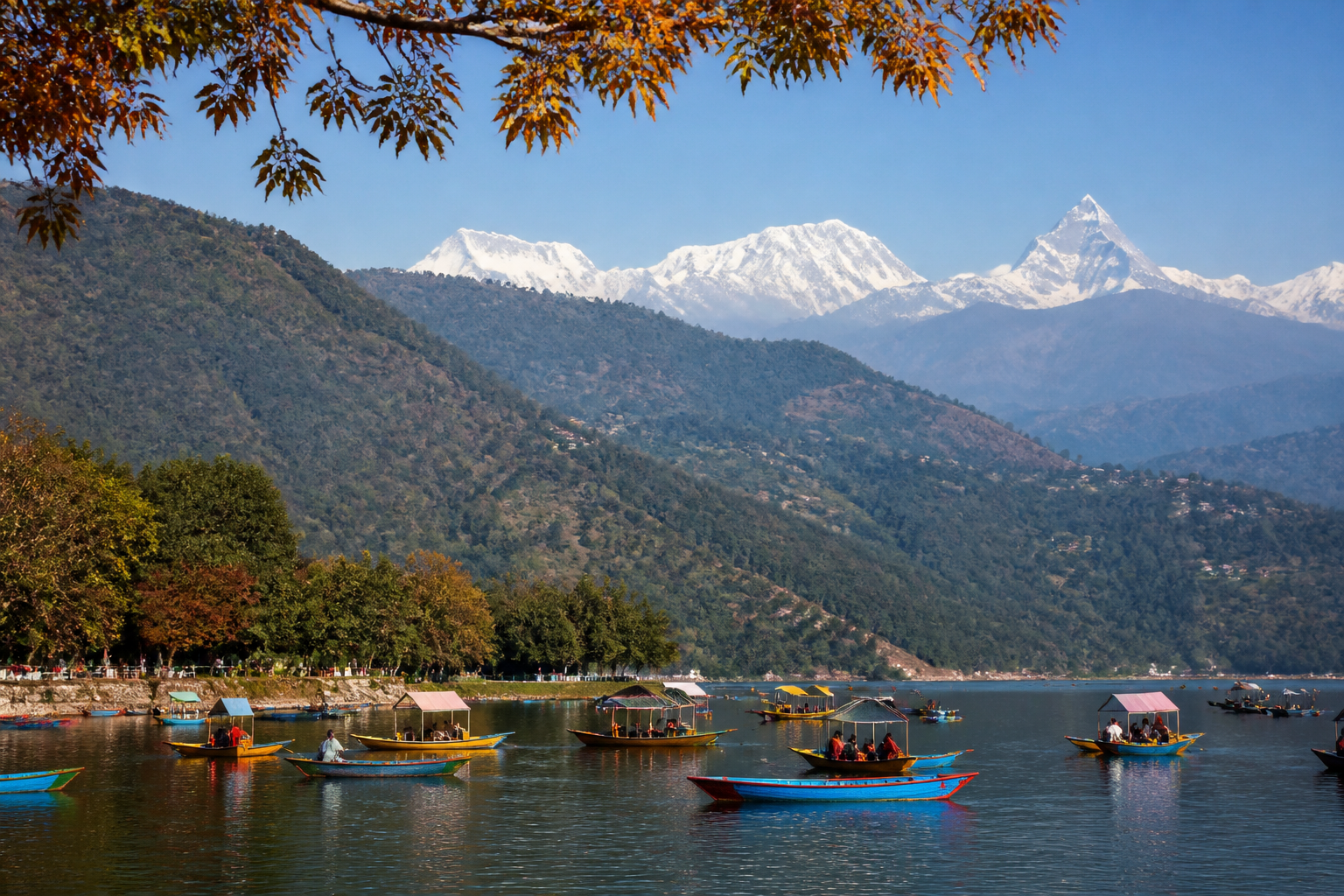
Autumn is my favorite time to travel around Nepal. After the heavy monsoon rains, the air clears, the hills turn fresh green, and the mountains finally come into view. On a good morning, you can look across the valley and see sharp white peaks glowing above the rooftops.
September can still bring a few rainy days, but October and November are usually the most reliable months. The skies are bright, daytime temperatures are comfortable, and the evenings feel pleasantly cool. It is also festival season, so towns and villages have a lively feel, with marigold garlands, music, family gatherings, and colorful street celebrations.
The trade-off is that popular trekking routes and hotels get busy. I usually book my first few nights in advance, then leave room for flexibility.
## Must-See Spots: My Top Picks
### 1. Kathmandu Valley
Kathmandu is noisy, dusty, fascinating, and full of small surprises. In autumn, I like starting early, before traffic thickens and the air loses its freshness.
Visit **Swayambhunath**, commonly called the Monkey Temple, for wide views across the city. The steps are a workout, but the prayer flags, temple bells, and hilltop view make the climb worthwhile. Go early if you want a calmer visit.
In **Patan**, spend time around Durbar Square, then wander into the nearby courtyards. Some of my favorite moments have come from turning down an ordinary-looking alley and finding a quiet shrine, a metal workshop, or a small café serving buffalo momos.
For a slower afternoon, walk through **Boudhanath**. The stupa is especially atmospheric around sunset, when pilgrims circle the dome and the surrounding restaurants begin to glow with warm lights.
### 2. Pokhara and Phewa Lake
Pokhara is where I go when I want mountain scenery without immediately committing to a long trek. On clear autumn mornings, the Annapurna range appears behind the lake, sometimes reflected in the still water.
Renting a boat on **Phewa Lake** is simple and relaxing. I prefer going before breakfast, when the water is quiet and the lakeside cafés are only just opening. You can also hike or take a taxi up to the **World Peace Pagoda** for a broad view of the lake and surrounding hills.
If you have time, visit **Sarangkot** for sunrise. It can be chilly and crowded, but seeing the first light touch Machhapuchhre, or Fishtail Mountain, is one of those travel moments that stays with you. Take a warm layer and arrange transport beforehand; finding a ride back at dawn is not always easy.
### 3. Bandipur
Bandipur is a lovely break from the busier tourist centers. This old hilltop town has brick-paved lanes, traditional Newari houses, small temples, and a relaxed village atmosphere.
I enjoyed walking through the main bazaar in the late afternoon, when shopkeepers were chatting outside and children were heading home from school. The short hike to **Thani Mai Temple** is worth doing for the mountain views, especially in autumn when the air is clear.
Stay at least one night if you can. Day-trippers often leave before sunset, and the town becomes much quieter afterward. The bus journey from Kathmandu or Pokhara takes time, but it is part of the experience. Roads can be winding and rough, so keep motion-sickness medicine handy.
### 4. A Short Himalayan Trek
You do not need to attempt Everest Base Camp to enjoy Nepal’s mountain trails. For a manageable autumn trek, consider the **Poon Hill trek**, **Mardi Himal**, or the **Australian Camp route** near Pokhara.
Poon Hill is popular for good reason: the sunrise view is spectacular. Mardi Himal feels a little wilder, with forest paths and increasingly dramatic mountain views as you climb. Australian Camp is a good choice if you only have a couple of days.
A guide is useful for longer or less familiar routes, especially if you are traveling alone. Weather can change quickly at higher elevations, even during the clear autumn season.
## Practical Travel Advice
### Getting There & Visa
Most international travelers arrive at **Tribhuvan International Airport in Kathmandu**. Nepal generally offers visa on arrival for visitors from many countries. You fill out an arrival form, pay the fee, and proceed through immigration. Bring a passport with at least six months of validity and a passport-sized photo, although photo facilities are usually available at the airport.
Visa fees commonly depend on the length of stay, such as 15, 30, or 90 days. Rules can change, so check Nepal’s official immigration website before flying. Citizens of some countries may need to arrange a visa in advance.
Kathmandu flights can be delayed by weather, and domestic flights to Pokhara or mountain airstrips are particularly sensitive to clouds and wind. If you are connecting to an international flight, leave plenty of time and avoid scheduling everything too tightly.
### Where to Stay
– **Thamel, Kathmandu:** Best for first-time visitors, restaurants, trekking shops, nightlife, and easy access to travel agencies. It is busy, but convenient.
– **Patan:** A calmer choice with beautiful architecture, cafés, and a more local feel. I prefer it when I want a quieter evening.
– **Boudha:** Good for a peaceful atmosphere, Tibetan food, monasteries, and easy access to the stupa.
– **Lakeside, Pokhara:** The easiest base for lake views, restaurants, trekking arrangements, and relaxed evenings.
– **Bandipur Old Town:** Stay close to the main pedestrian street for heritage buildings and early-morning mountain views.
– **Sarangkot:** Choose this if sunrise is your main reason for visiting, though accommodation is more limited and evenings are very quiet.
### Getting Around
In Kathmandu, walking works well for exploring individual neighborhoods, but distances between areas can be tiring. **Pathao** and **inDrive** are useful for motorbike rides and cars, though availability varies. Traditional taxis are everywhere; agree on a price or ask the driver to use the meter before leaving.
In Pokhara, most places around Lakeside are walkable. Taxis are easy to find, and bicycles or scooters can be rented, although traffic and road conditions require care.
Tourist buses are often more comfortable than local buses for travel between Kathmandu, Pokhara, and Chitwan. They are still slower than the distance on a map suggests because of traffic, roadworks, and winding mountain roads.
## Real Costs & Local Tips
Nepal remains affordable, but prices rise in October and November, especially in Pokhara and on trekking routes.
### Approximate daily budgets
**Budget traveler: NPR 3,500–6,000 per day**
– Simple guesthouse or hostel: NPR 800–2,000
– Local meals: NPR 200–500 each
– Public buses and shared rides: NPR 100–500
– A few paid attractions and snacks included
**Mid-range traveler: NPR 8,000–15,000 per day**
– Comfortable hotel: NPR 3,500–8,000
– Restaurants and cafés: NPR 1,500–3,500
– Private taxis or occasional tours
– Entry fees and activities
Trekking costs vary widely. A short independent trek may be fairly economical, while hiring a guide, porter, and arranging permits can add considerably to the daily budget.
Nepal uses the **Nepalese rupee (NPR)**. Cash is still important, particularly outside Kathmandu and Pokhara. ATMs are common in cities but less dependable in smaller towns and mountain areas.
Tipping is not compulsory, but it is appreciated. In restaurants, rounding up or leaving around 5–10% is polite when service has been good. Guides, porters, drivers, and hotel staff also appreciate a thoughtful tip.
### A few local tricks that helped me
– **Eat where local families eat.** Dal bhat, thukpa, chow mein, and momos are usually cheaper and more satisfying than meals in heavily touristy restaurants.
– **Carry smaller rupee notes.** Drivers, small cafés, and ticket counters may not have change for large bills.
– **Compare transport prices.** Ask your hotel, a ride app, and a nearby taxi driver before accepting a long-distance fare.
– **Avoid rushing the mountains.** Build in an extra day for weather delays, especially if you are flying to or from a high-altitude destination.
– **Buy trekking supplies in Kathmandu or Pokhara.** Basic gear is often cheaper there than on the trail.
– **Pack layers, not just warm clothes.** Autumn mornings can be cold, afternoons sunny, and evenings cool again. A light down jacket, scarf, sunscreen, and good walking shoes covered most of my needs.
Nepal in autumn is not completely smooth or predictable—and that is part of its character. A bus may take twice as long as expected, a clear mountain view may appear for only ten minutes, and the best meal of the day may come from a tiny roadside kitchen. But when the skies open and the peaks rise above the hills, the whole journey feels wonderfully worthwhile.
KEYWORDS: Nepal mountains