
# Mumbai Beyond the Expo Hall: My Favorite Sights, Food Stops, and Tips for IITM 2026
## The Vibe & When to Go
Mumbai has a restless energy that takes a day or two to understand. Trains rattle past old colonial buildings, office workers squeeze into cafés, sea air drifts across Marine Drive, and somewhere nearby a wedding band is usually rehearsing for the evening.
That mix makes the city a fitting host for **IITM Mumbai 2026**, where tourism boards, hotels, travel companies, and wedding specialists are expected to put their destinations in front of buyers and travelers. The spotlight on destination weddings is especially interesting. India’s wedding travel scene has moved well beyond palace venues and beach resorts; couples are now looking at hill towns, heritage cities, vineyards, islands, and international locations.
If the event takes place during Mumbai’s cooler season, roughly November to February, you can expect warm afternoons, comfortable evenings, and much less humidity than in summer. January and February are particularly pleasant for walking around South Mumbai. The monsoon, from June to September, gives the city dramatic skies and greener views but also brings heavy rain and traffic delays.
I would plan two extra days around the trade show. One day is enough for meetings; it is not enough to understand Mumbai.
## Must-See Spots: My Top Picks
### 1. Gateway of India and Colaba
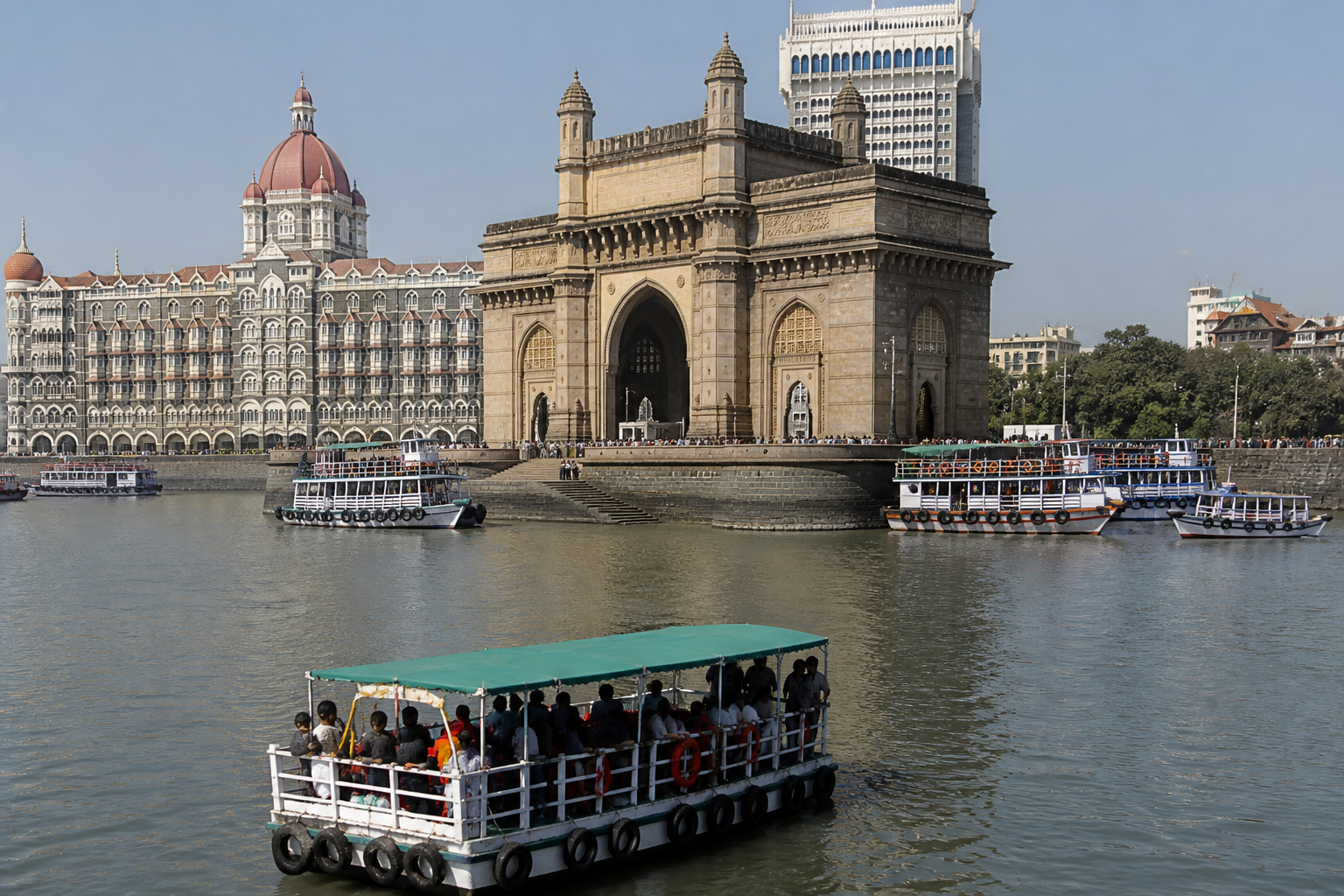
I like coming here early, before the tour groups and photographers arrive in full force. The Gateway is busy, but the waterfront still gives you a good first look at Mumbai’s scale and history.
From here, walk through Colaba toward **Kala Ghoda**. You will pass old façades, small galleries, cafés, street stalls, and shops selling everything from handmade notebooks to bright cotton clothes. The walk is easy, though the pavements can be uneven.
For a quieter break, step into the **David Sassoon Library** if it is open to visitors. The reading room and Gothic architecture offer a calm pause from the traffic outside.
### 2. Marine Drive at Sunset
Marine Drive is not a secret, but I still return every time I am in Mumbai. Grab a simple snack—perhaps roasted corn, bhel puri, or an ice cream—and sit along the promenade as the sky turns pale orange.
The breeze can be strong, so bring a light layer. If you want photographs without the biggest crowds, come on a weekday just before sunset and stay after dark. The curve of the lights along the bay is one of the city’s most memorable views.
### 3. Fort, Kala Ghoda, and the Food Between Them
South Mumbai is best explored on foot in the morning. Start around Fort, look up at the old buildings, and take your time around the smaller lanes. The area has a mix of offices, art spaces, bookshops, cafés, and historic churches.
For lunch, I usually prefer a busy local restaurant over a polished hotel dining room. Try a **Bombay sandwich**, **keema pav**, **pav bhaji**, or a South Indian thali. If you are cautious about street food, choose a stall with a steady local crowd and food that is cooked hot in front of you.
A small personal rule: never plan a tight appointment immediately after a long South Mumbai lunch. Traffic and a heavy meal can easily turn a 20-minute journey into an hour.
### 4. Bandra’s Seafront and Wedding-Planning Side
Bandra feels younger and more relaxed than the Fort area, with cafés, boutiques, churches, murals, and plenty of restaurants. Walk around **Bandstand** and **Carter Road**, then explore the lanes near Chapel Road and Ranwar Village.
This is also a useful neighborhood for anyone attending IITM with an interest in destination weddings. You will find event designers, photographers, fashion studios, boutique hotels, and restaurants used to handling private celebrations. The city itself is not always a wedding venue in the traditional sense, but it is a major place to meet the people who create and sell wedding experiences across India.
## Practical Travel Advice
### Getting There and Visa
Mumbai’s **Chhatrapati Shivaji Maharaj International Airport** is the main arrival point. Terminal 2 handles most international flights and is a substantial distance from the city center, so allow extra time during peak traffic.
For international visitors:
– Check whether your nationality qualifies for an **Indian e-Visa**.
– Apply only through the official Indian government visa website.
– Your passport generally needs at least six months’ validity and blank pages.
– Carry a printed copy of your visa approval and keep your hotel or event booking details available.
– Visa rules can change, so check the current requirements before booking non-refundable travel.
Indian citizens do not need a visa. Travelers coming from other Indian cities can usually choose between direct flights and overnight trains, depending on time and budget.
For IITM, check the organizer’s official page for the confirmed 2026 date, venue, exhibitor registration, and visitor passes. Mumbai events sometimes move between exhibition centers and large convention venues, and the difference can affect your hotel choice.
### Where to Stay
**For business travelers:**
Stay around Andheri East, Powai, or near the airport if the event venue is in the northern or western suburbs. These areas are practical for meetings and airport access, though they are not the best base for sightseeing.
**For first-time visitors:**
Choose Colaba, Fort, or Churchgate. You will be close to the Gateway, museums, Marine Drive, and many historic streets. Rooms can be smaller and more expensive, but the location saves time.
**For cafés, nightlife, and a younger atmosphere:**
Bandra West is my favorite compromise. It has good restaurants, late-night cafés, and easy access to Bandstand and the western suburbs.
**For a quieter, polished stay:**
Lower Parel has modern hotels, restaurants, and shopping malls. It is useful for business trips, although it feels less historic than South Mumbai.
### Getting Around
Mumbai’s local trains are fast and cheap, but they can be extremely crowded. I avoid the busiest rush-hour trains unless I am traveling with someone who knows the system.
For most visitors:
– Use **Uber or Ola** for longer journeys, but add plenty of time for traffic.
– Download a local map and save your hotel, event venue, and airport before arriving.
– Use the **Mumbai Metro** where the route suits you; it can save a lot of time on busy corridors.
– Black-and-yellow taxis are still common, and auto-rickshaws are useful in the suburbs.
– Walking works well in Fort, Kala Ghoda, Colaba, and parts of Bandra, but crossings and traffic require patience.
– If you have a morning meeting, avoid crossing the city during rush hour.
## Real Costs and Local Tips
Prices vary widely, especially around major events. The estimates below are per person and exclude international flights.
### Budget: ₹2,500–₹5,000 per day
This can cover:
– A hostel or basic guesthouse
– Local breakfasts and casual meals
– Public transport, short auto-rickshaw rides, and occasional taxis
– Free sights such as Marine Drive, Gateway of India, and neighborhood walks
### Mid-range: ₹7,000–₹15,000 per day
This usually includes:
– A comfortable hotel room, shared with one other traveler
– Restaurant meals and a few cafés
– App-based taxis for longer journeys
– Museum visits, shopping, or an evening event
Hotels near the airport, convention centers, and popular business districts may charge more during IITM and wedding-industry events, so booking early is sensible.
The local currency is the **Indian rupee (₹)**. Cards and digital payments are widely accepted in hotels, malls, and established restaurants, while small food stalls and taxis may still prefer cash or UPI.
Tipping is not compulsory, but rounding up or leaving around **5–10%** for good restaurant service is appreciated. Check whether a service charge has already been added before tipping again.
### A Few Money-Saving Tricks
– **Eat where office workers eat.** Busy lunch counters and local restaurants usually offer better food at much lower prices than hotel dining rooms.
– **Use the train or Metro for one major journey each day.** Even one avoided taxi trip can save money and time.
– **Confirm taxi fares before starting.** With app rides, check the final fare and pickup point; airport roads can be confusing.
– **Do not buy souvenirs at the first tourist stall.** Walk a little farther in Colaba or compare prices in two or three shops before paying.
– **Carry a reusable water bottle** and refill it at your hotel. Mumbai’s heat can make short walks surprisingly tiring.
– **Build a buffer around event appointments.** A low-cost snack and an extra hour are better than missing a meeting because of traffic.
IITM Mumbai 2026 should be useful for travelers who want more than a sightseeing weekend. It brings the practical side of tourism into view: who is building new routes, which destinations are courting wedding groups, what hotels are offering, and how travel planners are changing the way people celebrate.
My advice is to attend the event with a notebook, comfortable shoes, and enough free time afterward to see Mumbai away from the exhibition floor. The city’s best moments often happen between appointments—over a cutting chai, on a crowded street, or beside the sea after sunset.
KEYWORDS: Mumbai skyline, Marine Drive Mumbai