
# Ho Chi Minh City Travel Guide: Street Food, Hidden Corners, and the Real Megacity Feel
Ho Chi Minh City is changing quickly, but it hasn’t lost its appetite for noise, coffee, motorbikes, and late-night bowls of noodles. New skyscrapers and the first metro line now sit alongside old apartment blocks, family-run food stalls, French colonial buildings, and tiny alleys where someone is always cooking.
That mix is what makes the city so memorable. It feels ambitious and untidy in the best possible way—a place building an international tourism identity while still living at street level.
## The Vibe & When to Go
My first impression was a city running on strong coffee and constant movement. Motorbikes stream through intersections, cafés occupy every spare corner, and the smell of grilled pork or bánh mì seems to follow you down the pavement.
Ho Chi Minh City is hot all year. The **dry season usually runs from December to April**, bringing bright skies and humid afternoons. The **rainy season generally lasts from May to November**, but showers often arrive suddenly, pour hard for 30 minutes, and then leave the streets steaming again. A compact umbrella or light rain jacket is useful either way.
I like visiting between **December and March**, when the weather is usually easier for walking. April and May can feel very hot, while the rainy months are still perfectly manageable if you plan museums, cafés, and indoor stops around the afternoon showers.
The city is especially interesting right now because it is becoming easier to explore as a large, modern destination. The metro gives visitors another way to move around, the riverfront is being developed, and new hotels and restaurants are appearing beyond the old tourist center. Still, the most rewarding moments often happen on a plastic stool beside a busy street.
## Must-See Spots: My Favorite Places
### 1. District 1 Before Breakfast
Start early around **Ben Thanh Market**, before the heat and tour groups build up. The market is busy and colorful, though I prefer wandering through the nearby streets afterward rather than spending too long shopping inside.
Walk toward **Nguyen Hue Walking Street**, then continue to the old apartment buildings at 42 Nguyen Hue. The cafés inside are reached by slightly worn staircases, and the views over the boulevard are much more interesting than the building exterior suggests.
For a quieter break, visit the **Central Post Office** and the **Notre-Dame Cathedral area**. The cathedral has been under renovation, so check the current access situation, but the post office remains a lovely place to see the city’s colonial-era architecture in everyday use.
My favorite time in District 1 is early morning, when locals are exercising in parks and cafés are full of people slowly drinking iced coffee.
### 2. The War Remnants Museum
This is not an easy museum, but it is an important one. The exhibits are emotionally heavy and present the Vietnam War through Vietnam’s perspective, with photographs and stories that stay with you long after leaving.
Give yourself at least two hours and don’t rush through the outdoor displays. If you are traveling with children, some sections may be difficult. I usually pair the museum with a quiet lunch nearby rather than trying to pack in several more attractions immediately afterward.
### 3. Cholon and Binh Tay Market
For a different side of the city, take a Grab to **Cholon**, the historic Chinese quarter in District 5. It feels less polished than central District 1 and much more local.
**Binh Tay Market** is the main landmark, but the surrounding streets are the real reward. Look for traditional medicine shops, Chinese-style temples, noodle restaurants, and small businesses selling ingredients in bulk. **Thien Hau Temple** is particularly atmospheric, with coils of incense hanging from the ceiling.
Go in the morning when the market is lively. Wear modest clothing if you plan to visit temples, and keep your bag close in crowded areas.
### 4. The Saigon River and Thu Thiem
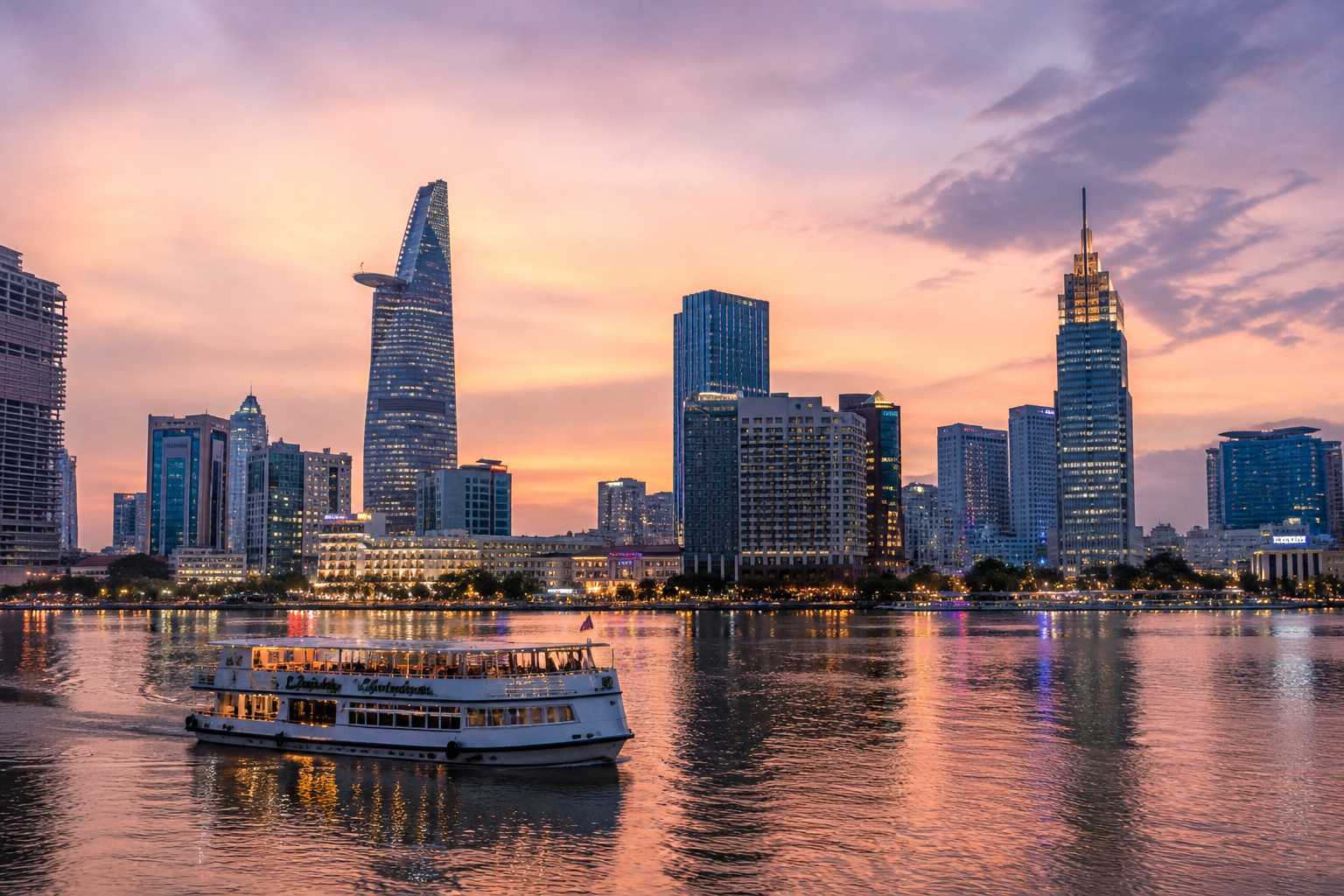
At sunset, I like crossing toward **Thu Thiem** for a wider view back toward the skyline. The riverfront gives you a chance to see Ho Chi Minh City as the growing megacity it is becoming: towers, construction cranes, traffic, and old neighborhoods all sharing the same horizon.
You can also take a short river bus ride if the timing works. It is not a grand sightseeing cruise, but it offers a cool breeze and a nice change from the roads. For dinner, return to District 1 or explore Thao Dien, where you will find more international restaurants and relaxed bars.
## Practical Travel Advice
### Getting There and Visa
Most international visitors arrive at **Tan Son Nhat International Airport**, which is close to the city center but can be very busy at peak times. Leave extra time for immigration and airport traffic.
Vietnam offers **e-visas for citizens of many countries**, generally allowing stays of up to 90 days with single or multiple entry options. Requirements and eligible nationalities can change, so apply through Vietnam’s official immigration website rather than a random third-party service. Your passport should normally have at least six months of validity remaining, and you should check that the name and passport number on the application are completely accurate.
From the airport, Grab is usually easier than negotiating with a taxi. Follow the app’s pickup instructions, since airport traffic can make the meeting point confusing.
### Where to Stay
– **District 1:** Best for first-time visitors, nightlife, major sights, and easy access to restaurants. It can be noisy.
– **District 3:** A calmer choice with leafy streets, good local food, and attractive old villas. This is my personal favorite for a longer stay.
– **Thao Dien, District 2:** Popular with expats, families, and travelers who like cafés, brunch, and international restaurants. It feels more spread out.
– **District 5:** A good base for food lovers and anyone interested in Cholon. It is less convenient for sightseeing in central District 1 but has plenty of character.
– **Near the airport:** Practical for an early flight, though I would not choose it for a full city stay.
### Getting Around
Ho Chi Minh City is not always comfortable for walking because of heat, traffic, and motorbikes using the sidewalks. Walk in shorter sections and cross roads steadily rather than making sudden movements.
**Grab** is the most useful app for both cars and motorbike taxis. Motorbike rides are cheap and often much faster in traffic, but wear the helmet provided and avoid them with large luggage. Metered taxis from established companies can also be reliable.
Metro Line 1 now gives travelers another option between central areas and the eastern side of the city. It is clean and easy to use, though it does not replace buses or rideshares for every neighborhood.
## Real Costs and Local Tips
Vietnamese currency is the **dong (VND)**. At the time of writing, rough prices might look like this:
### Budget travel: around **500,000–800,000 VND per day**
– Hostel bed or simple guesthouse: 180,000–350,000 VND
– Street breakfast: 30,000–60,000 VND
– Local lunch or dinner: 40,000–100,000 VND
– Coffee: 25,000–60,000 VND
– Several short Grab rides: 100,000–200,000 VND
### Mid-range travel: around **1,200,000–2,500,000 VND per day**
– Comfortable hotel: 800,000–1,600,000 VND
– Sit-down meals: 150,000–400,000 VND
– Museums, cafés, and occasional taxis: 250,000–500,000 VND
Tipping is not required in most places, though rounding up or leaving a small amount for excellent service is appreciated. Some higher-end restaurants add a service charge, so check the bill before paying.
A few things that saved me money:
– **Use Grab before getting into a taxi** so you know the expected fare.
– **Carry small bills** for street food, markets, and drinks. Large notes can be difficult for small vendors to change.
– **Check prices before ordering**, especially at market stalls or seafood restaurants.
– **Try local cafés away from the main tourist streets.** The coffee is often better and noticeably cheaper.
– **Avoid walking with your phone held out toward the road.** Motorbike snatching does happen, particularly near busy streets.
Ho Chi Minh City can feel overwhelming for the first day or two, but give yourself time to settle into its rhythm. Order a cà phê sữa đá, find a low plastic chair, and watch the traffic move around you. That simple pause often explains the city better than any landmark.
KEYWORDS: Ho Chi Minh City, Vietnam street food