
# Guam Beyond the Resort Strip: Quiet Beaches, Chamorro Food, and Honest Travel Tips
Guam is having a complicated comeback. Japanese visitors are returning, but that growth has not yet made up for a broader drop in arrivals from other markets. You can feel this in the quieter hotel corridors and less crowded sightseeing spots—but also in the local pride behind every small restaurant, reef tour, and family-run shop still welcoming travelers.
That makes Guam an interesting place to visit now. It is easy to reach, naturally beautiful, and much more personal once you look beyond Tumon’s big hotels.
## The Vibe & When to Go
Guam feels like a mix of American convenience and Micronesian island life. You will see wide roads, chain stores, and familiar payment systems, but you will also find roadside barbecue stands, village fiestas, ancient latte stones, and families gathering around trays of red rice and grilled meat.
The weather is warm all year, usually around **80–88°F (27–31°C)**. The drier months generally run from **December through June**, while July to November can bring heavier rain and typhoons. Even during the wetter season, showers often pass quickly, though storms can disrupt flights and tours.
I like Guam in the shoulder periods—roughly late spring or early autumn—when hotel rates can be gentler and beaches feel less crowded. If you visit while tourism is still rebuilding, spend some money with local businesses rather than staying entirely inside a resort. A village restaurant or family-owned dive shop benefits far more than another meal at a familiar chain.
## Must-See Spots: My Top Picks
### 1. Tumon Bay, Early in the Morning
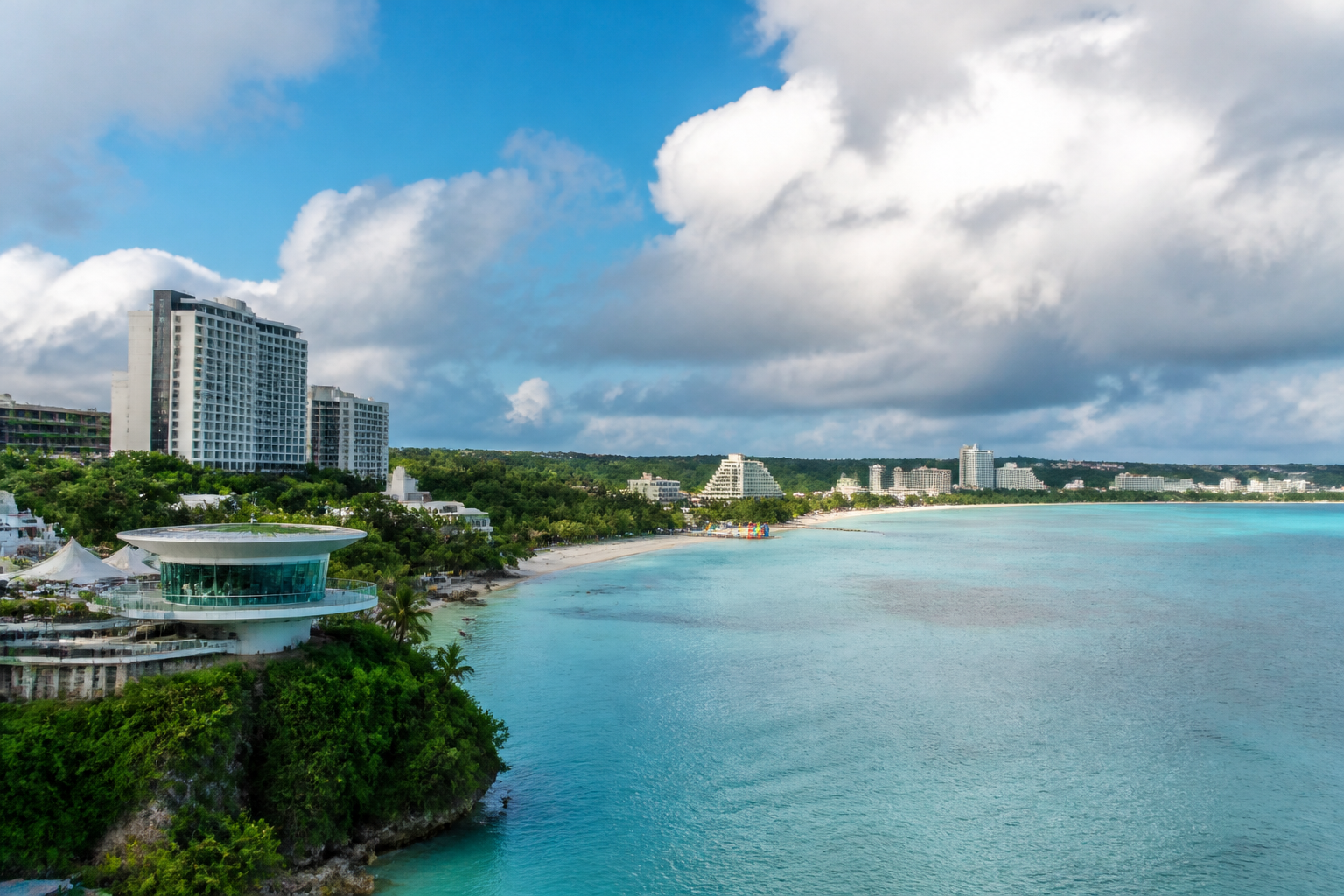
Tumon is Guam’s main resort area, and it can feel busy during the day. But arrive before breakfast and it changes completely. The water is often calm, the sand is cool, and you can watch hotel workers setting up beach chairs while local swimmers get in their morning exercise.
The bay is good for beginner snorkeling, although conditions vary. Ask your hotel or a local operator where the water is safest that day, and avoid standing on coral. Ypao Beach Park, just south of the main hotel strip, is a more relaxed place for a picnic and sunset.
Tumon is convenient, but I would not spend the whole trip there. Guam’s character starts showing up once you leave the main strip.
### 2. Two Lovers Point for the View
Two Lovers Point, or **Puntan Dos Amantes**, is one of the island’s classic viewpoints. The cliff-top lookout gives you a wide view of Tumon Bay and the deep blue Pacific. The story behind the name is tragic and romantic, but the real appeal for me is the wind, the open horizon, and the chance to see how dramatically the coastline rises beyond the hotels.
Go near sunset, but leave enough time to find parking and walk around calmly. The viewpoint is popular, so visiting earlier in the afternoon can be more peaceful. Bring water—the heat feels stronger when you are standing in the sun.
### 3. Ritidian Point and the Northern Coast
For a quieter side of Guam, head north toward **Ritidian Point**, part of the Guam National Wildlife Refuge. The beaches here feel wilder, with pale sand, thick greenery, and fewer buildings in sight.
Access can depend on road conditions, weather, and military or wildlife management closures, so check before driving out. Do not assume the beach will be open just because the weather looks fine. Pack food, water, sunscreen, and anything else you need for several hours; there are not many services nearby.
The northern coast is a good reminder that Guam is more than a shopping and resort destination.
### 4. Chamorro Village and Southern Guam
**Chamorro Village** in Hagåtña is a lively evening stop, especially on Wednesday nights when the market is busiest. I like going hungry: look for chicken kelaguen, barbecue skewers, red rice, shrimp patties, and sweet treats made with coconut. Prices are usually friendlier than resort restaurants, though popular stalls can sell out.
If you have a rental car, continue south through villages such as **Inarajan** and **Merizo**. Inarajan’s natural pools are scenic when conditions are safe, and the southern roads offer a slower, greener view of the island. Stop at local stores for drinks and snacks rather than trying to rush through every viewpoint in one afternoon.
## Practical Travel Advice
### Getting There and Visa Rules
Guam is a U.S. territory, so entry rules are tied to U.S. immigration requirements.
– U.S. citizens do not need a passport to enter Guam from the mainland, though airlines require acceptable identification for travel.
– Travelers from countries in the U.S. Visa Waiver Program generally need an approved **ESTA**, unless they have another valid entry document.
– Some nationalities may qualify for the **Guam-CNMI Visa Waiver Program**, which has separate conditions and can allow stays of up to 45 days.
– Visa requirements depend on your passport, travel history, and itinerary. Check the official U.S. Customs and Border Protection or Guam government website before booking.
Japan, South Korea, the Philippines, Taiwan, and mainland U.S. routes have historically been important to Guam’s visitor economy. Flight schedules can change seasonally, so compare direct flights with connections through Honolulu, Tokyo, Seoul, Manila, or other regional hubs. A connection may cost less, but remember that Guam is not always served by daily flights from every city.
### Where to Stay
**Tumon:** Best for first-time visitors, beach access, shopping, and resort facilities. It is convenient but usually the most expensive area.
**Hagåtña:** Better for travelers who want to be closer to government buildings, local restaurants, museums, and central Guam. The hotel selection is smaller than in Tumon.
**Tamuning:** A practical middle ground with supermarkets, restaurants, medical services, and easy access to the airport and Tumon. This is often a good choice for families or longer stays.
**Southern villages:** Choose this only if you want quiet scenery and plan to rent a car. You will trade nightlife and convenience for space and a slower pace.
### Getting Around
Guam is not highly walkable outside the resort areas. Tumon itself is manageable on foot, but distances between villages and beaches are much larger than they look on a map.
– **Rental car:** Usually the easiest option, especially for Ritidian Point and southern Guam. Book ahead during holidays and check insurance costs carefully.
– **Buses:** The public bus network is limited. The **Lam Lam Tours** trolley and buses are useful around Tumon, shopping centers, and some popular attractions, but they are not ideal for exploring the whole island.
– **Taxis:** Available near major hotels and the airport, though fares can add up quickly.
– **Ride apps:** Local ride services may be available, but coverage and wait times can vary. Check current options such as Stroll or other Guam-based services when you arrive rather than assuming a mainland app will work.
– **Walking:** Fine for short stretches in Tumon, not realistic for most sightseeing outside the hotel district.
If you rent a car, allow extra time for traffic near Tumon and Tamuning. Drive patiently, especially on narrow southern roads, and never leave valuables visible inside the vehicle.
## Real Costs and Local Tips
Guam uses the **U.S. dollar**. Credit cards are widely accepted, although cash is useful at village markets, small food stands, and some beach vendors.
### Rough Daily Budgets
**Budget traveler: $90–$140 per person**
– Shared or simple room: $45–$80
– Casual meals and local food: $25–$40
– Bus, occasional taxi, or shared transport: $10–$25
– Free beaches and viewpoints: $0–$15
**Mid-range traveler: $180–$300 per person**
– Comfortable hotel: $110–$200
– Restaurants and a few local meals: $45–$75
– Rental car share, fuel, or taxis: $25–$50
– One paid activity or tour: $30–$75
These figures exclude flights and can rise during school holidays, Japanese or Korean travel peaks, and major events. Resort fees, parking, and rental-car insurance can also make a surprisingly large difference.
### Tipping
Tipping is similar to the mainland United States:
– Restaurants: around **15–20%** for good service
– Bars: about **$1–$2 per drink**
– Taxis: roughly **10–15%**
– Hotel porters: a few dollars per bag
– Housekeeping: a few dollars per night if service is good
Some restaurants include a service charge, so check the bill before adding another tip.
### A Few Ways to Spend Less
– **Eat away from Tumon at least once a day.** Local barbecue, bakeries, diners, and Chamorro food stalls are often cheaper and more memorable than resort dining.
– **Buy drinks and snacks at a supermarket.** Hotel minibars and beach kiosks can be painfully expensive.
– **Book your car only for the days you need it.** You may not need one if you plan to stay around Tumon for the first part of your trip.
– **Check beach and attraction conditions before driving across the island.** A closure or rough weather can turn an expensive day trip into a long drive for nothing.
– **Ask locals what is open.** Guam’s weather, road conditions, and business hours can change quickly, and a hotel concierge or café owner often has more current information than an old travel listing.
Guam may not feel as busy as it did before the recent tourism downturn, and that is part of the story right now. The island is still finding its balance after years of disrupted travel. For visitors, the reward is a more relaxed experience—and the chance to support the small businesses, guides, cooks, and communities helping Guam recover.
KEYWORDS: Guam beach, Chamorro Village