
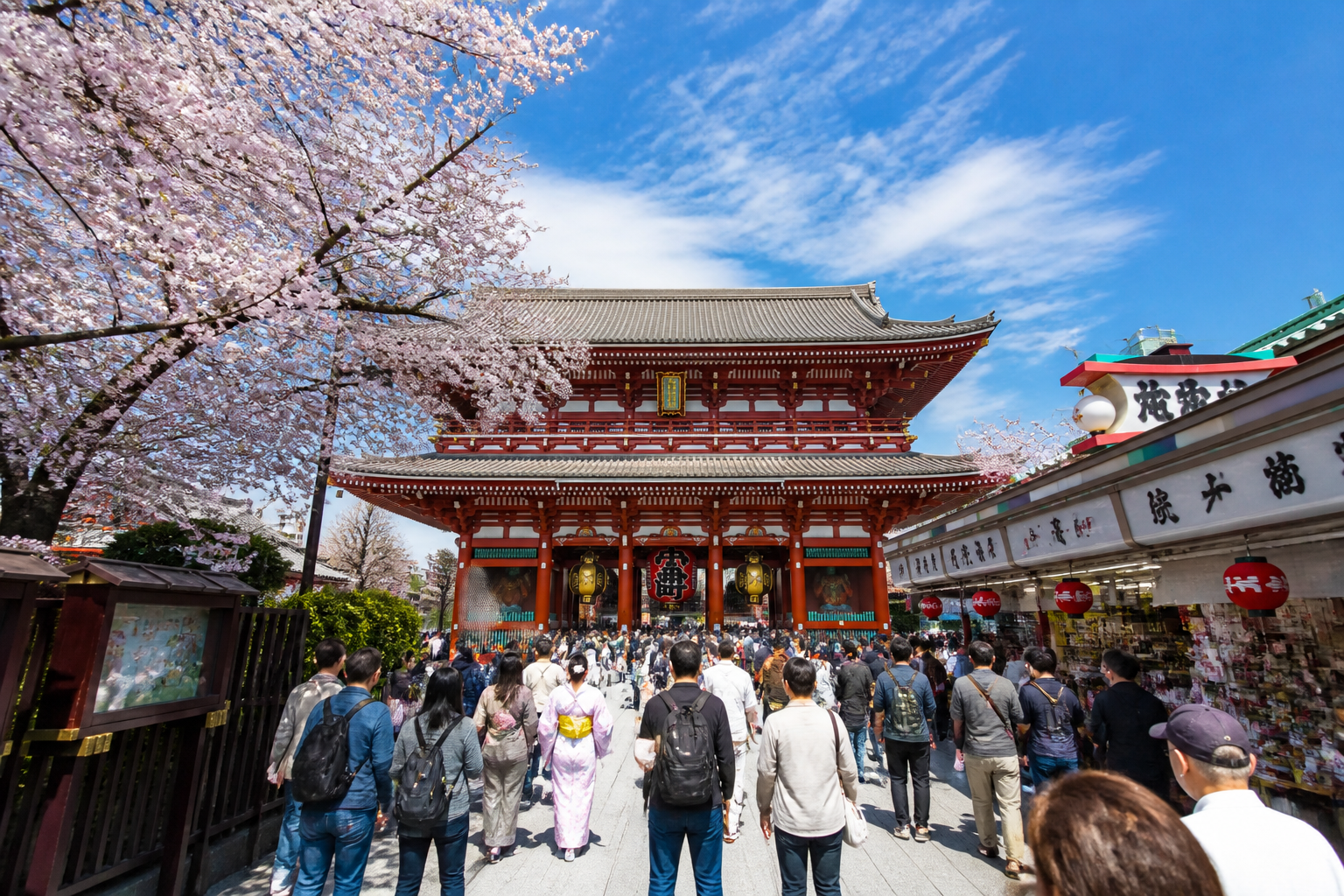
# Fukuoka and Kyushu in Golden Week 2026: Food Stalls, Coastal Trains, and Smarter Routes
## The Vibe & When to Go
Golden Week 2026 is shaping up to be a busy period across Asia, with longer breaks, fresh flight routes, and travelers looking beyond the usual Tokyo–Kyoto circuit. If you want a Japanese trip that feels lively without being quite as overwhelming as the main tourist corridor, I’d look at **Fukuoka and southern Japan**.
Fukuoka has an easygoing feel. It is a proper city, with excellent shopping and nightlife, but the sea, mountains, temples, and small towns are close enough for simple day trips. I found it much less tiring than Tokyo, and the food scene is outstanding even when you are eating casually.
Late April and early May usually bring comfortable weather, with daytime temperatures around **18–24°C**. You may get a rainy spell, but the heavy summer humidity has not arrived yet. Japan’s Golden Week falls around **April 29 to May 6, 2026**, so expect packed trains, higher hotel prices, and busy attractions. I would visit in the second half of May if your dates are flexible. If you are traveling during Golden Week itself, book everything early and build in extra time.
## Must-See Spots: My Top Picks
### 1. Hakata Old Town and the Food Stalls
Start around **Kushida Shrine**, where narrow streets, small temples, and old merchant houses give you a gentler introduction to Fukuoka. I liked wandering here in the morning, before the shopping arcades became crowded.
In the evening, head toward the riverside food stalls, known locally as **yatai**. Order a bowl of tonkotsu ramen, grilled chicken skewers, or mentaiko, the spicy cod roe that appears on almost everything in Fukuoka.
The stalls are tiny and seating is limited, so go early and avoid bringing large luggage. Prices can vary, and some stalls have a small cover charge, so check the menu before sitting down. The atmosphere is friendly, but these are working food businesses rather than staged attractions—eat, chat, and make room for the next customer.
### 2. Dazaifu Tenmangu Without Rushing
Dazaifu is the classic day trip from Fukuoka, famous for its shrine dedicated to scholarship. The approach is lined with snack shops, including stalls selling **u magari mochi**, a warm rice cake filled with sweet red bean paste.
The shrine area can be very crowded during school holidays, so I prefer arriving before 9 a.m. After visiting the main shrine, walk a little farther to **Kamimuta Park** or take the short train connection toward the quieter hills. The National Museum of Kyushu is also nearby and is a good indoor option if the weather turns wet.
Allow at least half a day. The journey from central Fukuoka is straightforward, but trains fill quickly during Golden Week.
### 3. Itoshima’s Beaches and Small Cafés
For a slower day, take the train west to **Itoshima**, a coastal area with beaches, farm shops, seafood restaurants, and cafés in converted houses. I especially enjoyed the stretch around Keya and the small fishing communities, where the pace changes completely from the city.
Public transport becomes less frequent outside the main towns, so check the bus timetable before setting off. Renting a car makes the day easier, but parking near popular beaches can be difficult on weekends. A bicycle rental is another good option if you are staying close to the train line and want to explore without driving.
Bring sunscreen and a light jacket. The sea breeze can feel surprisingly cool, even on a sunny afternoon.
### 4. A Longer Route to Beppu
If you have four or five days, add **Beppu** to the trip. Its hot-spring culture is very different from Fukuoka’s food-and-city rhythm. The famous “hells” are colorful geothermal pools designed mainly for viewing, while the public baths are where you get a better sense of local life.
Beppu is easy to reach by limited express train, though seats disappear quickly during holiday periods. I recommend staying at least one night rather than trying to squeeze it into a rushed day trip. Look for a small ryokan or a hotel with a public bath, and ask about bathing rules when you check in.
## Practical Travel Advice
### Getting There and Visa
Fukuoka Airport has direct connections to many Asian cities and is unusually convenient: the domestic and international terminals are close to the city, with Hakata Station reachable by subway and a short transfer.
For Golden Week 2026:
– Check whether your passport qualifies for Japan’s visa-waiver program.
– Travelers who need a visa should apply through the Japanese embassy, consulate, or approved application center in their country.
– Passport rules, permitted stay lengths, and electronic travel procedures can change, so confirm details through Japan’s official immigration website before booking non-refundable travel.
– If you are connecting through another country, check its transit rules too.
Flight prices rise quickly for Golden Week. I would search for flights arriving into **Fukuoka, Osaka, and Tokyo**, then compare the total cost of trains and domestic flights. Sometimes flying into Osaka and taking the Shinkansen is cheaper, but the time savings are not always worth the extra transfer.
### Where to Stay
**Hakata:** Best for first-time visitors, train connections, airport access, and day trips. It is practical rather than romantic, but you can walk to plenty of restaurants.
**Tenjin:** Better for shopping, bars, cafés, and evening energy. I prefer this area when I want to eat and wander without constantly checking train times.
**Nakasu:** Convenient for nightlife and food stalls. It can be noisy, especially on weekends, so check the room location before booking.
**Itoshima:** A good choice for a quiet coastal stay, but only if you are happy with fewer restaurants and slower transport.
For Golden Week, I would reserve accommodation as soon as your dates are fixed. Cancellation-friendly bookings are especially useful while you are comparing routes.
### Getting Around
Fukuoka is easy to explore on foot, especially around Hakata, Tenjin, and the riverside. The subway connects the airport, Hakata, and Tenjin quickly.
Useful options include:
– **IC cards:** Suica, ICOCA, and other Japanese transport cards work on most trains, buses, and subways.
– **Google Maps:** Generally reliable for routes, platform numbers, and departure times.
– **Taxis:** Helpful late at night or in rural areas. JapanTaxi and GO are commonly used, though availability can vary outside cities.
– **Regional trains:** Reserve seats for long-distance trips during Golden Week. Standing-room journeys are possible, but not pleasant with luggage.
– **Buses:** Cheap and useful, but rural timetables may be limited. Take a screenshot of your return schedule before leaving Wi-Fi.
## Real Costs and Local Tips
Japan is not as cheap as it once was, but Fukuoka can still be managed sensibly.
### Typical Daily Budget
**Budget traveler: ¥7,000–¥12,000 per person**
– Capsule hotel or simple hostel
– Convenience-store breakfasts
– Ramen, set meals, and casual restaurants
– Local trains and short subway journeys
– Mostly free temples, parks, and neighborhoods
**Mid-range traveler: ¥18,000–¥32,000 per person**
– Comfortable business hotel or modest guesthouse
– A few sit-down meals
– Several train trips or one day of car rental
– Museum tickets, cafés, and an occasional nicer dinner
Hotel costs can double during Golden Week, so accommodation is the part of the budget most likely to change.
Japan uses the **yen (¥)**. Cash is still useful at smaller food stalls, temple shops, rural buses, and family-run restaurants. Tipping is not expected. If someone gives you excellent service, a sincere “arigatou gozaimasu” is more appropriate than leaving money on the table.
### Small Tricks That Saved Me Money
– Buy breakfast from a convenience store. Rice balls, fruit, yogurt, and coffee make a perfectly good start before a day trip.
– Use lunch set menus. Restaurants that feel expensive at dinner often offer filling midday meals for ¥1,000–¥1,800.
– Avoid buying a regional rail pass automatically. Compare individual tickets first, especially if you are only visiting Fukuoka and Beppu.
– Carry a small bag for rubbish. Public bins are limited, and you may end up carrying wrappers back to your hotel.
– At yatai stalls, check prices and any seating charge before ordering. The food is fun, but not every stall is a bargain.
– Travel one stop beyond the main shopping district for meals. Around residential stations, you will often find quieter restaurants with lower prices and fewer queues.
– Reserve popular trains online or at the station as soon as you know your plan. During Golden Week, “we’ll just catch the next one” can turn into a long wait.
Fukuoka makes a strong base for the new, longer-route style of travel that is becoming more popular around Golden Week. You can enjoy a proper city break, then slip away to the coast, a hot-spring town, or a quiet shrine without changing hotels every night. That balance is exactly what kept me there longer than planned.
KEYWORDS: Fukuoka Japan