
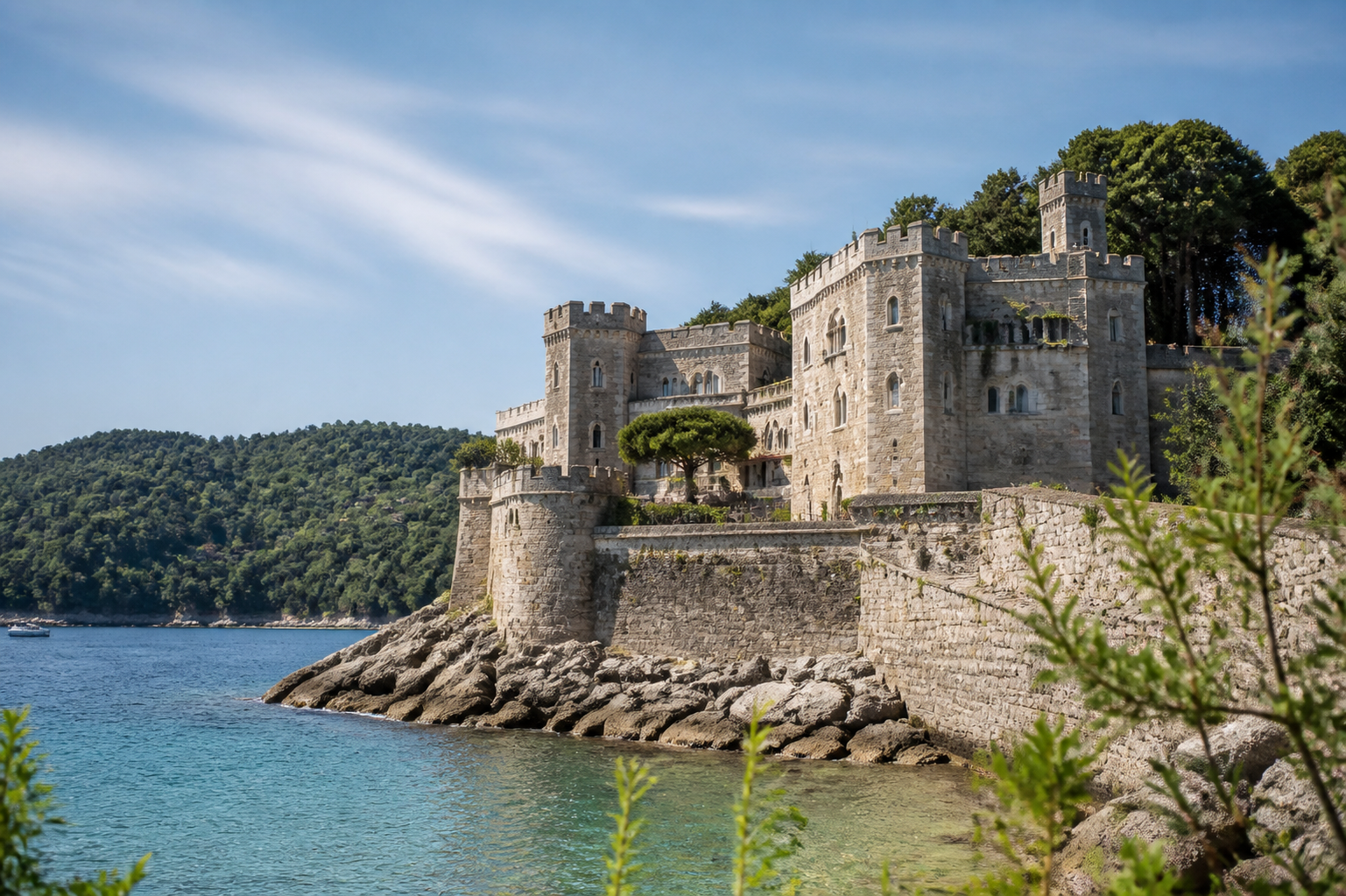
# France Beyond the Summer Rush: Cooler Corners, Local Flavors, and Smarter Travel Tips
France still knows how to charm you: a morning espresso at a pavement café, a village market where someone is arguing cheerfully over peaches, and a train ride that carries you from a city to the sea in a few hours.
But summer travel here is changing. Heatwaves and wildfires have made some parts of the Mediterranean coast, Provence, and Corsica harder to plan in July and August. I’ve found that the best trips now come from looking beyond the traditional holiday map. Northern France, the Atlantic coast, the Loire Valley, and the mountains can offer a gentler, more comfortable experience—especially if you travel in May, June, September, or early October.
## The Vibe & When to Go
France feels relaxed on the surface, but each region has its own rhythm. Paris is quick and restless, Provence is slower and sun-soaked, Brittany feels salty and windswept, and the Loire Valley is made for long lunches and even longer bike rides.
Summer remains popular, but it can be intensely hot. In southern cities such as Marseille, Avignon, and Nîmes, daytime temperatures can climb high enough to make sightseeing uncomfortable. Forest paths, beaches, and rural roads may also close temporarily when fire risk is severe. Before heading into the countryside, check local prefecture websites or the official **Météo-France** and **Vigie-Feu** updates.
My favorite times to visit are:
– **May and June:** Long days, green landscapes, and generally manageable temperatures.
– **September:** Warm seas, fewer families, and a calmer feel in popular towns.
– **Early October:** Excellent food markets, autumn colors, and lower prices.
– **July and August:** Great for the Atlantic coast, Brittany, the Alps, and northern cities, but book well ahead.
The clever change is simple: don’t build your whole trip around the Riviera in the hottest weeks of the year.
## Must-See Spots: My Top Picks
### 1. Paris, but with room to breathe
Paris is busy, of course, but you can still find quieter corners. I like starting early around the Île Saint-Louis, then walking along the Seine before the tour groups fully wake up. The covered passages near Grands Boulevards are a good rainy-day escape, and the Canal Saint-Martin area is pleasant for an unhurried lunch.
For a cooler afternoon, head to the **Musée de la Vie Romantique** or one of the smaller galleries rather than spending the entire day in a huge museum. At lunchtime, look for a fixed-price menu at a neighborhood bistro. A three-course menu du jour can be better value than ordering separate dishes.
If the heat is intense, use Paris’s museums, cafés, and shaded parks strategically. Don’t try to march from the Louvre to Montmartre at two in the afternoon.
### 2. The Loire Valley by bike or local train
The Loire Valley is one of my favorite alternatives to the hotter southern routes. The grand castles are beautiful, but the quiet lanes, riverside paths, and village bakeries are what stayed with me.
**Amboise** is a good base, with easy access to Château Royal d’Amboise and Clos Lucé. **Blois** has a lively old center and useful train connections. If you only visit one castle, choose **Chambord** for its scale and unusual architecture. For something more intimate, Chenonceau is lovely in the morning before the crowds arrive.
You can rent bikes near several train stations and ride short sections rather than committing to a huge day in the saddle. Pack water, because some stretches between villages are surprisingly open and sunny.
### 3. Brittany’s coast for fresh air and seafood
When the south is sweltering, Brittany can feel like a different country. The light is cooler, the weather changes quickly, and the coastline rewards slow walks.
I particularly like **Saint-Malo** early in the morning, before the old city fills with visitors. Walk the ramparts, then leave the center for a quieter stretch of coast. **Dinan** is inland but full of stone lanes, small shops, and crêperies. Along the coast, order galettes made with buckwheat flour and finish with a salted-butter caramel crêpe.
Bring a light jacket even in summer. Brittany’s wind can turn a sunny afternoon chilly, and a rain shower can appear without much warning. That changeable weather is part of its appeal.
### 4. Provence outside the hottest hours
I wouldn’t skip Provence, but I would plan it differently now. Visit markets early, take a long lunch indoors, and save walks for morning or evening. **Arles** is a wonderful base for Roman history, photography, and small galleries. **Aix-en-Provence** has elegant streets and shaded fountains, while the **Luberon** is best explored by car or organized day trip.
The lavender season usually peaks around late June and July, but fields vary by location and weather. Don’t trespass for a photograph, and avoid driving onto narrow farm tracks. In dry periods, some hilltop villages and natural areas may have access restrictions because of fire danger.
For a quieter southern break, consider **Sète**, **Collioure**, or parts of the Camargue rather than the busiest Riviera resorts.
## Practical Travel Advice
### Getting There & Visa
France is part of the Schengen Area. Visitors from the United States, Canada, the United Kingdom, Australia, and many other visa-exempt countries can generally stay for up to **90 days in any 180-day period** for tourism. Your passport usually needs to be valid for at least three months after your planned departure from the Schengen Area and issued within the previous ten years.
Rules can change, so check the French government or your local French consulate before booking. If an electronic travel authorization becomes required for your nationality, apply through the official EU website rather than a third-party service charging extra fees.
Paris Charles de Gaulle has the most international connections, but don’t assume it is always the best arrival point. Lyon, Nice, Marseille, Bordeaux, and Toulouse can save time if you are heading directly into another region. Compare the full journey, including the train from the airport, not just the flight price.
### Where to Stay
– **Paris:** Stay in the 5th, 9th, 11th, or 15th arrondissements for a mix of food, transport, and neighborhood life. The Marais is attractive but can be expensive and noisy.
– **Loire Valley:** Amboise is charming and walkable; Tours has more restaurants and better transport links.
– **Brittany:** Saint-Malo suits history and seaside walks. Rennes is more practical if you want train connections and lower prices.
– **Provence:** Avignon works well without a car. Aix is beautiful but often pricier. Arles is a good choice for a slower, artsy stay.
– **Atlantic coast:** Bordeaux is convenient for city comforts, while La Rochelle and Bayonne offer easier access to the sea.
I usually choose a place within ten minutes of a train station or tram stop. A pretty rural rental can become frustrating if every bakery, beach, and dinner requires a car.
### Getting Around
France’s train network is excellent between major cities. Use **SNCF Connect** to check schedules and book tickets. High-speed TGV tickets are often cheaper when purchased early, but regional TER trains are usually flexible and don’t require reservations.
In cities, trams and buses are reliable and cheaper than taxis. **Citymapper** works well in Paris and several larger cities. Uber and Bolt operate in many urban areas, though availability drops outside city centers. For longer journeys, BlaBlaCar can be useful if you are comfortable sharing a ride.
A car helps in Provence, the Dordogne, Corsica, and rural Brittany, but avoid picking one up immediately in Paris. Parking is expensive, and trains are much less stressful.
## Real Costs & Local Tips
France uses the **euro (€)**. Prices vary enormously between Paris, small towns, and resort areas.
### Approximate daily budgets per person
**Budget: €70–€110**
– Hostel or simple guesthouse: €30–€55
– Bakery breakfast: €4–€8
– Supermarket lunch or casual meal: €8–€15
– Dinner at a modest restaurant: €18–€30
– Local transport and occasional attraction: €10–€20
**Mid-range: €150–€240**
– Comfortable hotel or private room: €90–€150
– Café breakfast: €10–€15
– Restaurant lunch and dinner: €45–€75
– Museums, trains, and local transport: €25–€50
Tipping is not compulsory because service is included, but rounding up or leaving a few euros for good service is perfectly welcome. At a nicer restaurant, around 5–10% is generous if you were happy with the meal.
A few things that saved me money:
– **Order the lunch set menu.** Look for *formule*, *menu du jour*, or *plat du jour*.
– **Drink tap water.** Ask for *une carafe d’eau* rather than buying bottled water.
– **Use bakeries for breakfast and light lunches.** A fresh sandwich, quiche, and pastry can cost far less than a sit-down meal.
– **Book major trains early.** The cheapest TGV fares disappear quickly, especially on Friday and Sunday.
– **Avoid restaurants directly beside famous sights.** Walk two or three streets away and check where locals are eating.
– **Carry a reusable bottle and sun protection.** Heat can sneak up on you, especially on stone streets with little shade.
– **Check fire restrictions before hiking or driving through forests.** A closed trail is not an inconvenience to ignore; it is usually a safety decision.
France has not stopped being a great summer destination. It has simply become a place where timing and location matter more. If you shift your route north, west, or into the mountains—or visit the south in the shoulder season—you can still have the long lunches, village walks, and beautiful, slightly imperfect days that make traveling here so rewarding.
KEYWORDS: France travel