
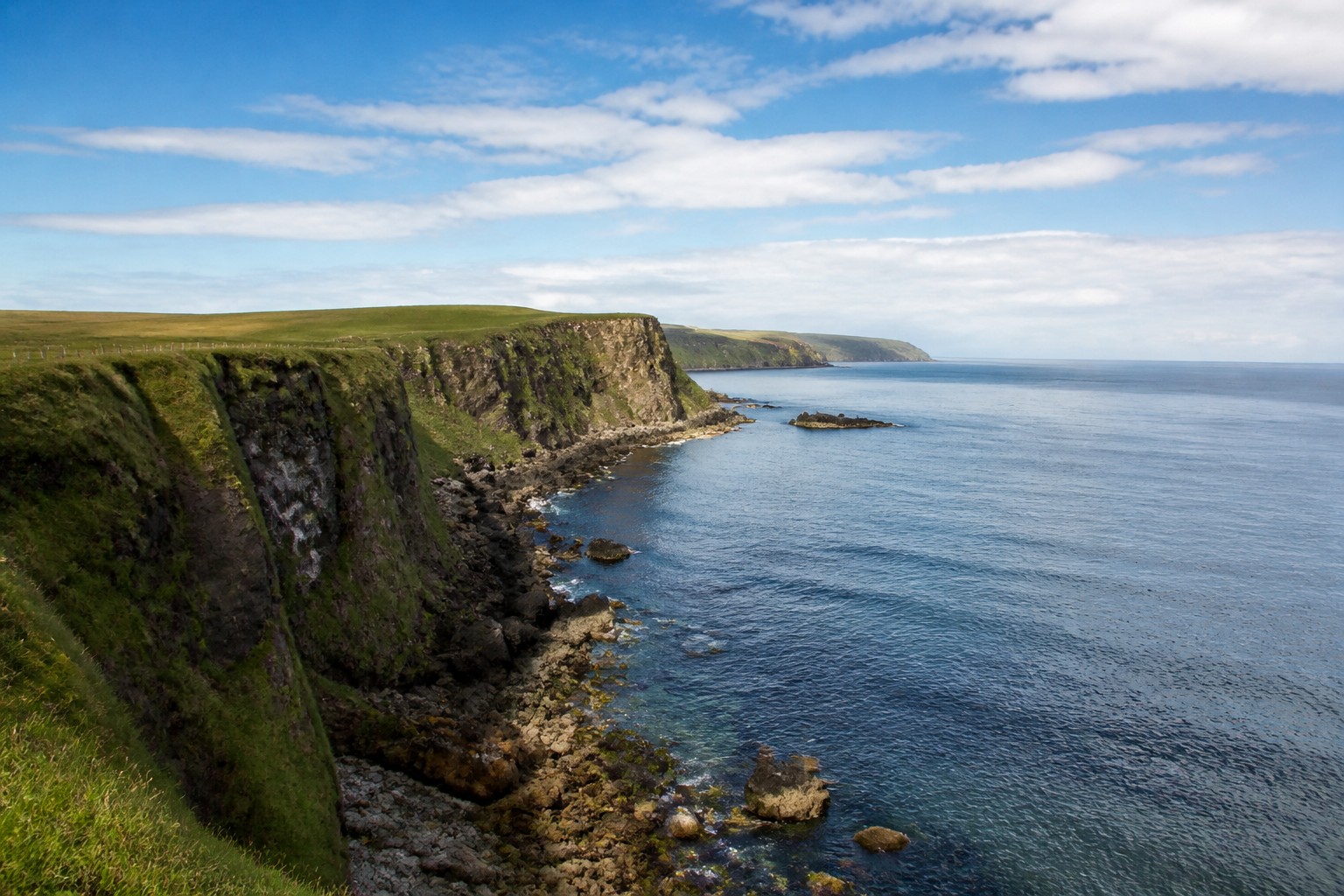
# Dumfries and Galloway: Quiet Roads, Wild Landscapes, and the Scotland I Keep Thinking About
Dumfries and Galloway has recently received global travel recognition from the **BBC**, and I can understand why. This corner of southwest Scotland doesn’t shout for attention. It wins you over slowly—with empty beaches, dark starry skies, old stone ruins, good local food, and roads that seem to lead somewhere beautiful almost by accident.
## The Vibe & When to Go
Dumfries and Galloway feels wonderfully unhurried. You’ll find lively little towns, but between them are long stretches of moorland, forest, farmland, and coast where you may see more sheep than people.
The weather is classic southwest Scotland: changeable, breezy, and often softer than you expect, but rain can arrive without much warning. Spring brings fresh green hills and lighter evenings, while summer is the easiest season for coastal walks and forest trails. Autumn is especially lovely if you enjoy copper-colored woodland and quieter roads. Winter has its own charm, particularly around the coast, though shorter daylight hours mean planning your drives carefully.
I’d visit now if you’re looking for a slower Scottish break without the crowds around Edinburgh or the Isle of Skye. Bring waterproof shoes, a proper jacket, and a little patience for weather delays. The best views often appear five minutes after the rain.
## Must-See Spots: My Top Picks
### 1. Galloway Forest Park and the Dark Sky landscape
This was the place that stayed with me longest. Galloway Forest Park is huge, wild, and wonderfully quiet, with lochs, hills, pine forests, and small roads that make a road trip feel like a proper escape.
During the day, try a walk around **Clatteringshaws Loch** or explore the trails near **Kirroughtree**. At night, the area is famous for its dark skies. On a clear evening, pull over somewhere safe, switch off the car lights, and give your eyes time to adjust. The stars can be astonishing.
A practical tip: don’t rely entirely on mobile signal or Google Maps in the forest. Download maps beforehand, carry water, and let someone know your route if you’re heading out alone.
### 2. Caerlaverock Castle
Caerlaverock Castle looks like something from a storybook, but it feels more atmospheric than polished. Its unusual triangular shape, moat, and battered stone walls make it easy to imagine medieval life here.
The castle sits near the Solway coast, surrounded by open countryside and wetlands. I’d allow at least an hour and a half, then take a slow drive through the nearby lanes. The reserve around Caerlaverock is also a good place for birdwatching, especially during migration seasons.
It’s a peaceful stop rather than a packed attraction, which is exactly what makes it appealing. Wear shoes that can handle muddy paths after wet weather.
### 3. Sweetheart Abbey and the village of New Abbey
Sweetheart Abbey is one of those places that looks beautiful even under a grey sky. The red sandstone ruins rise above the small village of New Abbey, and the setting is quiet enough that you can hear birdsong around the walls.
The story behind the abbey is romantic but sad: Lady Dervorgilla founded it in memory of her husband and had his embalmed heart carried with her. That detail gives the ruins a very human feeling.
After visiting, stop for tea or cake locally if somewhere is open, then continue toward the coast. This is an easy half-day trip from Dumfries and works well for travelers who want history without spending the whole day in a museum.
### 4. Kirkcudbright and the Solway Coast
Kirkcudbright is known for its artists, colorful harbor, galleries, and relaxed small-town atmosphere. I liked wandering without much of a plan—looking into independent shops, sitting near the water, and taking in the painted houses.
For a quieter coastal experience, continue toward **Rockcliffe** or **Sandyhills**. Rockcliffe is especially good for a short walk with sea views and woodland. The Solway coast has a softer, more open character than Scotland’s dramatic west coast, with wide tidal flats and distant hills.
Check tide times before planning a beach walk. The coastline can look completely different a few hours later, and some paths become surprisingly wet.
## Practical Travel Advice
### Getting There and Visa Requirements
The easiest airports are usually:
– **Glasgow Airport**, roughly 1.5 to 2.5 hours away by car depending on your destination
– **Edinburgh Airport**, around 2 to 3 hours away
– **Newcastle Airport**, useful for some northern routes, though usually less convenient
Dumfries has railway connections from Glasgow, Carlisle, and other parts of the UK. Trains are convenient if you’re staying in Dumfries itself, but a car makes a huge difference once you want to explore the forests, abbeys, beaches, and smaller villages.
For entry, Dumfries and Galloway follows **UK immigration rules**. Many visitors who don’t need a visa now need a **UK Electronic Travel Authorisation (ETA)** before flying, while travelers from countries requiring a visa must apply for the appropriate UK visa in advance. Irish citizens generally have different arrangements under the Common Travel Area. Check the official UK government website before booking, as requirements and fees can change.
### Where to Stay
– **Dumfries town centre:** Best for train access, restaurants, shops, and a practical base without a car.
– **Kirkcudbright:** A good choice for galleries, harbor walks, and a prettier coastal-town atmosphere.
– **Gatehouse of Fleet or Newton Stewart:** Handy for exploring Galloway Forest Park and nearby walking routes.
– **Dalbeattie or Rockcliffe area:** Ideal if you want woodland and coast close by.
– **Country cottages and farm stays:** Best for families, couples, or anyone hoping to cook and enjoy the landscape at a slower pace.
Accommodation can become limited during school holidays and summer weekends, especially in small coastal villages. Booking ahead is sensible if you want a particular cottage or dog-friendly room.
### Getting Around
A car is the most realistic option for seeing the wider region. Distances can look short on a map, but narrow roads and winding routes make journeys slower than expected.
Dumfries is manageable on foot, and some towns are easy to explore without transport. Local buses connect larger settlements, but services can be infrequent, especially on Sundays and in rural areas. Taxis are available in towns, though you may need to book ahead.
I wouldn’t plan on using Uber as your main transport. Coverage is limited or unavailable in many rural areas. Local taxi companies are more dependable, particularly if you’re trying to reach a train station or a remote walking trail.
## Real Costs and Local Tips
Prices vary by season, but these are realistic daily estimates per person:
### Budget travel: £65–£100 per day
– Hostel or basic guesthouse: £30–£55
– Simple meals, bakery lunches, or groceries: £20–£30
– Bus fares, fuel share, and low-cost attractions: £15–£25
### Mid-range travel: £130–£210 per day
– Comfortable hotel or B&B: £80–£130
– Pub meal, café lunch, and breakfast: £35–£55
– Car hire, fuel, attractions, or occasional taxi: £25–£50
The local currency is the **pound sterling (£)**. Cards are accepted almost everywhere, but I still like carrying a little cash for honesty boxes, small cafés, parking machines, and rural shops.
Tipping is not compulsory in Scotland. In restaurants, around **10%** is a reasonable gesture for good service, especially if a service charge hasn’t already been added. You don’t need to tip at every café or pub.
A few things that helped me keep costs down:
– **Pack lunches for driving days.** Rural cafés can be spaced farther apart than you expect, and a supermarket picnic beside a loch is often more enjoyable anyway.
– **Fill the car before heading into the forest.** Petrol stations become much less frequent once you leave the larger towns.
– **Check opening days carefully.** Small attractions, cafés, and galleries may close on certain weekdays outside summer.
– **Look beyond the famous viewpoints.** A short coastal path, village harbor, or forest loop can be just as memorable as a major attraction—and usually costs nothing.
– **Download maps and attraction information in advance.** Signal can disappear quickly once you’re among the hills.
Dumfries and Galloway is not a place I’d visit to tick off a long list of landmarks. I’d go for the feeling of having space again: a windy beach, a warm pub after a wet walk, old ruins in the evening light, and roads where the journey itself becomes the day’s best part.
KEYWORDS: Dumfries Galloway