
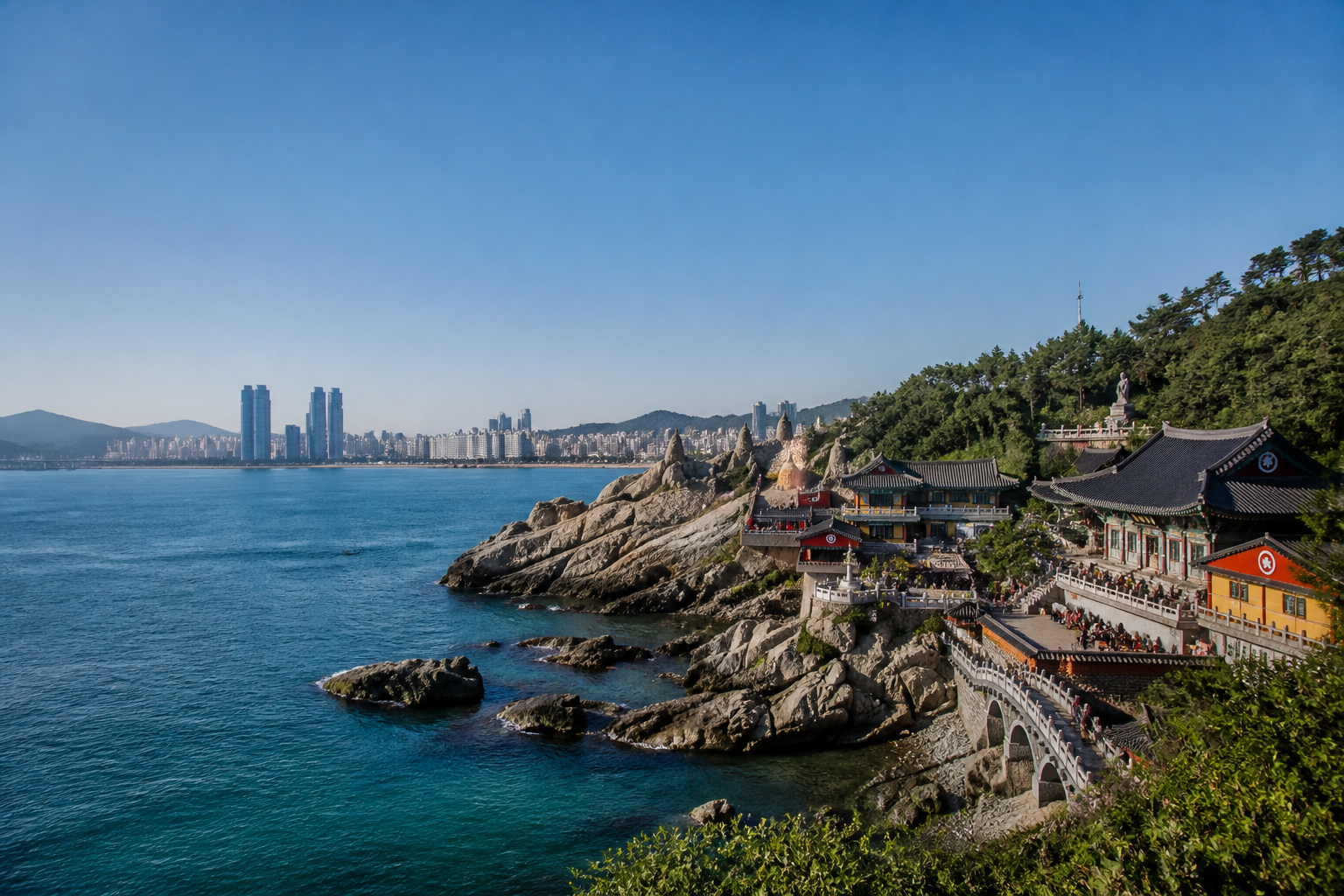
# Busan in 2027: My Favorite Beaches, Seafood Spots, and Honest Travel Tips
Busan has just landed at **No. 5 on Expedia’s Top 10 Global Travel Destinations for 2027**, according to *The Korea Times*. I can understand why. Seoul often gets the first visit, but Busan is the city that made me slow down: mornings by the sea, hot fish cakes from a street stall, steep hills with incredible views, and evenings spent watching the lights come on around Gwangalli Beach.
It feels like a working port city rather than a polished resort. That mix is what I love most.
## The Vibe & When to Go
Busan is relaxed, lively, and wonderfully easygoing. You can spend one day in a busy seafood market and the next wandering a quiet coastal trail with only the sound of waves and gulls.
The best times to visit are usually:
– **April to May:** Mild temperatures, clear spring days, and comfortable walking weather.
– **September to October:** Warm sea air, less humidity, and some of the nicest sunsets of the year.
– **June to August:** Beach season, but also hot, humid weather and occasional heavy rain during the monsoon period.
– **December to February:** Cold but often crisp and sunny. Hotels can be cheaper, and winter seafood is excellent.
If you’re traveling soon, check the forecast carefully rather than trusting the season alone. Busan’s weather can shift quickly, especially near the coast. A light waterproof jacket and comfortable shoes are useful almost any time of year.
## Must-See Spots: My Top Picks
### 1. Gwangalli Beach After Dark
Haeundae may be Busan’s best-known beach, but Gwangalli is my favorite place to spend an evening. The view of **Gwangan Bridge** changes as the sky gets darker, and the beachfront cafés and casual restaurants make it easy to stay for hours.
I like arriving before sunset, grabbing a drink or a cone of roasted chestnuts, and finding a seat on the sand. On some evenings, people bring folding chairs and snacks while street performers play along the promenade.
For a quieter view, walk east toward **Millak Waterside Park**. Pick up sushi or seafood from a nearby shop and eat outside with the bridge in front of you.
### 2. Gamcheon Culture Village—With a Little Patience
Gamcheon’s colorful hillside houses are beautiful, but the main lanes can feel crowded, especially between late morning and mid-afternoon. Go early if you want peaceful photos.
Instead of rushing through the famous photo points, I recommend following the smaller side streets, browsing the tiny studios, and stopping at a neighborhood café. Wear shoes with a good grip—the village is full of stairs and steep slopes.
You don’t need to spend half a day here. Two or three hours is enough, especially if you combine it with nearby **Amisan Observatory** or the old harbor area.
### 3. Jagalchi Market and BIFF Square
Jagalchi Market is where Busan’s identity as a port city really comes through. The lower floor is filled with tanks and stalls selling everything from shellfish to flatfish, while restaurants upstairs will cook your choice for a fee.
If you’re not comfortable choosing live seafood, look for a busy restaurant with a clear menu and prices displayed. You can also keep things simple with grilled fish, raw fish rice bowls, or spicy seafood stew.
Afterward, walk through **BIFF Square** for hotteok, a sweet Korean pancake filled with seeds and syrup. The version sold here is especially popular, and one is usually enough to share unless you have a serious sweet tooth.
### 4. Taejongdae or the Coastal Walks Around Cheongsapo
For sea views without city noise, I’d choose **Taejongdae**. The park has cliffs, pine trees, and wide views across the water. There is a small sightseeing train, but walking the trails gives you more freedom to stop at the viewpoints.
Closer to Haeundae, **Cheongsapo** is another good choice. The red-and-white lighthouses, seafood restaurants, and old railway path make it feel more local than the main beach strip. The Blue Line Park train is scenic, but book ahead during busy periods. If tickets are gone, simply walk part of the old track and enjoy the same coastal scenery for free.
## Practical Travel Advice
### Getting There and Visa
Busan’s **Gimhae International Airport** has direct flights from several Asian cities. If you’re coming from Europe, North America, or Australia, you may find better prices by flying into Seoul and taking the high-speed KTX train to Busan. The train from Seoul takes roughly two and a half hours and arrives near the center of the city.
Entry rules depend on your passport. Many travelers can enter South Korea visa-free for short tourist stays, while others need to apply for a visa in advance. Some nationalities also need **K-ETA**, South Korea’s electronic travel authorization, though exemptions and rules can change. Check the official Korean immigration or K-ETA website before booking, particularly for a 2027 trip.
For flights, compare Gimhae with Seoul’s Incheon Airport. A slightly longer route through Seoul can sometimes save enough money to cover the KTX ticket and still leave you with a better schedule.
### Where to Stay
Busan is spread out, so choose your neighborhood based on how you want to spend your time.
– **Haeundae:** Best for first-time visitors, beach access, cafés, hotels, and plenty of restaurants. It can feel busy and touristy.
– **Gwangalli:** My favorite for evenings, bridge views, bars, and a more relaxed beach atmosphere.
– **Seomyeon:** Convenient for shopping, nightlife, restaurants, and subway connections. It’s practical rather than scenic.
– **Nampo-dong:** Great for markets, street food, Jagalchi, BIFF Square, and the old downtown area.
– **Yeongdo:** A good choice if you like harbor views, independent cafés, art spaces, and a quieter neighborhood feel.
If it’s your first visit, Haeundae or Seomyeon makes logistics easy. If you’ve already seen the main sights, I’d stay in Gwangalli or Yeongdo.
### Getting Around
Busan’s subway is clean, reliable, and affordable. It won’t take you everywhere, but it covers the main areas and connects well with the airport. Buses fill in the gaps, although routes can be confusing if you don’t read Korean.
Download **Naver Map** or **KakaoMap** rather than relying only on Google Maps. Google Maps works for basic planning, but local map apps are much better for bus routes, walking directions, and restaurant locations.
For taxis, use **Kakao T** if you can set it up, or ask your hotel or restaurant to call one. Taxis are generally reasonable, but traffic around Haeundae and Gwangalli can be slow during evenings and weekends.
A **T-money card** is useful for subway and bus travel. You can buy and reload one at convenience stores or subway stations.
## Real Costs and Local Tips
South Korea uses the **Korean won (KRW)**. Prices change, but these are realistic daily estimates for one person, excluding international flights:
### Budget travel: around ₩60,000–₩100,000 per day
This could cover:
– Hostel or basic guesthouse: ₩25,000–₩45,000
– Simple breakfast: ₩5,000–₩8,000
– Local lunch or noodles: ₩8,000–₩12,000
– Street food and a casual dinner: ₩15,000–₩25,000
– Public transportation and small extras: ₩5,000–₩10,000
### Mid-range travel: around ₩130,000–₩220,000 per day
This usually includes:
– Comfortable hotel: ₩80,000–₩150,000
– Coffee and breakfast: ₩10,000–₩20,000
– Restaurant meals: ₩30,000–₩50,000
– Taxis, attractions, and snacks: ₩15,000–₩30,000
Prices rise sharply on summer weekends, public holidays, and during major festivals. Booking accommodation early matters more than saving a few thousand won on meals.
A few habits made my trips cheaper and easier:
– **Eat lunch at markets or local diners.** A filling bowl of noodles, pork soup, or rice can cost much less than a meal with a sea view.
– **Check whether restaurant prices include side dishes.** Korean meals often come with banchan, so extra orders are not always necessary.
– **Skip the most expensive beach cafés.** Walk one or two blocks inland and you’ll often find better coffee at half the price.
– **Carry a little cash.** Cards are widely accepted, but some market stalls, small snack stands, and older restaurants still prefer cash.
– **Don’t tip by default.** Tipping is not a normal part of dining in South Korea. A warm thank-you is enough.
– **Visit popular sights early.** Gamcheon, Haeundae, and the Blue Line Park can become crowded later in the day.
Busan is easy to like, but I think it becomes memorable when you leave room for ordinary moments: a bowl of pork soup near the subway, a slow walk through a residential lane, or sitting on Gwangalli Beach while the bridge lights shimmer across the water. The Expedia ranking may bring more attention in 2027, but the city’s real charm is still found away from the busiest photo spots.
KEYWORDS: Busan beach, Busan skyline