
# Busan Before the Crowds: My Favorite Beaches, Food Stops, and Honest Travel Tips
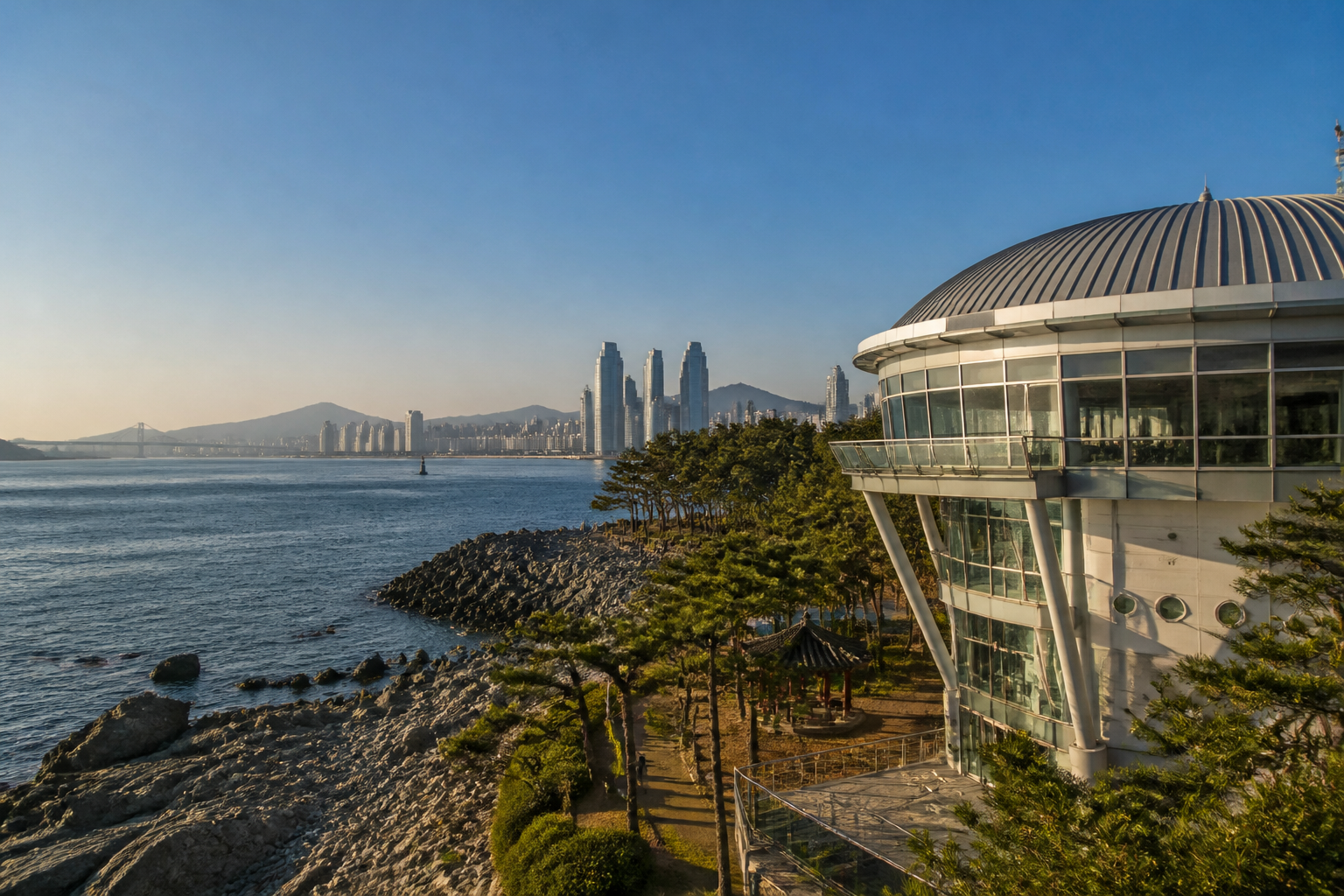
Busan has just earned a very promising spot: **No. 5 on Expedia’s Top 10 global travel destinations for 2027**, according to *The Korea Times*. I can understand why. Busan gives you a little bit of everything—long beaches, seafood markets, mountain views, lively neighborhoods, and a relaxed coastal rhythm that feels different from Seoul.
What I like most is that Busan doesn’t demand that you rush. You can spend the morning wandering colorful hillside streets, eat grilled clams beside the water, and finish the day in a quiet café with a view of the harbor.
## The Vibe & When to Go
Busan feels like a working port city that happens to have beautiful beaches. It is less polished and fashion-focused than Seoul, but that is part of its charm. Fishing boats still come into the markets, elderly locals gather over coffee, and residential streets sit right beside major tourist sights.
The best times to visit are **April to June** and **September to October**, when the weather is usually mild enough for walking. Spring brings clear skies and occasional cherry blossoms, while autumn is cooler and often wonderfully sunny.
Summer is popular for beach trips, but July and August can be hot, humid, and rainy. The beaches get crowded, especially around Haeundae. Winter is quiet and often crisp, with cold sea winds but fewer visitors and very comfortable prices.
If you are planning around Expedia’s 2027 prediction, I would consider going before the destination becomes even more popular. Busan already has busy weekends, but weekdays can still feel pleasantly local.
## Must-See Spots: My Top Picks
### 1. Haeundae Beach and the quieter side streets
Haeundae is Busan’s famous beach, and yes, it can feel busy. Still, I enjoy walking the full length of the sand early in the morning, before umbrellas and crowds take over. The sea air is refreshing, and the skyline looks especially pretty from the eastern end.
After the beach, wander toward **Dalmaji-gil Road**. It is known for its ocean views and cafés, but you do not need to visit the most famous coffee shop. I usually look for a smaller place with a window seat and stay for an iced coffee or a slice of cake.
For a calmer beach experience, continue to **Cheongsapo**, where you can see the red-and-white lighthouse, seafood restaurants, and the popular seaside train route.
**My tip:** Visit Haeundae at sunrise or after dinner. Midday is the busiest and hottest part of the day.
### 2. Gamcheon Culture Village—but arrive early
Gamcheon Culture Village is one of Busan’s most photographed places, with brightly painted homes climbing the hillside. The views are lovely, but the narrow streets can become crowded with tour groups.
I prefer arriving before 9 a.m., when shopkeepers are opening up and the village is much quieter. Rather than only following the main photo spots, walk a few turns away from the central path. You will find tiny galleries, old stairways, and rooftop views over the city.
Wear comfortable shoes. The hills are steep, and some staircases are uneven. The village is still a residential neighborhood, so keep your voice down and avoid photographing people’s homes too closely.
### 3. Jagalchi Market and Nampo-dong
For a taste of Busan’s working-city side, head to **Jagalchi Market**. The seafood displays can be dramatic, with tanks full of live octopus, shellfish, and fish I could not always identify. Upstairs, restaurants will cook your chosen seafood for you.
If that feels too expensive, look for a simple local restaurant in the surrounding streets instead. I have had satisfying bowls of seafood soup and grilled fish without paying market-premium prices.
From Jagalchi, it is easy to walk through **Nampo-dong**, where you will find snack stalls, cosmetics shops, old cinemas, and busy shopping streets. Try **씨앗호떡, or ssiat hotteok**, a warm sweet pancake filled with seeds and syrup. It is messy, hot, and exactly the sort of snack I want while exploring.
### 4. Gwangalli Beach at night
Gwangalli is my favorite place for an easy evening. The beach faces the **Gwangan Bridge**, which lights up after dark. Sit on the sand with a convenience-store drink, or choose one of the cafés and restaurants across the road.
The atmosphere is younger and more casual than Haeundae. On weekends, local musicians and small groups often gather near the beach. You can also find reasonably priced Korean barbecue restaurants in the streets behind the waterfront.
For dinner, I like ordering grilled pork, seafood pancakes, or spicy rice cakes and sharing several dishes. Busan meals are often best when nobody orders just one thing.
## Practical Travel Advice
### Getting There and Visa Information
Most international visitors arrive through **Gimhae International Airport**, which is connected to central Busan by light rail and subway. If you are flying from outside Asia, you may find more convenient or cheaper routes through Seoul, Tokyo, Osaka, Taipei, Hong Kong, or Singapore.
For flights, compare the total price rather than just the ticket fare. A cheap ticket with a long overnight connection may not save much once you add airport food, luggage, and lost time.
Visa rules depend on your passport. Citizens of many countries can enter South Korea for short tourist visits without a traditional visa, while others must apply in advance. Some visa-exempt travelers may also need a **K-ETA**, although requirements and temporary exemptions can change. Check the official Korea Visa Portal and K-ETA website shortly before departure.
You will generally need:
– A passport valid for your stay
– Proof of onward or return travel in some cases
– A completed arrival or immigration form if required
– Accommodation details and a reachable phone number
Do not rely on old blog posts for entry rules. South Korea has adjusted K-ETA policies more than once.
### Where to Stay
– **Haeundae:** Best for first-time visitors who want beaches, restaurants, modern hotels, and easy access to attractions.
– **Gwangalli:** My preferred choice for a more relaxed evening scene, ocean views, cafés, and the Gwangan Bridge.
– **Seomyeon:** Convenient and lively, with lots of food, shopping, and subway connections. A good base if you plan to explore different parts of Busan.
– **Nampo-dong:** Great for markets, street food, shopping, and older Busan neighborhoods. It feels more local and urban than Haeundae.
– **Yeongdo:** A quieter option with harbor views, independent cafés, and a slower pace. Public transport takes a little more planning, but the atmosphere is rewarding.
If you are staying only two nights, choose Haeundae or Seomyeon. For three or more nights, splitting your stay between the beach area and central Busan can work well.
### Getting Around
Busan’s subway and buses are reliable and affordable. The subway is easiest for longer journeys, while buses help you reach hillside neighborhoods and quieter beaches.
Pick up a **T-money card** at a convenience store or transit station. You can load it with cash and use it on buses, subways, and some taxis.
For directions, I use **Naver Map** rather than Google Maps, which has limited usefulness in South Korea. **KakaoMap** is another good option. For taxis, use **Kakao T** if you can register it, although regular taxis are also easy to find near stations and busy streets.
Busan is walkable in sections, not as one whole city. Haeundae, Gwangalli, Nampo-dong, and Seomyeon are pleasant on foot, but traveling between them can take 30 to 60 minutes.
## Real Costs and Local Tips
Prices vary with the exchange rate, but these are comfortable estimates per person:
### Budget travel: around ₩60,000–₩90,000 per day
– Guesthouse or simple hostel: ₩25,000–₩45,000
– Local breakfast or convenience-store meal: ₩5,000–₩8,000
– Simple lunch or dinner: ₩8,000–₩15,000
– Subway and bus fares: roughly ₩5,000–₩8,000 per day
– Coffee, snacks, and small entrance fees: ₩10,000–₩20,000
### Mid-range travel: around ₩150,000–₩250,000 per day
– Comfortable hotel: ₩100,000–₩180,000
– Restaurant meals: ₩15,000–₩35,000 each
– Taxis, cafés, and occasional paid attractions: ₩20,000–₩40,000
South Korea uses the **Korean won**, written as KRW or ₩. Cards are widely accepted, but keep some cash for market snacks, small restaurants, transportation top-ups, and older shops.
Tipping is not expected in Korea. You do not need to add a restaurant tip, and leaving extra money can sometimes confuse staff.
A few things that saved me money:
– **Eat lunch away from the beachfront.** Restaurants one or two streets inland are often noticeably cheaper.
– **Use convenience stores for breakfast and drinks.** Kimbap, boiled eggs, fruit, and coffee make an easy inexpensive start.
– **Avoid taxis during heavy rain and Friday evenings.** Traffic can turn a short ride into an expensive slow crawl.
– **Visit major sights early.** You will get better photos at Gamcheon and Haeundae, and you may avoid paying for unnecessary tour packages.
– **Check seafood prices before ordering.** At markets, ask about the price by weight and cooking charges so there are no surprises.
– **Carry a reusable water bottle.** Cafés often provide free water, and buying bottled drinks all day adds up.
Busan is the kind of place I would happily revisit without a packed itinerary. I can spend one day chasing beaches and viewpoints, another eating my way through markets, and still leave with a list of neighborhoods I did not get to explore. With Expedia placing it at No. 5 for 2027, more travelers are likely to discover it soon—but for now, there are still plenty of quiet corners between the famous sights.
KEYWORDS: Busan beach, Busan Korea