
# Colombia After Its 2026 World Travel Awards Win: My Favorite Places, Flavors, and Travel Tips
Colombia has been having a big moment, and the 2026 World Travel Awards only made it more official. The country took top honors across several travel categories, reflecting what many travelers have already discovered: Colombia is colorful, welcoming, wildly varied, and much easier to enjoy than its old reputation suggests.
I’ve traveled through Colombia in different moods—from slow mornings in coffee country to noisy, joyful nights in Cartagena—and the country never feels like just one destination. Bogotá has cool mountain air and serious museums. Medellín is green, energetic, and full of hillside views. The Caribbean coast brings heat, music, and salty breezes. Then there are the coffee towns, Pacific beaches, deserts, rivers, and remote jungle regions.
The best part is that Colombia still rewards curiosity. A few streets away from the main square, you often find a family-run restaurant, a tiny bakery, or a quiet viewpoint that feels far more memorable than the famous postcard spot.
## The Vibe & When to Go
Colombia sits close to the equator, but its weather depends heavily on altitude. Bogotá can feel chilly and rainy in the same week that Cartagena is hot enough for a swim before breakfast. Medellín is famously mild, while the coffee region is warm, green, and prone to short bursts of rain.
There isn’t one perfect season for the whole country, but these are useful guidelines:
– **December to February:** Generally popular and fairly dry in many regions, though prices rise around Christmas and New Year.
– **March to May:** Lush landscapes and occasional heavy rain. A lovely time for coffee country if you don’t mind carrying a rain jacket.
– **June to August:** Often good for city trips, hiking, and the Caribbean coast, with busy periods around local festivals.
– **September to November:** More rain in several regions, but fewer crowds and better accommodation deals.
I like traveling in the shoulder seasons, especially February to March or September to October. You get a little more breathing room in the historic centers, and small hotels are often less expensive.
Colombia feels social and outdoorsy. People linger over coffee, gather in plazas, and treat food as something to share rather than rush through. Music spills from bars, buses, and corner shops. You’ll also notice a strong regional identity: a paisa from Medellín, a costeño from the Caribbean, and a rolo from Bogotá may all have completely different ideas about food, weather, and how late dinner should be.
## Must-See Spots: My Top Picks
### 1. Bogotá’s La Candelaria and the mountain above the city
I usually suggest beginning in Bogotá, even if the altitude requires a slow first day. At more than 2,600 meters, the city can leave you breathless before you’ve done anything strenuous. Drink water, take it easy, and don’t plan a mountain hike immediately after landing.
La Candelaria is the historic center, packed with colorful doors, street art, museums, cafés, and old colonial buildings. The Gold Museum is one of the city’s true highlights, especially if you enjoy history and beautifully made objects. I also like wandering toward the Botero Museum, where the collection is free and the surrounding streets are good for a relaxed afternoon.
For the best city view, take the cable car or funicular up **Monserrate**. Go early if you can. The view is dramatic on a clear day, but Bogotá’s clouds can roll in quickly. Bring a light jacket, even if the lower city feels mild.
For a more local food experience, skip eating every meal in La Candelaria. Try **ajiaco**, Bogotá’s comforting chicken-and-potato soup, and look for a busy neighborhood restaurant where office workers are eating lunch. The midday **corrientazo**—a set meal with soup, rice, protein, salad, and a drink—is one of the easiest ways to eat well for very little.
### 2. Medellín: leafy neighborhoods, cable cars, and a slower rhythm
Medellín surprised me with how pleasant it is to spend several days there. The city is surrounded by green mountains, and the climate is warm without being exhausting. The metro is clean and simple to use, while the cable cars reveal how dramatically the city climbs the hillsides.
Stay around **El Poblado** if you want restaurants, nightlife, and plenty of accommodation choices. It’s convenient but can feel a little polished and international. I prefer spending time in **Laureles**, where the streets are flatter, the cafés feel more relaxed, and locals seem to outnumber visitors.
Ride the metro and cable car simply for the views, but avoid treating hillside neighborhoods as sightseeing displays. If you visit Comuna 13, choose a responsible local guide and listen to residents rather than arriving only to photograph the escalators and murals. The area has a complicated history, and the best tours explain it with care.
One of my favorite Medellín afternoons is low-key: coffee in Laureles, a walk along the tree-lined streets, then an evening at a small restaurant rather than a crowded rooftop bar. If you have an extra day, take a trip to **Guatapé** and climb El Peñol. Start early; the stone stairway becomes hot and crowded later in the morning.
### 3. Cartagena’s old city and the quieter Caribbean side
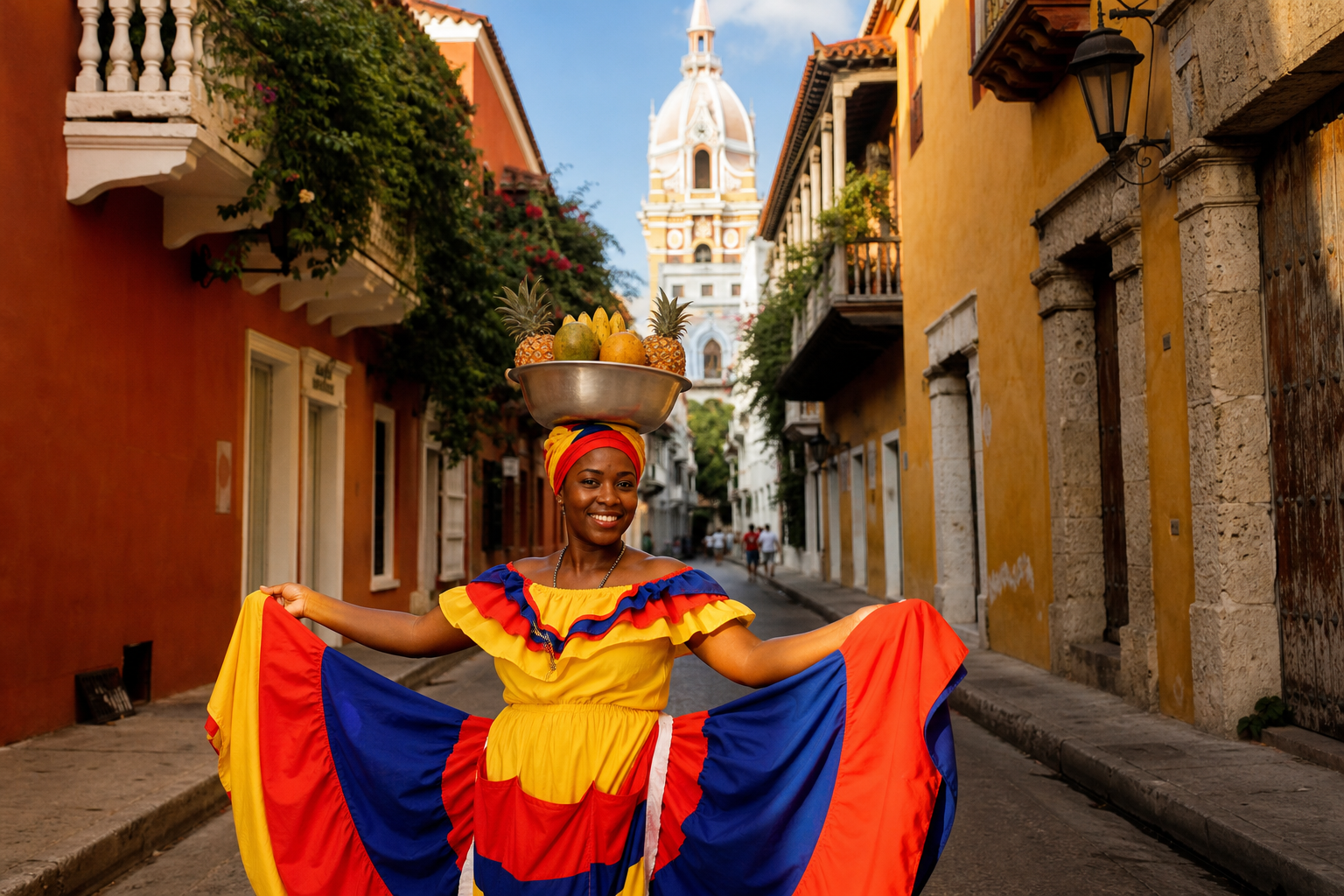
Cartagena is beautiful, but it can also be hot, busy, and expensive. The old city walls glow golden near sunset, and the balconies overflowing with flowers make even a simple walk feel cinematic. Still, I enjoy Cartagena most when I stop trying to see everything at midday.
Walk the old town early, before the heat builds. Explore **Getsemaní** for murals, small bars, and a more lived-in atmosphere, then return to the walls for sunset. The famous clock tower area gets crowded, so I often wander a few streets away and find a quieter plaza instead.
For a different side of the city, consider staying in **Manga** or visiting **Castillogrande**. They don’t have the same historic drama, but they offer calmer evenings and a glimpse of daily city life.
The beaches directly in Cartagena are not the country’s best. If you want clear water and soft sand, take a boat or organized transfer to the **Rosario Islands**, but check the boat operator carefully. Sea conditions can be rough, and cheap day trips sometimes pack too many people onto a small boat. For an even more relaxed beach stay, look toward **Barú** or the coast around **Santa Marta**, depending on your itinerary.
### 4. Salento and the Cocora Valley
The coffee region is where I’d send anyone who wants Colombia at a gentler pace. **Salento** has colorful houses, mountain air, excellent coffee, and streets that invite wandering. It can get busy on weekends, so staying two or three nights helps you enjoy it before the day-trippers arrive.
The main reason many people come is the **Cocora Valley**, home to Colombia’s tall wax palms. The classic loop hike can be muddy and steep, especially after rain. Wear shoes with real grip and bring a waterproof layer. Jeeps leave from Salento’s main square, but departures may depend on demand rather than a fixed clock.
Don’t spend the whole visit chasing viewpoints. Visit a small coffee farm, ask how the beans are processed, and taste the difference between a fresh local brew and the sweet coffee often served in tourist cafés. Nearby **Filandia** is another lovely town, with craft shops, viewpoints, and a quieter feel than Salento.
## Practical Travel Advice
### Getting there and visa requirements
Most international visitors fly into **Bogotá**, though Cartagena and Medellín also receive international flights. From North America, Europe, and several Latin American cities, there are regular direct routes or easy connections.
Visa rules depend on your passport. Citizens of many countries—including the United States, Canada, the United Kingdom, Australia, and much of the European Union—can usually enter for tourism without arranging a visa in advance, often for up to 90 days. Requirements and permitted stay lengths can change, so check Colombia’s official immigration information or your nearest Colombian consulate before booking.
You may be asked for:
– A passport valid for your stay
– Proof of onward or return travel
– An address for your accommodation
– Evidence of sufficient funds in some cases
Airfares are often lower when you compare Bogotá, Medellín, and Cartagena separately rather than assuming you must fly in and out of the same city. For a multi-city trip, an open-jaw ticket can save both time and a long bus ride.
### Where to stay
– **Bogotá:** La Candelaria for history and museums; Chapinero or Zona G for restaurants and nightlife; Parque 93 for a quieter, more polished stay.
– **Medellín:** Laureles for local restaurants and a relaxed atmosphere; El Poblado for nightlife and a large choice of hotels; Envigado for a more residential feel.
– **Cartagena:** The walled city for atmosphere; Getsemaní for nightlife and character; Manga for quieter streets and better value.
– **Salento:** Near the center for convenience; outside town for mountain views and a peaceful coffee-farm experience.
– **Santa Marta:** The historic center for restaurants and access to Tayrona; Rodadero for a busier beach scene; Minca for cooler mountain air and eco-lodges.
If you’re sensitive to noise, ask about nearby bars and rooftop venues before booking. Cartagena and Medellín can stay lively well past midnight.
### Getting around
Colombia is easy to explore, but distances are larger than they look on a map. Mountain roads can turn a seemingly short journey into a full day.
– Use **metro systems** in Bogotá and Medellín where available.
– **TransMilenio** in Bogotá is useful but crowded; keep your phone and wallet secure.
– Apps such as **Uber, Cabify, and DiDi** operate in major cities, though local arrangements can vary.
– Taxis are common, but ask your hotel or restaurant to call one, or use an app where possible.
– For intercity travel, compare buses with domestic flights. A bus may be inexpensive, but a flight can save an entire day.
– In smaller towns, walking is often the best way to explore. For rural areas, use registered taxis or transfers recommended by your accommodation.
## Real Costs and Local Tips
Colombia uses the **Colombian peso (COP)**. Prices change frequently, so I’d check the current exchange rate before arriving rather than relying on old online guides.
A realistic daily budget looks something like this:
### Budget travel: around **COP 130,000–220,000 per person**
This usually covers:
– Hostel dorm or simple guesthouse
– Local breakfasts and corrientazos
– Public transportation
– One inexpensive activity
– Limited nightlife
### Mid-range travel: around **COP 300,000–600,000 per person**
This can cover:
– A comfortable private room
– A mix of local restaurants and nicer cafés
– App-based rides or occasional taxis
– Museum visits, guided walks, and day trips
Cartagena’s old city, high-season beach areas, and popular coffee towns can run higher. Bogotá and Medellín offer more choice at nearly every price level.
Tipping is not compulsory, but it is appreciated. Many restaurants add a voluntary **10% service charge**, which the server should ask you to approve. Check the bill before paying. For guides, drivers, and excellent service, a small tip in pesos is a kind gesture.
A few things that helped me keep costs under control:
– **Eat the weekday lunch menu.** The set lunch is often filling, fresh, and far cheaper than ordering à la carte.
– **Carry small bills.** Street vendors, small cafés, and bus stations may not have change for large notes.
– **Ask taxi fares before getting in.** Better still, use an app or have your accommodation arrange the ride.
– **Book tours directly with reputable local operators.** Hotel desks can sometimes add a large commission.
– **Don’t exchange money at the airport unless necessary.** Rates are usually less favorable. Use a reliable exchange office or withdraw from a bank ATM in a secure area.
– **Learn a few Spanish phrases.** “¿Cuánto cuesta?”, “sin azúcar,” and “¿me puede ayudar?” go a long way. Even a basic attempt usually brings a warmer response.
Colombia’s 2026 World Travel Awards recognition feels believable because the country’s appeal isn’t limited to one famous city or resort. It’s in the small coffee shop where the owner explains the beans, the mountain road opening onto a green valley, the old woman selling fruit in a plaza, and the evening when a simple local meal turns into a long conversation.
Go with a little patience, leave room in your schedule, and let each region show you its own personality. That’s when Colombia becomes more than a list of award-winning places—it becomes a trip you keep talking about long after you’ve come home.
KEYWORDS: Colombia travel, Cartagena Colombia