
# Chengdu Beyond the Pandas: Tea Houses, Spicy Food, and the City’s Slower Side
## The Vibe & When to Go
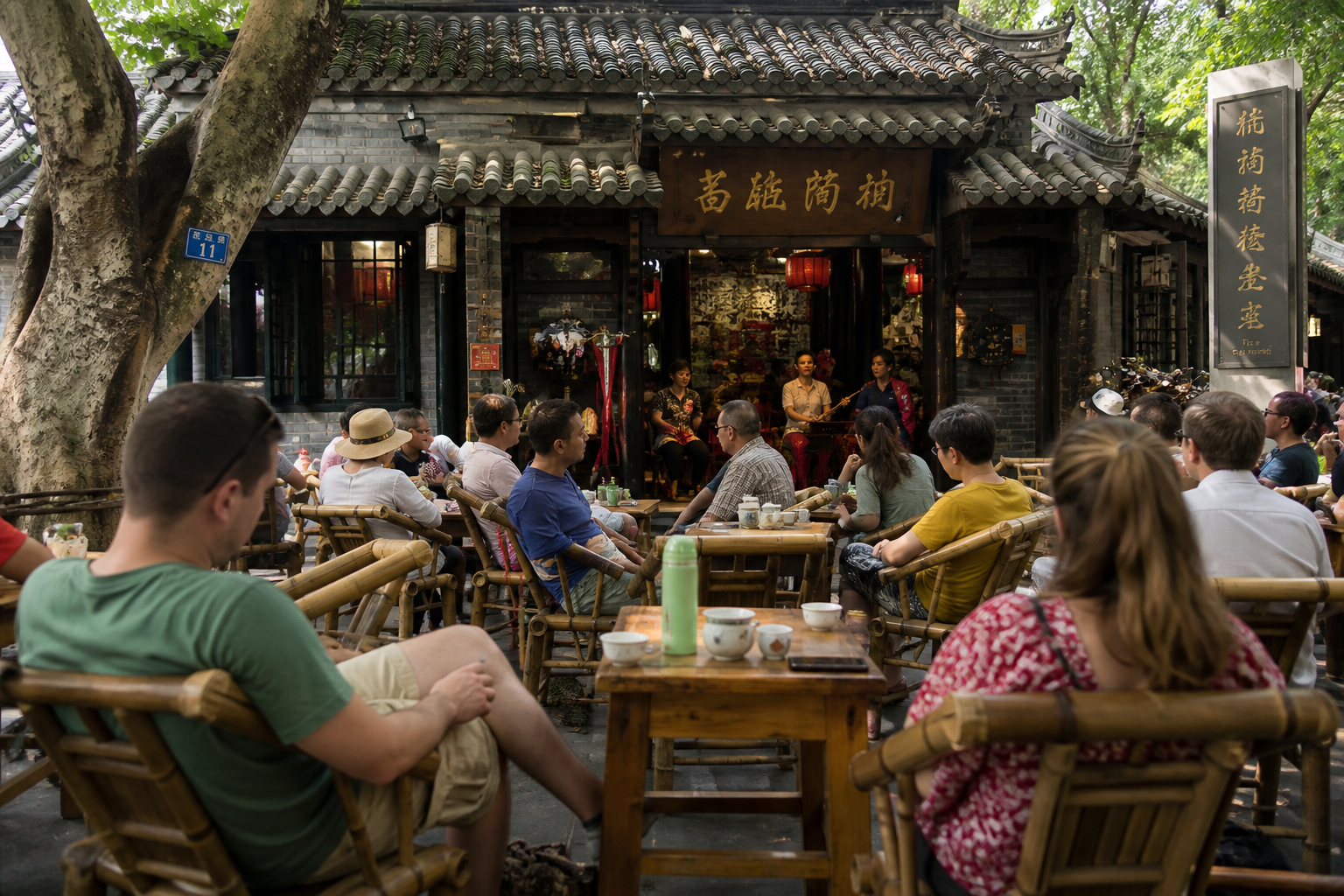
Chengdu has a wonderfully unhurried personality. People gather in public parks for tea, mahjong games spill onto small tables, and even busy streets seem to move at a softer pace than Beijing or Shanghai. Then there is the food—bold, numbing, spicy, and impossible to ignore.
In late spring and early summer, the city is warm, humid, and often cloudy, with sudden rain showers. Temperatures usually sit around **20–30°C**, so bring light clothes, comfortable walking shoes, and a small umbrella. The greenery looks fresh this time of year, and the cooler mornings are ideal for exploring before the heat and crowds build.
Many visitors arrive for the giant pandas, but Chengdu is much more rewarding when you stay a few extra days. The city gives you time to wander, eat slowly, and see how locals spend an ordinary afternoon.
## Must-See Spots: My Top Picks
### 1. Chengdu Research Base of Giant Panda Breeding
Yes, the pandas are still the main attraction—and seeing one roll lazily through breakfast is genuinely delightful. Go as early as you can, ideally arriving before the gates open. The pandas are most active in the morning, while later hours can be hot and crowded.
Book tickets ahead through the official platform if possible. After watching the pandas, take your time around the less crowded paths and nursery areas. Avoid rushing from enclosure to enclosure; some of my favorite moments came from simply watching a panda chew bamboo in complete concentration.
The base is outside the central city, so allow at least half a day for the visit.
### 2. People’s Park and the Heming Tea House
People’s Park shows Chengdu at its most relaxed. Locals come here to dance, sing, play mahjong, exercise, and meet friends over tea. The famous Heming Tea House can be busy, but it remains a fun place to sit with a cup of jasmine tea and watch the park unfold around you.
Tea service is simple but can feel confusing if you are not used to the local system. Ask the staff about the price before ordering, and keep some small cash handy. If you want the same atmosphere with fewer visitors, walk away from the main tea house and look for smaller tables deeper inside the park.
Nearby, the matchmaking corner is an interesting glimpse into family life in Chengdu. You may see parents displaying information about their unmarried adult children. Be respectful and avoid taking close-up photos without permission.
### 3. Wenshu Monastery and the Old Neighborhood Streets
Wenshu Monastery is one of my favorite places in the city because it combines quiet temple courtyards with ordinary neighborhood life. Incense drifts through the halls, monks move between buildings, and locals stop by to pray before returning to nearby shops and noodle stalls.
The vegetarian food around the monastery is excellent, especially if you want a break from spicy Sichuan dishes. After visiting, wander through the surrounding lanes rather than heading straight back to the metro. You will find tea shops, traditional snacks, small bakeries, and older residential buildings tucked behind the main roads.
Go in the morning for a calmer visit. Late afternoon is better for food and people-watching.
### 4. Kuixinglou Street, Yulin, and Sichuan Food
Chengdu is the kind of place where dinner can easily turn into a three-hour event. Kuixinglou Street is lively and convenient for trying local dishes, while Yulin has a more neighborhood feel with small restaurants, bars, dessert shops, and late-night food.
Order carefully if you are not used to chili. Ask for **wei la**, meaning mildly spicy, but remember that “mild” in Chengdu may still bring plenty of heat. Good dishes to try include:
– **Mapo tofu**
– **Dan dan noodles**
– **Sichuan-style wontons**
– **Sweet water noodles**
– **Cold chicken with chili oil**
– **Hotpot**, ideally with a split pot if your group has different spice preferences
For a deeper food experience, consider a local cooking class or a guided food walk. It helps explain the difference between chili heat, Sichuan pepper numbness, fermented bean pastes, and the many sauces that make the cuisine more than just “spicy.”
### 5. A Day Trip to Sanxingdui or Dujiangyan
If you have four or more days, leave central Chengdu for a day.
**Sanxingdui Museum** is the better choice for history and archaeology. Its strange bronze masks and oversized figures feel completely different from the familiar images of imperial China. Reserve tickets ahead and give yourself several hours, especially if you enjoy museums.
**Dujiangyan** suits travelers who prefer scenery, temples, and old engineering. The ancient irrigation system still works today, and the surrounding hills make a pleasant change from the city. Start early to avoid the strongest afternoon heat and weekend crowds.
## Practical Travel Advice
### Getting There and Visa
Chengdu has two airports, but most international travelers use **Chengdu Tianfu International Airport**, which is farther from the city center. **Chengdu Shuangliu International Airport** is closer and handles many domestic flights.
For entry rules, check the Chinese embassy or consulate serving your country before booking. Visa-free policies change by nationality and travel purpose. Some travelers may qualify for a temporary visa-free entry program, while others need a standard tourist visa. Eligible transit passengers may also use China’s **240-hour visa-free transit policy**, but the route, passport, and onward-ticket rules are specific.
Keep copies of your passport, hotel booking, return or onward ticket, and travel insurance details. Airlines can check these documents before boarding.
For flights, compare both Tianfu and Shuangliu airports. A slightly cheaper ticket to Tianfu may involve a longer transfer into town, while Shuangliu can save time if the fare difference is small.
### Where to Stay
– **Tianfu Square or Chunxi Road:** Best for first-time visitors who want easy metro access, shopping, restaurants, and a central location.
– **Wenshu Monastery:** Quieter, more atmospheric, and good for travelers who prefer old streets and relaxed mornings.
– **Kuixinglou or nearby Qingyang District:** Handy for food, bars, cafés, and evening walks.
– **Yulin:** A good choice for repeat visitors who want a local residential feel, independent restaurants, and nightlife.
– **Near Chengdu East Railway Station:** Practical if you are taking early high-speed trains, though less charming for a longer stay.
I would choose somewhere within a short walk of a metro station. Chengdu is spread out, and being near public transport makes a big difference.
### Getting Around
The metro is clean, affordable, and easy to use once you get familiar with the signs. It reaches many major sights, though the panda base and some day-trip locations require a taxi or separate transport.
For rides, most people use **DiDi**, usually through the Alipay or WeChat app. Set up your payment apps before arriving and add a bank card if supported. Having your hotel name written in Chinese can save a lot of confusion.
Walking works well in central neighborhoods, especially around People’s Park, Wenshu, Kuixinglou, and the lanes near Chunxi Road. Chengdu is flat, but the blocks can be large, so do not underestimate distances in the summer heat.
High-speed trains are the easiest way to reach nearby cities. Buy tickets through the official railway app or a reliable booking service, and keep your passport ready for station checks.
## Real Costs & Local Tips
China uses the **renminbi**, usually written as **RMB** or **¥**. Card payments are not always accepted directly, but mobile payments through Alipay and WeChat are common. Cash is still useful for small tea houses, markets, and older food stalls.
Tipping is not a normal part of everyday dining in Chengdu. Restaurants generally do not expect it, and leaving extra money may cause confusion. A tip for an exceptional private guide or hotel service is optional, not required.
### Approximate Daily Budgets
**Budget traveler: ¥180–350 per day**
– Hostel bed or simple guesthouse: ¥60–150
– Local breakfast and meals: ¥40–100
– Metro and occasional bus rides: ¥10–30
– One or two inexpensive attractions or snacks: ¥30–70
**Mid-range traveler: ¥500–900 per day**
– Comfortable hotel: ¥300–600
– Restaurants and cafés: ¥120–250
– Metro, taxis, and rideshares: ¥40–100
– Attractions or a guided activity: ¥50–150
Hotels can cost more during public holidays, school breaks, and major events. Hotpot is also easy to underestimate because of extra dishes, drinks, dipping sauces, and side orders.
### A Few Money-Saving Tricks
– **Eat where office workers eat.** Look for busy noodle shops and small restaurants away from the main tourist streets. Fast turnover usually means fresher food and better prices.
– **Use the metro for long trips.** A taxi across Chengdu can be reasonable, but repeated rides quickly add up.
– **Order one dish at a time.** Portions are often generous, and you can always add more after seeing the table.
– **Check attraction booking rules early.** Popular places such as the panda base and Sanxingdui may sell out, while some museums require advance reservations or passport details.
– **Carry tissues and wet wipes.** Not every public toilet has paper, and Sichuan meals can become wonderfully messy.
– **Be cautious with “tea house experiences” promoted by strangers.** Some are harmless, but unexpected invitations can lead to inflated bills. Choose established tea houses or ask your hotel for a recommendation.
Chengdu stayed with me less because of any single landmark and more because of its daily rhythm: tea poured into small cups, peppercorns tingling on my tongue, older residents chatting in the shade, and the sudden quiet inside a temple courtyard. Come for the pandas if you like, but give the city enough time to show you everything else.
KEYWORDS: Chengdu skyline, Sichuan food