
# Singapore Beyond the Skyline: Hawker Food, Green Corners, and Honest Travel Tips
## The Vibe & When to Go
Singapore feels polished without being dull. One minute you’re walking past glass towers and spotless shopping arcades; the next, you’re eating chicken rice at a crowded hawker centre while aunties call out orders over the clatter of plates. It’s easy to navigate, wonderfully multicultural, and compact enough that you can fit food, gardens, museums, and a sunset walk into the same day.
The weather is hot and humid all year, usually around **25–32°C**. Rain can arrive suddenly, even on a bright afternoon, but it often passes quickly.
– **November to January:** Generally wetter, with heavier showers.
– **February to April:** Often a little drier and comfortable for sightseeing, though still hot.
– **May to October:** Warm with plenty of sunshine, plus occasional storms.
I like visiting when I can start early, take a cool break after lunch, and head out again in the late afternoon. Singapore is especially appealing right now for travelers who enjoy easy city breaks, cashless payments, and reliable public transport. Visa and the Singapore Tourism Board have also been working together to encourage travel through tourism campaigns, visitor insights, and smoother payment experiences, which makes the city even more convenient for international visitors.
## Must-See Spots: My Top Picks
### 1. Marina Bay at Blue Hour
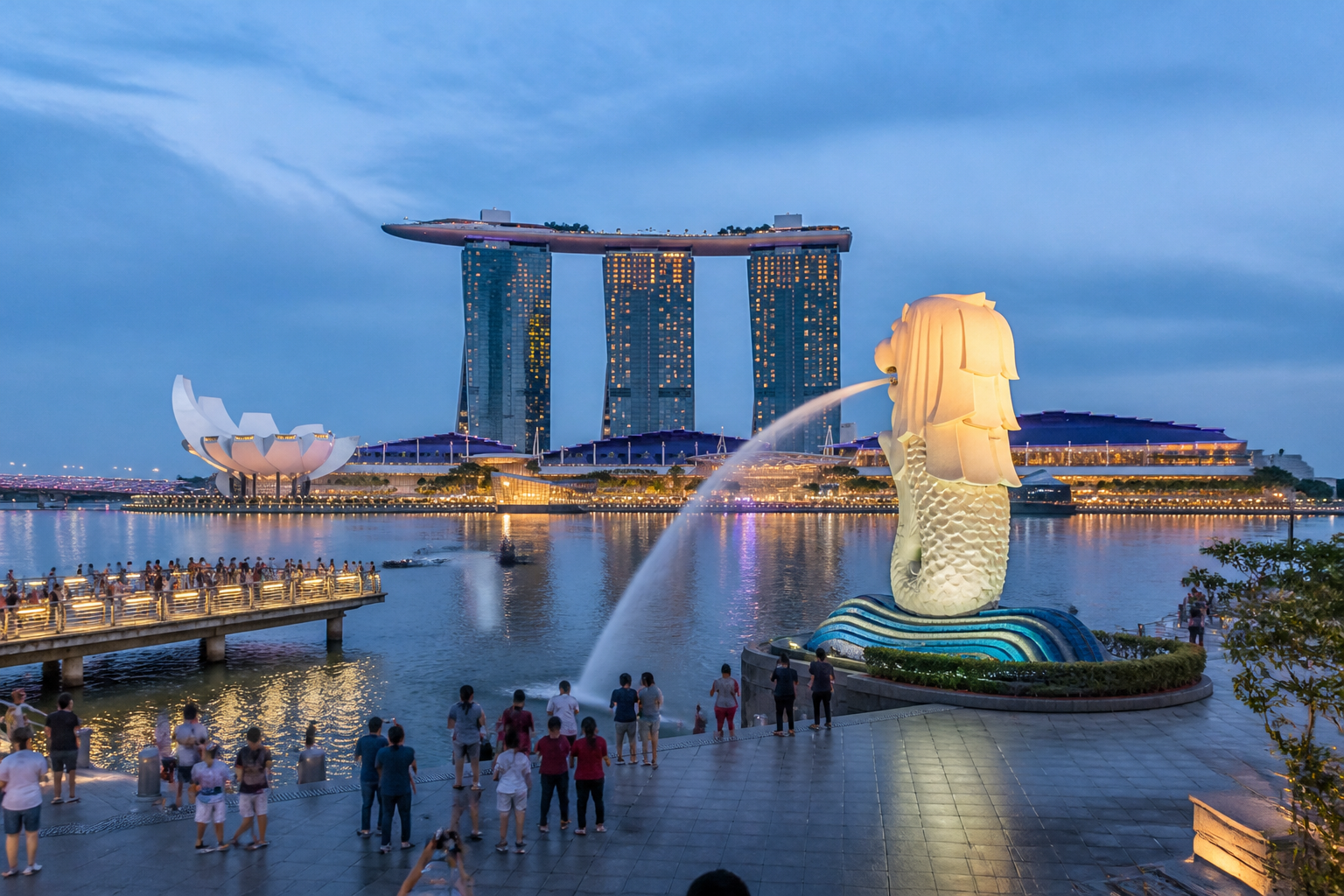
Marina Bay is the classic Singapore view, but it earns its reputation. I’d begin at **Merlion Park**, then walk toward the Helix Bridge as the heat softens. The skyline starts to glow, and the reflections on the water make the whole area feel calmer than it does during the day.
The light and sound show at **Spectra**, outside Marina Bay Sands, is free and lasts only about 15 minutes. It’s a pleasant stop rather than something that needs a whole evening planned around.
For a quieter view, walk toward **Gardens by the Bay** and find a bench away from the main crowds. The Supertrees are impressive at night, but I enjoyed the surrounding waterfront paths just as much.
### 2. Chinatown and Maxwell Food Centre
Chinatown is at its best before the streets get busy. I like wandering through the shophouses, visiting the **Buddha Tooth Relic Temple**, and then stopping for breakfast or lunch at **Maxwell Food Centre**.
Try local dishes such as:
– Hainanese chicken rice
– Fishball noodles
– Carrot cake, which is savory rather than sweet
– Fresh sugarcane juice
– Kaya toast with soft-boiled eggs
Bring a little patience. Popular stalls may have long queues, but the food usually moves quickly. If you see tables with tissue packets placed on them, those seats are “chope-d”—reserved by someone. Choose another table rather than moving the packet.
### 3. Kampong Glam and the Back Streets
The golden dome of **Sultan Mosque** is the obvious landmark, but the area is more enjoyable when you wander beyond the main stretch of Haji Lane. I found small boutiques, record shops, cafés, and colorful murals tucked into the surrounding streets.
Go in the late afternoon when the sun is less intense. Have a drink nearby, then walk toward Arab Street and North Bridge Road. The neighborhood has a lively character without feeling as formal as the Marina Bay area.
### 4. Southern Ridges or Pulau Ubin
For greenery, I’d skip the idea that Singapore is only a city of towers. The **Southern Ridges** connect several parks with elevated walkways, including the Henderson Waves bridge. It’s a good morning outing, although the humidity makes water essential.
If you have more time, take the ferry to **Pulau Ubin**. It feels much less manicured, with quiet roads, forest paths, old villages, and bicycle rentals near the jetty. It’s one of my favorite places to see a slower, more rustic side of Singapore. Go early, carry mosquito repellent, and don’t expect luxury facilities.
## Practical Travel Advice
### Getting There and Visa Requirements
Singapore’s main airport, **Changi Airport (SIN)**, is one of the easiest in Asia to use. It’s connected to the city by MRT, taxi, and ride-hailing services. Many major airlines fly directly to Singapore, and regional low-cost carriers can offer good fares from nearby Asian cities.
Entry rules depend on your passport:
– Many visitors can enter Singapore without a visa for stays of 30 or 90 days.
– Some nationalities must apply for a visa before arrival.
– Your passport generally needs at least six months’ validity.
– Most travelers must submit the free **SG Arrival Card** online within three days before arrival.
– Immigration officers may ask for proof of onward travel, accommodation, or sufficient funds.
Check the latest requirements on Singapore’s official Immigration and Checkpoints Authority website before booking. A tourist visa, where required, is separate from the Visa payment network mentioned in tourism promotions.
### Where to Stay
**Marina Bay or City Hall:** Best for first-time visitors who want easy access to major sights, malls, and restaurants. Prices are usually higher.
**Chinatown:** A strong choice for food lovers and travelers who want a central location with plenty of character.
**Bugis or Kampong Glam:** Good for cafés, shopping, colorful streets, and a more youthful atmosphere.
**Little India:** Often better value, with excellent South Indian food and a lively local feel. It can be noisier and busier than other neighborhoods.
**Orchard Road:** Convenient for shopping and comfortable hotels, though it feels more commercial than historic.
I’d choose a hotel close to an MRT station rather than paying extra for a rooftop pool or a famous address. In Singapore, a good transport connection saves more time than a glamorous postcode.
### Getting Around
Singapore’s MRT is clean, fast, air-conditioned, and usually the best way to cross the city. Buses fill in the gaps, and Google Maps or Citymapper is helpful for checking routes.
You can usually pay public transport fares with a contactless bank card, mobile wallet, or a stored-value travel card. Check your bank’s foreign transaction fees before relying on contactless payments.
For short rides, **Grab** is the most familiar ride-hailing app. Taxis are also easy to find, especially around hotels and shopping districts. Walking works well in individual neighborhoods, but the heat and humidity can make a 20-minute walk feel much longer than expected.
## Real Costs and Local Tips
Singapore is not a budget destination by Southeast Asian standards, but you can control the cost quite easily by eating at hawker centres and using public transport.
### Approximate Daily Budgets
**Budget traveler: SGD 70–120 per day**
– Hostel bed or simple room: SGD 35–70
– Hawker meals: SGD 5–12 each
– Public transport: SGD 5–10
– Free attractions and inexpensive activities
**Mid-range traveler: SGD 180–300 per day**
– Comfortable hotel: SGD 130–220
– Café breakfast and restaurant meals: SGD 35–70
– Transport, museums, drinks, and occasional paid attractions
Hotel prices rise sharply during major events, school holidays, and large conferences. Booking a few weeks ahead can make a noticeable difference.
The local currency is the **Singapore dollar (SGD)**. Cards are widely accepted, including at many hawker stalls, although cash is still useful at smaller food centres and neighborhood shops.
Tipping is not expected in the usual way. Many restaurants add a **10% service charge** and **9% GST**, so check the bill before adding anything extra. A small tip for excellent service is appreciated but not required.
### A Few Money-Saving Tricks
– **Eat where office workers eat.** Hawker centres in residential neighborhoods often cost less than restaurants around Marina Bay.
– **Carry a water bottle.** Tap water is safe to drink, and Singapore’s heat can make bottled water surprisingly expensive near attractions.
– **Use free attractions well.** Gardens by the Bay’s outdoor areas, Marina Bay walks, temple visits, and many neighborhood strolls cost nothing.
– **Avoid taxis during rain and peak hours.** Prices and waiting times can jump. If you’re not carrying luggage, the MRT is usually faster.
– **Look for set lunches.** Restaurants often offer better-value weekday menus than their dinner menus.
– **Reserve popular restaurants, but don’t queue for every famous stall.** Singapore has excellent food everywhere; a busy queue is not always proof that it’s the best meal in town.
Singapore rewards a relaxed rhythm: an early walk, a long hawker lunch, a cool indoor break, and an evening spent outside once the air becomes easier. Give yourself room to wander between the famous sights, and you’ll find the city feels much more personal than its polished image suggests.
KEYWORDS: Singapore skyline, Singapore hawker food