
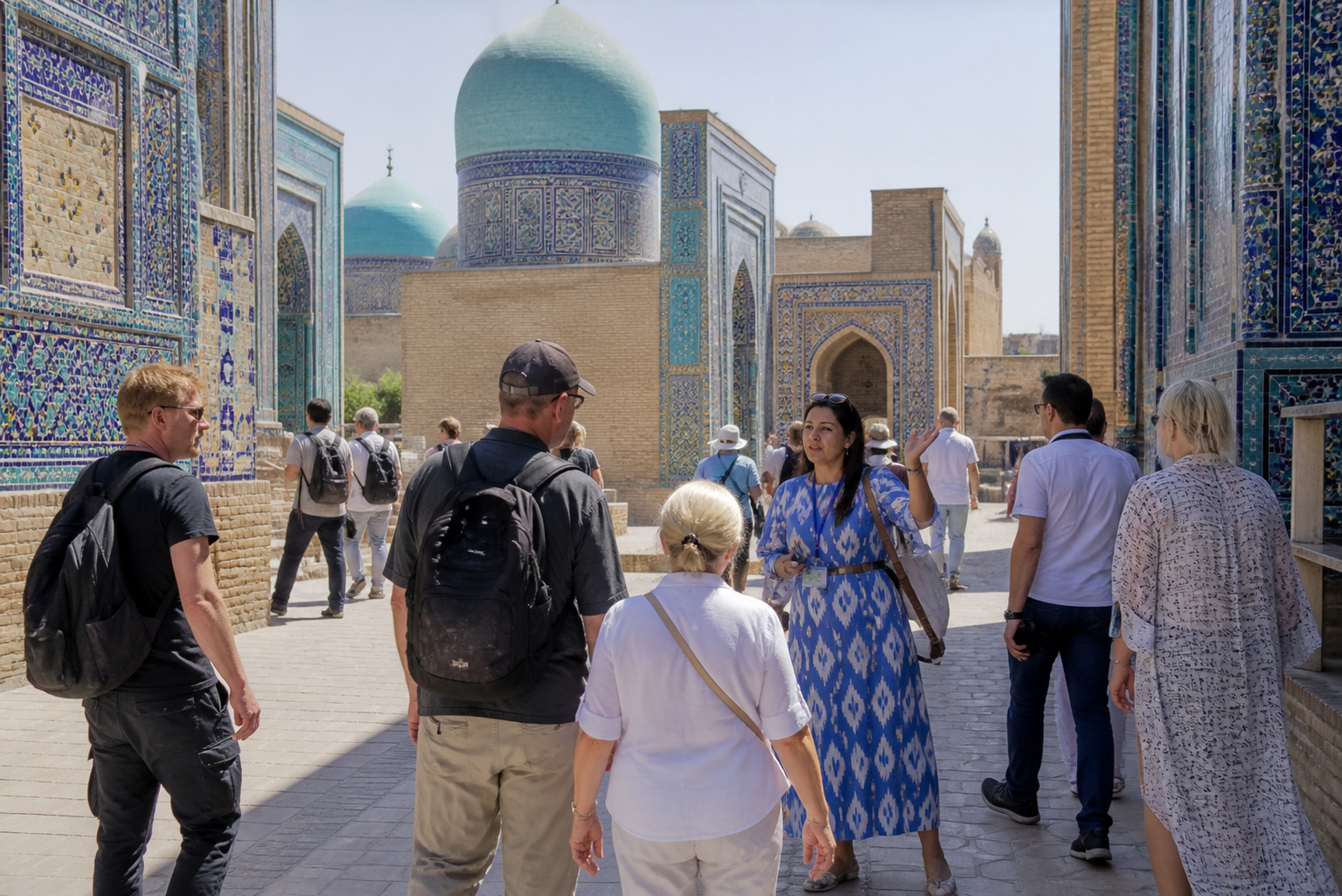
# Uzbekistan Beyond the Headlines: Blue Domes, Warm Bread, and My Favorite Travel Tips
Uzbekistan has welcomed **10.3 million tourists in the first nine months**, according to Azərtac—and after traveling through the country, I can understand why. The numbers are growing, but the experience still feels personal in many places: a shopkeeper tearing open a hot *non* bread for you, a grandmother waving from a courtyard, or a taxi driver insisting you try the best plov in town.
Uzbekistan is a country of grand Silk Road cities, but it is also wonderfully ordinary in the best possible way. You can spend the morning admiring turquoise tilework and the afternoon eating melon slices at a neighborhood market.
## The Vibe & When to Go
Uzbekistan feels sunny, spacious, and slightly cinematic. The cities are filled with broad avenues, pale Soviet-era buildings, shaded courtyards, and monuments that glow pink and gold near sunset. Outside the historic centers, daily life moves at a slower, more local rhythm.
The best months are generally **April to May** and **September to October**, when the weather is pleasant for walking. Spring brings green parks and blossoming trees, while autumn has warm afternoons, cool evenings, and excellent fruit in the markets.
Summer can be very hot, especially in Bukhara and Khiva, where temperatures may climb above 35°C. Winter is quieter and often sunny, though nights can be cold. If you are traveling during the cooler season, bring layers—the sun may feel warm during the day, but stone streets and unheated guesthouses can feel chilly after dark.
Right now, Uzbekistan is attracting more visitors, but it still does not feel as crowded as many famous European destinations. Go early to the major monuments and you may have entire courtyards almost to yourself.
## Must-See Spots: My Top Picks
### 1. Registan Square, Samarkand
Registan is the grandest sight in Uzbekistan, with three enormous madrassas covered in blue, cream, and gold decoration. The first time I saw it at sunset, the buildings seemed to change color every few minutes.
Visit twice if you can:
– Go early in the morning for quieter photographs.
– Return after dark when the square is softly illuminated.
– Climb to a viewpoint or rooftop café nearby for a full view of the three façades.
The surrounding area is polished and easy to explore, but I enjoyed wandering a few streets away afterward. Small bakeries, fruit stalls, and residential lanes give you a better sense of Samarkand beyond its famous monuments.
Other Samarkand highlights include **Shah-i-Zinda**, a beautiful avenue of mausoleums, and the **Bibi-Khanym Mosque**. Shah-i-Zinda is especially lovely in the morning, before tour groups arrive.
### 2. The Old City of Bukhara
Bukhara is the city I found easiest to fall into. Its old center is compact, walkable, and full of domed bazaars, turquoise-tiled mosques, and quiet lanes where cats seem to own every doorway.
Start around **Lyabi-Hauz**, the historic pool surrounded by restaurants and mulberry trees. From there, walk toward the trading domes and the **Kalon Minaret**. The minaret is impressive from a distance, but my favorite moments were inside the smaller courtyards nearby, where sunlight landed on chipped blue tiles.
For a calmer experience, visit early in the morning. The streets are peaceful, shopkeepers are just opening their doors, and the light is beautiful. Stay in a traditional courtyard guesthouse if possible. Some rooms are basic, but the atmosphere is much more memorable than a standard hotel.
### 3. Khiva’s Walled Old Town
Khiva feels almost like a film set, though people genuinely live and work inside the old city walls. The main area, **Ichan-Kala**, is filled with tall mud-brick walls, carved wooden columns, minarets, and narrow passageways.
Buy a ticket that covers the main sights, then take your time rather than rushing from one monument to another. The **Kalta Minor Minaret**, **Tash Hauli Palace**, and the old city walls are the big attractions, but I liked the smaller details most—the blue tile patterns, quiet workshops, and children playing near the gates.
Climb the city wall or a permitted minaret viewpoint near sunset. The desert light makes Khiva look wonderfully soft, and you can see the whole historic town spread below you.
Khiva is smaller and quieter than Samarkand and Bukhara, so two nights is usually enough for most travelers.
### 4. Tashkent’s Markets and Neighborhoods
Tashkent is often treated as a starting point, but I would give it at least two full days. It is greener, more modern, and more spread out than the Silk Road cities.
Visit **Chorsu Bazaar** for mountains of spices, dried fruit, bread, and colorful produce. Go hungry and try *samsa*, grilled meat, and fresh pomegranate juice. The market can be busy, so keep your bag close and do not accept the first price automatically in souvenir stalls.
The Tashkent Metro is another highlight. Each station has its own design, and it is one of the easiest and cheapest ways to move around the city. I also enjoyed walking through the quieter streets near **Tashkent City** and the old residential areas around central Tashkent, where cafés and small bakeries sit between apartment blocks.
## Practical Travel Advice
### Getting There and Visa Requirements
Most international visitors arrive through **Tashkent International Airport**. Direct and connecting flights commonly run through Istanbul, Dubai, Doha, Almaty, Moscow, and other regional hubs. Samarkand also has international connections, which can save time if you plan to begin your trip there.
Visa rules depend on your passport:
– Citizens of many countries can enter Uzbekistan visa-free for short stays, often up to 30 days.
– Travelers from some other countries can apply for an online e-visa.
– Some nationalities need to arrange a visa through an Uzbek embassy or consulate.
Check the latest information through the official Uzbek government visa portal or your nearest Uzbek embassy before booking. Passport validity and entry rules can change.
Hotels and registered guesthouses normally handle visitor registration for you. Keep booking confirmations, especially if you are staying in smaller guesthouses or moving between several cities.
### Where to Stay
**Tashkent:** Stay around Amir Temur Square, Yunusabad, or near a central metro station for easy access to restaurants and sights. Chorsu is better if you want a busier local atmosphere.
**Samarkand:** The area around Registan is convenient for first-time visitors and evening walks. Near the train station is practical if you are arriving by Afrosiyob train, though it feels less atmospheric.
**Bukhara:** Choose a guesthouse inside or just beside the old town. Courtyard guesthouses near Lyabi-Hauz are ideal for atmosphere and easy sightseeing.
**Khiva:** Staying inside Ichan-Kala lets you walk out early before day-trippers arrive. Rooms inside the walls can be more expensive, but the location makes a big difference.
### Getting Around
The most comfortable route between major cities is the **Afrosiyob high-speed train**, especially between Tashkent, Samarkand, and Bukhara. Tickets can sell out during holidays and weekends, so book ahead when possible.
For Khiva, many travelers fly to Urgench and take a taxi or arranged transfer for the final stretch.
Within cities:
– Old Bukhara, Khiva, and central Samarkand are easy to explore on foot.
– Tashkent is spread out, so use the metro or **Yandex Go**, a popular rideshare app.
– Taxis are inexpensive, but agree on a price before getting in if you are not using an app.
– Shared taxis connect towns and train stations, although they usually leave only when full.
The trains are clean and comfortable, and taking one gives you a chance to watch the landscape change from city outskirts to wide, dry countryside.
## Real Costs and Local Tips
Uzbekistan remains affordable compared with much of Europe, though historic-center hotels and high-speed trains can raise the total.
### Typical Daily Budget
**Budget traveler: $25–40 per day**
– Guesthouse or hostel: $10–20
– Local meals: $5–10
– Transport: $2–6
– Entry fees and small extras: $5–10
**Mid-range traveler: $60–100 per day**
– Comfortable hotel or private guesthouse: $30–60
– Restaurant meals and cafés: $15–25
– Local transport and occasional taxis: $5–10
– Sightseeing and activities: $10–20
The local currency is the **Uzbekistani soʻm (UZS)**. Cash is still useful, especially in markets, small restaurants, and guesthouses outside the main tourist areas. Larger hotels and restaurants may accept cards, but I would not rely on them everywhere.
Tipping is not compulsory, but rounding up or leaving around **5–10%** for good restaurant service is appreciated. You do not need to tip every taxi driver or shopkeeper.
### A Few Tips That Saved Me Money
– **Eat where office workers eat.** Local cafés serving plov, lagman, and shashlik are usually tastier and cheaper than restaurants directly beside the monuments.
– **Book trains early.** The Afrosiyob can fill up, and last-minute alternatives may mean a slower, less comfortable journey.
– **Use Yandex Go in larger cities.** It reduces haggling and makes short rides much easier.
– **Carry small notes.** Vendors and small cafés may struggle to give change for large bills.
– **Buy bottled water in supermarkets.** Convenience shops near monuments often charge more.
– **Ask whether an entry ticket includes extra areas.** Some historic sites have separate fees for viewpoints, museums, or photography.
– **Keep some flexibility for meals.** A guesthouse breakfast may be generous, and one large local meal can easily carry you through half a day.
Uzbekistan is not a destination I would rush through. The monuments are spectacular, but the memories that stayed with me were smaller: tearing apart hot bread at a market, drinking tea in a shaded courtyard, and watching the evening light settle over old blue domes. The growing visitor numbers are changing the country’s tourism scene, but there is still plenty of room to wander, get pleasantly lost, and find your own favorite corner.
KEYWORDS: Uzbekistan Samarkand