
# Beyond K-Pop: Finding the Korea I Didn’t Expect in Seoul
I first arrived in Seoul expecting neon signs, dance studios, glossy cafés, and young people dressed like they had just stepped out of a music video. Those things are here, of course. You’ll hear K-pop in shops, see giant idol adverts on subway platforms, and find fans lining up for themed pop-ups.
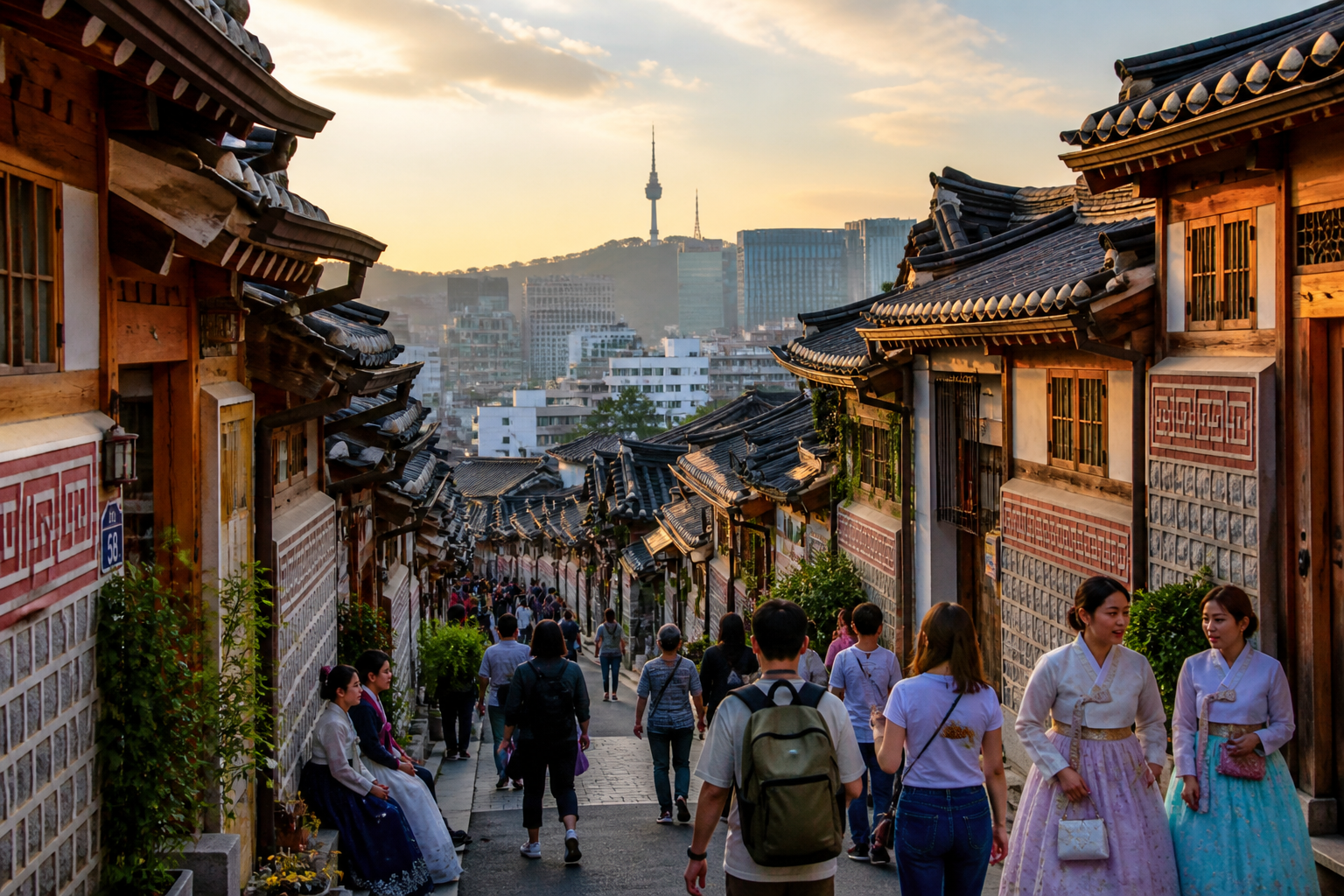
But after a few days, the music became only one small part of the story. What stayed with me was the quiet clatter of metal chopsticks in a neighbourhood restaurant, old men playing baduk in a park, the smell of sesame oil drifting from a market, and the way a centuries-old gate can sit just a few streets from a glass office tower.
Seoul is loud and fast, but it also has a wonderfully ordinary side.
## The Vibe & When to Go
Seoul feels energetic without being constantly chaotic. The city moves quickly—subway doors beep, office workers hurry through stations, and cafés fill up late into the evening—but you can turn down a side street and find a tiny noodle shop or a peaceful shrine within minutes.
The most comfortable times to visit are **April to May** and **September to October**. Spring brings mild days and flowers, though yellow dust can occasionally affect air quality. Autumn is cooler, clearer, and often my favourite season for walking. Summers are hot, humid, and rainy, with monsoon showers usually arriving around July. Winters are dry and genuinely cold, but the city looks beautiful under crisp blue skies.
If you’re visiting during the cooler months, bring a proper coat and shoes with good grip. Seoul involves far more walking than many first-time visitors expect. In spring and autumn, layers are the answer because sunny afternoons can still turn chilly after dark.
## Must-See Spots: My Favourite Parts of Seoul
### 1. Gyeongbokgung Palace and the quieter corners of Jongno
Gyeongbokgung is the grand palace most visitors picture, and it deserves the attention. I like arriving early, before the tour groups gather, then wandering slowly through the courtyards instead of rushing from gate to gate for photographs.
Afterwards, leave the main palace entrance and explore **Seochon**, a smaller, more relaxed neighbourhood on the palace’s western side. It has old homes, independent bookshops, modest restaurants, and cafés tucked into renovated hanok houses. I had one of my best simple meals there: hot kalguksu noodles, dumplings, and a bowl of kimchi that was far spicier than I expected.
Bukchon Hanok Village is beautiful, but it is also a residential area. Keep your voice down, avoid entering private lanes, and don’t treat people’s front doors as photo backdrops. For a quieter traditional atmosphere, I prefer wandering around Seochon and nearby Tongin Market.
### 2. Seongsu: trendy, creative, and still a little rough around the edges
Seongsu is where Seoul’s café culture, fashion labels, galleries, and old industrial buildings collide. Former shoe factories and warehouses now house coffee roasters, small exhibitions, and pop-up shops.
It can feel polished, especially on weekends, but look beyond the famous cafés. Walk toward the back streets around the old factory buildings, where repair workshops and long-established businesses still operate. The contrast is what makes Seongsu interesting.
Go in the late morning, browse slowly, and stay for dinner. Many shops open later than you might expect, and the area becomes much livelier after work. If you’re travelling for K-pop or Korean fashion, this is a good place to see how trends actually filter into everyday life.
### 3. Gwangjang Market and the food that doesn’t need a photo shoot
Gwangjang Market can be busy and touristy, but I still recommend it for a first taste of Seoul’s street food. Sit at a counter, point at what looks good, and order small portions so you can try several things.
I usually go for **bindaetteok**, a crisp mung-bean pancake, **mayak gimbap**, tiny seaweed rice rolls, and a bowl of knife-cut noodles. The best approach is to eat where local office workers and families are eating rather than choosing the stall with the biggest online following.
For a calmer market experience, try **Mangwon Market** in western Seoul. It feels more local, prices are friendlier, and you can pick up fruit, snacks, fried chicken, and rice cakes for a picnic by the nearby river.
### 4. The Han River at sunset
The Han River is one of the easiest places to slow down. Pick up convenience-store snacks, grab a picnic mat, and sit near **Yeouido Hangang Park** or **Mangwon Hangang Park** as the sun goes down.
Korean convenience stores are part of the fun. You can buy instant noodles, boil them at a machine outside the store, and add a triangle kimbap or a boiled egg. It sounds basic, but sitting beside the river with a steaming cup of noodles is one of my favourite Seoul memories.
If you have time, rent a bicycle or simply walk along the riverside paths. On warm evenings, families, couples, students, and groups of friends all gather there. It is a much better glimpse of everyday Seoul than another shopping mall.
## Practical Travel Advice
### Getting There and Visa
Most international visitors arrive at **Incheon International Airport**, around an hour or more from central Seoul depending on traffic and your final neighbourhood. The Airport Railroad Express train is quick and comfortable, while the all-stop train is cheaper. Airport buses are useful if you have heavy luggage.
From Australia, direct or one-stop flights are available from Sydney, Melbourne, Brisbane, Perth, and other major cities, depending on the season. I compare flights into Incheon and check baggage allowances carefully—some of the cheapest fares look good until luggage is added.
Australian passport holders can generally visit South Korea for tourism **without a visa for stays of up to 90 days**, but entry rules and K-ETA requirements can change. Check the official Korean immigration or embassy website before booking and again before flying. Your passport should have sufficient validity, and you may need to complete an arrival card or online entry form.
### Where to Stay
– **Hongdae:** Best for first-time visitors, nightlife, music, cafés, affordable food, and a younger atmosphere. It can be noisy, so avoid staying directly above a busy bar.
– **Myeongdong:** Convenient for shopping and transport, especially if you want an easy base. It is more commercial and less atmospheric at night.
– **Jongno or Insadong:** Good for palaces, traditional streets, tea houses, and a slower evening pace. I would choose Jongno if you want history without being far from the action.
– **Euljiro:** Great for restaurants, bars, and Seoul’s older industrial character. The small alleys are atmospheric but can be confusing after dark.
– **Gangnam:** Modern, polished, and well connected. It suits travellers interested in beauty clinics, shopping, nightlife, and business hotels, but it feels less traditionally Seoul.
### Getting Around
Seoul’s subway is clean, extensive, and usually the fastest way to travel. Buy a **T-money card** at a convenience store or subway station and top it up with cash. It works on trains and buses.
Use **Naver Map** or **KakaoMap** rather than relying entirely on Google Maps, which has limited walking and navigation functions in South Korea. Kakao T is the most useful taxi app. You can also hail taxis on the street, but the app removes much of the language guesswork.
The city is walkable in sections, not all at once. Hongdae, Ikseon-dong, Jongno, and the palace area are good on foot, but Seoul is huge. I usually choose one main area for the morning and another for the afternoon rather than spending half the day crossing the city.
## Real Costs and Local Tips
South Korea uses the **won (KRW)**. Prices change, but these are reasonable daily estimates for Seoul:
### Budget: around ₩60,000–₩100,000 per person
This might cover:
– Guesthouse dorm or simple room: ₩25,000–₩50,000
– Local breakfast or convenience-store food: ₩5,000–₩10,000
– Affordable lunch and dinner: ₩20,000–₩35,000
– Public transport: ₩5,000–₩8,000
– One inexpensive attraction or coffee: ₩5,000–₩10,000
### Mid-range: around ₩150,000–₩280,000 per person
This usually includes:
– Comfortable hotel room shared between two people
– Sit-down meals and a few nicer cafés
– Subway, buses, and the occasional taxi
– Museum visits, shopping, or a small night out
Seoul can become expensive quickly if you eat at trendy restaurants every night or shop heavily in major retail districts. The good news is that excellent food is available at nearly every price level.
Tipping is not expected in ordinary restaurants, cafés, taxis, or hotels. If someone gives you unusually helpful personal service, a sincere thank-you is enough. Credit cards are widely accepted, but it is still useful to carry some cash for markets, small restaurants, and transport top-ups.
### A few things that saved me money
– **Eat lunch like a local.** Set menus and small neighbourhood restaurants are usually much better value than restaurants aimed at tourists.
– **Use convenience stores strategically.** They are handy for breakfast, bottled water, snacks, and picnic supplies, not just emergency meals.
– **Skip taxis during rush hour.** Traffic can turn a short trip into an expensive crawl. The subway is usually quicker.
– **Book popular restaurants and pop-ups early.** K-pop-related cafés and limited-time exhibitions can fill up quickly, but you rarely need to pay inflated prices through unofficial sellers.
– **Carry a reusable water bottle.** Seoul has plenty of convenience stores, and buying drinks repeatedly adds up.
– **Look up local opening days.** Small museums, galleries, and restaurants often close one weekday, so check before making a special trip.
What surprised me most was how easily a K-pop trip can turn into something much broader. One minute you might be standing outside an entertainment company building or browsing an idol merchandise shop. The next, you’re eating homemade dumplings in an alley, hearing a grandmother scold someone affectionately across a market stall, or watching the city lights come on over the Han River.
That contrast is the real reason I’d return to Seoul. The famous parts are fun, but the ordinary moments are the ones that stay with you.
KEYWORDS: Seoul Korea