
# Thailand on Screen: Chasing Movie Locations, Island Views, and the Real Stories Behind Them
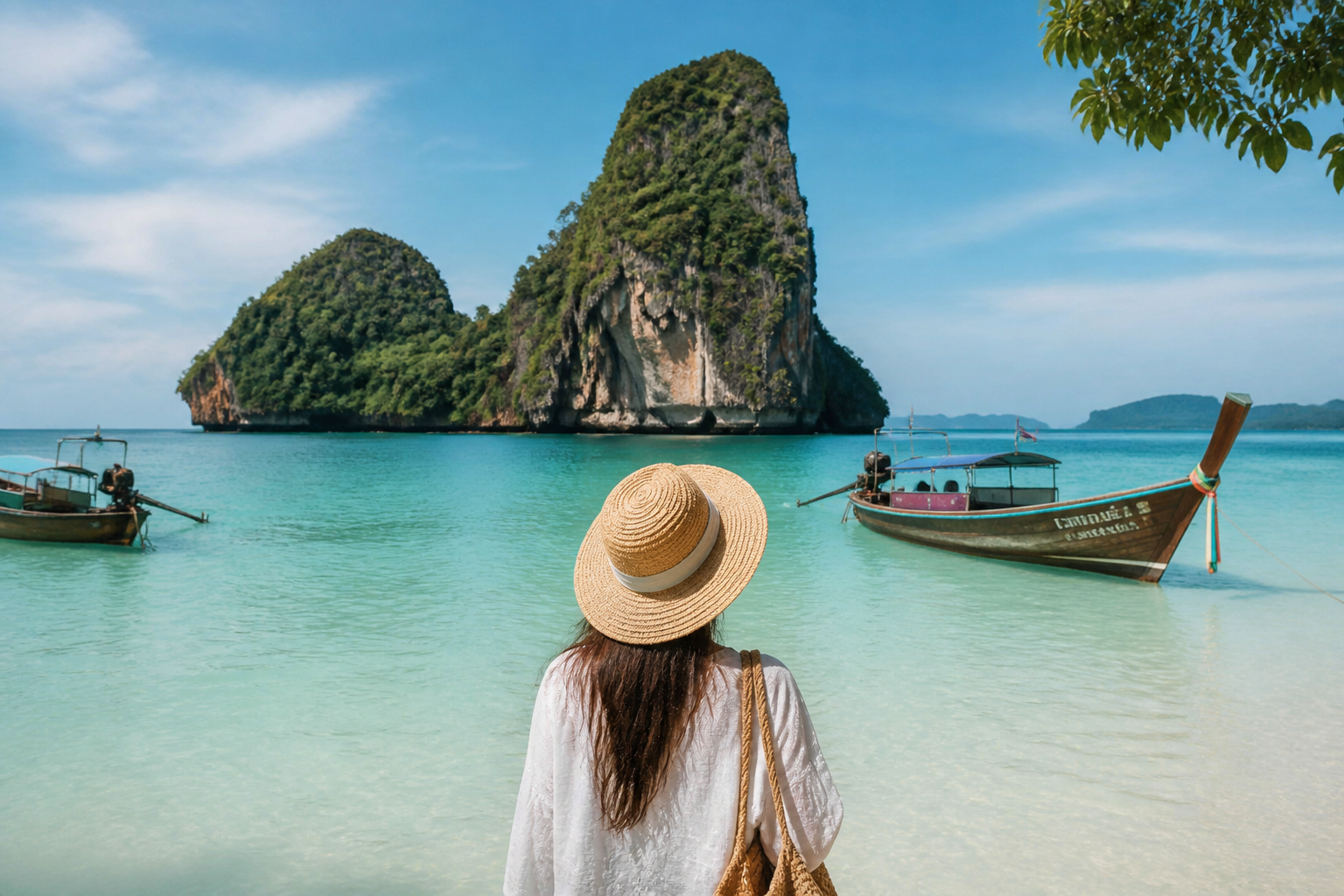
Thailand has always looked ready for the movies. Bangkok glows after dark, long-tail boats cut across green water, and limestone cliffs rise out of the Andaman Sea like someone designed them for a big reveal.
Now the country is leaning into that reputation, promoting film tourism and turning famous movie locations into places travelers can actually visit. I followed a loose movie-location trail from Bangkok to the southern islands, and the best part was discovering that these places were much more interesting than their screen time suggested.
## The Vibe & When to Go
Thailand feels wonderfully busy and relaxed at the same time. In Bangkok, traffic roars beside quiet temple courtyards. On the islands, a short boat ride can take you from a crowded beach to a nearly empty stretch of sand.
The country has three broad travel seasons:
– **November to February:** Cooler and drier, especially pleasant for Bangkok and northern Thailand. This is also the busiest period.
– **March to May:** Hot and humid, with April often feeling intense in the cities. Beaches can still be excellent if you plan your days around the heat.
– **June to October:** The rainy season. Showers can be heavy but brief, and you’ll often find better hotel prices. Weather varies from coast to coast.
Thailand’s growing film-tourism push makes this a fun time to visit because more travelers are looking beyond the standard temple-and-beach itinerary. Movie locations are being presented as part of the country’s wider culture and scenery, but they still feel like real places rather than polished theme-park attractions.
Bring patience, sunscreen, and clothes that dry quickly. A light rain jacket is useful even when the forecast looks mostly clear.
## Must-See Spots: My Top Picks
### 1. Maya Bay, Phi Phi Islands — *The Beach*
Maya Bay became globally famous after *The Beach*, and yes, the cliffs and bright water really do look almost unreal. When I first arrived, I understood immediately why filmmakers chose it. The bay is surrounded by tall limestone walls, and the water shifts between pale turquoise and deep blue depending on the light.
The catch is that it can get very crowded. Visitor rules and seasonal closures are used to protect the beach, so check the current access situation before booking a boat trip. Boats may not be allowed to land directly on the sand, and swimming restrictions can change.
My favorite way to experience it was to arrive as early as possible, then spend more time exploring quieter areas around Phi Phi Leh rather than treating Maya Bay as the entire day. A private long-tail boat costs more, but splitting one with a small group gives you better control over timing.
**My tip:** Don’t judge the place by a rushed midday stop. Early morning light is softer, the heat is easier, and the crowds are noticeably calmer.
### 2. Phang Nga Bay — The James Bond Island View
Khao Phing Kan and the famous limestone pillar nearby became known as “James Bond Island” after appearing in *The Man with the Golden Gun*. The island itself is small, but the surrounding bay is the real attraction.
I preferred the quieter parts of the trip: paddling a canoe through sea caves, drifting under overhanging cliffs, and watching the water turn silver near sunset. The scenery feels much larger from a boat than it does from the little viewing area onshore.
Most tours leave from Phuket or Phang Nga. From Phuket, an early departure is useful because the main stops get busy quickly. If you stay in Phang Nga town or nearby Ao Nang, you may find less expensive and less hurried tours.
**My tip:** Ask exactly how long the tour spends kayaking. Some itineraries advertise kayaking but include only a short, guided paddle while most of the day is spent at crowded stops.
### 3. Bangkok’s River and Hotel Districts — *The Hangover Part II*
Bangkok appeared in *The Hangover Part II*, with the city’s skyline, river, traffic, and rooftop bars becoming part of the story. You don’t need to copy the characters’ chaotic night to enjoy the same setting.
Start around the Chao Phraya River. Take a local ferry, walk around the lanes near Talat Noi, and stop for a cold drink when the afternoon heat becomes too much. At night, rooftop bars offer dramatic views, but you can get a similar skyline feeling from riverside restaurants and hotel lounges without paying for the most famous address.
I liked Talat Noi for its old shophouses, tiny shrines, painted walls, and unexpected views of the river. It feels much more personal than simply ticking off a rooftop bar.
**My tip:** Use the public river boats during daylight. They’re cheap, scenic, and far less stressful than sitting in Bangkok traffic.
### 4. Chiang Mai’s Old City and Northern Landscapes
Chiang Mai may not have one single movie location as instantly recognizable as Maya Bay, but it has become part of Thailand’s broader screen-tourism story through international productions, Thai cinema, and travel programs drawn to its old city, mountain roads, markets, and temples.
This is where I’d slow down. Rent a bicycle or walk early, before the streets heat up. Visit a neighborhood market, take a cooking class in the countryside, or drive up toward Doi Suthep for cooler air and wide views over the city.
The old city is compact enough to explore on foot, though the best moments often happen just outside it. One morning, I left the main temple route and ended up at a small café beside a quiet lane where monks were collecting breakfast. That kind of unplanned wandering is a big part of Chiang Mai’s charm.
**My tip:** If you visit in March or April, check air-quality reports. Burning season can bring smoky conditions, especially in northern Thailand.
## Practical Travel Advice
### Getting There and Visa Requirements
Most international visitors arrive through **Bangkok’s Suvarnabhumi Airport** or **Don Mueang Airport**. Phuket and Chiang Mai also have direct international flights, particularly during the high season.
Thailand offers visa-free entry to many nationalities, often for stays of up to **60 days**, but the list and permitted stay can change. Some travelers need a visa in advance, while others can apply for an extension inside Thailand.
Before flying, check:
– Thailand’s official visa or embassy website for your nationality
– Passport validity requirements
– Whether you need proof of onward travel
– The **Thailand Digital Arrival Card**, which may be required for foreign visitors arriving by air, land, or sea
For flights, Bangkok is usually the cheapest entry point. Domestic flights to Phuket, Krabi, Chiang Mai, or Surat Thani are frequent and often affordable if booked ahead. Night trains are another good option, especially between Bangkok and Chiang Mai or southern destinations.
### Where to Stay
**Bangkok**
– **Riverside:** Best for temples, ferries, sunset views, and a slower atmosphere
– **Sukhumvit:** Convenient for restaurants, nightlife, shopping, and the BTS Skytrain
– **Old Town:** Ideal for historic sights, street food, and walking, though public transport is less convenient
**Phuket**
– **Old Phuket Town:** Great cafés, food, architecture, and better value than the main beach areas
– **Kata or Karon:** A reasonable balance of beach access, restaurants, and quieter evenings
– **Patong:** Choose it if nightlife and convenience matter more than peace and quiet
**Krabi and Ao Nang**
– **Ao Nang:** Easy for boat trips and restaurants, but busy
– **Krabi Town:** More local, cheaper, and calmer, though you’ll need transport to the beaches
– **Railay:** Beautiful and memorable, but accommodation can be more expensive and supplies cost more
**Chiang Mai**
– **Old City:** Best for temples and walking
– **Nimman:** Trendy cafés, coworking spaces, and modern restaurants
– **Riverside:** More relaxed, with a good choice of boutique hotels
### Getting Around
Bangkok’s **BTS Skytrain and MRT** are the easiest way to avoid traffic. Use the river boats for riverside sights, and use metered taxis or Grab when public transport doesn’t reach your destination.
**Grab** is widely useful for cars and food delivery. In some places, **Bolt** can be cheaper, though availability varies.
For short rides, motorbike taxis are fast but not for everyone. Wear a helmet and avoid renting a scooter unless you’re properly licensed, insured, and genuinely comfortable riding in traffic. Thailand’s roads can be unpredictable, especially around tourist beaches.
Island travel usually involves ferries, speedboats, or long-tail boats. Keep a little flexibility in your schedule because rough weather can delay boats, particularly during the rainy season.
## Real Costs and Local Tips
Thailand can still be very affordable, though popular islands and Bangkok hotels have become noticeably pricier.
### Approximate daily budgets
**Budget traveler: 1,200–1,800 THB per day**
– Hostel bed or simple guesthouse
– Local meals and market food
– Public transport and occasional short rides
– Free temples, beaches, and self-guided walks
**Mid-range traveler: 2,500–4,500 THB per day**
– Comfortable hotel or private room
– A mix of local restaurants and cafés
– Grab rides, ferries, and occasional tours
– One paid attraction or boat trip
Phuket, Phi Phi, and other famous islands can easily exceed these figures, especially if you book private boats or stay directly on the beach.
Thailand uses the **baht (THB)**. Cash is still important for markets, small restaurants, ferries, and taxis. Cards are common in hotels, shopping centers, and many cafés, but don’t rely on them everywhere.
Tipping is not compulsory. At restaurants, rounding up or leaving around **5–10%** is appreciated when service has been good. Tour guides and hotel staff may be given a small tip, but nobody expects American-style tipping in every situation.
### A few tricks that saved me money
– **Eat where office workers eat.** A busy noodle shop near a local market usually costs much less than a restaurant aimed at tourists.
– **Agree on taxi fares before getting in** if the driver won’t use the meter. Better yet, use Grab or find another taxi.
– **Book island tours after comparing the itinerary.** The cheapest boat isn’t always the best value, but the most expensive one may include little more than a nicer pickup van.
– **Carry small notes and coins.** Vendors often struggle to break large bills, and having exact change makes small purchases quicker.
– **Visit famous film locations early.** You’ll avoid both the worst crowds and the temptation to pay extra for a rushed private tour later in the day.
Thailand’s movie locations are a good excuse to travel across the country, but they shouldn’t be the whole reason you go. The most memorable moments I had were between the famous stops: a ferry ride with locals heading home, grilled chicken from a roadside stall, a quiet temple after rain, and a long conversation with a driver who had never seen the movie filmed in his own province.
That’s the appeal of Thailand on screen and in real life. The camera may point you toward a beautiful place, but the country itself is what keeps you there.
KEYWORDS: Thailand travel