
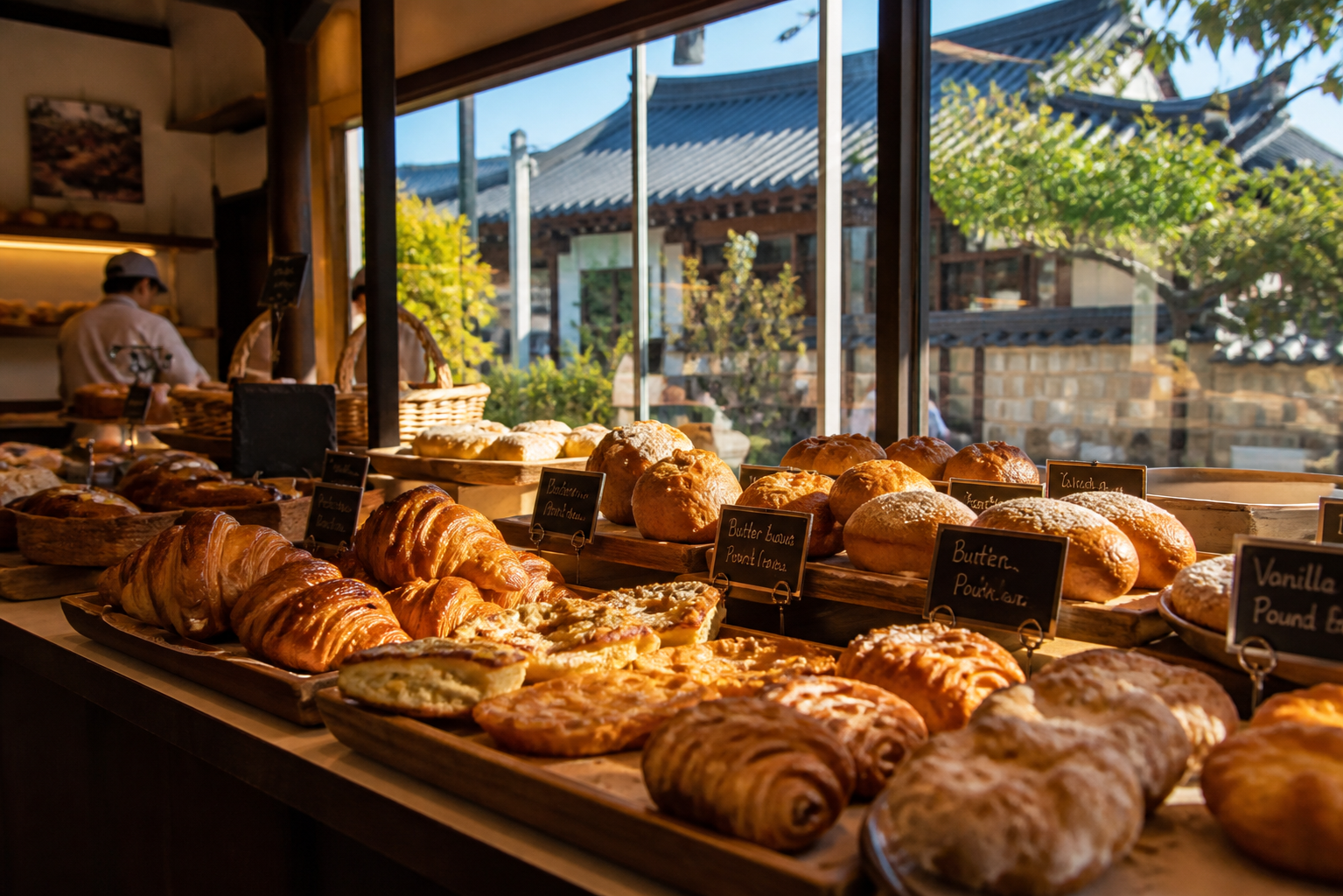
# Gunsan, Korea: The Quiet Port City Where a Neighborhood Bakery Became the Main Attraction
There are grand reasons to visit Korea—palaces, mountain trails, neon-lit shopping streets—but sometimes a trip begins with something much smaller. In Gunsan, that might be a paper bag of red bean bread from **Lee Sung Dang**, one of the country’s oldest bakeries.
I came expecting to grab a pastry and move on. Instead, I spent most of the day wandering through old port streets, photographing faded shop signs, eating more bread than I planned, and realizing that Gunsan feels wonderfully different from Seoul or Busan. It is slower, a little weathered, and very easy to like.
## The Vibe & When to Go
Gunsan sits on Korea’s western coast in North Jeolla Province. It was once a busy port, and parts of the old downtown still have Japanese-era buildings, low storefronts, quiet alleys, and wide streets that feel almost unusually calm after Seoul.
The city is especially pleasant in **spring and autumn**. April and May bring mild days and fresh green scenery, while October and November are cooler, clearer, and comfortable for walking. Summers can be hot and humid, and the winter wind off the coast has a sharp bite.
Right now, Gunsan makes sense for travelers who want a side trip with personality rather than another packed city itinerary. The bakery is the hook, but the real pleasure is walking around afterward with a warm snack in your hand and nowhere urgent to be.
## Must-See Spots: My Top Picks
### 1. Lee Sung Dang Bakery
This is the stop that put Gunsan on many food travelers’ maps. Lee Sung Dang has been operating since 1945, and the line outside can look intimidating, especially on weekends. It usually moves faster than expected, though I would still arrive early if you want the full selection.
The bakery’s best-known items are its **red bean buns** and **vegetable buns**. The red bean filling is smooth and sweet without being overwhelming, while the vegetable bun has a savory, comforting flavor. I bought both and immediately understood why people carry boxes of them onto buses and trains.
A few practical things:
– Go in the morning for the freshest selection.
– Expect a queue during lunch hours and holidays.
– Buy one to eat nearby and a small box for later.
– The bakery is close to several downtown sights, so you do not need to plan a separate visit.
There is something charming about eating a famous pastry in an ordinary neighborhood instead of at a glossy attraction. The people around me were just as likely to be local families as visitors.
### 2. Modern Cultural Belt
Gunsan’s old downtown has a collection of preserved and restored buildings from the Japanese colonial period. Some are museums, some are galleries, and others are simply interesting to see from the outside.
The **Modern History Museum** gives useful context about Gunsan’s port and its complicated past. I found it easier to appreciate the older buildings after visiting the museum first. The stories are not always comfortable, but they add depth to what might otherwise look like a pretty collection of vintage architecture.
Take your time along the surrounding streets. Look for old wooden houses, tiled roofs, small stationery shops, and signs that have survived several generations. The area is compact enough to explore on foot, and the best moments often come between the official attractions.
### 3. Hirotsu House
The Hirotsu House is one of the better-known historic homes in the old district. You cannot treat it like a regular open house, but seeing the traditional Japanese-style structure from the outside gives you a sense of how layered Gunsan’s history is.
I preferred visiting early in the day, when the street was quiet and there were fewer tour groups. Combine it with the nearby cultural sites rather than making a long trip just for the house.
### 4. Wolmyeong Park and the Harbor Area
When you need a break from buildings and museums, head toward **Wolmyeong Park**. It is a good place for a gentle walk, especially in spring when the trees are green and the city opens up below you.
The harbor side of Gunsan has a different mood from the old downtown. It feels more spacious and practical, with working-city energy rather than sightseeing polish. If you enjoy photography, late afternoon is lovely here, when the light softens over the water and rooftops.
For an even longer outing, consider a day trip to **Seonyudo Island** in the Gogunsan Islands. It takes more planning and depends on transport connections, but the beaches and coastal scenery make a nice contrast to the bakery-and-history focus of central Gunsan.
## Practical Travel Advice
### Getting There & Visa
The easiest route is usually through **Seoul or Incheon**.
From Seoul, you can take a train or express bus toward Gunsan. Buses are often the simplest option, with regular departures from Seoul’s Central City Bus Terminal. Travel time is generally around two and a half to three hours, depending on traffic.
There is also a train connection, though routes and transfer times can vary. Check **Korail** before you go rather than assuming every train is direct.
Gunsan Airport has limited domestic service, so most international visitors will find Incheon more convenient.
For entry requirements, South Korea’s rules depend on your nationality and the length and purpose of your visit. Some passport holders can enter visa-free, while others need to apply for a visa in advance. **K-ETA requirements and temporary exemptions change**, so check the official Korea Visa Portal and K-ETA website before booking. Make sure your passport has enough validity and that your arrival information matches your application.
### Where to Stay
Gunsan is easy enough to visit as a long day trip, but staying overnight makes the experience much better. The streets become noticeably quieter after dinner.
– **Old downtown:** Best for history, bakeries, cafés, and walking to the main sights.
– **Near Gunsan Bus Terminal:** Convenient for an early departure or a short stay, with plenty of practical restaurants.
– **Eunpa Lake area:** Better for a calmer evening, lakeside walks, and slightly more modern hotels.
– **Seonyudo or nearby islands:** Choose this only if your main plan is coastal scenery and you are staying at least two nights.
For most first-time visitors, I would stay near the old downtown. It is not the fanciest part of town, but being able to walk out for breakfast and reach the bakery before the crowds is a real advantage.
### Getting Around
Central Gunsan is pleasantly walkable. Lee Sung Dang, the Modern History Museum, Hirotsu House, and several other sites can be linked together without needing a car.
For longer distances:
– Local buses are inexpensive, though routes can be confusing if you do not read Korean.
– KakaoMap is more reliable than Google Maps for walking and public transit directions.
– Kakao T is the local rideshare and taxi app. You may need a Korean phone number or a payment method that works in Korea.
– Taxis are reasonable for short trips, especially when two or three people are sharing the fare.
– A rental car is useful for Seonyudo and the islands, but unnecessary for central Gunsan.
I downloaded the Korean names of my hotel and main attractions before leaving. Showing the address to a taxi driver was much easier than trying to pronounce everything.
## Real Costs & Local Tips
Prices vary by season, but Gunsan is generally cheaper than Seoul.
### Daily budget
**Budget traveler: ₩55,000–₩85,000 per person**
– Guesthouse or simple room: ₩30,000–₩50,000
– Meals: ₩15,000–₩25,000
– Transport and snacks: ₩10,000–₩15,000
**Mid-range traveler: ₩120,000–₩190,000 per person**
– Comfortable hotel: ₩80,000–₩130,000 per room
– Meals and bakery stops: ₩25,000–₩40,000
– Taxis, cafés, and entrance fees: ₩15,000–₩25,000
South Korea uses the **won (₩)**. Credit cards are accepted in most hotels, restaurants, and larger cafés, but I always keep some cash for small eateries, market stalls, and local buses.
Tipping is not expected in Korea. You do not need to add a percentage at restaurants or cafés, and trying to tip can sometimes create an awkward moment.
### A few things that made my trip easier
– **Do not visit the bakery at peak lunch time.** Early morning or mid-afternoon is usually less stressful.
– **Use a rechargeable transit card.** A T-money card works on buses and makes short rides much simpler.
– **Eat where office workers eat.** The small restaurants away from the main historic streets were cheaper and often more satisfying than the places with English signs.
– **Carry your bakery purchase carefully.** The red bean buns are soft, and stacking them under a water bottle in your bag is a mistake I made once.
– **Check opening days before visiting small museums.** Some attractions close one day a week or operate on reduced hours outside peak season.
– **Bring a translation app, but do not rely on it for every meal.** Pointing at photos, choosing a set menu, and following what the table next to you ordered often worked better.
Gunsan is not the place I would choose for a packed checklist. Its appeal is gentler than that. You come for a bakery, stay for the old streets, and leave with a box of buns, a few quiet photographs, and the feeling that you saw a side of Korea many travelers rush past.
KEYWORDS: Gunsan Korea, Korean bakery