
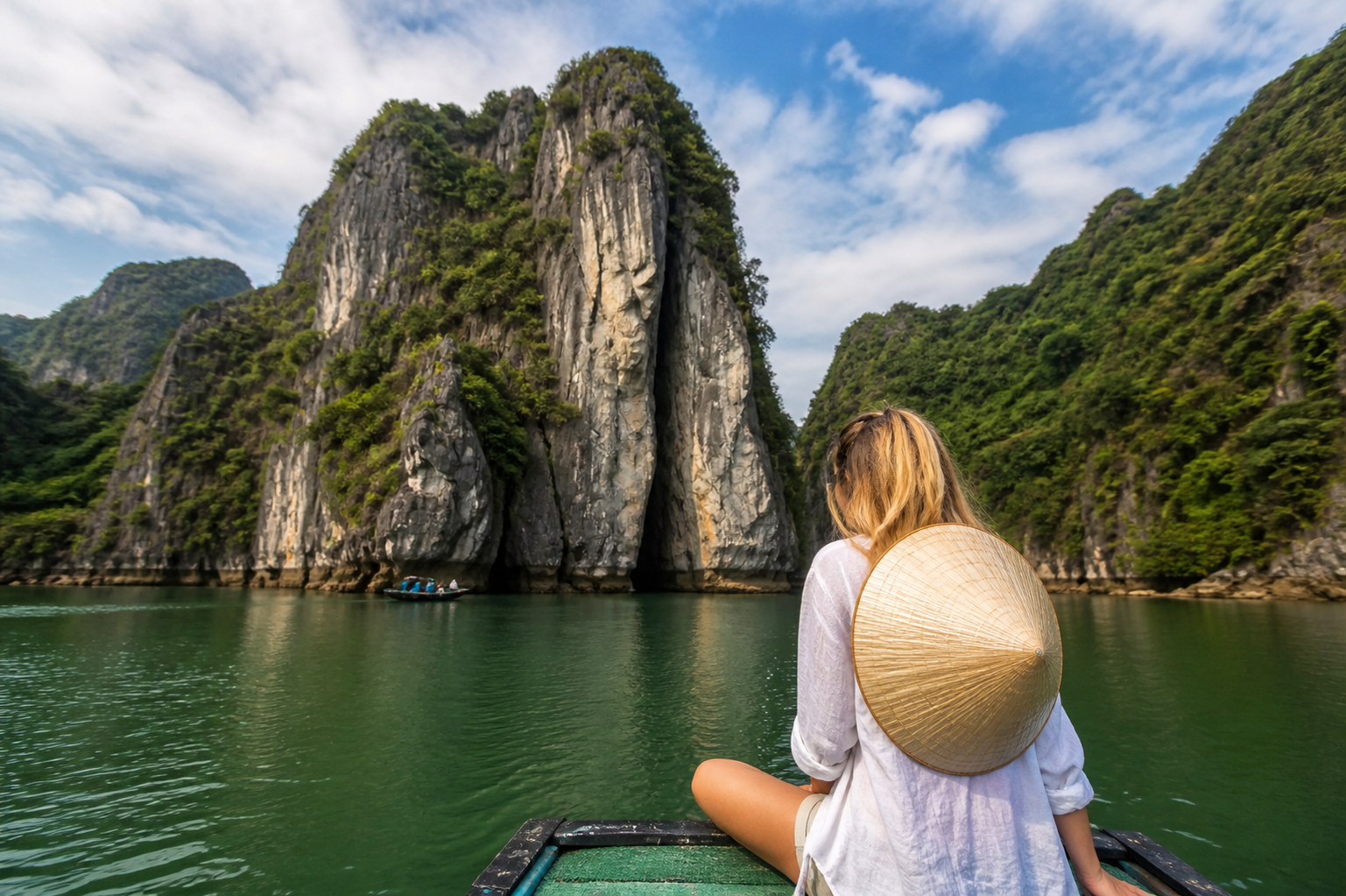
# Lost in Vietnam’s Wilderness: Big Landscapes, Kind Strangers, and the Comfort of Feeling Safe
I came to northern Vietnam expecting dramatic mountains, winding roads, and the occasional wrong turn. I did not expect to get briefly lost in the wilderness.
It happened on a rural trail outside the usual tourist routes. The phone signal disappeared, the path split into three smaller paths, and the last person we had seen was a farmer carrying a basket uphill. We were not in immediate danger, but the quiet suddenly felt very large.
Then a local family spotted us. They walked us back toward the village, offered tea, and refused money when we tried to thank them. That small moment stayed with me more than any viewpoint. Vietnam’s wilderness can feel remote, but the people rarely do.
## The Vibe and the Best Time to Go
Northern Vietnam feels raw in the best possible way. Limestone mountains rise behind rice fields, motorbikes buzz through tiny villages, and mist rolls across the valleys before breakfast. One minute you are eating noodles beside a busy road; the next, you are standing in complete silence with only birds and buffalo nearby.
The weather changes a lot by region:
– **October to April:** Cooler and generally drier in the north. This is my favorite time for Ha Giang and Cao Bang, though mountain evenings can be surprisingly cold.
– **May to September:** Hotter, greener, and more humid, with spectacular rice fields. Rain can make mountain roads and hiking trails slippery.
– **June to August:** Expect heavy downpours in parts of the north. Check road conditions before setting off, especially if you are riding a motorbike.
If you are visiting now, pack for changing conditions rather than trusting the temperature in Hanoi. A light rain jacket, sturdy shoes, and one warm layer can make a huge difference once you climb into the mountains.
## My Favorite Places in Vietnam’s Northern Wilderness
### 1. Ha Giang Loop: The Road Is the Main Attraction
The Ha Giang Loop is famous for its cliffside roads, but the best memories often happen between the famous viewpoints. We stopped at roadside kitchens, shared corn wine with a family, and watched children race home from school along a dusty lane.
The route is not a casual motorbike outing. Some stretches are narrow, steep, and busy with trucks. If you are not an experienced rider, hire an **easy rider**—a local driver who takes you on the back of their motorbike. It costs more than riding yourself, but I found it far less stressful and much safer.
Try to spend at least three nights on the loop. Rushing through it in two days means spending most of your time on the road and missing the villages, markets, and quiet walks that make the area special.
**Personal tip:** Start early each morning. The roads are calmer, the mountain light is beautiful, and you have more time to stop if weather or road repairs slow you down.
### 2. Dong Van and Ma Pi Leng Pass
The Ma Pi Leng Pass is one of those places where photographs fail to show the scale. The road clings to the mountainside, with the Nho Que River far below. It can feel thrilling and slightly nerve-racking at the same time.
Rather than stopping only at the main viewing platform, ask your guesthouse about smaller walking paths around Dong Van. We found a quiet trail through karst hills where the only company was a few goats and a farmer tending vegetables.
Dong Van town itself is simple but atmospheric, especially early in the morning. The old quarter wakes slowly, with bowls of pho, strong coffee, and market sellers arranging herbs and fruit.
### 3. Ban Gioc Waterfall and Cao Bang
Ban Gioc sits near the Chinese border and is one of Vietnam’s most impressive waterfalls. The water spreads over several limestone tiers, surrounded by green fields and forested hills.
Go early if you want a peaceful visit. By late morning, tour groups arrive and the bamboo rafts become busier. The nearby villages are also worth exploring, so do not treat the waterfall as a quick photo stop.
Cao Bang province feels quieter than Ha Giang. The roads are often less crowded, and I found the pace easier for travelers who want scenery without constantly checking the next famous viewpoint.
### 4. Ba Be Lake: Slow Days on the Water
Ba Be Lake is a gentler alternative to the mountain loops. You can take a boat through the lake, visit caves and waterfalls, and stay with a local family in a stilt house.
The evenings here are wonderfully calm. Dinner is usually home-cooked, with rice, greens, grilled fish, and whatever the family has prepared that day. Do not expect hotel-style service; the charm is in sharing a simple meal and waking to chickens, village sounds, and mist over the water.
If you are nervous about remote travel, Ba Be is a good introduction. It feels wild, but the activities are easy to arrange through local guesthouses.
## Practical Travel Advice
### Getting There and Visa
Most travelers begin in **Hanoi**, which has the widest choice of international flights. From there, you can travel north by sleeper bus, limousine van, train, or a short domestic flight followed by road transport.
For Vietnam’s northern mountains:
– **Ha Giang:** Usually reached by overnight bus or limousine van from Hanoi. The journey takes roughly six to eight hours, depending on traffic.
– **Cao Bang:** Around seven to nine hours by road from Hanoi.
– **Ba Be Lake:** Usually reached by road, often with a transfer arranged by your homestay.
– **Sapa:** Accessible by train or bus from Hanoi, although the town is more developed and busier than Ha Giang or Cao Bang.
Vietnam offers **e-visas for citizens of many countries**, generally allowing stays of up to 90 days with single or multiple entry options. Some nationalities also receive visa-free entry for limited periods. Your passport should normally have at least six months’ validity, but check the current rules through Vietnam’s official immigration portal before booking.
Use the exact passport details on your application. A small spelling mistake can create a miserable airport problem.
### Where to Stay
Your choice of base changes the whole experience:
– **Hanoi Old Quarter:** Best for first-time visitors, food, nightlife, and transport connections. It is lively and noisy.
– **Ha Giang City:** Practical for arranging the loop, renting gear, or meeting an easy rider.
– **Dong Van:** Best for mountain scenery, local markets, and a quieter evening.
– **Cao Bang City:** A useful base for exploring Ban Gioc and nearby waterfalls.
– **Ba Be villages:** Best for homestays, home cooking, and slow mornings beside the lake.
– **Sapa:** Choose this if you want more cafés, hotels, and organized trekking. Stay outside the center for a calmer atmosphere.
In remote areas, read recent reviews carefully. A “homestay” may mean a family home with mattresses on the floor, shared bathrooms, and cold water. I loved that style of travel, but it helps to know what you are booking.
### Getting Around
In Hanoi, use **Grab** for cars and motorbikes. It is simple, inexpensive, and reduces arguments over fares. Walking works well in the Old Quarter, although crossing the road requires patience and a steady pace.
In the mountains:
– Hire a local driver or easy rider for difficult routes.
– Use public buses between larger towns, but ask your guesthouse to confirm departure times.
– Do not rely completely on Google Maps. Some trails are poorly marked, and map pins can lead you onto private land or rough farm tracks.
– Download offline maps before leaving town.
– Carry cash, water, snacks, and a portable charger on day trips.
Vietnam is generally safe for visitors, including solo travelers, but the wilderness brings different risks. Tell your guesthouse where you are going, avoid hiking alone after dark, and turn back if rain makes a trail or road unsafe.
## Realistic Costs and Local Money Tips
Vietnam remains affordable, though prices rise in major tourist areas and during holidays.
### Budget travel
Expect to spend around **US$25–40 per day** if you stay in hostels or basic homestays, eat local food, use buses, and keep paid activities limited.
Typical prices:
– Local breakfast: **30,000–60,000 VND**
– Bowl of pho or noodles: **40,000–80,000 VND**
– Basic homestay: **150,000–350,000 VND per person**
– Short Grab motorbike ride: often **20,000–60,000 VND**
– Local bus ride: usually inexpensive, depending on distance
### Mid-range travel
Plan on roughly **US$60–120 per day** for a comfortable hotel or private room, regular restaurant meals, private transfers, and guided activities.
A private driver or easy rider for a mountain route can be one of your biggest expenses, but it is also where I would spend the money. A good local driver understands road conditions, knows where to stop, and can help if plans change.
Vietnam uses the **Vietnamese dong (VND)**. Cash is essential in villages and at small eateries. Cards are more common in hotels and larger restaurants, but do not assume they will work everywhere.
Tipping is not required in the same way it is in some countries. You can round up a bill or leave a small amount for excellent service. For guides and drivers, a tip is appreciated, especially after a multi-day trip, but it should feel like thanks rather than a fixed obligation.
## Small Tricks That Saved Me Money and Trouble
– **Eat where local workers eat.** A crowded rice shop usually offers better value than a restaurant with a large English menu and photographs of every dish.
– **Agree on transport prices before leaving** if there is no meter or app fare. Write the number down if communication is difficult.
– **Carry small notes.** Vendors may not have change for a 500,000 VND bill, and buying a 20,000 VND snack with one can be awkward.
– **Book the first night, not always the whole trip.** In the quieter provinces, plans change with weather and road conditions. Leaving some flexibility helped us find better homestays.
– **Buy water and snacks before heading into the mountains.** Villages may have small shops, but opening hours are unpredictable.
– **Be careful with cheap motorbike rentals.** Check the brakes, tires, lights, horn, and papers before accepting the bike. If the road looks beyond your experience, hire a driver instead.
What I remember most about getting lost was not the fear. It was the way the situation changed as soon as people realized we needed help. A woman brought out stools. Her brother checked the route on his phone. Someone produced tea. Within minutes, our mistake had become a small village gathering.
That is the feeling I carried home from northern Vietnam: the landscapes can make you feel wonderfully small, but you are rarely left to manage everything alone.
KEYWORDS: Ha Giang Vietnam