
# Jordan Is Ready to Welcome the World: Petra, Wadi Rum, and the Places I’d Return to Tomorrow
Jordan has a way of making a first visit feel strangely familiar. Maybe it’s the coffee poured into tiny cups, the easy conversation with a shopkeeper, or the way an evening in Amman can turn into dinner with people you met ten minutes earlier.
Lately, Jordan has been back in the international spotlight, with global names such as Mike Tyson and Ronaldinho helping draw attention to the country. That attention is useful, but Jordan doesn’t need celebrity approval to be memorable. Its real appeal is found in the old stones, desert silence, generous meals, and the people who are genuinely pleased you came.
## The Vibe & When to Go
Jordan feels energetic without being overwhelming. Amman is busy, hilly, and a little chaotic in the best possible way. Outside the capital, the pace changes quickly: Petra asks for patience, Wadi Rum encourages stillness, and the Dead Sea makes you forget what time it is.
Spring and autumn are the most comfortable seasons, with warm days and cool evenings. From March to May, the hills around Amman can be surprisingly green, while September to November brings pleasant sightseeing weather. Summer is hot, especially in Petra and the desert, though evenings in Amman can be manageable. Winter is cooler and occasionally rainy, with snow even possible in higher parts of Amman.
Jordan feels especially ready for visitors now because the main sights are easier to enjoy at a slower pace than they were during the busiest travel years. You can still find quiet corners in Petra, get a desert camp with real space around it, and sit down for a long meal without feeling rushed.
## Must-See Spots: My Top Picks
### 1. Petra Beyond the Treasury
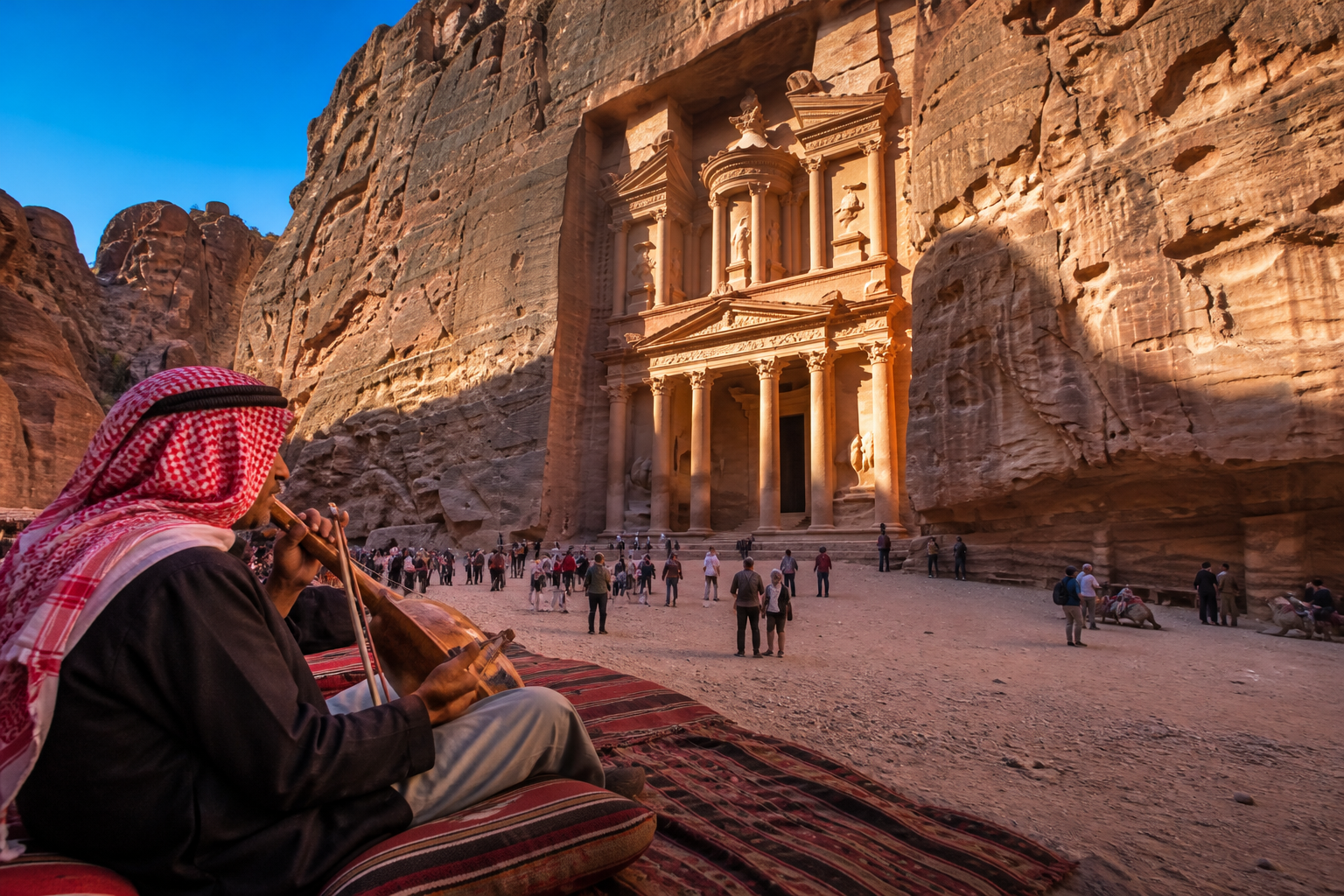
The first glimpse of the Treasury through the narrow Siq is every bit as dramatic as people promise. I still remember the gradual reveal: a slice of rose-colored stone becoming a full façade as I walked closer.
But don’t stop at the Treasury. Most visitors take photographs and turn around, while the site continues for hours. Walk along the Colonnaded Street, see the Royal Tombs, and climb toward the Monastery if your legs and the weather allow it. The Monastery takes effort, but the view at the top makes the climb feel worthwhile.
A few practical things helped me:
– Start early, before the heat and larger groups arrive.
– Wear shoes with proper grip; the ground is uneven and dusty.
– Carry water, even in cooler months.
– Be polite but firm if you don’t want a horse ride or souvenir.
– If you have two days, use the second for the High Place of Sacrifice or a quieter trail.
Petra is not a place to rush through in three hours. Give it time to unfold.
### 2. Wadi Rum at Sunset
Wadi Rum is less about ticking off sights and more about how the landscape makes you feel. The sandstone cliffs seem to change color every few minutes, from pale gold to orange and then deep red. In the late afternoon, I liked sitting on a rock and watching the shadows move across the desert rather than chasing one more viewpoint.
A jeep tour is the easiest way to explore the wider area. Most include stops at rock bridges, old inscriptions, canyons, and open desert viewpoints. A night in a Bedouin-style camp adds something special, especially when the camp lights are low and the sky is clear.
Ask what your camp actually includes before booking. Some places are simple tents with shared bathrooms; others are comfortable bubble tents with private facilities. Both can be enjoyable, but they are very different experiences.
Bring a warm layer. Desert nights can be cold even after a hot day.
### 3. Amman’s Hills, Cafés, and Old Streets
Amman is a city for wandering without a strict plan. Start around the Roman Theatre and the Citadel, then walk through downtown for fresh juice, falafel, spices, and the constant sound of taxis.
The Citadel is especially beautiful near sunset. From up there, Amman spreads across the hills in a jumble of cream-colored buildings. Visit the Temple of Hercules and the Umayyad Palace, but leave time to simply look over the city.
For food, I’d begin with:
– **Falafel and hummus** for a quick, inexpensive breakfast
– **Mansaf** if you want to try Jordan’s famous lamb-and-rice dish
– **Maqluba**, a comforting upside-down rice and vegetable dish
– **Kanafeh** in downtown Amman, preferably shared because it is wonderfully rich
Rainbow Street is pleasant for cafés and evening walks, but downtown is where I found more everyday atmosphere. Try both rather than spending your entire Amman stay in one area.
### 4. The Dead Sea and Madaba
Floating in the Dead Sea is a strange, memorable experience. The water is dense enough to hold you up, but any small cut on your skin will announce itself immediately. Don’t shave before swimming, and keep your hands away from your eyes.
Use the mud sparingly, rinse thoroughly, and don’t stay in the water too long. The heat can sneak up on you.
Nearby Madaba is a good stop for a quieter cultural afternoon. The town is known for its Byzantine mosaics, including the famous map of the Holy Land. Mount Nebo is close as well, with wide views toward the Jordan Valley and, on a clear day, beyond.
## Practical Travel Advice
### Getting There & Visa
Most international visitors arrive at **Queen Alia International Airport**, about 30–40 minutes south of Amman depending on traffic. Royal Jordanian and several international airlines serve the airport, with connecting options through major European and Gulf hubs.
Many nationalities can obtain a visa on arrival, but the rules depend on your passport. Some travelers need to arrange a visa in advance, and certain nationalities may face extra requirements. Check the Jordanian embassy or official tourism information before booking non-refundable travel.
The **Jordan Pass** can be excellent value if you plan to visit Petra and other major sites. It may include Petra entry and can cover the tourist visa fee for eligible visitors who stay for the required number of nights. Read the current conditions carefully before purchasing; visa rules and fees can change.
Your passport should generally have at least six months’ validity beyond your arrival date. Keep a copy of your passport, travel insurance, and accommodation details on your phone.
### Where to Stay
**Amman**
– **Downtown:** Best for food, markets, the Roman Theatre, and a more local atmosphere. It can be noisy and hilly.
– **Jabal Amman:** A good balance of cafés, guesthouses, restaurants, and walkable streets.
– **Abdali or Sweifieh:** Better for modern hotels, shopping, and business-style comfort.
**Petra**
Stay in **Wadi Musa**, the town beside the archaeological site. A hotel within walking distance of the entrance is convenient, especially if you want to arrive early. Budget guesthouses farther uphill can have excellent views but may require a taxi after a long day.
**Wadi Rum**
Choose a camp based on the experience you want, not just the photos. Ask about bathroom facilities, heating, meals, transport from the village, and whether a jeep tour is included.
**Dead Sea**
Resort hotels dominate this area, so it is usually pricier than Amman or Madaba. If you want to save money, stay in Madaba or Amman and visit the Dead Sea for the day.
### Getting Around
Amman is walkable in small sections, but the hills and traffic make longer journeys tiring. Taxis are common, and ride-hailing apps such as **Careem** and **Jeeny** are useful where available. Agree on a taxi fare beforehand if the meter is not being used.
For Petra, Wadi Rum, and the Dead Sea, many travelers hire a driver for several days. It costs more than public transport but saves time and makes the route much easier. Shared minibuses can be inexpensive, though schedules are not always convenient and departures may depend on the vehicle filling up.
Driving yourself is possible, but I would only recommend it if you are comfortable with assertive traffic, unclear lane markings, speed bumps, and nighttime driving. Between major destinations, a private driver can make the trip far less stressful.
## Real Costs & Local Tips
Jordan uses the **Jordanian dinar**, written as JOD. It is a strong currency, so Jordan can feel more expensive than travelers expect, particularly at Petra, the Dead Sea resorts, and organized desert camps.
### A realistic daily budget
**Budget traveler: around 35–55 JOD per person**
– Simple guesthouse or hostel: 12–25 JOD
– Local meals: 3–7 JOD each
– Shared transport and occasional taxi: 5–12 JOD
– Basic sightseeing and drinks: 5–10 JOD
**Mid-range traveler: around 80–140 JOD per person**
– Comfortable hotel: 45–90 JOD
– Restaurants and cafés: 15–30 JOD
– Taxis or shared private transport: 10–25 JOD
– Tours and entrance fees: varies widely
Petra, a Wadi Rum camp, and a Dead Sea resort can push your daily total much higher. I would budget separately for those rather than trying to squeeze them into an average daily figure.
Tipping is appreciated but not compulsory in the same way everywhere. In restaurants, check whether a service charge has already been added. If not, leaving around 5–10 percent for good service is polite. Small tips for guides, drivers, and hotel staff are also welcome.
### A few money-saving tricks
– **Eat where locals eat.** Falafel, shawarma, hummus, and rice dishes are filling and far cheaper than hotel meals.
– **Buy water in supermarkets**, not from the first shop beside Petra or a major viewpoint.
– **Carry small notes and coins.** They make taxis, cafés, and small purchases much easier.
– **Book desert camps carefully.** A low headline price may exclude transfers, jeep tours, dinner, or breakfast.
– **Use the Jordan Pass calculation.** If Petra and several other sites are on your list, it can save a noticeable amount.
– **Dress for the place, not just the weather.** Modest, breathable clothing helps you feel comfortable in towns and religious sites, while a scarf and light jacket are useful in the desert.
Jordan rewards travelers who leave a little room in the schedule. Sit down for the extra cup of tea. Let the shopkeeper explain where the family recipe came from. Stop the car when the desert light changes. Those unplanned moments are often what stay with you longest.
KEYWORDS: Jordan Petra