
# Jeju Beyond the Headlines: Coastal Walks, Local Food, and Safer Ways to Explore
Jeju is still the kind of island where you can eat a bowl of seafood soup in a tiny neighborhood restaurant, turn down a coastal road, and find yourself staring at waves with nobody else around. But recent reports about mishandled missing-person cases have understandably made some travelers uneasy. The stories have raised questions about how quickly reports are handled, especially in remote areas.
My own view is that Jeju remains a generally safe destination, but it rewards sensible planning. This is a large, rural island with volcanic trails, dark roads, sudden weather changes, and plenty of isolated coastline. I would not let the headlines stop me from visiting, but I would take location sharing, trail planning, and emergency contacts more seriously than I might on a city break in Seoul.
## The Vibe & When to Go
Jeju feels slower and more open than mainland South Korea. The island has black volcanic stone walls, tangerine orchards, windy beaches, fishing villages, and roads that seem to disappear into fields. Even in busy areas, you can usually find a quiet café or a small shoreline within a short drive.
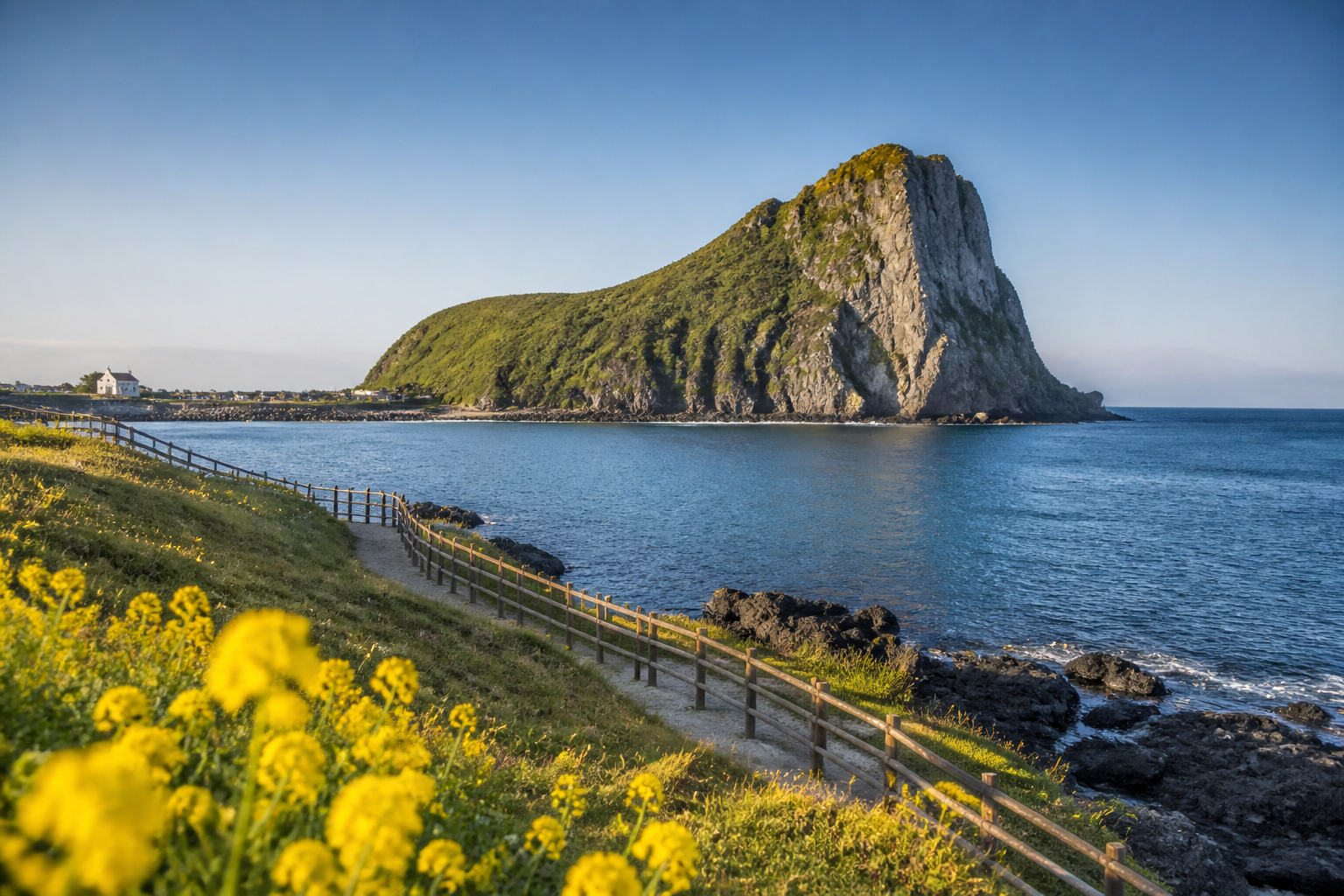
Spring brings yellow canola flowers and mild days, though strong winds can make it feel colder than expected. Summer is warm, humid, and popular for beaches, but rain and typhoons can disrupt plans. Autumn is one of my favorite seasons: clear skies, comfortable hiking weather, and fewer crowds after the summer rush. Winter is cool and windy, with occasional snow on Hallasan, while the coast usually stays milder.
Jeju is a good choice right now if you want fresh air, outdoor scenery, and a trip that can be enjoyed at a gentler pace. Just check the forecast before setting out. A sunny morning can turn into thick fog or heavy rain surprisingly quickly.
## Must-See Spots: My Top Picks
### 1. Seongsan Ilchulbong at a quieter hour
Seongsan Ilchulbong is famous for sunrise, but you do not have to arrive before dawn to enjoy it. I like going later in the morning, walking around the lower paths, and taking in the view of the crater and fishing village below.
The climb is manageable for most reasonably active travelers, though the steps can be tiring in wind or heat. Wear shoes with a decent grip, and avoid wandering onto unofficial cliffside paths. If the weather is foggy, the views may disappear, so check the forecast before making an early start.
Nearby cafés and seafood restaurants can be more expensive than those a few streets away. Walk a little beyond the main visitor area before choosing lunch.
### 2. A stretch of the Jeju Olle Trail
You do not need to hike the entire island to enjoy the Jeju Olle Trail. Pick one section that matches your energy and transport plans. Coastal routes near Seogwipo offer sea views, stone walls, and small villages, while quieter eastern sections feel more rural.
I especially enjoy the parts where the trail passes through fields and along low seawalls rather than famous attractions. They show everyday Jeju better than a packed photo stop.
For safety, download your route before leaving, bring water, and tell someone where you are going. Some sections become very quiet outside the daytime hours. I would avoid starting a remote trail late in the afternoon, particularly alone.
### 3. Hallasan, with an honest look at the effort
Hallasan is beautiful, but it is not a casual stroll. Even the shorter routes can involve steep sections, slippery rocks, and rapidly changing conditions. The Seongpanak and Gwaneumsa routes require advance reservations when visitor limits are in place, so check the official trail system before traveling.
For a gentler experience, look at shorter forest routes around the mountain or visit in good weather without trying to force a summit hike. Start early, carry a warm layer even in mild weather, and turn back if conditions deteriorate. Pride is a poor hiking companion.
Do not rely entirely on phone service in remote mountain areas. Keep your phone charged and save emergency numbers in advance.
### 4. Dongmun Market and the old city
When I want a break from driving and scenery, I head to Dongmun Market in Jeju City. It is lively without feeling too polished, and it is a good place to try grilled seafood, abalone porridge, tangerines, rice cakes, and black-pork dishes.
Prices vary from stall to stall, so look around before buying. Some vendors offer small samples, but you never need to purchase something just because you tasted it. Going in the late afternoon gives you time to browse before the evening food stalls become busy.
For a quieter local experience, explore the streets around the market rather than staying only on the busiest lanes.
## Practical Travel Advice
### Getting There and Visa
Most visitors fly into **Jeju International Airport**, with frequent domestic flights from Seoul Gimpo and Busan. The Seoul–Jeju route is one of the busiest air routes in the world, so compare several departure times. Early morning and late evening flights are often cheaper, but allow extra time for airport transfers.
There are also direct international flights from selected Asian cities, though routes change seasonally.
Visa rules depend on your passport. Many nationalities can enter South Korea visa-free for a limited stay, while others must apply for a visa in advance. K-ETA requirements and temporary exemptions can change, so check:
– The official Korea Visa Portal
– Your nearest Korean embassy or consulate
– The official K-ETA website, if your nationality is covered
Make sure your passport has enough validity for your trip and keep your accommodation details handy at immigration.
### Where to Stay
**Jeju City:** Best for first-time visitors, airport convenience, markets, buses, and restaurants. It is the practical choice if you are not renting a car.
**Seogwipo:** A good base for waterfalls, coastal walks, Hallasan’s southern side, and a slower evening atmosphere. I find it more relaxed than Jeju City.
**Aewol:** Popular for cafés, sunsets, and a stylish coastal feel. It can be pricey, and having a car makes the area much easier.
**Seongsan:** Ideal for sunrise at Seongsan Ilchulbong and exploring eastern Jeju. It is quieter at night, so do not expect a huge choice of late restaurants.
**Jocheon or Hamdeok:** A pleasant middle ground with beaches, cafés, and access to the eastern coast. Hamdeok is especially convenient during warmer months.
If safety is a concern, choose accommodation with a staffed reception or clear self-check-in instructions, read recent reviews, and avoid booking an isolated pension simply because the photos look peaceful.
### Getting Around
A rental car is the easiest way to explore Jeju, especially if you want to visit rural beaches, trailheads, and small villages. Roads are generally good, but driving distances can feel longer than they look on a map. Use a navigation app suited to Korea, such as **Naver Map** or **KakaoMap**, rather than relying only on Google Maps.
You will need an accepted driving license and, in many cases, an **International Driving Permit**. Confirm the rental company’s requirements before arriving.
Buses cover the main towns and many attractions, but service can be slow and less frequent in rural areas. They are perfectly usable for a relaxed itinerary built around one region.
Taxis are convenient for short trips. **Kakao T** is the most useful rideshare and taxi app, although setting it up can be easier with a Korean phone number or a payment card that the app accepts. If you are traveling alone, share your live location with a friend when taking a taxi to a remote accommodation or trailhead.
## Safety After the Missing-Person Cases
The recent reports have been upsetting because they point to failures in how missing-person reports were handled, not because Jeju is suddenly unsafe for every visitor. Still, the concern is understandable, particularly for solo travelers and anyone planning remote hikes.
I would follow these habits:
– Send your daily route and accommodation address to someone you trust.
– Keep your phone charged and carry a portable battery.
– Avoid isolated beaches, forest roads, and trails after dark.
– Do not assume a beautiful empty road is safe to walk along; some roads have poor lighting and no sidewalks.
– If someone in your group goes missing, contact **112** immediately rather than waiting. For medical or mountain emergencies, call **119**.
– Save the **1330 Korea Travel Helpline** number for travel assistance and translation support.
– Carry your passport or a secure copy, especially when moving between accommodations.
Jeju is not a place where you need to feel nervous every minute. It is a place where basic precautions matter because the island is spread out and help may take longer to reach remote locations.
## Real Costs and Local Tips
Prices change with the season, but these are realistic daily estimates per person, excluding flights:
### Budget: around ₩60,000–₩100,000 per day
– Guesthouse or simple room: ₩30,000–₩60,000
– Local meal: ₩8,000–₩15,000
– Buses and occasional short taxi rides: ₩5,000–₩15,000
– Market snacks and coffee: ₩10,000–₩20,000
### Mid-range: around ₩130,000–₩230,000 per day
– Comfortable hotel: ₩80,000–₩150,000
– Restaurant meals: ₩30,000–₩60,000
– Taxis or rental-car costs shared between travelers: ₩20,000–₩50,000
– Cafés, snacks, and entrance fees: ₩15,000–₩30,000
A rental car can add roughly ₩50,000–₩100,000 per day before fuel and insurance, depending on the season and vehicle. Sharing with two or three people usually makes it more reasonable.
South Korea uses the **Korean won (₩)**. Credit cards are widely accepted, but keep some cash for markets, small restaurants, buses, and rural businesses. Tipping is not expected in ordinary restaurants, cafés, taxis, or hotels. A sincere thank-you is enough.
### A few money-saving tricks
– Eat one or two meals at local markets or neighborhood restaurants instead of ordering seafood beside the most famous attractions.
– Buy tangerines, bottled water, and snacks at convenience stores before heading to a trailhead.
– Group your sightseeing by area. Crossing the island repeatedly wastes both fuel and time.
– Reserve popular hotels and rental cars early during spring flower season, summer holidays, and autumn weekends.
– Check whether an attraction is genuinely worth the entrance fee before joining a tour just for a photo stop.
– Avoid booking a packed island-wide itinerary. Staying in two different areas can reduce driving and give you calmer evenings.
Jeju still offers the kind of travel memories that stay with you: wind coming off the sea, warm soup after a hike, and a quiet road lined with stone walls. I would visit with more awareness than before, especially around remote trails and missing-person emergencies, but I would not write the island off. Plan carefully, keep people informed, and leave room for the slower, quieter side of Jeju.
KEYWORDS: Jeju Island, South Korea coast