
# Ho Chi Minh City in 2026: Street Food, Secret Corners, and the Best Ways to Explore
Ho Chi Minh City has always had a restless energy, but in 2026 it feels especially confident. The city has picked up **three major Asian tourism awards**, as reported by Vietnam News Agency (TTXVN), putting fresh attention on a place many travelers already love for its food, history, nightlife, and wonderfully chaotic streets.
Awards aside, what I enjoy most is how quickly Ho Chi Minh City changes from one mood to another. One minute you’re sipping iced coffee beside a busy road; the next, you’re wandering down a quiet alley filled with family homes, tiny shrines, and laundry hanging above your head.
## The Vibe and When to Go
Ho Chi Minh City is loud, humid, generous, and surprisingly intimate once you get used to the traffic. Scooters flow around cars like schools of fish, food stalls appear on nearly every block, and evenings often belong to sidewalk cafés and plastic stools.
The city has a tropical climate:
– **December to April:** Generally drier, sunnier, and easier for walking. This is my favorite period for a first visit.
– **May to November:** More rain, but usually in short, heavy bursts rather than all-day drizzle. Carry a light rain jacket or small umbrella.
– **Around Tet, Vietnamese Lunar New Year:** The city becomes beautifully festive, though some family-run restaurants and shops close for several days.
In 2026, the new tourism recognition gives you another reason to visit, but I wouldn’t come expecting a polished resort-style city. Ho Chi Minh City’s charm is in the everyday scenes: breakfast eaten on a curb, old apartment blocks covered in cafés, and the smell of grilled pork drifting through a narrow lane.
## Must-See Spots: My Top Picks
### 1. District 1’s Historic Core
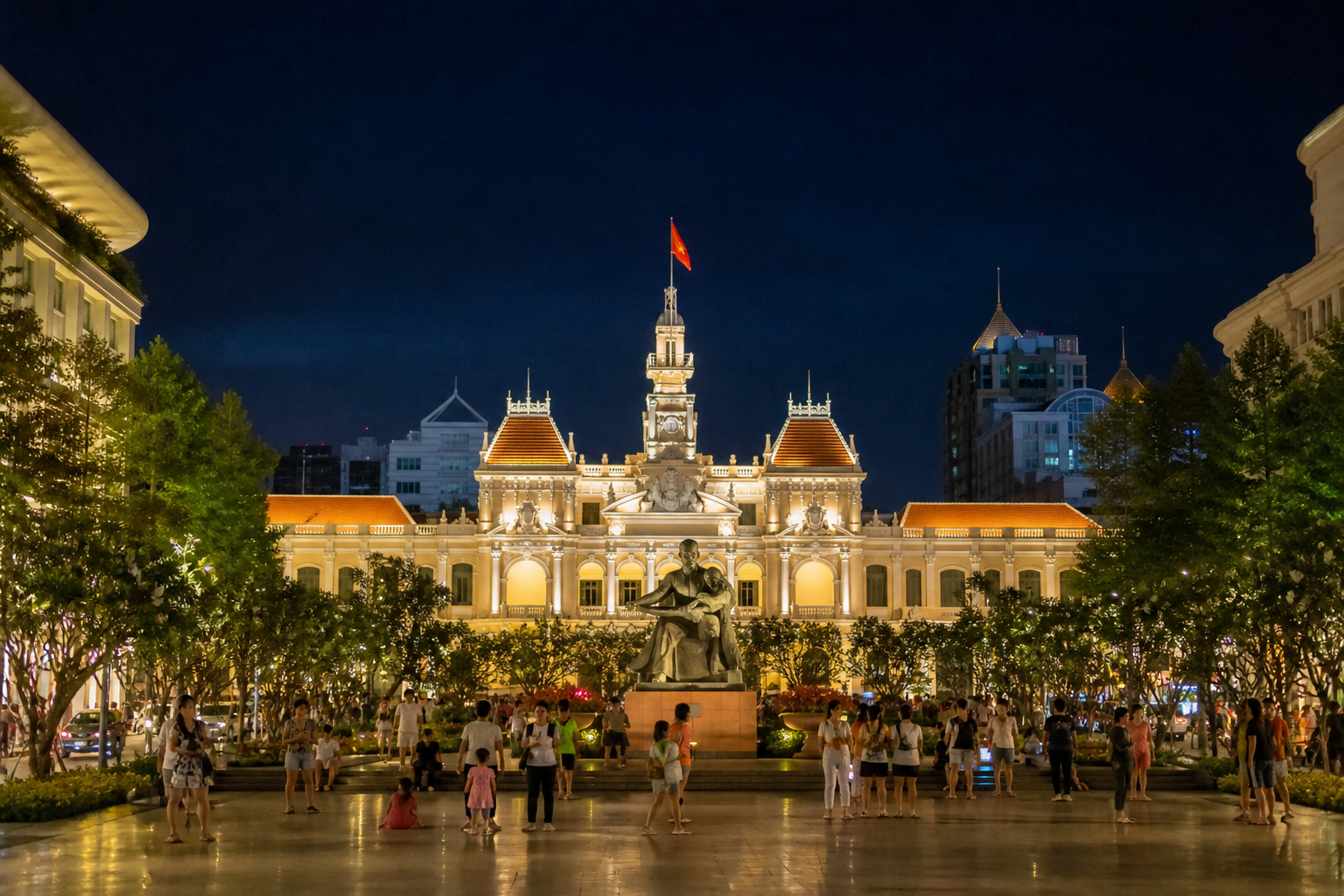
Start around **Nguyen Hue Walking Street**, then make your way toward the Central Post Office, Notre-Dame Cathedral Basilica area, and the old colonial buildings nearby. Nguyen Hue is especially lively after sunset, when local families, young couples, and groups of friends gather under the lights.
I prefer visiting early in the morning, before the heat builds. Grab a Vietnamese iced coffee and watch the city wake up. The Central Post Office can be busy, but it still feels like a functioning public building rather than a frozen museum piece.
For a quieter break, look for the old **“apartment café” buildings** around Nguyen Hue and Ton That Dam streets. They can look a little worn from the outside, but inside you’ll find coffee shops, boutiques, art spaces, and balconies with wonderful city views. Take the lift if there is one; climbing several flights in the heat is not as romantic as it sounds.
### 2. The War Remnants Museum
This is one of the most powerful places in the city, and it deserves more time than a quick photo stop. The exhibits present the Vietnam War and its aftermath through photographs, military equipment, and personal stories.
Some displays are emotionally difficult, so I usually visit in the morning when I have enough energy and quiet afterward. Give yourself at least two hours, and avoid rushing straight into a busy lunch. A slow bowl of pho or a coffee nearby gives you space to process what you’ve seen.
The museum is not a neutral history textbook, but it offers an important Vietnamese perspective. I recommend reading a little about the country’s modern history before visiting.
### 3. Cho Lon and Binh Tay Market
For a different side of the city, head west to **Cho Lon**, Ho Chi Minh City’s Chinatown. The area is full of Chinese-Vietnamese temples, herbal medicine shops, food stalls, and old family businesses.
**Binh Tay Market** is more local and less polished than Ben Thanh Market. Go in the morning, when traders are busy and the market feels most alive. Nearby, visit **Thien Hau Temple**, where the incense coils hanging from the ceiling create a warm, smoky atmosphere.
Cho Lon is also a good place to try dishes with Chinese-Vietnamese influences, including roasted duck, noodle soups, and dumplings. I found the streets around the market more interesting than the market itself, so leave time to wander without a fixed route.
### 4. The Saigon River and Thao Dien
When the city traffic becomes tiring, spend an evening beside the **Saigon River**. The riverfront around District 1 has become more inviting, especially near the newer parks and dining areas.
For a slower, more international atmosphere, cross toward **Thao Dien in District 2**. It has stylish cafés, small restaurants, galleries, and shops selling Vietnamese design goods. It is not the most traditional part of the city, but it’s comfortable after a few intense days in the center.
I like going to Thao Dien late afternoon, finding a café with outdoor seating, and staying until dinner. Be prepared for some traffic crossing the river, especially during rush hour.
## Practical Travel Advice
### Getting There and Visa
Most international visitors arrive at **Tan Son Nhat International Airport (SGN)**. It is close to the central districts, but traffic can make the short journey surprisingly slow.
Vietnam offers **electronic visas for citizens of many countries**, generally allowing stays of up to 90 days with single- or multiple-entry options. Visa exemptions also apply to some nationalities, but the permitted stay varies. Check the current rules on Vietnam’s official immigration website before booking, since requirements can change.
Your passport should usually have at least six months of remaining validity and spare blank pages. Double-check every detail on your e-visa application, especially your name, passport number, and arrival airport. A small error can create a major headache at the border.
For flights, compare arrivals into Ho Chi Minh City with nearby regional connections through Bangkok, Singapore, Kuala Lumpur, or Hong Kong. If you land late at night, prearrange an airport transfer or use an official taxi queue rather than accepting offers from random drivers inside the terminal.
### Where to Stay
– **District 1:** Best for first-time visitors, nightlife, major sights, and easy access to restaurants. It can be noisy, so request a room away from the street.
– **District 3:** My favorite central area for a more local feel. You’ll find tree-lined streets, excellent food, and less nightlife noise.
– **District 5 and Cho Lon:** Good for Chinese-Vietnamese culture, markets, temples, and local restaurants.
– **Thao Dien, District 2:** Relaxed, café-filled, and popular with long-stay travelers and families.
– **Binh Thanh:** A useful middle ground with local food, modern apartments, and relatively easy access to both central districts and Thao Dien.
If you’re visiting for only two or three nights, stay in District 1 or District 3. Longer stays give you more freedom to choose a neighborhood with a calmer rhythm.
### Getting Around
Walking works well in small sections, especially in District 1 and District 3, but the heat and traffic can make long walks exhausting. Crossing the road takes practice: walk at a steady pace, make eye contact with approaching riders, and don’t suddenly stop halfway across.
For longer trips, use **Grab** for motorbike rides or cars. GrabBike is usually the fastest and cheapest option, though you should be comfortable riding pillion in busy traffic. **Be** is another local ride-hailing app that can be useful.
Taxis from reputable companies such as **Vinasun** and **Mai Linh** are generally reliable. Public buses are inexpensive, but they take patience and are less convenient if you’re carrying luggage. The city’s metro system is developing, but it may not yet take you everywhere you want to go.
## Real Costs and Local Tips
Vietnam uses the **Vietnamese dong (VND)**. Cash is still useful for markets, street food, and small cafés, although hotels and larger restaurants usually accept cards.
A rough daily budget:
– **Budget traveler:** 600,000–1,000,000 VND per day, excluding flights and accommodation. This covers local meals, simple cafés, buses or motorbike rides, and low-cost attractions.
– **Mid-range traveler:** 1,500,000–2,800,000 VND per day, excluding flights and accommodation. This allows for a comfortable hotel, a few sit-down meals, ride-hailing, museum visits, and occasional cocktails.
– **Accommodation:** Basic rooms may start around 400,000–800,000 VND, while comfortable mid-range hotels often fall between 1,200,000 and 2,500,000 VND per night, depending on location and season.
Tipping is not required in most places. You can leave a little extra for excellent service, especially at a nicer restaurant, but staff do not generally expect North American-style tips.
A few things that saved me money and prevented avoidable hassles:
– **Check the menu price before ordering**, especially at seafood restaurants and busy tourist markets.
– **Use Grab instead of negotiating every ride**. The fare is shown in advance and reduces confusion.
– **Carry small notes** for street food and small purchases. Vendors may not have change for large bills.
– **Eat where local office workers eat**. If a small lunch stall is crowded at midday, that is usually a better sign than a restaurant with aggressive touts.
– **Keep your phone away from the road**. Snatch-and-grab theft can happen, particularly when people stand near the curb.
– **Bring a reusable water bottle** and refill it at your hotel. The humidity can sneak up on you.
Ho Chi Minh City’s three Asian tourism awards in 2026 reflect its growing profile, but the city’s real appeal remains wonderfully ordinary. It is the first bowl of noodles after a long flight, the unexpected temple behind a market, the grandmother selling fruit beside a modern tower, and the late-night coffee that turns into an hour of people-watching.
Come with comfortable shoes, a little patience, and an appetite. The city will do the rest.
KEYWORDS: Ho Chi Minh City, Vietnam street food