
# Ho Chi Minh City in 2026: Street Food, Hidden Corners, and Honest Travel Tips
Ho Chi Minh City has always had a way of making an entrance. The traffic swirls, the coffee is strong enough to reset your entire sleep schedule, and every street seems to offer something to eat. In 2026, the city is getting even more attention after winning three major Asian tourism awards, recognition that reflects what regular visitors already feel: this is one of Southeast Asia’s most energetic, rewarding city breaks.
Awards are nice, but they are not the reason I keep coming back. I return for the tiny sidewalk restaurants, the sudden quiet of an old apartment building, the smell of grilled pork drifting across an alley, and the feeling that a completely different afternoon can begin just by turning a corner.
## The Vibe & When to Go
Ho Chi Minh City is busy, warm, noisy, friendly, and slightly chaotic in the best possible way. It is not a city where you spend the whole day checking off grand monuments. The pleasure is in moving slowly between a market, a café, a museum, and a food stall, with plenty of stops in between.
The city has two main seasons:
– **Dry season: December to April** — generally sunnier and easier for walking, though March and April can be very hot.
– **Rainy season: May to November** — humid with sudden, heavy showers. Rain often arrives dramatically and disappears within an hour or two.
I actually enjoy the rainy season. Find a café with a covered balcony, order a Vietnamese iced coffee, and watch the motorbikes glide through the wet streets. If you want the most comfortable weather for exploring on foot, aim for **December through February**.
The city is especially lively during major festivals and holiday periods, which helps explain its new 2026 tourism recognition. Just remember that popular hotels and flights can fill quickly around **Tet**, the Vietnamese Lunar New Year.
## Must-See Spots: My Top Picks
### 1. District 1 at sunrise
Most visitors see District 1 after breakfast, when the streets are already packed. I prefer arriving early, before the heat builds and before the cafés fill up.
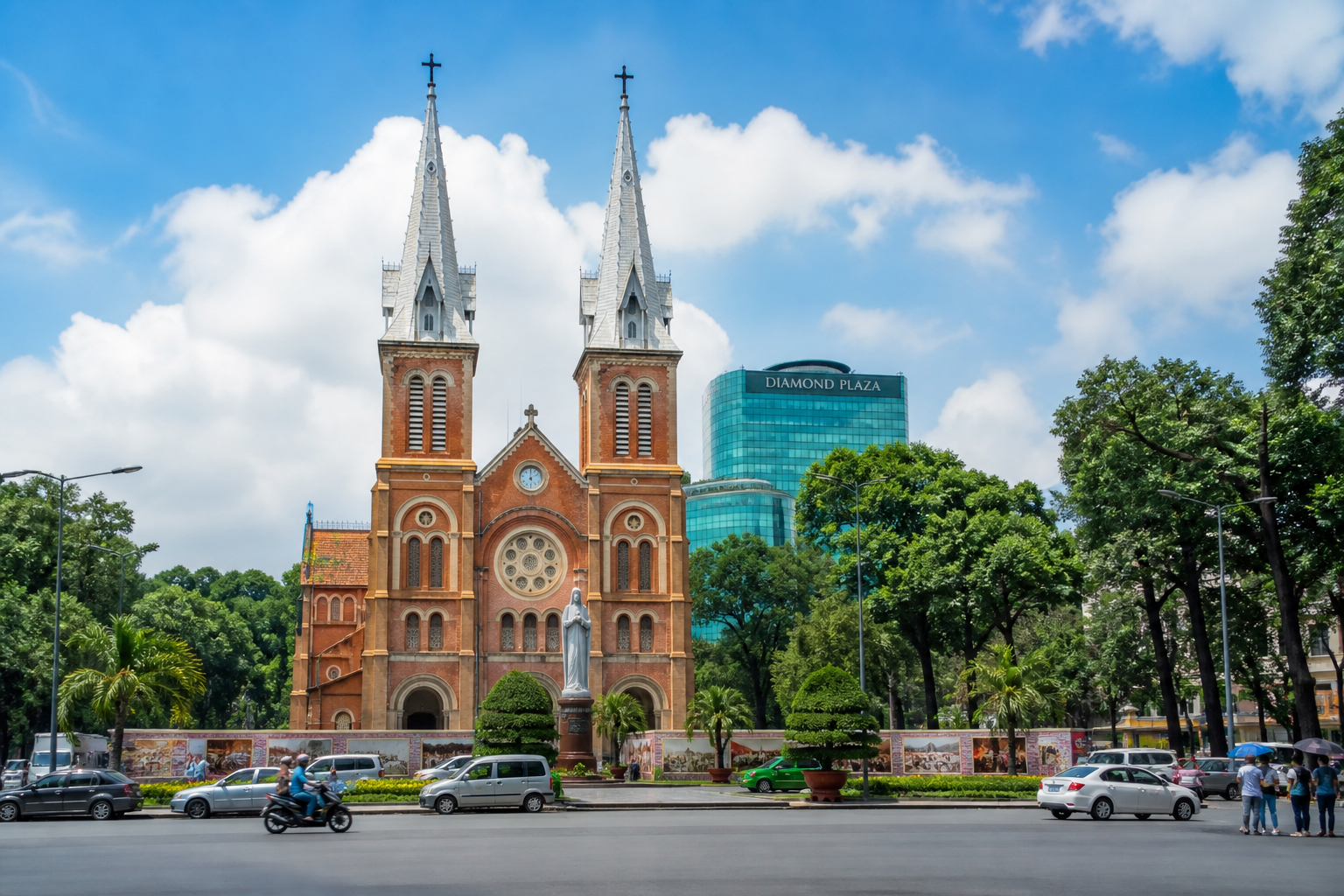
Start around **Nguyen Hue Walking Street**, then wander toward the Central Post Office and Notre-Dame Cathedral area. The cathedral may still have renovation work underway, but the surrounding streets are full of character. The Central Post Office is worth a quick look, especially for its old maps and yellow-painted interior.
For breakfast, skip the hotel buffet once and try **banh mi**, **pho**, or a bowl of **hu tieu** from a busy local stall. A crowded place is usually a good sign. Bring small notes and do not expect every vendor to speak English, but pointing at what someone else is eating usually works.
### 2. The War Remnants Museum
This is a difficult museum, but an important one. The exhibits are emotionally heavy and present the war through Vietnam’s experience, with powerful photographs and personal stories.
I would not schedule it immediately before a long food tour or a rushed afternoon. Give yourself at least two hours, and leave some quiet time afterward. The museum can feel intense, particularly in the photography galleries, but it adds historical depth to everything else you see in the city.
Go early if possible. The courtyard and outdoor displays become hot by midday.
### 3. Cholon and Binh Tay Market
For a different side of Ho Chi Minh City, head west to **Cholon**, the city’s historic Chinatown. The area feels less polished than central District 1 and far more local.
Binh Tay Market is the main landmark, but I enjoy the smaller streets around it more. Look for Chinese-style temples, herbal medicine shops, family-run noodle stalls, and old shophouses with faded signs. The **Thien Hau Temple** is particularly atmospheric, with coils of incense hanging from the ceiling.
Cholon is a good place to try dishes with southern Chinese influence. I usually go in the morning, when the market is busiest and the food stalls have their fullest selection.
### 4. The Saigon River and Thao Dien
When the city center becomes too loud, cross toward **Thao Dien** in Thu Duc City. It has a more relaxed café and restaurant scene, with leafy streets, creative shops, and plenty of places for a slow lunch.
The area has become popular with expatriates, so prices can be higher than elsewhere. Still, it is pleasant for an afternoon, especially if you want good coffee, a riverside drink, or a break from constant traffic.
For a simple evening, take a ride to the riverfront around **Thu Thiem** and watch the skyline light up. The view is best just before sunset, when the air is a little cooler.
## Practical Travel Advice
### Getting there and visa requirements
Most international visitors arrive at **Tan Son Nhat International Airport**, which is close to the city center but can be very busy at peak times. Allow extra time for immigration and baggage collection, especially in the evening.
Vietnam offers **e-visas of up to 90 days**, including single-entry and multiple-entry options, for citizens of many countries. Apply through the official Vietnamese immigration website rather than through an expensive third-party service. Your passport should generally have at least six months’ validity and blank pages, but requirements can change, so check the official government guidance before booking.
There is no need to arrive hours before a domestic flight, but for international departures I usually allow around three hours.
### Where to stay
– **District 1:** Best for first-time visitors, nightlife, major sights, and easy access to restaurants. It can be noisy.
– **District 3:** A calmer choice with tree-lined streets, local eateries, and attractive old villas. This is my favorite area for a more balanced stay.
– **District 4:** Good for food lovers and travelers who want to stay close to the center without paying central prices. Some streets are rougher around the edges, but the food is excellent.
– **Thao Dien:** Comfortable, café-filled, and popular with longer-stay travelers. Expect higher prices and more international restaurants.
– **Cholon:** Better for repeat visitors who want a more local atmosphere and do not mind being farther from the central landmarks.
### Getting around
Walking works well in small sections, but crossing major roads takes patience. Walk at a steady pace and avoid sudden stops; motorbike traffic usually flows around you.
For longer distances, I use **Grab** for cars and motorbike taxis. The app shows the price before you book, which avoids awkward bargaining. **Xanh SM**, the electric vehicle ride service, is another useful option in many parts of the city.
Public buses are cheap, but routes can be confusing if you are only staying a few days. The metro has begun improving connections in the city, although it does not yet replace rideshares for most sightseeing routes.
Always keep your phone away from the street side when walking. Bag snatching is not something to panic about, but it is a sensible precaution.
## Real Costs and Local Tips
Vietnamese currency can look intimidating because of all the zeros. As a rough guide, **US$1 is around 24,000–26,000 VND**, though exchange rates change.
### Daily budgets
**Budget traveler: around 600,000–1,000,000 VND per day**
– Simple guesthouse or hostel
– Street food and local cafés
– GrabBike rides
– A few low-cost attractions
**Mid-range traveler: around 1,500,000–3,000,000 VND per day**
– Comfortable hotel
– Mix of local food and sit-down restaurants
– Several rideshares
– Museums, cafés, and an occasional rooftop drink
Hotels and nightlife can push the total higher, especially in District 1.
Tipping is not compulsory. At a nicer restaurant, leaving **5–10%** for genuinely good service is appreciated, but nobody expects an American-style tip everywhere. For street food and taxis, simply paying the agreed amount is fine.
A few habits that saved me money:
– **Use Grab instead of negotiating with taxis** unless you are familiar with the local companies and meters.
– **Carry small VND notes.** Vendors may not have change for large bills, and small payments are much easier.
– **Check prices before ordering seafood or items sold by weight.** Ask, “Bao nhiêu?” and confirm the amount.
– **Eat where local workers eat.** Busy stalls with a short menu are often tastier and cheaper than restaurants aimed mainly at tourists.
– **Keep a little cash even if you prefer cards.** Small cafés, markets, and food carts may accept only cash.
– **Avoid exchanging money at the airport unless necessary.** Exchange a small amount there, then compare rates in the city at reputable banks or licensed exchange counters.
Ho Chi Minh City’s three new Asian tourism awards may bring more first-time visitors in 2026, but the city does not need much polishing to be enjoyable. Come hungry, leave room in your schedule for wandering, and accept that the best meal of the day may happen on a plastic stool beside a busy road.
KEYWORDS: Ho Chi Minh City, Vietnam street food