
# Fiji Travel Guide: Island Beauty, Honest Costs, and the Tourism Tax Catch
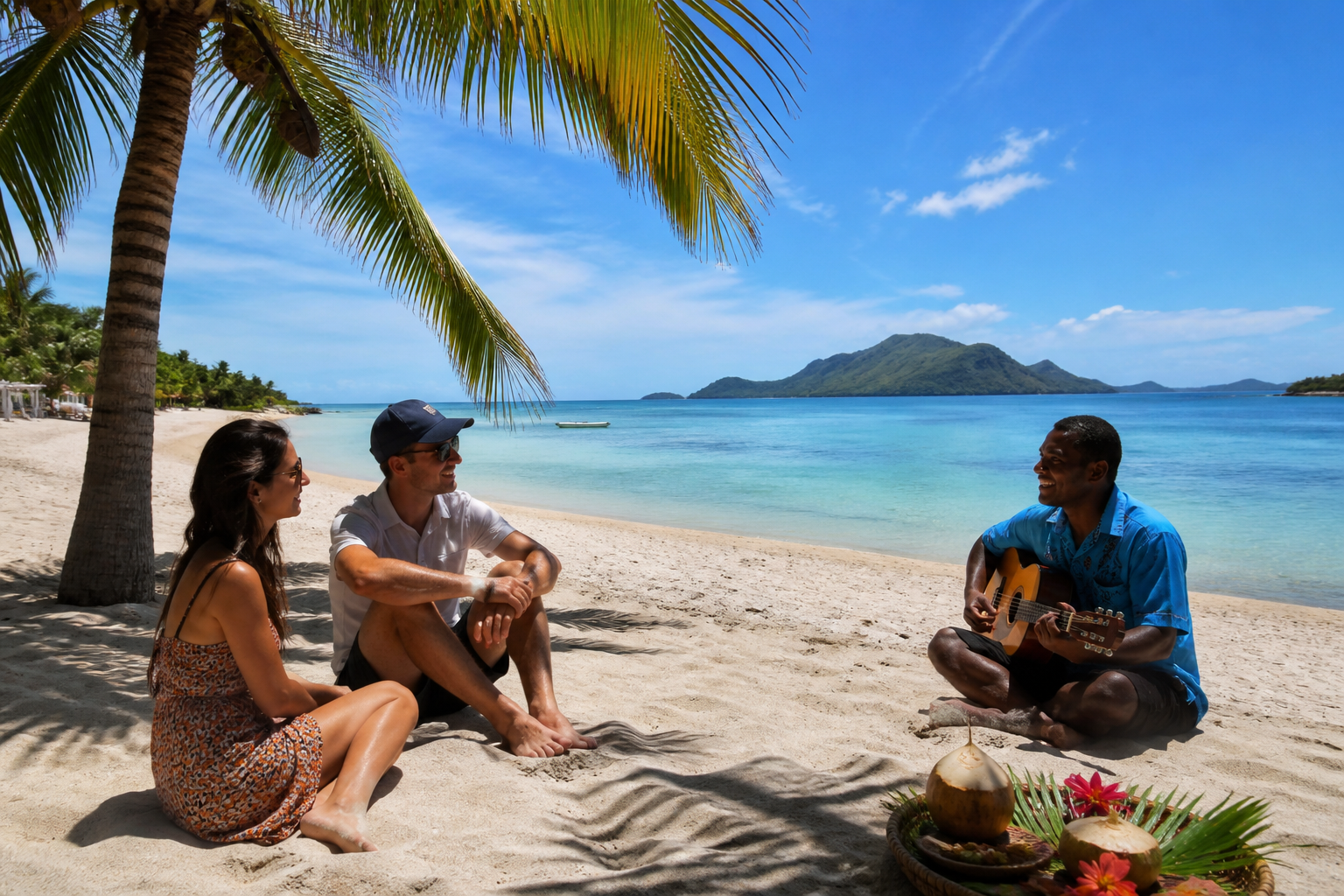
Fiji still has that magic that makes you slow down without trying. The sea is every shade of blue, people greet you with an easy smile, and even a short taxi ride can turn into a conversation about family, rugby, or where to find the best curry.
But there’s a new wrinkle for Australian travellers: Fiji’s recently introduced tourism levy has caught plenty of visitors off guard. The extra charge may appear on accommodation, tours, or other tourism services, and some travellers have only noticed it when checking out. The exact amount and how it is displayed can vary, so I now treat the advertised price as a starting point rather than the final bill.
That doesn’t make Fiji a poor-value destination. It just means you need to read the fine print before booking.
## The Vibe and When to Go
Fiji feels relaxed in a way that is hard to fake. Resort areas can be polished and busy, but outside them you’ll find village roads, roadside fruit stalls, buses with open windows, and beaches where the loudest sound is usually the water.
The **dry season, from May to October**, is generally the easiest time to visit. Days are warm, humidity is lower, and the skies are often clear enough for snorkelling, diving, and boat trips. July and August are popular with Australians escaping winter, so flights and resorts can be expensive.
The **wet season, from November to April**, brings hotter, more humid weather and short bursts of heavy rain. It can still be a lovely time to go, especially if you find a good deal, but tropical storms are possible. February and March tend to be quieter, while Christmas and New Year are among the busiest and most expensive periods.
Right now, Fiji is especially appealing for travellers who want an easy island break without spending every day inside a resort. The key is to mix the famous beaches with local food, markets, villages, and at least one trip beyond Denarau.
## Must-See Spots: My Top Picks
### 1. The Coral Coast
The Coral Coast runs along the southern side of Viti Levu and is one of my favourite places for a slower, more varied Fiji trip. You get beaches, reef trips, forest walks, small villages, and family-run restaurants without the concentrated resort atmosphere of Denarau.
The beaches near **Korotogo and Sigatoka** are good bases. I enjoyed stopping at the **Sigatoka Market** for tropical fruit and browsing the stalls before heading back towards the coast. A local bus ride through this part of the island is far more memorable than spending the whole holiday in a resort shuttle.
For snorkelling, ask your accommodation about reef conditions rather than booking the first tour offered online. Some operators visit quieter reef areas and keep groups small.
### 2. Nadi Market and the Garden of the Sleeping Giant
Nadi is often treated as a place to sleep before heading to the islands, but I think it deserves at least a full day.
Start at **Nadi Market**, where you’ll see mountains of pineapples, pawpaw, cassava, taro, and leafy greens. It’s a good place to buy snacks for the road, although it’s polite to ask before photographing people.
Later, visit the **Garden of the Sleeping Giant**, a peaceful orchid garden just outside town. It’s not a huge attraction, which is part of its charm. The paths are shaded, the air smells of wet earth and flowers, and it gives you a break from the heat and traffic.
Nadi is also one of the better places in Fiji for Indian-Fijian food. Look for small curry shops serving roti, dhal, fish curry, and spicy chutneys. The simple-looking places are often the ones I remember most.
### 3. The Yasawa Islands
For bright water, sandy beaches, and that classic island feeling, the Yasawas are hard to beat. The ferry from Port Denarau takes time, but the journey itself is part of the experience.
Accommodation ranges from basic beach bure-style rooms to comfortable resorts. The smaller properties usually offer a more personal stay, and you may end up eating dinner with the owners or joining a village ceremony.
My advice is not to cram too many islands into one trip. Pick one or two places and stay a few nights. Constantly packing bags and waiting for transfers takes the shine off island travel quickly.
Ask about weather and boat conditions before booking snorkelling trips. The sea can be choppy even when the beach looks calm.
### 4. Suva and Colo-i-Suva Forest Park
Suva has a completely different personality from the resort coast. It’s busy, rainy, leafy, multicultural, and full of everyday Fijian life. I like it because it feels like a real city rather than a holiday bubble.
The **Fiji Museum** is a useful stop if you want context about the country’s history and Indigenous culture. After that, wander through the produce markets and try a local lunch.
Just outside Suva, **Colo-i-Suva Forest Park** has swimming holes, jungle trails, and cool freshwater pools. Wear proper shoes because the paths can be slippery after rain. Go with enough water, and ask locally about current trail conditions.
## Practical Travel Advice
### Getting There and Visa Requirements
Australians can generally visit Fiji without arranging a tourist visa in advance. Visitor permits are issued on arrival, usually for stays of up to four months, but your passport should be valid for at least six months beyond your arrival date. You may also be asked for proof of onward travel and enough money for your stay.
Rules can change, so check the official Fiji immigration information and Smartraveller before departure.
From Australia, direct flights are commonly available from **Sydney, Brisbane, Melbourne, and occasionally other major cities**, depending on the season and airline schedule. Fiji Airways and major Australian carriers often run the routes.
If you’re flying onward to an island resort, leave plenty of time between your international arrival and ferry or domestic flight. Delays, baggage collection, and transfers can take longer than expected.
### Where to Stay
– **Denarau Island:** Best for families, resort facilities, pools, and easy access to island ferries. It is convenient but usually expensive, and it doesn’t feel especially local.
– **Nadi:** Good for short stays, airport access, markets, restaurants, and travellers watching their budget.
– **Coral Coast:** My pick for a balanced Fiji holiday with beaches, activities, and a quieter pace.
– **Suva:** Best for food, museums, city life, and travellers who want to see more than the resort side of Fiji.
– **Yasawa or Mamanuca Islands:** Ideal for swimming, snorkelling, and a proper island escape. Check transfer costs before booking a cheap-looking room.
– **Savusavu or Taveuni:** Better for a quieter, more adventurous trip, especially if you enjoy diving, hiking, and smaller communities.
### Getting Around
Fiji is not a place where you need to hire a car for the entire trip, especially if you’re staying around Nadi or Denarau.
– **Local buses** are cheap and useful on Viti Levu. They can be basic, but they give you a glimpse of everyday life.
– **Taxis** are common around airports, towns, and resorts. Ask about the fare before leaving if the meter is not being used.
– **Private drivers** are handy for full-day trips, particularly on the Coral Coast. Agree on the route, waiting time, and total price in advance.
– **Resort transfers** are convenient but can be much more expensive than arranging transport yourself.
– **Rideshare apps** are not as consistently available as they are in Australian cities. I wouldn’t rely on Uber for getting around Fiji. Local taxi operators and hotel desks are usually more dependable.
– **Ferries and small boats** connect many islands. Book early during school holidays and allow extra time for weather delays.
## Real Costs and the Tourism Tax Catch
Fiji can be affordable, but resort prices can climb quickly once meals, transfers, activities, and taxes are added.
### Rough daily budgets
**Budget traveller: FJD $100–180 per person**
This might cover a simple guesthouse or hostel, local buses, market food, inexpensive restaurants, and one low-cost activity. Island transfers can push the daily average higher.
**Mid-range traveller: FJD $250–450 per person**
This usually allows for a comfortable hotel or modest resort, a mixture of local and tourist restaurants, taxis, and occasional snorkelling or boat trips. Popular islands and high-season dates can cost considerably more.
The Fijian dollar is the local currency. Cards are accepted at most hotels, resorts, and larger restaurants, but cash is useful for buses, markets, small cafés, and village shops. ATMs are easy to find in Nadi and Suva but less reliable on smaller islands.
Tipping is not compulsory in Fiji. At resorts, a staff Christmas fund or communal gratuity box is sometimes available. If someone gives you genuinely good service, a small tip is appreciated, but there’s no need to tip every time a drink arrives.
### How to avoid unpleasant surprises
– **Check the final booking total.** Fiji’s new tourism levy has caused backlash because some travellers saw the charge only at checkout. Look for VAT, service charges, environmental fees, and the newer tourism levy before paying.
– **Ask whether resort prices include meals and transfers.** A room that looks cheap can become expensive once breakfast, boat transport, and compulsory meal plans are added.
– **Eat outside the resort when possible.** Local curry houses, bakeries, and market stalls are usually much cheaper than hotel restaurants.
– **Carry small notes and coins.** It makes bus fares, market purchases, and small taxi payments easier.
– **Don’t book every activity through the resort desk.** Ask guesthouse owners or local operators about alternatives, but choose licensed businesses with proper safety equipment.
– **Bring reef-safe sunscreen and a reusable water bottle.** Buying basics at a resort shop is often far more expensive.
– **Respect village customs.** If you visit a village, dress modestly, remove your hat when appropriate, and ask before taking photographs. A small sevusevu gift, usually kava arranged through your guide, may be expected.
Fiji remains a beautiful, generous place to visit, but the new tax conversation is a reminder to budget with a little more care. I’d still happily return. I’d simply compare the final prices, keep some cash in my wallet, and leave room in the itinerary for the unplanned moments—the roadside lunch, the village conversation, or the swim at a beach we almost drove past.
KEYWORDS: Fiji beaches