
# Vietnam in the Digital Age: Street Food, Slow Mornings, and Smarter Ways to Travel
Vietnam is the kind of country that rewards curiosity. One minute you’re drinking strong iced coffee on a noisy Hanoi sidewalk; the next, you’re drifting past limestone islands in Lan Ha Bay or eating seafood with your feet in the sand in Da Nang.
What makes traveling here especially easy now is the growing digital side of the experience. Maps, e-visas, translation apps, QR menus, online train tickets, and cashless payments have made Vietnam much more approachable. Still, the best moments usually happen away from the screen—when a grandmother waves you toward the right food stall or a local driver recommends a noodle shop you would never have found alone.
## The Vibe & When to Go
Vietnam feels lively, layered, and wonderfully unpredictable. Cities are full of motorbikes, tiny cafés, shaded alleyways, and food stalls that seem to appear wherever there is a spare patch of pavement. Outside the cities, the pace changes quickly: rice fields, mountain roads, fishing villages, beaches, and quiet riverside towns are all within reach.
Because Vietnam stretches a long way from north to south, the weather varies quite a bit:
– **Hanoi and northern Vietnam:** Cool and sometimes misty from December to February; warm and humid from May to September. March to April and October to November are usually comfortable for exploring.
– **Central Vietnam, including Hoi An and Hue:** Often sunny from February to August. Rain and storms are more common from September to January.
– **Ho Chi Minh City and the Mekong Delta:** Hot most of the year, with a wetter season from May to October. December to April is generally drier.
I like traveling between **February and April**, when much of the country is pleasant and outdoor sightseeing is comfortable. If you plan to visit several regions, check the weather city by city rather than assuming the whole country has one season.
Vietnam is also a good choice right now for travelers who like using technology without losing the feeling of spontaneous travel. You can buy museum tickets online, book a sleeper train from your phone, scan a restaurant menu, and use live maps to find a quieter street nearby.
## Must-See Spots: My Top Picks
### 1. Hanoi’s Old Quarter and the quieter side of Hoan Kiem
Hanoi is noisy, busy, and full of character. I love wandering through the Old Quarter early in the morning, before the sidewalks fill with stools and scooters. You’ll see people exercising around Hoan Kiem Lake, vendors arranging fruit, and café owners sweeping the pavement in front of their shops.
Try not to rush through the famous streets. Some of my favorite moments came from turning into smaller lanes around the Old Quarter, where you’ll find family-run noodle shops, old balconies, and tiny coffee rooms hidden above street level.
A few things I recommend:
– Try **egg coffee**, especially if you enjoy rich, sweet drinks.
– Visit the **Temple of Literature** early, before the larger tour groups arrive.
– Take a walking tour focused on food, but ask the guide to include small local places rather than only famous restaurants.
– Use a map app to mark cafés and sights, but allow yourself to wander without checking it every few minutes.
Traffic can be intimidating at first. When crossing a street, walk slowly and steadily rather than darting back and forth. The motorbike flow usually moves around you.
### 2. Hoi An at dawn and after the lanterns come on
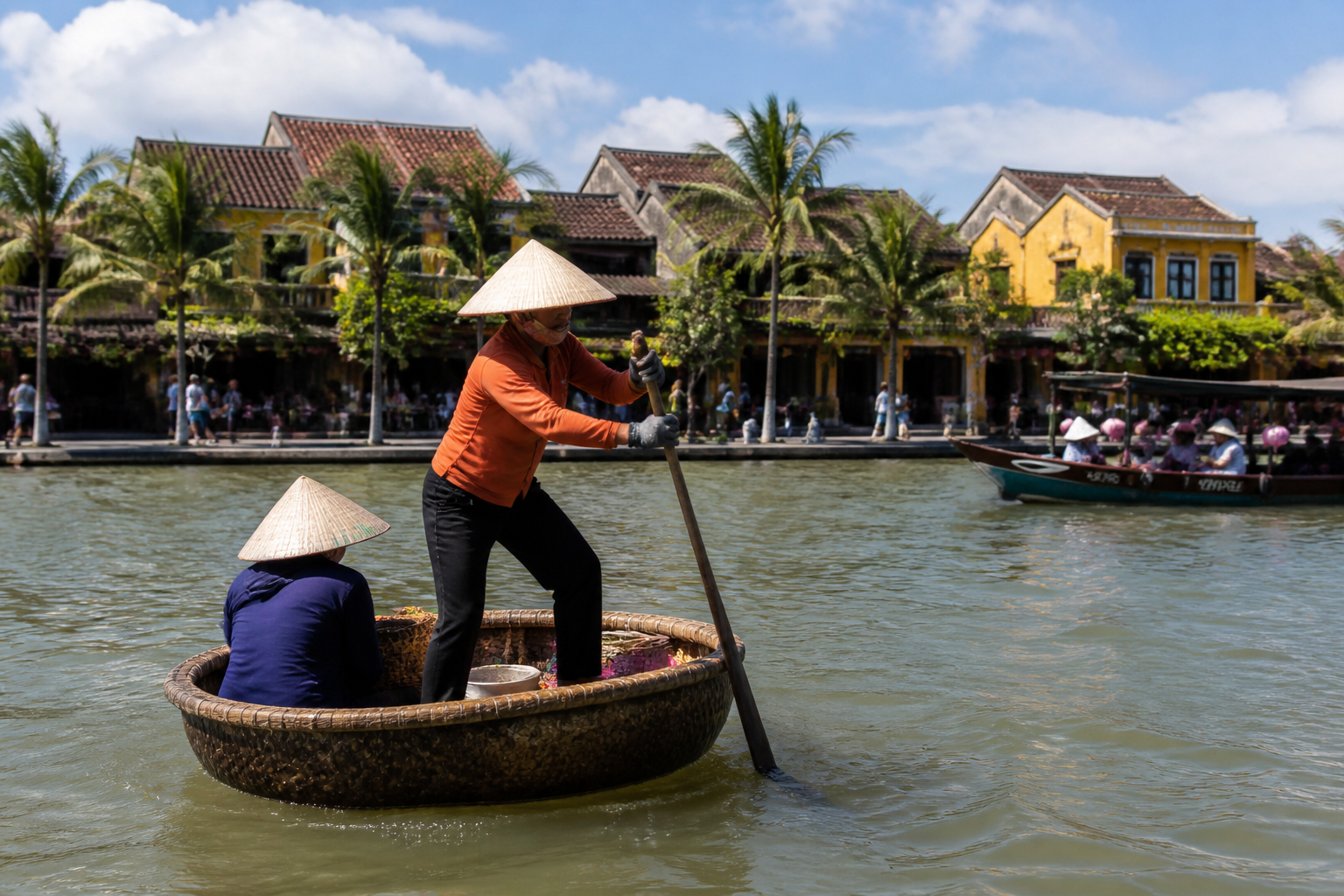
Hoi An is popular for good reason, though the lantern-lit center can feel crowded in the evening. My favorite time is early morning, when the streets are quiet and the yellow buildings glow in the soft light.
Rent a bicycle and ride beyond the old town toward the rice fields and **Tra Que Vegetable Village**. You’ll see farmers working the gardens, small cafés beside the road, and water buffalo standing in the fields. It’s a much calmer experience than spending the whole day in the central lanes.
In the evening, walk along the river, but don’t feel pressured to buy every souvenir offered. For a more relaxed meal, move a few streets away from the busiest waterfront restaurants. Hoi An is also a good place to have clothes made, though give the tailor enough time for at least two fittings.
Digital tools are useful here: online bicycle rentals, weather forecasts, and maps can help you plan around rain. But some of the best discoveries still come from following the smell of grilled pork or herbs from a side street.
### 3. Ha Long Bay or Lan Ha Bay without the rushed schedule
The limestone islands of northern Vietnam are unforgettable, but the quality of the trip depends heavily on the boat and itinerary. Many visitors choose Ha Long Bay, while nearby Lan Ha Bay often feels a little quieter.
I prefer a **two-day, one-night cruise** if the budget allows. A day trip can feel hurried, with long transfers and only a short time on the water. On a longer cruise, there is more time for kayaking, swimming, or simply sitting on deck as the light changes across the islands.
Before booking, check:
– The exact route, not just the name of the bay
– Group size
– Whether kayaking and entrance fees are included
– Recent guest reviews
– The pickup and return times from Hanoi
Avoid choosing only by the lowest price. A slightly better boat, cleaner cabin, and less crowded route can make a huge difference.
### 4. Ho Chi Minh City and a slower day in the Mekong Delta
Ho Chi Minh City is fast, bright, and energetic. I enjoy starting around **Ben Thanh Market**, then moving toward quieter streets near the Reunification Palace and the central book street. The city’s café culture is excellent—look for small upstairs cafés where you can watch the traffic below.
For food, try:
– **Banh mi** from a busy local stall
– **Com tam**, broken rice served with grilled pork
– **Banh xeo**, a crisp savory pancake
– Fresh sugarcane juice or Vietnamese iced coffee
If you have an extra day, visit the Mekong Delta. Choose a smaller group tour or stay overnight in Can Tho if you want a more relaxed experience. The famous floating markets are most active early in the morning, so sleeping nearby gives you a better chance of seeing them before the boats thin out.
Vietnam’s digital tourism services are most visible in places like Ho Chi Minh City. Restaurants, museums, hotels, and transport companies often use QR codes, online booking, digital maps, and electronic payments. Even so, keep some cash because smaller food stalls and family businesses may not accept cards.
## Practical Travel Advice
### Getting There and Visa
Most international visitors need a visa, though some nationalities have visa-free entry for limited stays. Vietnam currently offers **e-visas for citizens of many countries, generally for stays of up to 90 days with single or multiple entry**.
Apply through the official Vietnamese immigration website and check every detail carefully:
– Passport name and number
– Date of birth
– Intended entry point
– Entry and exit dates
– Passport validity, ideally at least six months beyond arrival
Make sure the e-visa lists the correct airport or land border. Print a copy as a backup even if you keep the document on your phone.
For flights, Hanoi, Ho Chi Minh City, and Da Nang are the main gateways. If you plan to travel north to south, flying into Hanoi and out of Ho Chi Minh City can save a long backtrack. Domestic flights are often affordable, but book earlier around Tet, Vietnam’s Lunar New Year, when transport becomes much busier.
### Where to Stay
Each city has a different feel, so location matters.
– **Hanoi Old Quarter:** Best for first-time visitors, street food, nightlife, and walking to major sights. It can be noisy.
– **Tay Ho, Hanoi:** Better for longer stays, cafés, lakeside walks, and a quieter evening atmosphere.
– **Hoi An Ancient Town:** Convenient for sightseeing, restaurants, and evening walks. Expect more visitors.
– **Cam Chau or An Bang, Hoi An:** A calmer choice with bicycles, rice fields, and easier access to the beach.
– **Da Nang near My Khe Beach:** Good for beaches, modern hotels, and easy day trips to Hoi An.
– **District 1, Ho Chi Minh City:** Central and convenient for sightseeing, though busy and tourist-oriented.
– **District 3, Ho Chi Minh City:** A little more local, with good food and attractive old villas.
For online accommodation bookings, I pay close attention to recent reviews about noise, hot water, air-conditioning, and the actual walking distance. A place described as “central” may still be a long walk in intense heat.
### Getting Around
Vietnam is easier to navigate than it once was, especially with a local SIM or eSIM.
– Use **Grab** for cars and motorbike taxis. Check the driver, license plate, and fare in the app.
– In Hanoi and Ho Chi Minh City, walking works well within individual neighborhoods, but crossing major roads takes patience.
– Domestic flights save time between distant regions.
– Trains are comfortable for some routes, especially Hanoi to Ninh Binh or Hue to Da Nang. Book through official railway channels or a reputable travel platform.
– Sleeper buses can be inexpensive, but check recent reviews and choose a reputable operator.
– In Hoi An, bicycles are ideal for short trips. Taxis or app-based rides are better at night or in heavy rain.
Download an offline map before leaving your hotel. Internet coverage is good in most tourist areas, but a saved map is useful when you’re in the mountains or moving between towns.
## Real Costs and Local Tips
Vietnam can suit many budgets. Prices vary by city and season, but these are realistic daily estimates per person.
### Budget travel: around **US$25–45 per day**
This usually covers:
– Hostel bed or simple guesthouse: **US$7–18**
– Local meals: **US$1.50–4 each**
– Coffee and drinks: **US$1–3**
– Public transport or short Grab rides: **US$3–8**
– A few low-cost attractions
### Mid-range travel: around **US$60–120 per day**
This usually includes:
– Comfortable hotel: **US$35–80**
– Sit-down meals and cafés: **US$15–30**
– Several app-based car rides
– Museum visits or day tours
– Occasional nicer meals or cocktails
The local currency is the **Vietnamese dong (VND)**. Cash is still important, especially for markets, street food, small cafés, and rural areas. Cards are widely accepted in hotels, larger restaurants, and shopping centers.
Tipping is not required in the same way it is in some countries. A small tip is appreciated for excellent service, especially by guides, drivers, and hotel staff. Check whether a service charge has already been added before tipping at higher-end restaurants.
### A few local tricks that save money and stress
– **Compare prices before agreeing to a ride.** Grab usually shows the fare in advance, which helps avoid awkward bargaining.
– **Eat where local workers eat.** A busy stall with a short menu is often fresher and cheaper than a restaurant displaying every dish in several languages.
– **Carry small notes.** Vendors may not have change for large bills, and small purchases are easier with exact money.
– **Check the bill before paying.** This is especially useful at casual restaurants where several dishes may be added quickly.
– **Use a local SIM or eSIM.** Reliable data makes maps, translation, ride-hailing, and digital payments much easier.
– **Book popular transport ahead during holidays.** Around Tet and major public holidays, trains, buses, and hotels can fill quickly.
– **Don’t rely only on online reviews.** Ask your hotel receptionist, café owner, or guide where they eat on an ordinary day. Their suggestions are often more useful than a highly photographed tourist spot.
Vietnam’s digital tourism scene is growing quickly, but the country still feels wonderfully human. Technology helps you find your way, compare prices, translate a menu, and reach places that once took far more planning. The real pleasure comes when you put the phone away for a while—sharing a table, learning how to cross a busy street, or sitting with a bowl of noodles as the city moves around you.
KEYWORDS: Vietnam travel, Hanoi street life