
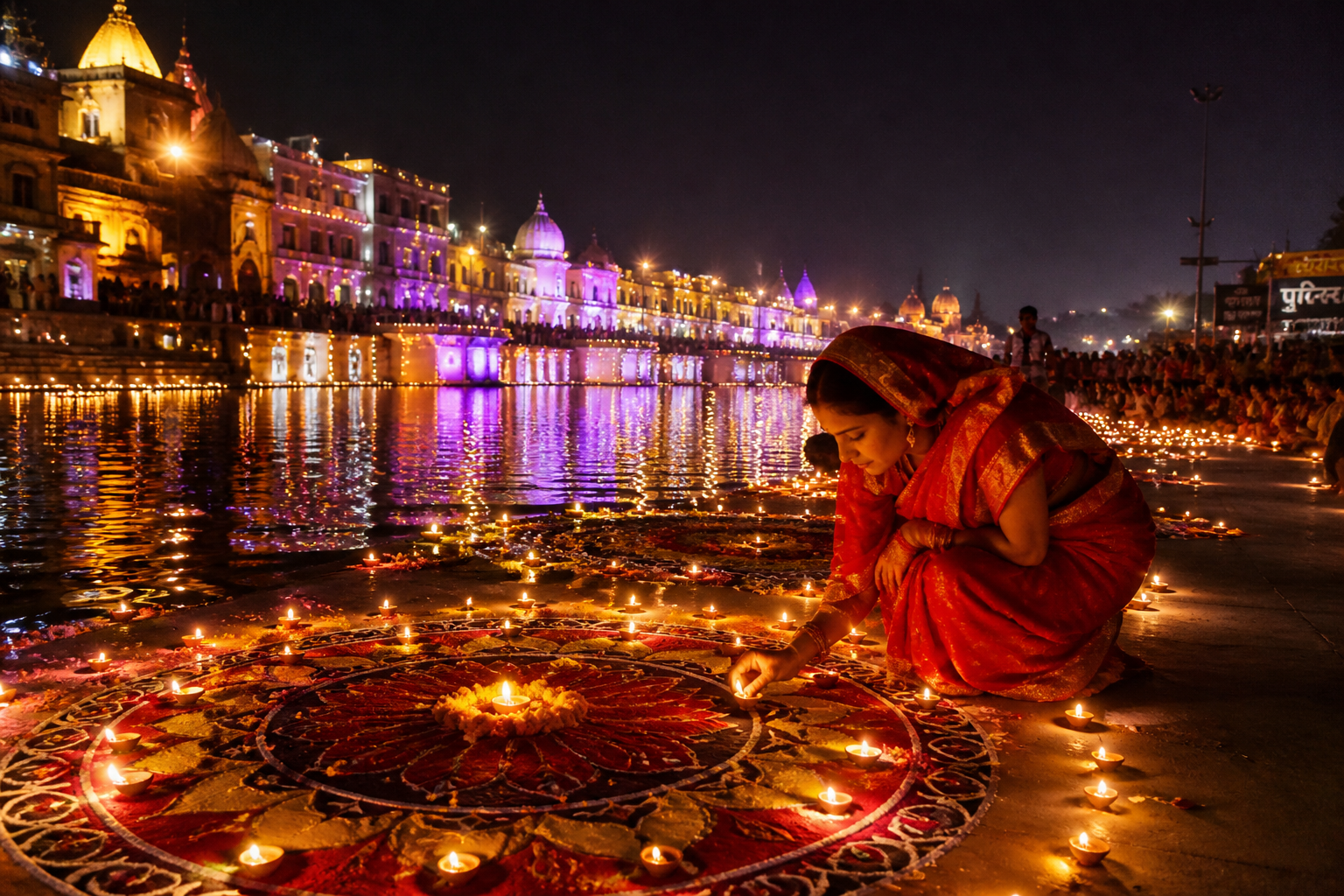
# Diwali in Delhi 2026: Bright Streets, Big Crowds, and a More Thoughtful Way to Travel
Diwali in Delhi is not a quiet, polished festival made for photographs alone. It is noisy, smoky, generous, crowded, spiritual, commercial, and deeply personal all at once. Homes glow with rows of diyas, shopfronts overflow with sweets, and even an ordinary apartment balcony can look magical after sunset.
In 2026, Diwali is expected on **Sunday, November 8**, though the exact date and public holiday schedule should be checked closer to the trip. The festival lasts several days, with Dhanteras and smaller family rituals leading up to the main night.
The big question is not whether Diwali will bring more visitors. It will. The better question is: **who receives the money those visitors spend?** Large hotels, airlines, shopping malls, and tour companies often take the biggest share. With a little care, travelers can also support neighborhood sweet makers, flower sellers, artisans, drivers, small restaurants, and community events.
## The Vibe & When to Go
Delhi in early November usually has pleasant daytime temperatures, often around **20–28°C**, with cooler evenings. The sky can be hazy, especially after Diwali night, when fireworks and winter pollution combine. Pack light cotton clothes for the day, a thin jacket for evenings, and a good-quality mask if you are sensitive to air pollution.
The city feels especially alive in the week before Diwali. Markets stay open late, families shop for gifts, and marigold garlands appear everywhere. On the main festival evening, many businesses close early so staff can celebrate at home. Roads can be chaotic, and some metro stations or attractions may operate on reduced schedules.
I enjoy this period more than the actual festival night. You can watch preparations unfold without spending the whole day dodging traffic and firecrackers. If you want the full experience, arrive at least **four or five days before Diwali** and stay a couple of days afterward.
A small cultural reminder: Diwali is celebrated in different ways across India and by several religious communities. For many Hindus it marks the return of Lord Rama to Ayodhya, while other traditions connect it with Lakshmi, prosperity, or the victory of light over darkness. It is better to ask before photographing family rituals, temple ceremonies, or people lighting lamps.
## Must-See Spots: My Top Picks
### 1. Old Delhi and the Diwali markets
Start early in **Chandni Chowk**, before the lanes become almost impossible to walk through. The air smells of frying jalebi, cardamom, incense, and hot parathas. During Diwali season, shops display gift boxes, brass lamps, decorations, dry fruit, and sweets in bright colors.
I like wandering around **Dariba Kalan**, known for its jewelry shops, and the lanes near **Kinari Bazaar**, where wedding and festival decorations hang from every storefront. Go with patience rather than a strict sightseeing plan. The best moments are often tiny ones—a shopkeeper arranging clay diyas, a family choosing sweets, or a flower seller building a marigold garland.
Wear comfortable shoes and keep your phone in a zipped pocket. This is not the place for a large backpack.
### 2. Gurudwara Bangla Sahib
This Sikh gurdwara is one of the calmest places to visit when Delhi feels overwhelming. The white domes and golden details are beautiful, but the real experience is the atmosphere: people praying, volunteers serving food, and visitors sitting quietly beside the sarovar, or sacred pool.
Dress modestly, cover your head, remove your shoes, and wash your feet before entering. Everyone is welcome, but this is a functioning place of worship, not a performance space. If you have time, learn about the community kitchen before joining the langar meal. It is a powerful reminder that hospitality during festival season should not be limited to paying guests.
### 3. Dilli Haat INA
For gifts that feel more connected to local craft traditions, I prefer **Dilli Haat** to a luxury shopping center. The stalls bring together artisans from different Indian states, so you can browse textiles, pottery, woodwork, metal crafts, and regional snacks in one open-air market.
Prices are not always rock-bottom, but the money goes more directly to makers and small sellers than it does in a chain store. Ask where an item was made and whether the seller is the artisan or a reseller. Bargain gently, if at all. A small reduction is reasonable; turning a handmade product into a race to the lowest price is not.
### 4. Lodhi Garden at sunset
For a break from the crowds, head to **Lodhi Garden** in the late afternoon. The old tombs, lawns, and shady paths offer a slower view of Delhi. During Diwali week, you may see families taking pre-festival portraits, couples carrying small gift boxes, and children practicing with sparklers.
It is not a Diwali attraction in the obvious sense, and that is exactly why I like it. Bring water, walk around the historic tombs, and stay for the changing light. Avoid carrying fireworks into the park; public rules can be strict, and firecrackers are not appropriate in a green space.
## Practical Travel Advice
### Getting There and Visa
Delhi’s main airport is **Indira Gandhi International Airport (DEL)**. It has direct flights from many major cities in Asia, the Middle East, Europe, and North America. Diwali is a busy travel period, so fares can rise sharply. I would book flights and accommodation **three to six months ahead**, especially for the weekend around November 8.
Most foreign visitors need an Indian visa. Many nationalities can apply for an **Indian e-Visa online**, but eligibility, permitted airports, passport validity, photo requirements, and processing times vary. Apply through the official Indian government visa website rather than a lookalike agency charging unnecessary fees. Check the rules again before booking because visa policies can change.
Keep a digital and printed copy of your passport, visa approval, and hotel address. Immigration officers may ask for onward travel details.
### Where to Stay
– **Connaught Place:** Convenient for first-time visitors, restaurants, metro access, and central Delhi. It can feel busy and less personal, but it is practical.
– **Paharganj:** Usually cheaper and close to New Delhi Railway Station. Choose your hotel carefully and expect noise, crowds, and a rougher street atmosphere.
– **Khan Market or Lodhi Colony:** Better for a calmer, more polished stay, with cafés, galleries, and easy access to central sights. Prices are higher.
– **Hauz Khas or South Delhi:** Good for restaurants, boutiques, and a younger nightlife scene. Travel times to Old Delhi can be long.
– **Aerocity:** Useful if you have an early flight or a short stopover, but it feels more like a hotel district than everyday Delhi.
If your visit overlaps with the main festival night, ask the hotel how it handles fireworks, air filtration, and late-night noise. A beautiful rooftop is less appealing if you cannot breathe comfortably.
### Getting Around
Delhi Metro is usually the fastest and most affordable way to cross the city. It connects the airport, New Delhi Railway Station, Old Delhi, Connaught Place, and many major neighborhoods. It will be crowded around Diwali, but traffic can be far worse.
For short trips, use **Uber or Ola**, and confirm the vehicle number before getting in. Auto-rickshaws are useful for local rides, though fares may require negotiation unless the driver agrees to use the meter. Delhi’s e-rickshaws are convenient around markets and metro stations.
Walking works well in Lodhi Garden, Connaught Place, and parts of Old Delhi, but Delhi is not a uniformly walkable city. Sidewalks can disappear, crossings are stressful, and traffic rarely behaves predictably. Leave extra time, especially on Diwali shopping days.
## Real Costs for Diwali 2026
Prices rise during the festival, particularly for hotels and flights. These are realistic daily estimates per person, excluding international airfare:
### Budget: ₹2,500–₹4,500 per day
– Hostel bed or basic guesthouse: ₹700–₹1,800
– Simple meals and street food: ₹500–₹900
– Metro, auto-rickshaws, and short rides: ₹300–₹700
– A few low-cost attractions and snacks
### Mid-range: ₹7,000–₹14,000 per day
– Comfortable hotel or private room: ₹4,000–₹9,000
– Restaurant meals and cafés: ₹1,500–₹3,000
– App-based cars, metro, and occasional guided visits: ₹800–₹1,500
– Shopping, museum visits, or a special Diwali meal
A four- or five-star hotel can charge several times more during the festival. If you want a luxury stay, compare the full price carefully; taxes, gala dinners, and compulsory festive packages can add a surprising amount.
The currency is the **Indian rupee (₹ or INR)**. Cards are common in hotels, malls, and established restaurants, while cash is still useful for street food, market purchases, auto-rickshaws, and small donations. Keep smaller notes.
Tipping is not compulsory, but it is appreciated. Around **5–10%** in a sit-down restaurant is reasonable when service charge has not already been added. For drivers, porters, and guides, a modest tip based on the quality and length of service is appropriate. Do not feel pressured to tip twice.
## Simple Ways to Spend More Responsibly
– **Buy from small sellers:** Choose neighborhood sweet shops, flower vendors, potters, and independent artisans instead of buying every gift from a hotel boutique or international chain.
– **Ask about local festival events:** Some resident associations, temples, and community groups host small celebrations. Attend only when visitors are welcome, and contribute through a donation or purchase rather than treating the event like a free show.
– **Choose earthen diyas and reusable decorations:** Plastic decorations and imported gift packaging create a lot of waste. Clay lamps from local potters are inexpensive and far more meaningful.
– **Be careful with fireworks:** Delhi has restrictions that can change from year to year. Never carry fireworks on public transport, avoid buying from unlicensed sellers, and do not photograph children handling firecrackers.
– **Eat at ordinary places:** A thali restaurant, family-run café, or market sweet shop often gives you a better taste of the city than a hotel’s expensive Diwali buffet.
– **Do not photograph strangers without asking:** Families may be dressed beautifully, but the festival is still their private religious and family time.
Diwali can create a huge tourism windfall, but travel spending does not automatically reach the people who make the festival feel alive. Staying in locally owned accommodation, hiring a licensed local guide, eating in independent restaurants, and buying directly from makers are small choices. Together, they decide whether the festival becomes another shopping spectacle—or a genuine source of income for the communities welcoming visitors.
KEYWORDS: Delhi Diwali