
# Busan Beyond the Ranking: Beaches, Seafood, and the Things Tourists Wish They’d Known
Busan has been getting a lot of attention lately, with an SBS News report highlighting its place among the world’s top five destinations. That sounds impressive—and after spending time there, I understand the appeal. Busan gives you sea views, lively markets, mountain neighborhoods, excellent food, and a much more relaxed rhythm than Seoul.
But the complaints from visitors are real too. Some tourists find the city harder to navigate than expected, especially when English information is limited, buses are confusing, and popular areas become crowded or expensive during holidays. Busan is rewarding, but it helps to arrive with realistic expectations.
## The Vibe & When to Go
Busan feels like a working port city that happens to have beautiful beaches. In the morning, you might see elderly locals walking along the waterfront, fishermen unloading their catch, and commuters rushing through Seomyeon. By evening, the beaches fill with couples, families, street-food hunters, and groups enjoying a drink with grilled seafood.
I especially love the contrast between the ocean and the hills. One minute you are eating hotteok near a busy market; the next, you are climbing a quiet lane with colorful houses and a wide view of the harbor.
Spring brings mild temperatures, fresh green hills, and comfortable walking weather. Summer is lively and humid, with crowded beaches and occasional heavy rain. Autumn is probably my favorite season: clear skies, cooler evenings, and pleasant hiking conditions. Winter is quieter and often sunny, though the wind beside the sea can feel sharp.
If you are visiting soon, pack layers and comfortable shoes. Busan has plenty of hills, stairs, and long walks between attractions. The weather can also change quickly near the coast.
## Must-See Spots: My Top Picks
### 1. Gamcheon Culture Village—Go Early
Gamcheon is the famous hillside neighborhood of brightly painted homes, murals, stairways, and small art shops. It is photogenic, but the main paths can feel packed once tour groups arrive.
I had a better time by arriving before 9 a.m., when the streets were still quiet and local cafés were just opening. Rather than racing from photo spot to photo spot, wander down the side lanes and look for small galleries and old homes carefully adapted into shops.
Please remember that people still live here. Keep your voice down, avoid photographing private doorways, and do not block narrow staircases for a perfect picture.
### 2. Jagalchi Market and the Nampo-Dong Streets
Jagalchi Market is where Busan’s seafood identity really comes alive. The lower level is full of tanks, stalls, and vendors selling everything from abalone to octopus. Upstairs, you can have your chosen seafood prepared for you.
Prices are not always obvious, so ask before ordering. If the market feels too intense, try one of the smaller seafood restaurants around Nampo-Dong instead. I often prefer these modest places, where the menus may be less polished but the meals feel more relaxed.
After eating, walk toward BIFF Square for hotteok filled with seeds, sugar, and nuts. It is sweet, oily, messy, and completely satisfying on a cool afternoon.
### 3. Haeundae Beach and the Blue Line Park
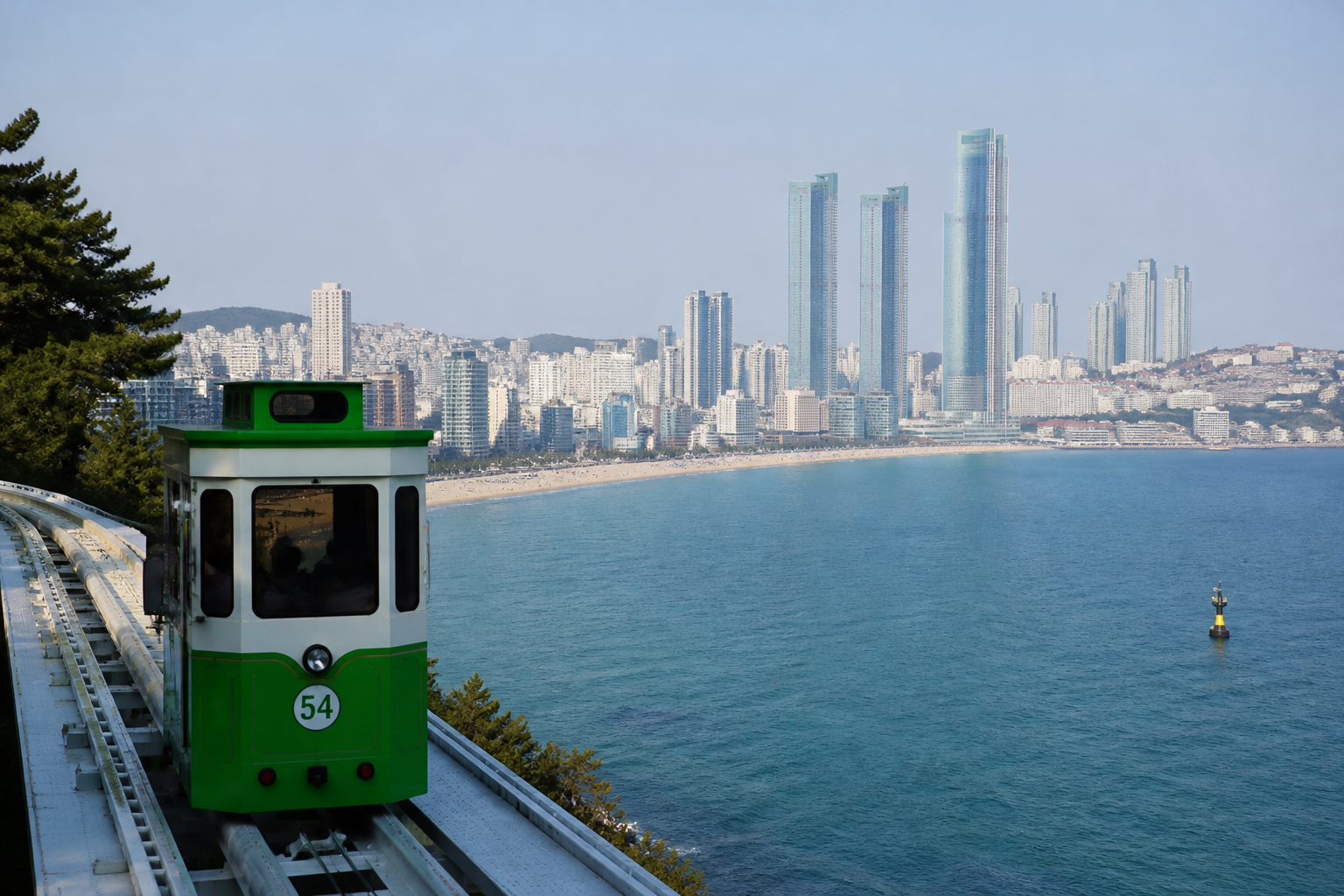
Haeundae is Busan’s best-known beach, and yes, it can be crowded—but the shoreline is long enough to escape the busiest section. Walk east toward Mipo and you will find the coastal Blue Line Park, where small capsules and beach trains follow the cliffs.
The Sky Capsule is fun, especially around sunset, but book ahead on weekends. The beach train is usually more practical if you simply want to enjoy the scenery without paying for the most popular time slot.
For a quieter coastal walk, continue toward Cheongsapo. The lighthouse area and seafood restaurants there feel less hectic than central Haeundae.
### 4. Taejongdae or Huinnyeoul Culture Village
Taejongdae, on Yeongdo Island, is a good choice when you want cliffs, pine trees, and open sea instead of city streets. The park train saves your legs, although walking the full loop is more rewarding if the weather is pleasant.
Huinnyeoul Culture Village is smaller and easier to combine with a half-day around Yeongdo. Its narrow lanes run along the coast, with cafés perched above the water. Go in the morning or late afternoon, and avoid treating it like a theme park. The village is still home to residents, and some roads are extremely narrow.
## Practical Travel Advice
### Getting There and Visa
Busan’s Gimhae International Airport has direct flights from several Asian cities. If you are coming from Europe, North America, or Australia, flying through Seoul, Tokyo, Taipei, Hong Kong, or Singapore is often the easiest option.
From Seoul, the KTX high-speed train reaches Busan in roughly two and a half hours. I prefer the train to a domestic flight because the stations are central and the journey is simple.
Visa rules depend on your passport. Many travelers can enter South Korea visa-free for short visits, while others need a visa in advance. Some visa-exempt travelers may also need K-ETA approval, although exemptions and requirements change. Check the official Korea Visa Portal and K-ETA website before booking, rather than relying on an old blog post.
### Where to Stay
– **Haeundae:** Best for beaches, cafés, nightlife, and first-time visitors who want a polished area.
– **Seomyeon:** The most convenient all-round base for restaurants, shopping, and subway connections.
– **Nampo-Dong:** Great for markets, seafood, old Busan, and easy access to Jagalchi and Yongdusan Park.
– **Gwangalli:** My favorite for evening views of Gwangan Bridge, with plenty of casual restaurants and bars.
– **Yeongdo:** Better for a slower, more local atmosphere, though transport takes a little more planning.
### Getting Around
Busan’s subway is clean, affordable, and useful, but it does not reach every scenic area. Gamcheon, Taejongdae, and some coastal villages require a bus or taxi after the train.
Use **Naver Map** or **KakaoMap** rather than Google Maps, which is less reliable for detailed walking and transit directions in South Korea. Download the apps before leaving the airport and save your hotel address in Korean.
Kakao T is the most useful taxi app. Regular taxis are reasonably priced, but traffic can be slow around Haeundae and Nampo-Dong. Buses are cheap but can be intimidating if you cannot read Korean, so check the route number carefully and keep a translation app ready.
This is where some tourist complaints make sense: Busan is not always intuitive. English signs exist, but not everywhere, and a “short” route on the map may include a steep hill or a long staircase.
## Real Costs and Local Tips
Prices vary by season, but these are realistic daily estimates per person:
### Budget trip: around **₩60,000–₩90,000 per day**
– Guesthouse or dorm: ₩25,000–₩45,000
– Simple meals: ₩15,000–₩25,000
– Public transport: ₩5,000–₩8,000
– Coffee, snacks, and small entry fees: ₩10,000–₩15,000
### Mid-range trip: around **₩130,000–₩220,000 per day**
– Private hotel room: ₩80,000–₩150,000
– Restaurant meals: ₩35,000–₩60,000
– Taxis, attractions, and cafés: ₩20,000–₩40,000
South Korea uses the **won (₩)**. Tipping is not customary, and leaving extra money at restaurants or cafés can feel unusual. A service charge is generally not expected, though upscale restaurants may handle things differently.
A few things that saved me money and frustration:
– **Use a transportation card.** Buy a T-money card at a convenience store and reload it for subways and buses.
– **Eat lunch away from the beach.** Restaurants directly facing Haeundae or Gwangalli often charge more for the view.
– **Book coastal attractions early.** The Blue Line Park sells out at popular times, especially on weekends and holidays.
– **Carry cash for markets and small eateries.** Cards are widely accepted, but some older vendors prefer cash.
– **Avoid packing every attraction into one day.** Busan looks compact on a map, but hills, transfers, and traffic add up quickly.
– **Check seafood prices before sitting down.** At markets, ask whether the price is for one portion, one fish, or one kilogram.
Busan may rank among the world’s top destinations, but it is not a friction-free city. You may get lost once or twice, misread a bus stop, or pay too much for a seaside meal. Still, that is part of the experience. Give yourself time to wander, eat slowly, and let the city reveal itself beyond the famous viewpoints.
**KEYWORDS: Busan beach**