
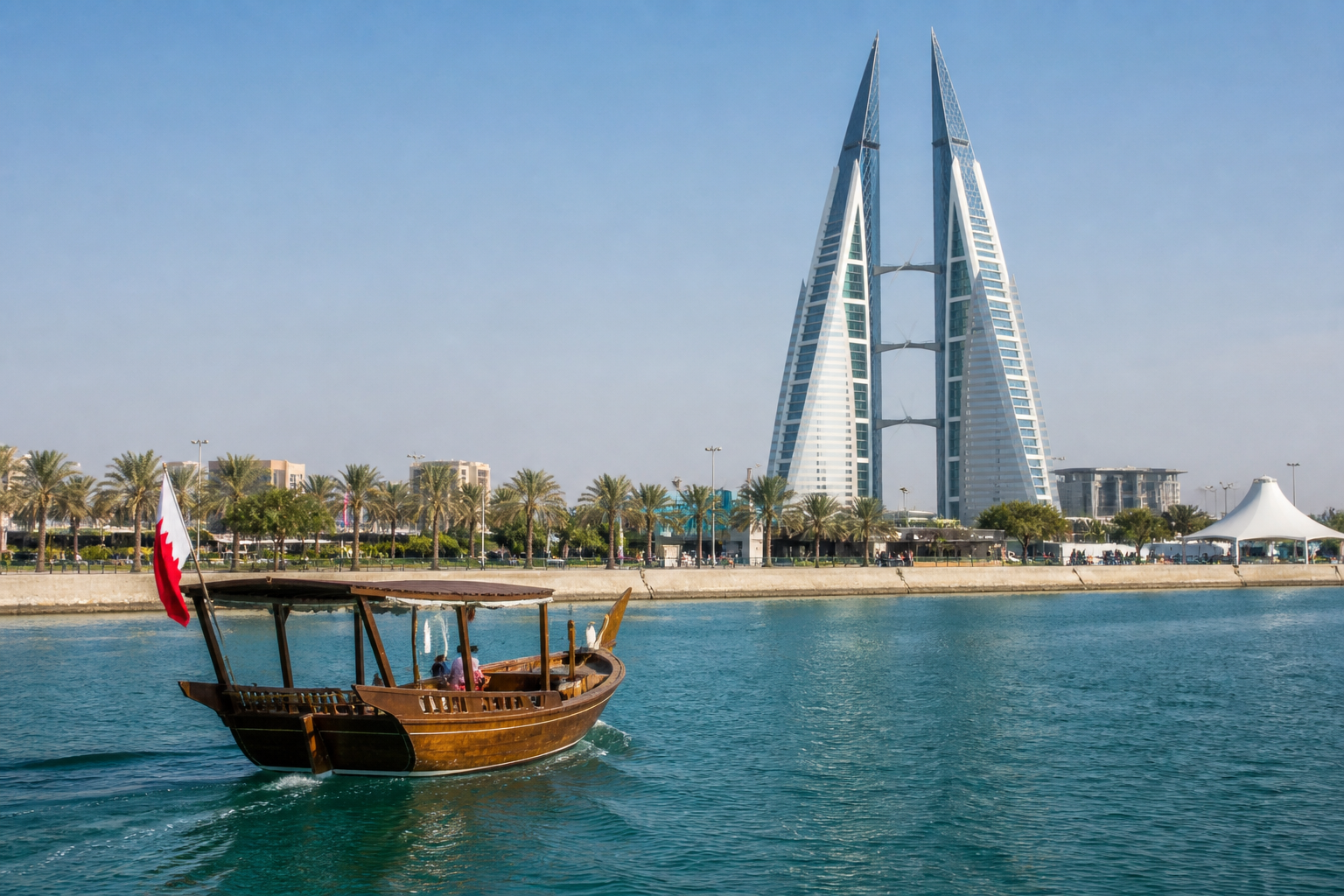
# Bahrain Beyond the Headlines: My Favorite Corners, Food Stops, and Honest Travel Tips
Bahrain’s tourism minister has been calling for stronger cooperation across the Gulf, and after spending time around the country, I can see why. Bahrain works beautifully as part of a wider Gulf trip: you can pair a few days here with Saudi Arabia, Qatar, the UAE, Oman, or Kuwait and get a very different feel in each place.
But Bahrain deserves more than a quick stopover. It is compact, friendly, and easy to explore, with old pearling villages, modern cafés, sea views, and a relaxed social atmosphere. It feels less grand and more personal than some of its Gulf neighbors, which is exactly what I enjoy about it.
## The Vibe & When to Go
Bahrain is warm, sociable, and pleasantly unhurried. Manama has busy roads, shopping malls, rooftop restaurants, and office towers, but you are never far from an old mosque, a quiet alley, or a fisherman bringing in the day’s catch.
The best months to visit are generally **November through March**, when daytime temperatures are comfortable for walking and outdoor sightseeing. December and January can feel surprisingly cool in the evenings, so I always pack a light jacket. From May through September, the heat can be intense, with high humidity making midday sightseeing difficult. Summer is still possible if you plan around indoor attractions, air-conditioned malls, and late dinners.
Bahrain is especially appealing right now as Gulf countries talk more openly about shared tourism routes and easier regional travel. A trip here can fit neatly into a wider Gulf itinerary without feeling like another version of Dubai or Doha.
## Must-See Spots: My Top Picks
### 1. Bab Al Bahrain and Manama Souq
I like starting in **Bab Al Bahrain**, the historic gateway to the old Manama Souq. The area is not polished in the way some modern tourist districts are, and that is part of its charm. You will find gold shops, spice stalls, fabric stores, cafés, and small restaurants tucked along busy streets.
Take your time here instead of rushing through for a photograph. I usually wander without a strict plan, stop for tea, and watch the neighborhood shift from morning shopping to evening social life.
A few streets can feel confusing, especially when shops are opening or closing, so wear comfortable shoes and carry some cash. The souq is liveliest later in the afternoon and after sunset.
### 2. Bahrain Fort at Sunset
**Bahrain Fort**, or Qal’at al-Bahrain, is one of the country’s most atmospheric places. The archaeological site sits beside the water, and the fort’s thick stone walls look especially beautiful in the late afternoon.
I would arrive about an hour before sunset. Walk through the ruins first, then find a quiet spot outside the main fort area as the light softens over the shoreline. The small visitor center gives useful background on Bahrain’s ancient trading history, but the real pleasure is simply being there when the heat fades.
There is not much shade, so bring water and avoid the hottest part of the day. If you have a car or ride-hailing app, this is an easy outing from central Manama.
### 3. Muharraq’s Pearling Path
Muharraq feels more intimate than Manama, with traditional houses, narrow lanes, and carefully restored buildings connected to Bahrain’s pearling history. The **Pearling Path** links several sites across the old town, including former merchants’ homes and cultural spaces.
This is one of my favorite places to walk because it offers small details rather than one huge landmark: carved doors, shaded courtyards, old walls, and glimpses of ordinary neighborhood life. Go in the late afternoon, when the light is softer and many places begin welcoming visitors.
Wear modest, comfortable clothing and keep your voice down around residential areas. Some buildings have limited opening hours, so check before setting out.
### 4. Al Fateh Grand Mosque and the National Museum
The **Al Fateh Grand Mosque** is a striking place to visit, and guided tours usually explain the architecture and local customs in a welcoming way. Visitors should dress modestly; women may be asked to cover their hair, and robes are often available.
For a better sense of Bahrain’s story, I would pair the mosque with the **Bahrain National Museum**. The museum covers the country’s ancient settlements, pearling era, traditions, and more recent history. It is cool, quiet, and a good choice during the hottest part of the day.
If you enjoy museums, leave at least two hours. The exhibits are not overwhelming, and the museum café makes a pleasant break afterward.
## Practical Travel Advice
### Getting There and Visa
Bahrain International Airport is close to Manama and receives regular flights from major Gulf hubs, including Dubai, Doha, Abu Dhabi, Riyadh, Jeddah, Kuwait City, and Muscat. For many travelers, the easiest plan is to fly through one of these airports and continue with a short regional connection.
Visa rules depend on your passport. Many nationalities can apply for an **eVisa**, and some can receive a visa on arrival. GCC citizens generally have easier entry arrangements, while GCC residents may have separate visa options depending on their profession and residency status.
Before booking, check the official Bahrain eVisa and Nationality, Passports & Residence Affairs websites. Make sure your passport has enough remaining validity and that you understand the allowed length of stay. Rules can change, especially for residents rather than citizens.
### Where to Stay
– **Manama Souq and Diplomatic Area:** Best for first-time visitors who want restaurants, shopping, and easy access to the main sights.
– **Seef:** A good choice for malls, modern hotels, cafés, and a quieter, more contemporary setting.
– **Juffair:** Popular for nightlife, casual dining, and apartment-style accommodation. It is lively but can feel less traditional.
– **Muharraq:** Better for travelers interested in heritage, local neighborhoods, and being closer to the airport.
– **Amwaj Islands:** Suited to longer stays, beach time, and resort-style accommodation, though it is farther from the old center.
I usually prefer Manama or Seef for a short trip. You can reach most attractions without spending too much time in traffic.
### Getting Around
Bahrain is not especially walkable as a whole, but parts of the old souq, Muharraq, and central Manama are pleasant on foot. For everything else, you will probably use a car.
– **Uber** is widely used and convenient for visitors.
– Local taxis are available, but agree on the fare or make sure the meter is running.
– Public buses cover much of the island and are inexpensive, though routes can take longer than a ride-hailing car.
– Renting a car makes sense if you want to visit the fort, southern Bahrain, and several beaches or desert areas.
Traffic can become heavy around Manama during office hours, so allow more time than the map suggests.
## Real Costs and Local Tips
Bahrain uses the **Bahraini dinar (BHD)**. It is a strong currency, so prices may feel higher than expected in hotels and upscale restaurants.
### Approximate daily budgets
**Budget traveler: BHD 25–40 per day**
– Simple guesthouse or shared accommodation
– Local cafés and casual meals
– Public buses or occasional ride-hailing trips
– Mostly free or low-cost attractions
**Mid-range traveler: BHD 60–110 per day**
– Comfortable hotel
– Restaurant meals and coffee stops
– Several Uber rides
– Museum visits and paid attractions
Luxury hotels, beach clubs, and fine dining can push the daily cost much higher.
Tipping is not compulsory, but rounding up or leaving around **5–10%** for good service is appreciated. Some restaurants add a service charge, so check the bill before tipping again. Credit cards are accepted in most hotels, malls, and restaurants, while small shops and local cafés may prefer cash.
### A few money-saving tips
– Eat at small Bahraini, Indian, Persian, and Filipino restaurants around Manama instead of dining only in hotel restaurants. The food is often better value and more memorable.
– Use Uber for price clarity, especially when you are unfamiliar with local taxi fares.
– Visit major outdoor sights early in the day or near sunset. You will avoid the worst heat and be less tempted to pay for unnecessary indoor stops.
– Carry a reusable water bottle. Bottled water is easy to find, but buying several bottles each day adds up quickly.
– Do not plan every meal around international hotel chains. Bahrain’s local breakfast cafés and shawarma shops are some of the easiest ways to eat well on a modest budget.
The biggest thing I would recommend is leaving room for unplanned stops. Bahrain’s best moments often happen between the headline attractions: a cup of cardamom tea in the souq, a conversation with a shopkeeper, or a quiet walk through an old Muharraq street after sunset. Greater cooperation across the Gulf may make regional travel easier in the future, but Bahrain already has its own gentle rhythm—and it is worth slowing down long enough to notice it.
KEYWORDS: Bahrain Manama