
# Al Jabal Al Akhdar: Cool Mountain Air, Rose Villages, and Honest Oman Travel Tips
## The Vibe & When to Go
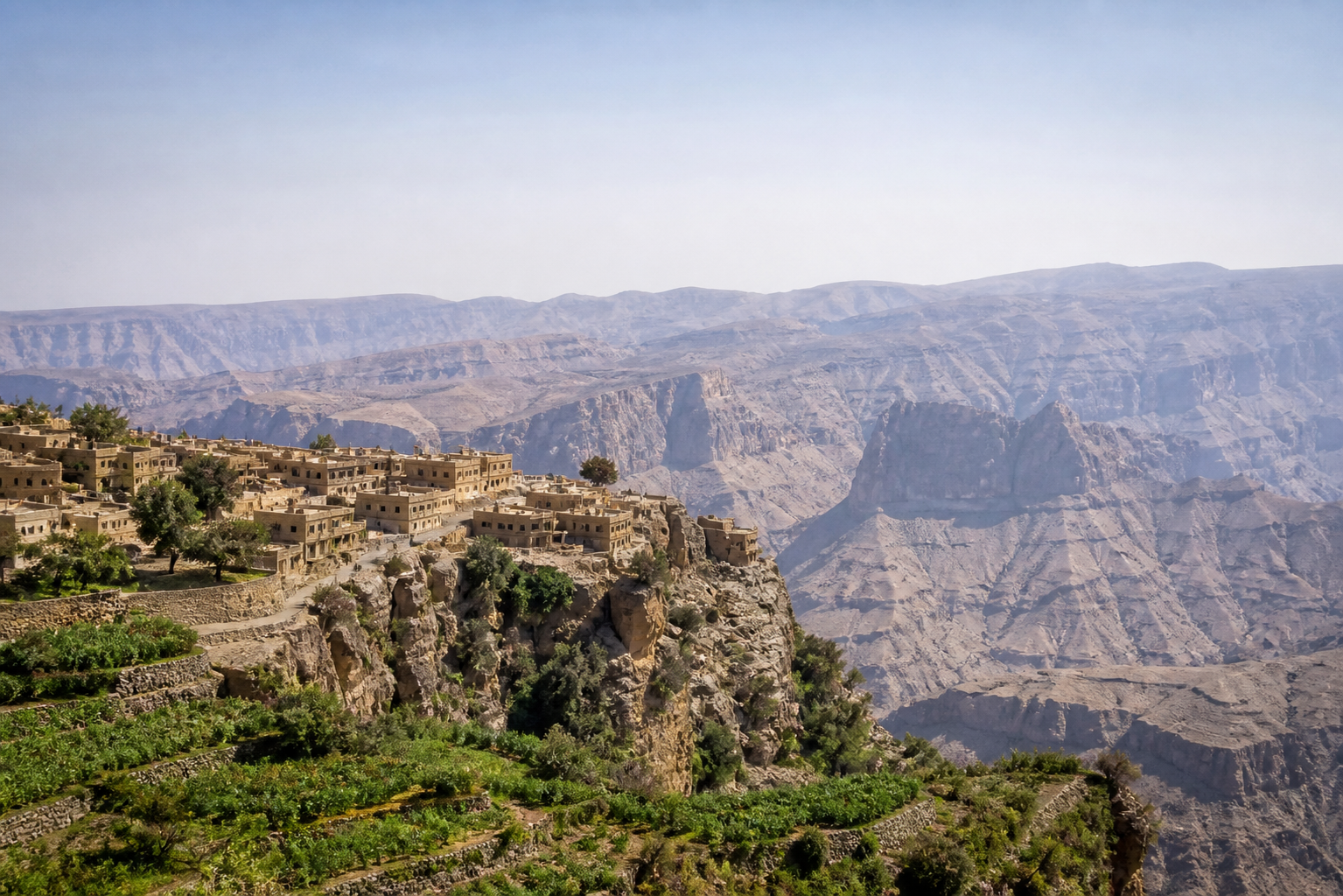
Al Jabal Al Akhdar feels like a different Oman. After the dry heat of Muscat or Nizwa, the mountain air is surprisingly fresh, the roads curl along deep valleys, and small villages cling to the rocky slopes. The views are wide and quiet rather than dramatic in a loud, crowded way. You can stand at the edge of a canyon and hear little more than wind, goats, and the occasional passing 4×4.
The mountain has just been named the **GCC Tourism Capital for 2027**, which is likely to bring more attention and more visitors. For now, it still feels fairly peaceful outside the main resorts.
The weather is the big reason people come here. At nearly 2,000 metres above sea level, Al Jabal Al Akhdar is much cooler than the lowlands. Summer days are often comfortable by Oman standards, although the sun remains strong. Winter evenings can be genuinely cold, so pack a fleece or light jacket. **March and April** are especially lovely, when the famous damask roses begin blooming and the mountain villages smell faintly floral in the early morning. October to April is generally the easiest period for hiking and sightseeing.
## Must-See Spots: My Top Picks
### 1. Diana’s Point and the Saiq Plateau
The viewpoint often called Diana’s Point is one of the mountain’s best-known stops, and it earns its reputation. The canyon drops away below you, with bare cliffs stretching into the distance. Princess Diana visited the area in the 1980s, and the viewpoint became associated with her visit.
I prefer arriving early, before the tour groups and before the light turns harsh. Bring coffee, sit quietly for ten minutes, and look beyond the nearest viewpoint railing. The landscape feels much bigger when you stop trying to photograph every second of it.
The nearby Saiq Plateau is also a good base for short walks between villages, terraces, and old irrigation channels.
### 2. Wadi Bani Habib: The Village in the Gorge
Wadi Bani Habib is one of my favourite places on the mountain. The old mud-brick homes sit in a steep gorge surrounded by walnut trees and rugged cliffs. Some buildings are abandoned, while others still show signs of careful restoration.
There is a staircase down to the village, and the return climb is steeper than it looks from above. Wear proper shoes rather than smooth sandals, especially if the stones are dusty or damp. Take your time here; the pleasure is in noticing small details—wooden doors, old cooking spaces, and the way the terraces are built into the mountainside.
### 3. The Rose Villages
During rose season, the villages around Al Jabal Al Akhdar become much more fragrant. Local families traditionally collect the small pink roses at dawn, then distil them into rose water using copper vessels and simple wood-fired methods.
You may see roadside stalls selling bottles of rose water, honey, dried herbs, and pomegranate products. Ask before photographing anyone working, and buy directly from a family stall when you can. The rose water makes a lovely souvenir, but check that the bottle is sealed properly if you are flying home.
Even outside the blooming season, the villages are beautiful for their terraces. Pomegranates, apricots, peaches, figs, and walnuts grow where the mountain water can reach them.
### 4. A Short Canyon Walk or Village Hike
You do not need to be an experienced trekker to enjoy the mountain. Several marked routes connect villages and viewpoints, while local guides can arrange longer walks through the terraces and wadis.
One of the nicest ways to spend a morning is to start early, walk for a couple of hours, and finish with tea at your hotel or a small local restaurant. The paths can be uneven, and there is little shade, so carry water and avoid setting out at midday in warmer months.
For serious hikes, hire a local guide. Mobile coverage can be patchy, and the terrain becomes confusing once you leave the main paths.
## Practical Travel Advice
### Getting There and Visa
Most visitors reach Al Jabal Al Akhdar from **Muscat**, which is about two to three hours away by car, depending on traffic and stops. Nizwa is closer and makes a good pairing with the mountain.
You will normally fly into **Muscat International Airport**. Direct flights from major Gulf cities are often the simplest option, while travellers from Europe and Asia may find better fares by connecting through Muscat, Doha, Dubai, or Abu Dhabi.
Oman’s visa rules depend on your nationality:
– Citizens of several countries can enter visa-free for short visits, often up to 14 days, if they meet the conditions.
– Other travellers need an Oman eVisa arranged before arrival.
– GCC residents may qualify for a separate eVisa category.
– Your passport should generally be valid for at least six months.
– Check the official Royal Oman Police eVisa website before booking, as entry rules and eligible nationalities can change.
Do not rely on an old blog post for visa information. Oman updates requirements from time to time, and airlines may check documents before boarding.
To drive up to Al Jabal Al Akhdar, you need a **4×4 vehicle**. There is a police checkpoint at the mountain entrance, and ordinary saloon cars are usually not allowed beyond it. Rental companies may also prohibit taking standard cars up the mountain, even if you think the road looks manageable.
### Where to Stay
Your best base depends on how you want the trip to feel:
– **Saiq and the surrounding villages:** Best for access to viewpoints, rose villages, and hiking routes. This is where most mountain hotels and guesthouses are located.
– **Al Hamra:** A good lower-cost base if you want to combine Al Jabal Al Akhdar with Misfat Al Abriyeen and the old towns around Nizwa. The weather is warmer than on the plateau.
– **Nizwa:** Ideal for travellers who want forts, souqs, restaurants, and an easier overnight stop before or after the mountain.
– **Mountain resorts:** Anantara Al Jabal Al Akhdar and other luxury properties offer pools, canyon views, guided walks, and excellent service. They are beautiful, but prices rise quickly on weekends and during rose season.
– **Local guesthouses and farm stays:** These can be more personal and often include generous Omani breakfasts. Book ahead if you are travelling during the cooler months.
Friday and Saturday nights can be busy with visitors from Muscat and the wider Gulf, so weekday stays are usually calmer and cheaper.
### Getting Around
Al Jabal Al Akhdar is not a place where you can depend on buses. You will need one of these options:
– Rent a 4×4 in Muscat or Nizwa.
– Hire a driver for the day if you do not want to drive mountain roads.
– Arrange hotel transfers in advance.
– Use local taxis for short trips, but agree on the price before leaving.
Oman’s **OTaxi** app operates in some areas, though availability is less reliable in the mountains than in Muscat. I would not plan an entire mountain trip around finding a ride through an app.
Fuel stations are limited once you leave the larger towns. Fill the tank in Nizwa or near Al Hamra, carry water, and download offline maps before heading uphill.
## Real Costs and Local Tips
Oman uses the **Omani rial (OMR)**. One rial is roughly equivalent to US$2.60, though exchange rates change. Credit cards are accepted at larger hotels and restaurants, but small shops, local stalls, and guesthouses may prefer cash.
Tipping is not compulsory, but rounding up or leaving around 5–10% for good restaurant service is appreciated. For guides, drivers, and hotel staff, a small tip is a friendly gesture rather than a strict expectation.
### A realistic daily budget
**Budget traveller: around 25–45 OMR per person**
– Guesthouse or simple room: 12–25 OMR
– Local meals and snacks: 5–10 OMR
– Shared transport or fuel contribution: 5–10 OMR
– Small entrance fees and drinks: 2–5 OMR
This becomes harder if you are travelling alone and paying for a 4×4 rental by yourself.
**Mid-range traveller: around 60–120 OMR per person**
– Comfortable hotel: 30–70 OMR
– Rental car and fuel: 15–30 OMR per person when shared
– Meals: 10–20 OMR
– Activities, guides, and small purchases: 5–15 OMR
Luxury resorts can take the daily budget well beyond this, especially with dinner, spa treatments, and guided excursions added.
### A few things that save money and hassle
– **Share a 4×4:** The rental and fuel costs make much more sense for two to four people.
– **Buy snacks and water in Nizwa:** Mountain hotel prices are noticeably higher, and small villages do not always have shops open when you need them.
– **Avoid planning only for the weekend:** Weekday rooms are often cheaper, and viewpoints feel far less crowded.
– **Carry cash in small notes:** It helps at farm stalls, village cafés, and roadside shops.
– **Ask about guided walks before arrival:** Hotels can fill their guide schedules quickly during rose season and public holidays.
– **Dress respectfully and practically:** Lightweight trousers, covered shoulders, sturdy shoes, sunscreen, and a warm layer for the evening will serve you better than holiday clothes designed only for hot weather.
Al Jabal Al Akhdar is not a destination for rushing from one attraction to the next. Give it two or three nights if you can. Spend one morning walking, one afternoon looking over the canyon with a cup of cardamom tea, and leave enough space for an unplanned village stop. That slower rhythm is what makes the mountain memorable—and hopefully remains part of its charm as 2027 brings more visitors.
KEYWORDS: Al Jabal Al Akhdar, Oman mountains