
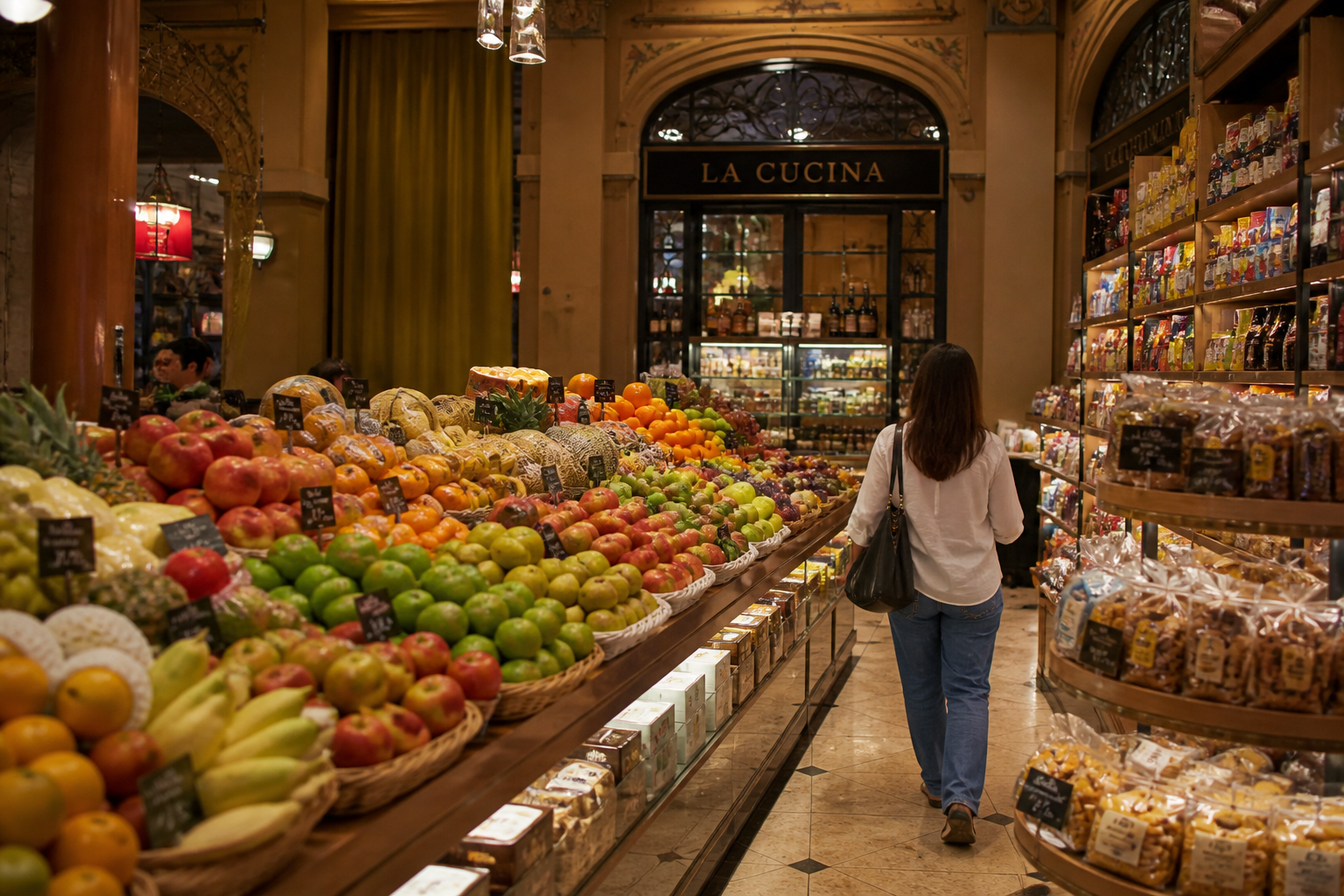
# Aisle Be There: My Tokyo Guide to Japan’s Most Fascinating Grocery Stores
## The Vibe & When to Go
Tokyo is the kind of city where even buying breakfast can feel like a small cultural adventure. One minute you’re choosing a perfectly wrapped rice ball from a convenience store; the next, you’re standing in a department-store basement admiring strawberries arranged like jewellery.
That basement food world—known as **depachika**—is one of my favourite sides of Tokyo. Grocery stores here aren’t just places to pick up milk and noodles. They are showcases for regional food, careful packaging, seasonal produce, handmade sweets, bento boxes, and tiny snacks you may never have seen before.
Tokyo is especially pleasant in **spring and autumn**, when the air is comfortable for walking. Spring brings cherry blossoms and delicate seasonal sweets, while autumn means chestnuts, sweet potatoes, mushrooms, and beautifully displayed fruit. Summer is hot and humid, but cold noodle dishes and chilled desserts make grocery shopping surprisingly fun. Winter is crisp, bright, and excellent for hot pot ingredients and holiday food displays.
I like visiting grocery stores on rainy afternoons or after a long sightseeing day. They are warm, easy to explore, and full of things you can take back to your room for a casual dinner.
## Must-See Grocery Spots: My Top Picks
### 1. The Depachika at Isetan Shinjuku
Isetan’s basement food hall is where I first understood that grocery shopping in Tokyo could feel theatrical. The displays are immaculate, but the atmosphere is not stiff. Office workers buy dinner, families choose sweets, and travellers wander around trying to decide between ten different kinds of beautifully packed bento.
Look for:
– Seasonal wagashi, or traditional Japanese sweets
– Sushi and sashimi boxes
– Fresh fruit gifts
– Croquettes, tempura, grilled fish, and takeaway meals
– Regional snacks from different parts of Japan
My favourite time to visit is about an hour before closing, when some prepared foods are discounted. The markdown stickers usually appear gradually, so don’t grab the first bento you see unless you really want it.
A small etiquette point: eat takeaway food back at your hotel, in a designated eating area, or somewhere you have permission to sit. Eating while walking is generally discouraged in Tokyo.
### 2. Nakano Broadway and the Supermarkets Around Nakano
Nakano is best known for vintage toys, manga, and collectibles, but the ordinary supermarkets around the station are just as interesting. This is where I prefer to shop when I want a more everyday view of Tokyo rather than an elegant department-store experience.
You’ll find:
– Affordable fruit and vegetables
– Fresh noodles and tofu
– Japanese curry blocks
– Pickles, miso, tea, and rice crackers
– Prepared meals that cost much less than those at department stores
After exploring Nakano Broadway, I usually stop at a local supermarket and put together a simple room dinner: onigiri, grilled fish, salad, fruit, and a bottle of green tea. It costs very little and feels more personal than eating another restaurant meal.
Go in the late afternoon if you want to see residents doing their regular shopping. The atmosphere is relaxed, and staff are usually patient even if your Japanese is limited.
### 3. Tokyo Station’s Character Street and Food Shops
Tokyo Station can be overwhelming, but the underground food areas are a brilliant place to pick up edible souvenirs before leaving the city. The famous character shops attract crowds, yet the nearby food counters and small stores are often more useful.
Try looking for:
– Tokyo-style sweets
– Limited-edition biscuits and cakes
– Bento boxes made for train journeys
– Rice crackers and savoury snacks
– Small gift packages that fit easily into your luggage
If you are taking the shinkansen, buy a **駅弁, or ekiben**, before boarding. These train bento boxes are more than a practical meal. They often feature ingredients from a particular region and come in charming boxes. I like choosing one at random and eating it while watching the scenery change outside the window.
Tokyo Station is crowded during weekday commuting hours. Visit mid-morning or mid-afternoon if you want to browse without being pushed along by the crowd.
### 4. Don Quijote in Shibuya or Asakusa
Don Quijote is not a traditional grocery store, but it is one of the easiest places to find Japanese snacks, instant noodles, sauces, matcha sweets, cosmetics, and odd little household items under one roof.
The stores are famously chaotic, with narrow aisles and bright signs everywhere. I always find something unexpected, from wasabi peas to tiny bottles of yuzu dressing. The Shibuya branch is open late, but it can be very busy. The Asakusa branch is often a little easier to browse.
My advice is to make a list before going in. Otherwise, you may leave with five types of KitKat and no idea how they ended up in your basket.
## Practical Travel Advice
### Getting There & Visa
Tokyo is served by **Narita International Airport** and **Haneda Airport**. Haneda is closer to central Tokyo and usually more convenient, while Narita has a wider range of international flights and can sometimes offer better fares.
From India, compare flights to both airports. A slightly longer connection may save money, but I prefer arriving at Haneda after a night flight because the transfer into the city is shorter.
Indian passport holders generally need to arrange a Japanese visa before travelling. Depending on where you live and your travel plans, you may apply through the Japanese embassy, consulate, or an authorised visa agency. Japan’s online visa rules can change, so check the official Japanese embassy website in India before booking non-refundable travel.
Keep copies of:
– Passport
– Flight and hotel bookings
– Bank statements or proof of funds
– Employment or leave documents
– A basic travel itinerary
Japan is organised, but immigration officers may still ask simple questions about your plans.
### Where to Stay
– **Shinjuku:** Best for first-time visitors, late-night food, shopping, and easy train connections. It is lively and busy, especially around the station.
– **Asakusa:** A calmer choice with traditional streets, temples, small eateries, and good access to Tokyo Skytree.
– **Ueno:** Convenient for museums, markets, and more affordable hotels. It has a practical, local feel.
– **Shibuya:** Good for fashion, nightlife, cafés, and people-watching, though rooms can be smaller and prices higher.
– **Ginza or Tokyo Station:** Ideal if you want polished hotels, department stores, and easy access to the shinkansen.
For a grocery-focused trip, I like staying near **Ueno, Shinjuku, or Tokyo Station**. Having a supermarket or convenience store downstairs makes breakfast and late-night meals simple.
### Getting Around
Tokyo’s trains and subways are the fastest way to move around, but the stations can be confusing at first. Use Google Maps for directions and allow extra time when changing lines.
A rechargeable **Suica or PASMO card** is useful for trains, subways, buses, and some convenience-store purchases. Availability of physical cards can vary, so check whether you can add a digital version to your phone.
Walking is often the best way to explore individual neighbourhoods. I like taking the train to a major station, then walking through the smaller streets around it rather than trying to cover the entire city underground.
Taxis are clean and reliable but expensive. Apps such as **GO** can help with bookings. Uber operates in Tokyo too, though it often connects you with licensed taxi services rather than private drivers.
## Real Costs & Local Tips
Japan can be expensive, but grocery-store meals make Tokyo much easier on the wallet.
### Approximate Daily Budgets
**Budget traveller: ¥8,000–¥12,000 per day**
– Hostel or simple room: ¥3,500–¥6,000
– Breakfast from a convenience store: ¥400–¥700
– Supermarket lunch or bento: ¥600–¥1,200
– Casual dinner: ¥1,000–¥2,000
– Local transport and small treats: ¥1,000–¥2,000
**Mid-range traveller: ¥18,000–¥30,000 per day**
– Comfortable hotel: ¥10,000–¥18,000
– Café breakfast: ¥1,000–¥2,000
– Department-store food hall lunch: ¥1,500–¥3,000
– Restaurant dinner: ¥3,000–¥6,000
– Transport, shopping, and snacks: ¥2,000–¥5,000
The currency is the **Japanese yen**. Japan is much more card-friendly than it used to be, but I still carry some cash for smaller restaurants, market stalls, and older shops.
Tipping is not expected in Japan. You don’t need to add money at restaurants, cafés, taxis, or grocery counters. A polite thank you is enough.
### A Few Tricks That Saved Me Money
– **Shop at supermarkets after 7 p.m.** Prepared meals, sushi, and bakery items may receive discounts as closing time approaches.
– **Use convenience stores for breakfast**, not every meal. Onigiri, yoghurt, fruit, boiled eggs, and coffee are cheap and filling, but local supermarkets usually offer more variety for less.
– **Buy fruit carefully.** Fancy fruit gift boxes can be surprisingly expensive. Look for ordinary bananas, mandarins, or cut fruit packs if you simply want something fresh.
– **Bring a foldable shopping bag.** Plastic bags may cost extra, and many stores expect you to carry your purchases yourself.
– **Check tax-free rules before buying souvenirs.** Department stores and larger shops may offer tax-free shopping for eligible visitors, but you’ll need your passport.
– **Avoid buying everything at the airport.** Tokyo supermarkets and department-store basements usually have a better selection and more reasonable prices.
The best part of grocery shopping in Tokyo is that it gives you a glimpse of regular city life. You see what people eat on busy evenings, how carefully food is packaged, which flavours change with the seasons, and how much care goes into something as simple as a lunch box.
So leave room in your itinerary—and in your suitcase—for a few supermarket detours. Some of my favourite Tokyo memories came from quiet aisles, warm croquettes, a cup of convenience-store coffee, and trying to guess what was inside a beautifully wrapped box.
KEYWORDS: Tokyo grocery store