
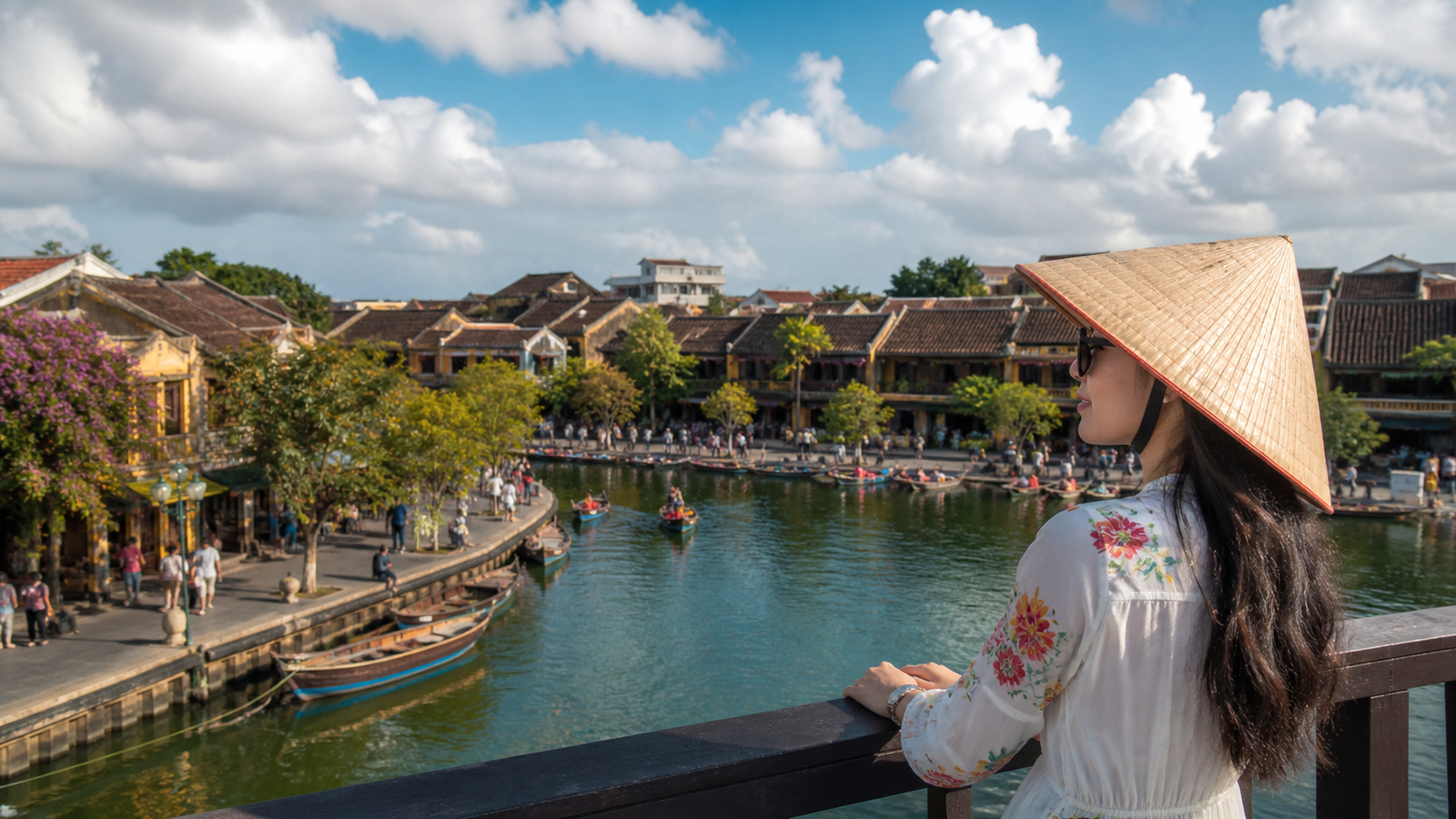
# Vietnam Travel Guide: Big Flavors, Quiet Corners, and Traveling Before It Gets Too Crowded
Vietnam has the kind of energy that grabs you quickly. One minute you’re sitting on a tiny plastic stool with a bowl of steaming pho, and the next you’re crossing a road through a river of scooters, trusting that everyone somehow knows what they’re doing.
The country is becoming one of Southeast Asia’s most talked-about destinations, and I understand why. Vietnam has excellent food, dramatic landscapes, lively cities, and a travel style that can still feel surprisingly personal. But its popularity is growing fast. Some places are already dealing with litter, traffic, rising prices, and too many visitors arriving at once—the same problems that have changed parts of Thailand.
That makes now a good time to visit, provided you travel thoughtfully and spread your time beyond the obvious stops.
## The Vibe & When to Go
Vietnam feels wonderfully varied. Hanoi is old, noisy, leafy, and full of strong coffee. Ho Chi Minh City is faster and more polished, with rooftop bars beside tiny family-run eateries. Central Vietnam brings lantern-lit streets, beaches, imperial history, and some of the country’s best food. In the north, limestone mountains and rice fields make even a long bus ride feel like part of the adventure.
The weather depends heavily on where you go:
– **Northern Vietnam:** October to April is generally cooler and drier. Hanoi can feel chilly and damp from December to February.
– **Central Vietnam:** February to August is usually the safest bet for sunshine, while rain and storms are more common later in the year.
– **Southern Vietnam:** December to April is often dry and warm. May to November brings regular tropical showers, usually followed by sunshine.
If you’re planning one trip across the whole country, **March to April** or **October to November** can offer a reasonable balance, though no month guarantees perfect weather everywhere.
Vietnam is worth visiting right now because it still rewards curiosity. You can eat brilliantly for very little money, find quiet rural roads a short ride from busy cities, and stay in locally owned guesthouses without spending a fortune. Just avoid treating every destination like a backdrop for a quick photo. The country is changing quickly, and respectful travel matters more than ever.
## Must-See Spots: My Favorite Stops
### 1. Hanoi’s Old Quarter and Quiet Lakeside Streets
Hanoi can be overwhelming at first. Scooters come from every direction, tiny sidewalks become parking lots, and the sound of horns seems to follow you everywhere.
Give yourself a day or two to adjust. Early mornings are my favorite time here. Around Hoan Kiem Lake, locals practice tai chi, jog, stretch, and sip coffee before the streets become busy. The Old Quarter is best explored on foot, though you’ll need patience when crossing roads. Walk slowly and steadily rather than making sudden moves.
For food, look beyond the most photographed restaurants. Try **bun cha**, grilled pork with noodles and herbs, and **egg coffee**, which is sweeter and richer than it sounds. A small family-run place on a side street can be more memorable than a famous restaurant with a line outside.
For a calmer afternoon, wander around the French Quarter or visit the Temple of Literature. I also liked simply sitting at a street café and watching the city work around me. Hanoi is not a city you rush through successfully.
### 2. Ninh Binh: Limestone Cliffs Without the Ha Long Bay Crowds
Ninh Binh is an easy trip from Hanoi and one of the places I recommend most strongly. The scenery is huge: green rice fields, steep limestone cliffs, winding rivers, and temples tucked into the countryside.
The boat ride at **Trang An** is beautiful, but it can become crowded during holidays and midday. Go early, or consider **Van Long Nature Reserve** for a quieter experience. In Tam Coc, renting a bicycle is a lovely way to move between villages, rice paddies, and small temples.
Climb to the viewpoint at **Hang Mua** if you’re ready for a steep set of stone steps. The view from the top is excellent, especially late in the afternoon, although it is not exactly a secret anymore. Bring water and wear shoes with a decent grip.
Staying two nights instead of making a rushed day trip gives you time to see the countryside after the tour buses leave. Choose a family homestay outside the main town and support a local business directly.
### 3. Hoi An and the Central Coast
Hoi An’s lanterns, yellow buildings, riverside cafés, and tailor shops make it easy to see why people fall for it. It is also one of Vietnam’s most crowded destinations, so timing makes a big difference.
Visit the Ancient Town early in the morning, before the heat and tour groups arrive. In the evening, walk away from the busiest riverfront streets and explore the quieter lanes around Cam Pho. The lantern-lit center is pretty, but Hoi An becomes more enjoyable when you slow down instead of trying to photograph every corner.
Rent a bicycle and ride toward **Tra Que Vegetable Village** or the beach. The route is mostly gentle, and you’ll see a less polished side of the area. If you want clothes made, ask several tailors for clear prices and delivery times. A low price does not always mean good work, and rushed fittings can be frustrating.
Nearby **An Bang Beach** is convenient, though it can feel busy. For a quieter beach day, ask your hotel about less crowded stretches farther from the center.
### 4. Ha Giang for Mountain Roads and Village Life
The Ha Giang Loop is one of Vietnam’s most memorable adventures, but it deserves a little thought. The mountain scenery is spectacular, with winding roads, deep valleys, and small villages spread across the hills.
You can ride yourself if you have the right motorcycle license, experience, and confidence. Many travelers choose an “easy rider” instead, with a local driver handling the bike while you enjoy the views. This is usually the safer choice, especially on wet roads or sharp mountain bends.
Choose a small group rather than the cheapest giant convoy. Ask how the company treats local communities, where you’ll stay, and whether the itinerary gives you time in villages rather than racing from viewpoint to viewpoint.
The loop is not a theme-park ride. Roads can be rough, weather can change quickly, and mountain travel takes longer than it appears on a map. Pack layers, gloves, sunscreen, and patience. The best moments may be a roadside cup of tea or a conversation at a family homestay rather than the most famous lookout.
## Practical Travel Advice
### Getting There and Visa Information
Vietnam’s main international airports are:
– **Hanoi:** Noi Bai International Airport
– **Ho Chi Minh City:** Tan Son Nhat International Airport
– **Da Nang:** useful for Hoi An and central Vietnam
Direct flights are available from many Asian cities, and regional airlines often offer good fares if you book a few weeks ahead. Compare the total price carefully—baggage, seat selection, and airport transfers can change the final cost.
Vietnam generally offers **e-visas valid for up to 90 days**, with single-entry and multiple-entry options available for eligible travelers. Rules can change, so apply through the official Vietnamese immigration website and check your passport’s requirements before booking nonrefundable travel. Your passport should usually have at least six months of validity remaining, with blank pages available.
Some nationalities receive visa-free entry for limited stays, but the permitted length varies. Do not rely on an old blog post or a forum comment. Check the current rules for your nationality before flying.
### Where to Stay
**Hanoi**
– **Old Quarter:** best for first-time visitors, street food, nightlife, and being close to major sights
– **French Quarter:** quieter, more spacious, and a little more refined
– **Tay Ho:** popular with longer-stay travelers, cafés, and a more relaxed atmosphere
**Hoi An**
– **Ancient Town:** atmospheric and convenient, but busy and sometimes noisy
– **Cam Pho:** close to the action without being right in the middle of it
– **Beach area:** better for a slower stay with more space and sea air
**Ho Chi Minh City**
– **District 1:** convenient for major attractions and nightlife
– **District 3:** local restaurants, tree-lined streets, and a calmer feel
– **Thao Dien in District 2:** cafés, international food, and longer-stay comfort
For a more meaningful stay, choose a small hotel, homestay, or guesthouse where the owners are present. Ask whether staff are paid fairly and whether the property manages waste and water responsibly.
### Getting Around
Vietnam is not always walkable in the way European cities are. Sidewalks may be blocked by scooters, street stalls, or parked cars, and traffic can be intense.
– Use **Grab** for rides and food delivery. It is usually easier than negotiating with a taxi.
– In Hanoi and Ho Chi Minh City, **GrabBike** is quick and inexpensive if you’re comfortable on a motorbike.
– Trains are comfortable for some long journeys, especially between Hanoi, Hue, Da Nang, and Ho Chi Minh City. Book soft seats or sleepers for overnight routes.
– Sleeper buses can save time and money, but quality varies. Read recent reviews and avoid the cheapest option if the journey is long.
– Domestic flights are useful for covering the country quickly, though trains are often more enjoyable for shorter distances.
– Rent a bicycle in smaller towns, but avoid renting a motorbike unless you have the proper license, insurance, and experience.
When crossing a busy road, walk at a steady pace and make your intentions clear. The traffic usually flows around you. Running tends to make things less predictable.
## Real Costs and Local Tips
Vietnam can still be very affordable, although prices rise during holidays and in heavily visited areas.
### Approximate Daily Budgets
**Budget traveler: $25–40 per day**
– Dorm bed or simple guesthouse: $6–15
– Local meals: $1.50–4
– Coffee and snacks: $1–3
– Short Grab rides: $1–5
– Low-cost attractions and occasional tours
**Mid-range traveler: $60–110 per day**
– Comfortable hotel or private room: $30–70
– Restaurants mixed with local meals: $15–30
– Longer transfers, activities, and entrance fees
– A few nicer cafés or drinks
These figures exclude international flights and can rise substantially if you add private drivers, cruises, beach resorts, or guided mountain trips.
Vietnam uses the **Vietnamese dong (VND)**. Cash is still useful for street food, small shops, markets, and rural areas. Cards are accepted at many hotels and modern restaurants, but not everywhere. ATMs are common in cities, though fees and withdrawal limits vary.
Tipping is not required in the same way it is in the United States. At restaurants, rounding up or leaving a small amount for genuinely good service is appreciated. For guides and drivers, a tip is kind if they have done a good job, but it should not feel compulsory.
### A Few Ways to Spend Less and Travel Better
– **Eat where office workers and students eat.** Busy local stalls usually have quick turnover, fresh food, and fair prices.
– **Check Grab before accepting a taxi.** If you use a street taxi, choose a reputable company and make sure the meter is running.
– **Carry small notes.** Vendors may not have change for large bills, and paying with a 500,000-dong note for a tiny purchase can create unnecessary confusion.
– **Travel outside peak holidays.** Tet, the Vietnamese Lunar New Year, is a wonderful cultural period but also a difficult time for transport, opening hours, and hotel availability.
– **Be cautious with “too cheap” tours.** A bargain Ha Long Bay cruise or motorbike trip may cut corners on safety, staff pay, or environmental standards.
– **Bring a reusable bottle and say no to extra plastic.** Refill stations are becoming easier to find, and small choices help in places already struggling with waste.
– **Book popular attractions early in the morning.** You’ll avoid the worst crowds and often get cooler temperatures at the same time.
Vietnam does not need to become another Thailand to succeed as a major tourist destination. Its appeal is strongest when visitors spread out, spend money with local businesses, respect communities, and leave room for ordinary life to continue. Go for the food, the landscapes, and the wonderfully messy street scenes—but also take the slower train, stay an extra night, and let the country surprise you away from the usual checklist.
KEYWORDS: Vietnam Hanoi