
# Vietnam Right Now: My Favorite Places, Honest Costs, and How to Travel Well
Vietnam has been having a moment for a while, but lately it feels as if everyone is talking about it. Travelers who once headed straight to Thailand are now adding Hanoi, Ninh Binh, Da Nang, and the northern mountains to their plans.
I understand why. Vietnam gives you dramatic scenery, excellent food, lively cities, and some of the best-value travel in Asia. But it is also at a turning point. Places such as Ha Long Bay and Hoi An are already feeling the pressure of crowds, plastic waste, traffic, and fast-built hotels. The country seems keen to welcome visitors without repeating some of Thailand’s more painful tourism mistakes.
That makes this a good time to go—but also a good time to travel with a little care.
## The Vibe & When to Go
Vietnam feels energetic, noisy, generous, and wonderfully unpredictable. In Hanoi, scooters stream around you like schools of fish, while someone quietly serves coffee from a tiny pavement stall. In the countryside, the pace changes completely: rice fields, limestone cliffs, water buffalo, and long lunches that stretch far beyond your original plan.
The weather depends heavily on where you are:
– **North Vietnam:** Hanoi, Ha Long Bay, and the mountains are cooler from November to March, with occasional mist and gray skies. April, May, October, and November are usually comfortable.
– **Central Vietnam:** Hoi An, Hue, and Da Nang are often sunny from February to August. Heavy rain and occasional flooding can arrive between September and January.
– **South Vietnam:** Ho Chi Minh City and the Mekong Delta are hot year-round. December to April is generally drier, while May to November brings short, heavy showers.
The shoulder months—roughly March to May and September to November—often offer the nicest balance of weather and manageable crowds. Pack light clothes, a rain jacket, sunscreen, and one warmer layer if you are heading north.
## Must-See Spots: My Top Picks
### 1. Hanoi’s Old Quarter and the quieter side of the city
Hanoi is chaotic in a way that becomes strangely comforting after a couple of days. I love starting early, before the streets become packed, with a bowl of pho and a walk around Hoan Kiem Lake.
The Old Quarter is fun, but don’t spend your whole visit there. Wander toward **Truc Bach Lake**, the leafy streets around **West Lake**, or the small cafés hidden in old French-era buildings. The Temple of Literature is calmer in the morning, and the Women’s Museum offers a thoughtful look at Vietnamese history and daily life.
For food, I would choose a busy local stall over a polished restaurant. Try **bun cha**, grilled pork served with noodles and herbs, or **cha ca**, turmeric fish with dill. Sit where office workers sit, and you will usually eat better and pay less.
One practical warning: sidewalks are often used for parking, so walking in Hanoi means sharing space with scooters. Keep your movements predictable when crossing roads. The traffic looks impossible, but it tends to flow around you if you walk steadily.
### 2. Ninh Binh: limestone cliffs without the Ha Long Bay price tag
Ninh Binh is one of my favorite stops in Vietnam. It is close enough to Hanoi for a day trip, but staying two nights gives you time to enjoy it before and after the tour buses arrive.
Take a boat through **Trang An** or **Tam Coc**, where the river passes between towering limestone formations and caves. Trang An is more scenic and organized; Tam Coc has a more open countryside feel. I prefer arriving early, especially on weekends.
Rent a bicycle or scooter and visit **Bich Dong Pagoda**, then climb the 500 steps to **Hang Mua viewpoint**. The climb is sweaty, but the view over the rice fields and karst peaks is exactly the sort of scene that makes you glad you came.
Stay around Tam Coc or Trang An rather than in Ninh Binh city. Small family-run guesthouses often include bicycles and a generous breakfast. The area is changing quickly, so choose places that avoid single-use plastics and treat the surrounding farms and waterways respectfully.
### 3. Hoi An and the beaches around Da Nang
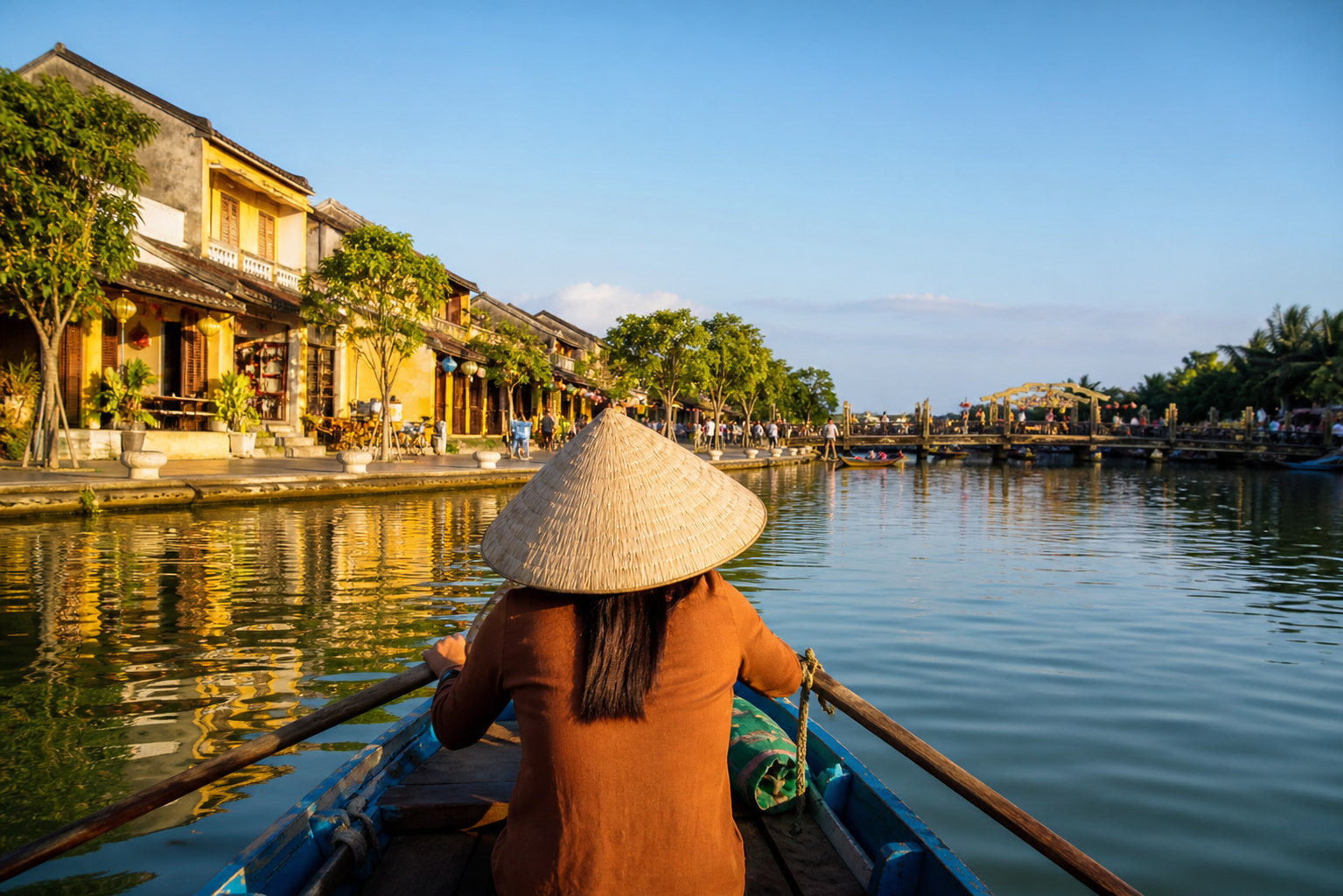
Hoi An’s old town can feel crowded at night, especially when the lanterns are lit and tour groups arrive. Still, I understand the appeal. The yellow walls, wooden balconies, riverside cafés, and glowing lanterns are beautiful.
My favorite time there is early morning, when shopkeepers are opening up and locals are buying breakfast. Walk beyond the central streets to **Cam Thanh**, cycle through the rice fields, or take a cooking class that includes a market visit. If you want tailor-made clothing, research a shop before arriving, agree on the price and delivery time, and allow room for alterations.
Da Nang makes a useful base if you prefer more space and a proper beach. The city has a relaxed food scene, wide roads, and a long stretch of sand. I like staying near **My Khe Beach** and taking a day trip to the **Son Tra Peninsula**, where forested roads lead to sea views and the Linh Ung Pagoda.
Be careful around the famous coconut basket boats in Cam Thanh. Some rides are loud, heavily staged, and involve spinning boats for tips. A quieter eco-tour with a local guide is a better experience.
### 4. Ha Giang Loop: the trip I still talk about
The Ha Giang Loop in northern Vietnam is not for everyone, but it is unforgettable. Mountain roads wind through deep valleys and high passes, with small villages and views that seem to change every few minutes.
Many travelers join a three- or four-day guided trip with an experienced local driver, known as an “easy rider.” I recommend that option unless you are genuinely confident on a motorbike. The roads can be rough, the weather changes quickly, and mountain traffic is not the place to learn from scratch.
Choose a company that limits group size, pays local guides fairly, and does not encourage reckless driving. Bring warm layers, even in warmer months, and expect basic accommodation in some villages. The reward is seeing a part of Vietnam where tourism still feels relatively personal.
## Practical Travel Advice
### Getting there and visa requirements
Most international visitors arrive through **Hanoi, Ho Chi Minh City, or Da Nang**. Flights from major Asian hubs are often much cheaper than flying directly from Europe, North America, or Australia, so compare both direct routes and one-stop options.
Vietnam currently offers **e-visas to citizens of all countries and territories**, generally for stays of up to **90 days**, with single-entry and multiple-entry options. Apply through the official Vietnamese immigration website, check every passport detail carefully, and make sure your passport has at least six months of validity and blank pages. Rules can change, so confirm the latest requirements before booking.
Print or save a copy of your e-visa. Airline staff may ask for it before you board.
### Where to stay
– **Hanoi Old Quarter:** Best for first-time visitors, street food, nightlife, and being close to major sights. It can be noisy.
– **West Lake, Hanoi:** More relaxed, greener, and popular with longer-stay travelers and cafés.
– **Hoi An Ancient Town:** Charming and convenient, but busier and pricier at night.
– **Cam Chau or Cam Thanh:** Quieter, greener, and better for bicycles.
– **Da Nang near My Khe Beach:** Good for beach time, modern hotels, and easy transport.
– **Ho Chi Minh City District 1:** Central and lively, with restaurants and bars nearby.
– **District 3 or Binh Thanh:** More local, less hectic, and often better value.
Small hotels and homestays can be excellent, but read recent reviews about noise, damp rooms, and construction. Vietnam’s accommodation standards vary widely even within the same price range.
### Getting around
Vietnam is easy to explore, though journeys often take longer than they look on a map.
– Use **Grab** for cars and motorbike taxis. The **Be** app is another local option in larger cities.
– Overnight trains are useful between Hanoi, Hue, Da Nang, and Ho Chi Minh City. Book a soft sleeper for comfort.
– Domestic flights save time on long north-south journeys, but add airport transfers and baggage fees to your budget.
– In cities, walk early in the morning before the heat and traffic build.
– For rural areas, hire a scooter only if you have the correct license, insurance, and real riding experience.
– On buses and trains, keep valuables in a small personal bag rather than in the luggage compartment.
## Real Costs and Local Tips
Vietnam remains affordable, though popular destinations are no longer uniformly cheap.
### Typical daily budgets
**Budget traveler: $25–40 per day**
– Dorm bed or simple guesthouse: $7–18
– Local meals: $1.50–4 each
– Coffee and drinks: $1–3
– Local transport: $2–6
– Occasional entrance fees: $2–8
**Mid-range traveler: $60–110 per day**
– Comfortable hotel: $30–70
– Restaurants and cafés: $15–30
– Grab rides and activities: $10–25
– Day tours or upgraded transport: extra
The currency is the **Vietnamese dong (VND)**. Prices can look alarming because of all the zeroes; $10 is roughly 250,000 VND, though exchange rates move. Carry small notes for food stalls, taxis, and small shops. Card payments are common in hotels and modern restaurants, but cash still matters.
Tipping is not compulsory. In cafés and casual restaurants, rounding up or leaving a small amount is appreciated. For guides, drivers, and hotel staff, a modest tip is welcome if the service was good. Check whether a service charge has already been added in higher-end places.
### A few things that save money and frustration
– **Order what is busy and local.** A crowded noodle stall is usually a better bet than a nearly empty restaurant beside a major attraction.
– **Ask the price before accepting a service.** This applies to taxis, short boat rides, street photography, shoe cleaning, and tailoring.
– **Use Grab instead of negotiating every car ride.** The fare is shown in advance, and you avoid many awkward conversations.
– **Visit famous sights early.** You get cooler temperatures, softer light, and fewer tour groups without paying extra.
– **Carry reusable chopsticks or a bottle.** Vietnam is trying to reduce tourism waste, but single-use plastic is still everywhere.
– **Do not buy wildlife souvenirs.** Avoid coral, shells, ivory, animal products, and anything that looks questionable at a market.
– **Cross roads calmly.** Walk at a steady pace and let scooters judge your movement. Sudden stops are more dangerous than moving slowly and predictably.
Vietnam is changing fast, and that is both exciting and slightly worrying. Go now for the food, mountains, rivers, history, and extraordinary everyday scenes—but give your money to locally owned businesses, stay a little longer in fewer places, and leave the beaches and villages cleaner than you found them. That is how Vietnam can welcome more travelers without becoming another destination overwhelmed by them.
KEYWORDS: Vietnam Hanoi