
# Exploring Phuket: My Favorite Beaches, Local Food, and Real Budget Tips for 2026
TTW’s 2026 list of the world’s top beach destinations is a good reminder that the best seaside trips are not always about finding the “perfect” beach. Phuket, one of Thailand’s most popular beach escapes, has bright blue water and soft sand, but it also has busy roads, crowded viewpoints, and pockets of overdevelopment. The trick is knowing where to slow down.
## The Vibe & When to Go
Phuket feels like several holidays sharing one island. Patong is noisy, bright, and open late. Kata and Karon are easiergoing, with plenty of restaurants and beaches within reach. Phuket Old Town has colorful Sino-Portuguese buildings, excellent food, and a completely different rhythm from the coast.
The driest and most comfortable period usually runs from **November through April**. March and April are hot, with strong sunshine and warm water. From May to October, rain showers become more common, though they often arrive suddenly and pass quickly. Rough seas can also affect boat trips during the southwest monsoon.
If you travel during the drier months, book popular hotels and island tours early. For better prices and fewer crowds, I like the shoulder periods around **late April, May, and October**, as long as I keep my plans flexible.
## Must-See Spots: My Top Picks
### 1. Kata Noi Beach
Kata Noi is smaller and calmer than Patong, and I find it much easier to spend a whole afternoon there without feeling overwhelmed. The beach is good for swimming in calmer weather, with a handful of cafés and resorts nearby.
Go before 10 a.m. for a quieter stretch of sand. In the late afternoon, walk up to one of the viewpoints along the southern road for a wide look over Kata and Kata Noi.
### 2. Phuket Old Town
This is where I go when I need a break from beach life. Wander along Thalang, Dibuk, and Krabi roads to see pastel-colored shop houses, small galleries, coffee shops, and old shrines. Sunday Walking Street on Thalang Road is especially lively, with local snacks, handmade goods, and live music.
Try **Hokkien noodles**, **moo hong** slow-cooked pork, and **roti with curry**. The food here is often more interesting—and cheaper—than what you find beside the major beaches.
### 3. Freedom Beach
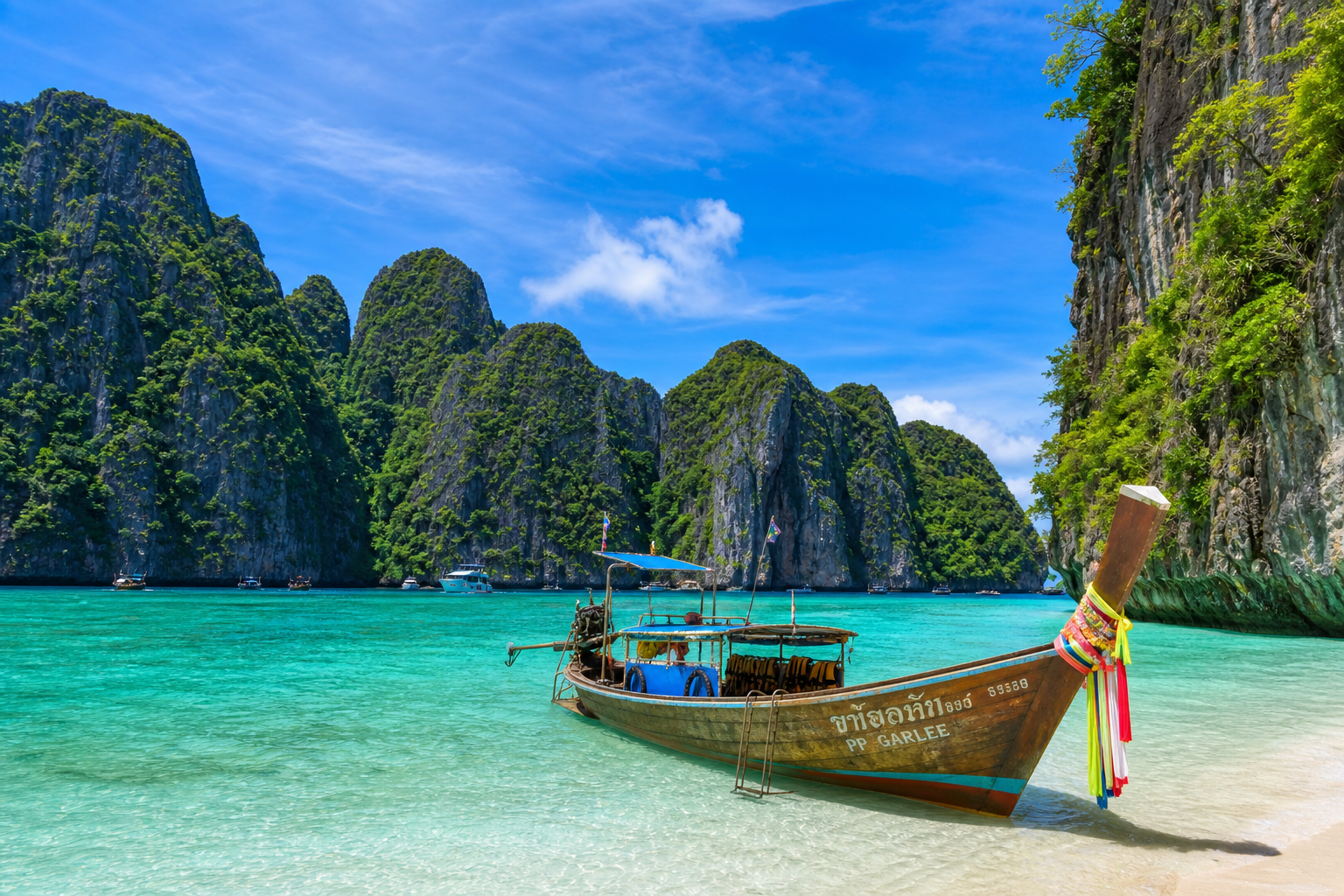
Freedom Beach has pale sand, clear water, and a more secluded feel than the main beaches near Patong. Access can change depending on the season and landowners, so check locally before heading there. You may need to arrive by long-tail boat or use a steep walking path.
Bring water, sunscreen, and cash. Facilities are limited, and the return trip can be less convenient than the journey in.
### 4. Phang Nga Bay
This is technically outside Phuket, but I would still set aside a day for it. The limestone cliffs rising out of the green water are dramatic without needing much imagination. Many tours stop at James Bond Island, but I prefer an itinerary that includes a quieter canoe ride through mangroves or sea caves.
Try to choose an early departure or a smaller group. The first time I went, the busiest stops felt rushed; the quieter stretches were the parts I remembered.
## Practical Travel Advice
### Getting There & Visa
Phuket International Airport receives direct flights from Bangkok, Singapore, Kuala Lumpur, Doha, Dubai, and other major cities. If your international route does not connect directly, flying through Bangkok is usually straightforward.
Thailand allows visa-free entry for citizens of many countries, often for stays of up to **60 days**, while other travelers need to apply for a visa before arrival. Rules depend on your passport and can change, so check the official Thai embassy or immigration website before booking.
Most foreign visitors must also complete the **Thailand Digital Arrival Card (TDAC)** online shortly before arrival. Use only the official government website; avoid third-party sites that charge unnecessary fees.
### Where to Stay
– **Patong:** Best for nightlife, shopping, and lots of tour choices. It is convenient but loud and crowded.
– **Kata or Karon:** A good middle ground for couples, families, and first-time visitors who want a beach without constant partying.
– **Kamala:** Quieter and more relaxed, with a pleasant beach and several higher-end resorts.
– **Rawai:** Good for longer stays, seafood, local restaurants, and access to nearby islands. The beach itself is not the best for swimming.
– **Phuket Old Town:** Great for food, cafés, architecture, and a more local urban feel. You will need transport to reach the main swimming beaches.
### Getting Around
Phuket is not especially walkable outside individual beach areas. Roads can be congested, particularly around Patong, Chalong, and Phuket Town.
– **Grab and Bolt** are useful for booking cars and motorbike taxis, though availability varies.
– Local taxis and tuk-tuks are common, but agree on the price before getting in.
– Renting a scooter can save time, but only do it if you are licensed, insured, and genuinely comfortable riding in traffic. Helmets are essential.
– Blue songthaew buses connect Phuket Town with some beach areas at low prices, but they are slow and do not run everywhere.
– For island trips, book through a reputable operator rather than accepting the cheapest street offer without checking what is included.
## Real Costs & Local Tips
Thailand is still manageable on a range of budgets, although Phuket is noticeably more expensive than many parts of the country.
### Typical daily budget per person
**Budget: THB 1,200–2,000**
– Simple guesthouse or hostel
– Local meals and market food
– Public buses or occasional shared rides
– Free beaches and low-cost attractions
**Mid-range: THB 3,500–6,500**
– Comfortable hotel or private room
– A mix of local restaurants and cafés
– App-booked taxis
– One paid activity or boat trip
These figures do not include international flights or major shopping. Prices rise around Christmas, New Year, and the January-to-March high season.
Thailand uses the **Thai baht (THB)**. Cash is still useful for markets, food stalls, small taxis, beach chairs, and family-run restaurants. Hotels and larger restaurants usually accept cards.
Tipping is not compulsory, but leaving a small amount for good service is appreciated. In restaurants, rounding up or leaving around **5–10%** is reasonable when a service charge has not already been added. For taxis, rounding up is enough.
### A Few Ways to Spend Less and Avoid Hassles
– **Eat one meal away from the beach.** A short ride inland can cut the price dramatically, especially for noodles, rice dishes, and seafood.
– **Check the restaurant bill.** Look for service charges, bottled water, and extra dishes you did not order.
– **Use Grab or Bolt before negotiating a taxi.** Even if you choose a street taxi, the app gives you a rough idea of the fair price.
– **Do not schedule boat trips too tightly.** Weather can change, and operators may move departure times. Leave a spare day if an island excursion matters to you.
– **Carry small notes.** A 1,000-baht bill can be difficult for a market stall or short taxi ride to change.
– **Treat “cheap” scooter rentals carefully.** Photograph the bike before leaving, check the brakes and tires, and never hand over your passport as a deposit.
Phuket can be beautiful, chaotic, expensive, peaceful, and wonderfully tasty—all in the same day. I would not visit expecting an untouched island. I would go for the mix: a quiet morning at Kata Noi, spicy noodles in Old Town, a long-tail boat on clear water, and an evening when the rain arrives just as dinner begins.
KEYWORDS: Phuket beach