
# Zimbabwe Travel Guide: Waterfalls, Wildlife, Warm Smiles, and Honest Budget Tips
Zimbabwe is having a moment. Its tourism brand is gaining fresh momentum, and after traveling through the country, I understand why. The landscapes are huge, the history is quietly powerful, and people are often the best part of the journey—quick with a joke, happy to offer directions, and genuinely proud of their home.
This is not a country I’d rush through. Zimbabwe rewards slow mornings, long drives, conversations over tea, and a little patience when plans change.
## The Vibe & When to Go
Zimbabwe feels spacious and unhurried. In Harare, you get leafy streets, busy markets, cafés, and a creative city atmosphere. Outside the capital, the pace drops away quickly. There are wide savannahs, granite hills, ancient stone ruins, and sunsets that seem to last forever.
The weather depends heavily on the season:
– **November to March:** Warm, greener, and often rainy. Victoria Falls can be spectacular, although some safari roads become muddy.
– **April to May:** A lovely shoulder season, with fresh green scenery and comfortable temperatures.
– **June to August:** Cool and dry, especially in the mornings and evenings. This is an excellent period for wildlife viewing.
– **September to October:** Hot and dry, but animals gather around remaining water sources, making this a strong safari season.
If you’re visiting during the cooler dry months, pack a fleece for early game drives. Even when the afternoon is warm, the first hour in an open safari vehicle can feel surprisingly cold. In the hotter months, carry water and don’t underestimate the sun.
Zimbabwe is worth visiting now because it still feels personal. The famous places are there, but you can often find quiet viewpoints, uncrowded trails, and small local businesses where your money goes directly into the community.
## Must-See Spots: My Top Picks
### 1. Victoria Falls: Go Beyond the Main Viewpoints
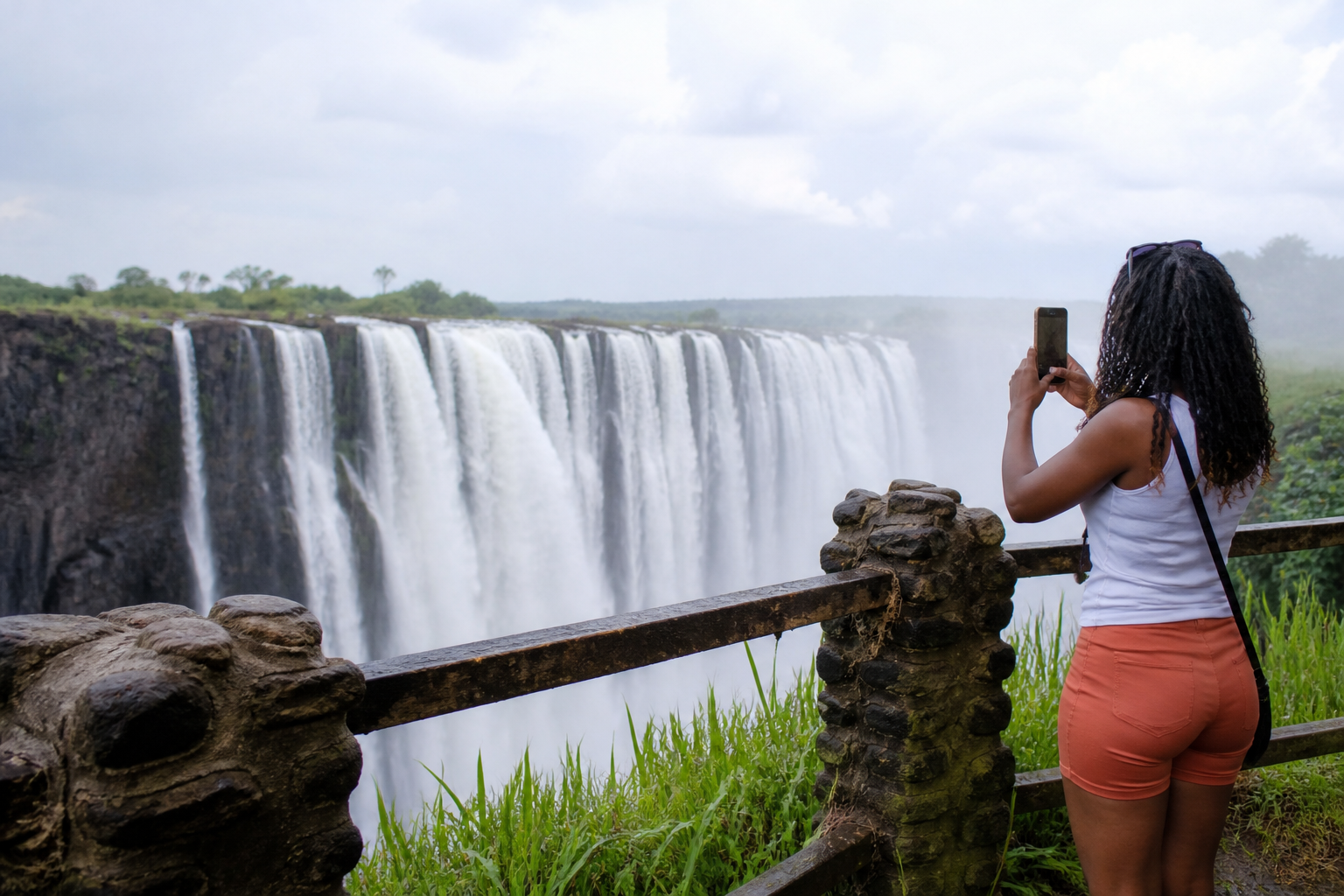
Victoria Falls is the obvious starting point, and yes, it deserves the attention. The sound arrives before the full view does, especially when the Zambezi is running strongly. Walking through the rainforest around the falls, you’ll catch glimpses of the water through the spray, and you may leave with damp clothes even on a sunny day.
I recommend arriving early, before the heat and larger groups. Take your time along the marked viewpoints rather than hurrying from one to the next. The quieter sections near Danger Point often gave me the best sense of the river’s power.
For a different perspective, book a **sunset cruise on the Zambezi**. Keep an eye out for hippos and elephants along the riverbank. If you want more adventure, activities include rafting, canoeing, bungee jumping, and scenic flights—but compare operators carefully and check what safety standards are in place.
A small practical tip: the mist can soak cameras and phones. A waterproof pouch is far more useful than trying to shield everything with your jacket.
### 2. Hwange National Park: Zimbabwe’s Big Wildlife Experience
Hwange is where I’d spend extra time if wildlife is your priority. It’s Zimbabwe’s largest national park and is especially known for elephants, but the landscape supports lions, buffalo, giraffes, wild dogs, zebras, and many bird species.
The best game drives begin early. The road may look empty for a while, then suddenly a herd of elephants appears between the trees. I loved those quiet stretches when the engine stopped and we simply listened—the birds, the wind, and the occasional distant call.
Choose accommodation near a waterhole if possible. Sitting quietly with a cup of coffee while animals come to drink can be as memorable as a formal game drive. Some camps also support local conservation and community projects, so ask where your accommodation fees go.
Hwange is a long journey from Victoria Falls by road, but the two destinations work well together. Many lodges can arrange transfers, though it’s wise to confirm the price before booking.
### 3. Great Zimbabwe: A Place That Deserves Time
Great Zimbabwe is not just a quick stop for photographs. The ancient stone city, near Masvingo, is one of the country’s most important historical sites, and walking among the granite walls gives you a real sense of scale and craftsmanship.
The Hill Complex is my favorite area. The climb is manageable, but wear proper shoes because the rocks can be uneven. From the top, you can look across the surrounding countryside and imagine how much life and movement once filled the settlement.
Bring a guide if one is available. The ruins become much more meaningful when you understand the history behind the stonework, the trading links, and the debates about who built the city. Give yourself at least half a day rather than squeezing it between long drives.
### 4. Harare and the Matobo Hills
Harare is often treated as a gateway, but I think it deserves a couple of nights. Spend time at **Mukuvisi Woodlands**, visit the National Gallery, and browse local craft stalls or produce markets. The city’s best moments are often simple ones: a relaxed lunch, a walk through leafy neighborhoods, or a conversation with a local artist.
If you have more time, travel south to **Matobo National Park**, near Bulawayo. The granite boulders and rounded hills create a landscape unlike anywhere else in Zimbabwe. The park is also known for rhinos and for the gravesite of Cecil Rhodes at World’s View, although I found the rock formations and quiet trails more compelling than the monument itself.
Matobo is a good place to hire a knowledgeable guide. The landscape has layers of history, cave paintings, wildlife, and local beliefs that are easy to miss when traveling alone.
## Practical Travel Advice
### Getting There and Visa Requirements
Most international visitors fly into **Harare**, **Victoria Falls**, or sometimes **Bulawayo**. Johannesburg is a common connection point, and there are also regional flights from places such as Addis Ababa and Nairobi depending on the season and airline schedules.
Visa rules depend on your passport. Many visitors can obtain a visa on arrival, while some nationalities must apply in advance. Zimbabwe also offers an online visa application system for eligible travelers. Check the latest requirements through the official Zimbabwe immigration or embassy website before booking flights.
If you are combining Zimbabwe with Zambia, ask whether you qualify for the **KAZA Univisa**. It can simplify travel between Zimbabwe and Zambia and may cover certain day trips into Botswana, subject to the current rules.
Keep these documents handy:
– Passport with at least six months’ validity
– Return or onward flight details
– Accommodation confirmations
– Proof of yellow fever vaccination if arriving from a yellow-fever-risk country
– Travel insurance covering medical care and evacuation
Avoid relying on outdated forum posts for visa information. Requirements and fees can change.
### Where to Stay
**Victoria Falls town:** Best for first-time visitors, easy access to the falls, restaurants, activities, and organized tours.
**Harare city center or Borrowdale:** Choose the center for convenience and museums; Borrowdale is quieter and has more modern restaurants and shopping areas.
**Bulawayo:** A good base for Matobo National Park and a more relaxed city experience. It has a strong architectural character and a slower pace than Harare.
**Masvingo:** Practical for visiting Great Zimbabwe. It is not the most polished tourist base, but it makes the ruins easy to reach.
**Safari lodges:** Stay inside or close to Hwange if you want early game drives and less time spent on the road. Prices vary widely, so compare what is included—meals, park fees, transfers, and activities can make a big difference.
### Getting Around
Zimbabwe is not a destination where I’d depend entirely on spontaneous public transport, especially for national parks.
– **Domestic flights** are useful for connecting Harare, Victoria Falls, and other major areas, though schedules may be limited.
– **Private transfers** are comfortable for longer distances and often make sense when traveling as a small group.
– **Rental cars** work best for confident drivers familiar with long distances, potholes, limited roadside services, and fuel planning.
– **Local taxis** are common around hotels and airports. Ask your accommodation to arrange one and agree on the fare before leaving.
– In Harare, local ride-hailing services may be available, but coverage can be inconsistent. Don’t assume Uber will work everywhere.
– **Walking** is pleasant in parts of central Harare, Bulawayo, and Victoria Falls during daylight, but use normal city awareness and avoid wandering unfamiliar areas at night.
For safari areas, your lodge or tour operator will usually organize the actual park transport.
## Real Costs and Local Tips
Zimbabwe uses several forms of payment, but **US dollars remain widely accepted**, especially in tourism. Card machines are available at many hotels, lodges, and established restaurants, but connectivity can fail. Carry clean, smaller US dollar notes for fuel, tips, markets, and small purchases.
Zimbabwe’s local currency situation has changed over time, so check the current official exchange rules before arrival. Don’t exchange money with informal street dealers, even if the offered rate looks tempting.
### Approximate Daily Budgets
These estimates are for one person and can vary sharply depending on transport and safari activities.
**Budget travel: around US$45–75 per day**
– Guesthouse or simple room
– Local meals and basic cafés
– Shared transfers or buses
– A few low-cost attractions
A full safari day, park fees, or adventure activity can push this higher.
**Mid-range travel: around US$120–220 per day**
– Comfortable hotel or lodge
– Restaurant meals
– Private or shared transfers
– Guided sightseeing and occasional activities
Safari lodges often cost more, particularly when meals, park fees, and game drives are included. For a wildlife-focused trip, it’s sensible to budget separately rather than trying to fit everything into a standard daily allowance.
### Tipping
Tipping is appreciated but should reflect the service. Around **10 percent** is reasonable in restaurants when service is not already included. For safari guides and camp staff, many travelers leave a general tip in a shared staff box and give the guide something separately. Roughly **US$10–20 per person per day for a guide** is a useful starting point for good service, though private guiding and luxury camps may follow different expectations.
### A Few Money-Saving and Sanity-Saving Tricks
– **Book park activities directly through reputable lodges or established operators.** The cheapest-looking deal is not always the safest or best value.
– **Carry cash in small denominations.** Breaking a US$50 note for a bottle of water can be surprisingly difficult outside major hotels.
– **Ask what is included before paying.** A room price may not include breakfast, park fees, transfers, or game drives.
– **Travel with a power bank.** Power cuts and unreliable charging points do happen, particularly outside major hotels.
– **Buy snacks and water in larger towns before heading into parks.** Prices at remote lodges are usually higher, and choices are limited.
– **Leave room in your schedule.** Long road journeys take time, and a delayed departure can affect an entire day. Zimbabwe is much more enjoyable when you aren’t racing every sunset.
Zimbabwe’s renewed tourism momentum feels deserved. The country has the scenery and wildlife to attract visitors, but what stayed with me most was the combination of grandeur and everyday warmth: a guide explaining an old story beside a stone ruin, a quiet elephant sighting at dawn, or a shopkeeper helping me find the right bus without making me feel foolish.
Go with patience, a little flexibility, and enough time to look beyond the headline attractions. That is when Zimbabwe really begins to open up.
KEYWORDS: Zimbabwe travel, Victoria Falls