
# From K-Dramas to Real Streets: My Favorite South Korea Screen-Tourism Stops
South Korea has a funny way of making familiar scenes feel new. You may recognize a café from a drama, a seaside road from a music video, or a palace courtyard from a historical series—then turn the corner and find ordinary life carrying on around it. That mix is what makes screen tourism here so enjoyable. The places are not just backdrops; they are busy neighborhoods, family restaurants, markets, beaches, and parks that locals actually use.
## The Vibe & When to Go
South Korea feels energetic without being chaotic. Seoul is fast, bright, and wonderfully convenient, while Busan moves at a more relaxed seaside pace. Smaller towns and islands give you room to slow down, especially once the day-trippers leave.
For a spring visit, expect cool mornings, mild afternoons, and plenty of flowers. April can be lovely but busy around the cherry blossoms. May is usually a little easier, with comfortable walking weather. Autumn—especially October—is my favorite season for long days outside, colorful hills, and crisp evenings. Summer is humid and rainy at times, while winter is cold but often clear and dry.
The country is especially fun to visit now if you enjoy Korean dramas, films, and music. Screen locations have become easier to find, but the best moments often happen when you stop chasing the exact camera angle and explore the surrounding streets too.
## Must-See Screen Locations: My Top Picks
### 1. Seoul: Palaces, Hanok Streets, and Drama Cafés
Start in **Gyeongbokgung Palace**, one of the most recognizable historical filming locations in Seoul. Rent a hanbok nearby if you like dressing up—many rental shops include palace entry discounts—and arrive early, before the main courtyard fills with visitors.
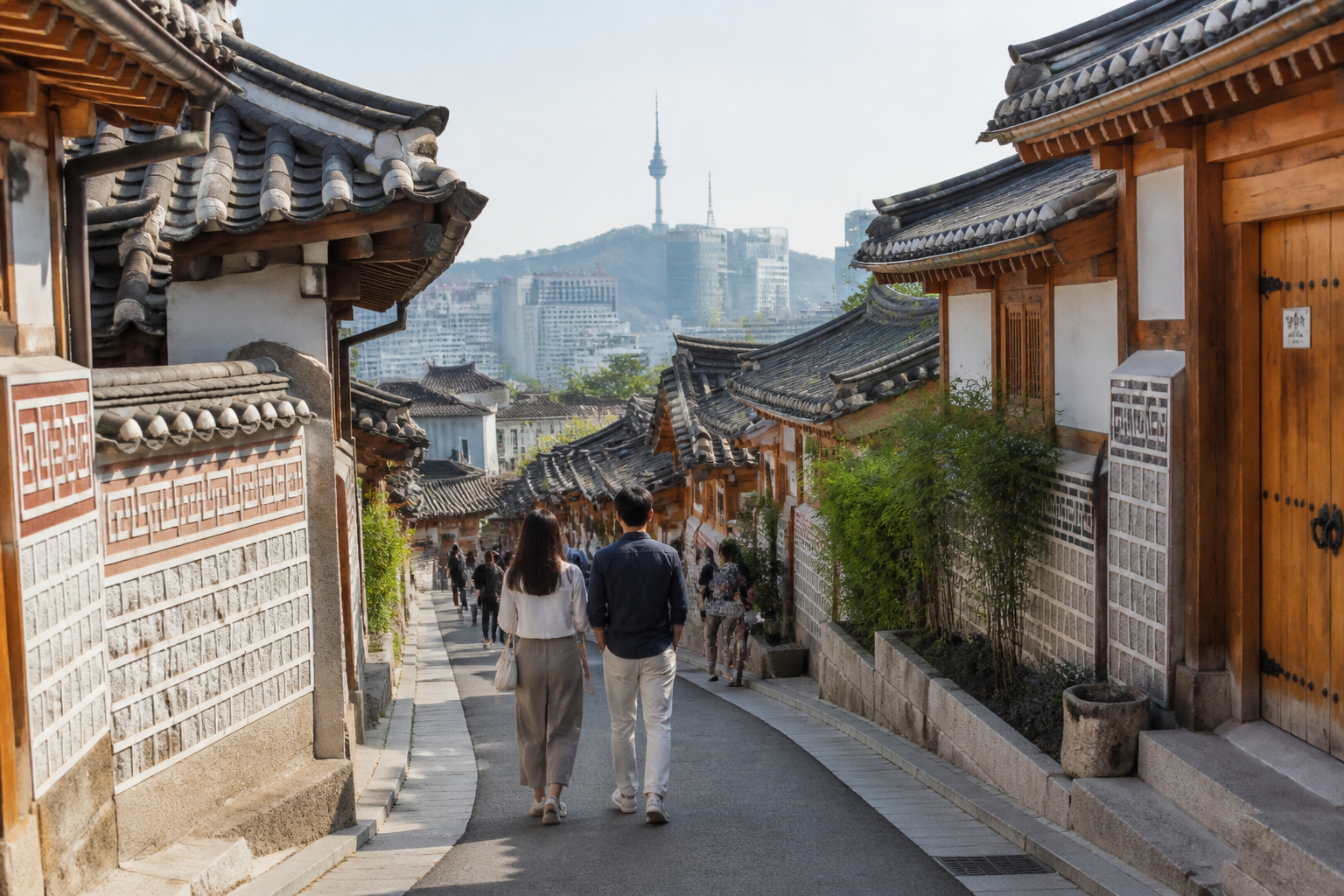
Afterward, walk toward **Bukchon Hanok Village**, where traditional tiled roofs sit above steep lanes and quiet residential streets. It has appeared in countless Korean productions, but remember that people live here. Keep your voice down and avoid blocking doorways for photos.
For a more relaxed stop, I like wandering through **Ikseon-dong**. The old hanok buildings now hold tiny restaurants, dessert shops, and cafés. It can feel crowded in the afternoon, so go before lunch or later in the evening. If a café looks too polished and busy, walk one street farther; some of my favorite drinks and pastries have come from the less obvious places.
**My tip:** Plan the palace, Bukchon, and Ikseon-dong on separate parts of the same day, but do not rush between them. Seoul’s small alleys are often more memorable than the famous viewpoints.
### 2. Busan: Beaches, Colorful Hills, and That Slow Coastal Feeling
Busan is one of the easiest places to enjoy screen tourism without feeling as if you are following a checklist.
Begin at **Haeundae Beach**, a familiar setting in films and television shows. The beach is pleasant at any time, but I prefer going early, then taking a stroll along the coast before the cafés get busy. Nearby **Cheongsapo** has colorful railway scenery, seafood restaurants, and the popular Blue Line Park. The Sky Capsule is scenic, though tickets sell out quickly; book ahead if you have your heart set on it.
For a completely different atmosphere, visit **Gamcheon Culture Village**. Its bright homes climb the hillside, and the area has appeared in Korean films and music videos. The main lanes are crowded, but the smaller side streets are quieter. Wear comfortable shoes—the village involves plenty of slopes and stairs.
I also enjoy **Huinnyeoul Culture Village**, which has a calmer cliffside feel and wide views over the water. It is a good place to sit with a coffee rather than hurry from one photo point to the next.
**My tip:** Stay in Busan for at least two nights. Trying to see Haeundae, Gamcheon, and the coastal villages in one rushed day takes away much of the fun.
### 3. Jeju Island: Volcanic Landscapes and Movie-Scene Roads
Jeju feels different from the mainland. The pace is slower, the roads open up, and the landscape does much of the talking. Korean productions often use the island’s beaches, stone walls, forests, and orange groves as natural scenery.
Spend time around **Seopjikoji**, where grassy coastal paths meet dark volcanic rock and wide ocean views. It has appeared in several dramas and films, but the best reason to visit is the walk itself. Bring a jacket; the wind can be strong even on a sunny day.
The **O’Sulloc Tea Museum** area is another easy stop, especially if you enjoy green tea desserts and tidy plantation views. For something wilder, explore the forest trails around **Bijarim** or one of Jeju’s oreum volcanic hills.
Jeju is much easier with a rental car, particularly if you want to visit filming locations outside Jeju City. Buses work for major routes, but they can turn a short journey into half a day.
**My tip:** Do not pack too many attractions into a single day. Jeju’s charm is in the drives between places, roadside tangerine stands, and quiet cafés overlooking the sea.
### 4. Gangneung and Jumunjin: The Famous Bus Stop by the Sea
At **Jumunjin Beach**, a small bus stop by the water became a major pilgrimage point for fans of *Goblin*. The original filming setup is simple, and the area can be surprisingly quiet outside peak hours.
The nearby **Gangneung** coastline is a good choice if you want a less urban Korean experience. Try fresh seafood, visit Anmok Coffee Street, and walk along the beach when the light softens in the late afternoon.
This is not the place to spend five minutes taking a photo and immediately leave. The coast is lovely, and Gangneung’s cafés and markets make the trip feel like a real weekend away rather than a single-location detour.
**My tip:** Check the bus schedule carefully or use a taxi for the final stretch. Public transport is possible, but rural connections are less frequent than in Seoul or Busan.
## Practical Travel Advice
### Getting There & Visa
Most international visitors fly into **Incheon International Airport**, which is connected to Seoul by airport train, limousine buses, and taxis. Busan’s **Gimhae Airport** is useful if you are starting in the south, and Jeju has frequent domestic flights from Seoul and Busan.
Visa rules depend on your passport. Many travelers can enter South Korea visa-free for short tourism stays, while others need to apply for a visa in advance. Some nationalities may also need a **K-ETA**, although exemptions and requirements can change. Check the Korean embassy or official immigration website for your country before booking non-refundable travel.
For flights, compare Seoul and Busan rather than assuming Seoul is always cheapest. If you are visiting Jeju, book domestic flights separately but leave plenty of time between an international arrival and a connecting flight.
### Where to Stay
– **Myeongdong or Euljiro, Seoul:** Convenient for first-time visitors, shopping, restaurants, and central sightseeing.
– **Hongdae:** Good for nightlife, cafés, young energy, and easy airport access.
– **Insadong or Jongno:** Better for palaces, traditional streets, markets, and a quieter evening atmosphere.
– **Haeundae, Busan:** Best for beaches, coastal walks, and modern hotels.
– **Seomyeon, Busan:** Central, practical, and well connected to different parts of the city.
– **Jeju City:** Handy for short trips and airport access.
– **Seogwipo, Jeju:** Better for waterfalls, coastal scenery, and a slower island stay.
– **Gangneung:** Choose a hotel near the beach if you want a relaxed coastal break; stay near the station for easier train connections.
### Getting Around
South Korea’s trains and subways are excellent. In Seoul, Busan, and other major cities, use a rechargeable **T-money card** for buses, subways, and some taxis. You can buy one at convenience stores or transport-card machines.
Download **Naver Map** or **KakaoMap** rather than relying only on Google Maps. They are much better for Korean addresses, walking routes, and transit information.
For taxis, **Kakao T** is the most useful app. Regular taxis are usually reasonable for short rides, especially when splitting the fare. In smaller towns, taxis may be easier than trying to decode an infrequent bus route.
Walking is enjoyable in central neighborhoods, but Seoul’s hills can surprise you. Wear shoes you would happily use for a full day of stairs, markets, and uneven sidewalks.
## Real Costs & Local Tips
South Korea can be affordable, especially if you eat where office workers and students eat.
### Rough Daily Budgets
**Budget traveler: ₩60,000–₩90,000 per person**
– Guesthouse or simple hostel: ₩25,000–₩45,000
– Local meals: ₩15,000–₩25,000
– Transport: ₩5,000–₩10,000
– One or two inexpensive attractions or coffees
**Mid-range traveler: ₩140,000–₩230,000 per person**
– Comfortable hotel: ₩90,000–₩160,000 per room, depending on location and season
– Meals and cafés: ₩35,000–₩60,000
– Transport and attractions: ₩15,000–₩30,000
Prices rise during cherry blossom season, autumn weekends, festivals, and major concert dates.
The currency is the **South Korean won (₩)**. Credit cards work in most hotels, shops, and restaurants, but keep cash for markets, small snack stalls, and some rural buses. Tipping is not standard. You generally pay the listed price, and adding a tip can sometimes feel unusual.
A few things that helped me keep costs down:
– **Eat one meal a day at a local neighborhood restaurant.** Look for places filled with office workers or students. Set menus and simple noodle or rice dishes are usually filling and inexpensive.
– **Use convenience stores for breakfast and snacks.** Kimbap, boiled eggs, yogurt, fruit, and coffee make an easy low-cost meal.
– **Book popular attractions early, but do not book every café or viewpoint.** Some screen-famous places are ordinary once you arrive, while a nearby unplanned street may be far more enjoyable.
– **Travel outside peak weekends when possible.** Palace areas, beaches, and famous filming locations are much more pleasant early in the morning or after 5 p.m.
– **Check whether your hotel has a water dispenser or laundry room.** Both can save money during a longer trip.
– **Carry a small reusable bag.** Convenience stores may charge for shopping bags, and market vendors do not always provide large ones.
South Korea is at its best when you balance the famous scenes with ordinary moments: a late-night bowl of soup, a quiet subway ride, a bakery you found by accident, or a seaside walk after the tour buses disappear. The dramas may bring you here, but the everyday details are usually what stay with you.
KEYWORDS: South Korea Seoul