
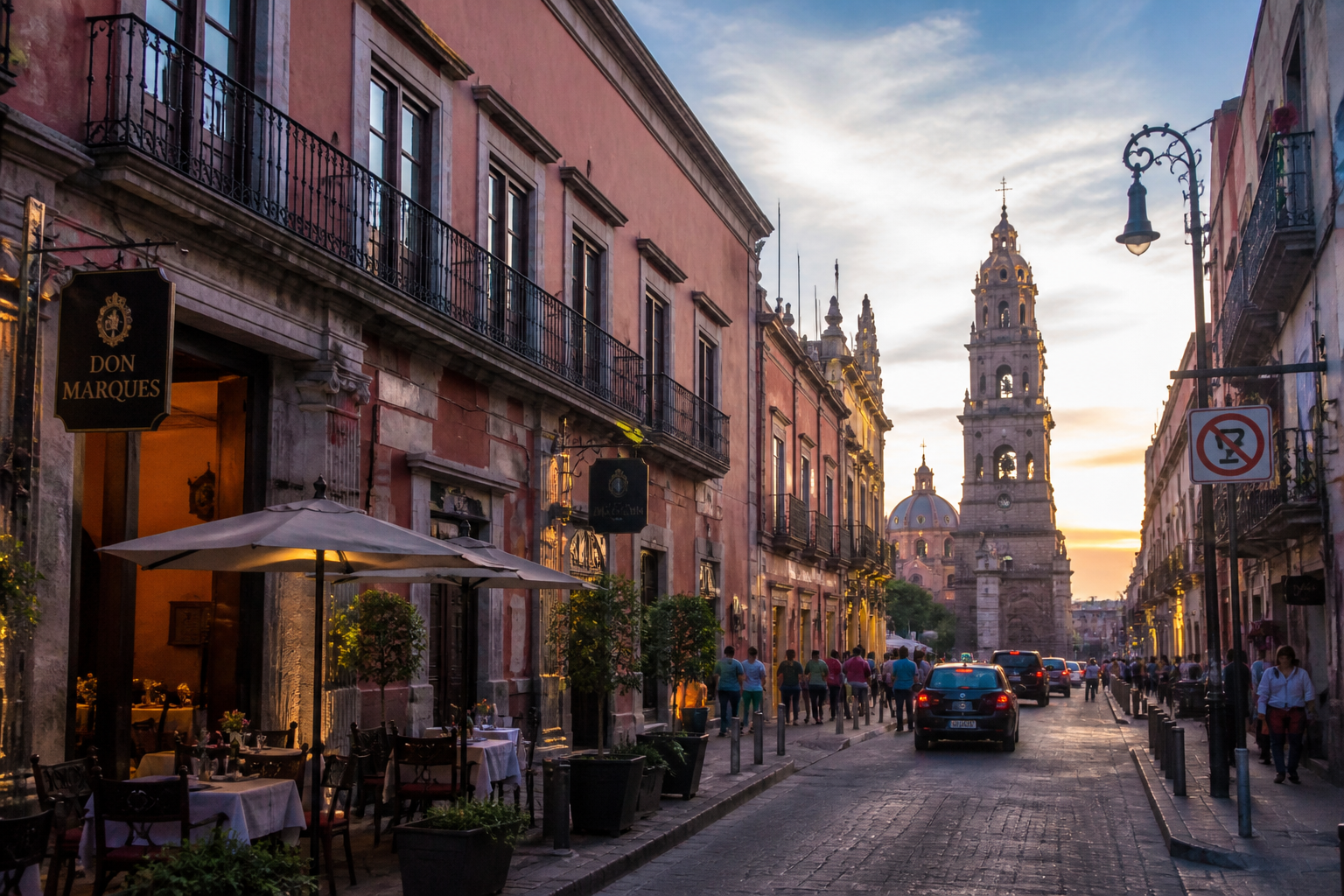
# Querétaro: Beautiful, Walkable, and Still Worth Protecting
Querétaro surprised me in the best way. I expected a pretty colonial city, but I didn’t expect to enjoy simply wandering it so much—past ochre walls, quiet courtyards, old churches, small bakeries, and streets that suddenly open onto a lively plaza.
The city has plenty of history, but it doesn’t feel frozen in a museum. Students, families, office workers, artists, and visitors all share the same sidewalks. That everyday life is part of Querétaro’s charm, and I hope it remains stronger than the pressure to turn every historic building into a boutique hotel or every quiet street into a commercial strip.
## The Vibe & When to Go
Querétaro feels polished without being overly formal. The historic center is handsome and remarkably easy to explore on foot, while neighborhoods such as Hércules give the city a more local, creative edge. Evenings are especially pleasant: people gather in the plazas, musicians play near the gardens, and the stone streets take on a warm golden color.
The climate is generally mild and dry. Days are often sunny and warm, while mornings and nights can feel cool, especially from November through February. The rainy season usually arrives between June and September, bringing short but sometimes heavy afternoon showers. Pack a light jacket, comfortable shoes, sunscreen, and a small umbrella if you’re visiting in summer.
Querétaro is a good choice right now if you want a cultural city break without the crowds and high prices of Mexico City or San Miguel de Allende. Go during the week if you can. The historic center is much more relaxed on a Tuesday or Wednesday than on a busy holiday weekend.
## Must-See Spots: My Top Picks
### 1. The Historic Center and Its Quiet Corners
Start around **Plaza de Armas**, then let yourself wander without following a strict route. The area is full of ornate doorways, colorful facades, small museums, and peaceful courtyards hidden behind unassuming entrances.
I liked walking early in the morning, before the cafés filled up and the streets became busy. Look for **Casa de la Corregidora**, the churches around the center, and the leafy gardens near **Templo de Santa Clara**. The city reveals itself slowly, and some of my favorite moments came from turning down streets that weren’t on my map.
Wear proper walking shoes. Some sidewalks are uneven, and the historic cobblestones are not kind to thin sandals.
### 2. The Aqueduct at Sunset
The **Querétaro Aqueduct** is the city’s most recognizable sight, and it deserves the attention. Its long row of stone arches is particularly beautiful around sunset, when the light softens the surrounding buildings.
You can see it from several viewpoints, but I enjoyed walking toward it from the historic center rather than simply taking a quick photo from a car. The area around **Calzada de los Arcos** becomes lively in the evening, with people out for walks and vendors selling snacks.
For a quieter view, go earlier in the morning. For atmosphere and photographs, go shortly before sunset—but expect more people.
### 3. Templo de Santa Rosa de Viterbo
This church is one of the places that stayed with me. The exterior is striking, but the interior is even more detailed, with elaborate decoration that rewards a slow visit.
It sits just outside the busiest part of the center, so many visitors rush past it. Don’t. Take a few minutes to sit quietly and look upward. Religious buildings in Querétaro are not just historical attractions; they are still active places of worship, so dress respectfully and avoid visiting during Mass unless you plan to participate.
### 4. Cerro de las Campanas and Hércules
For a bit of breathing room, visit **Cerro de las Campanas**, a hill with historical significance and open views over the city. It isn’t a dramatic mountain hike, but it gives you a break from stone streets and makes the city’s size easier to understand.
I also recommend spending an afternoon in **Hércules**, a former mill district that has grown into one of Querétaro’s more relaxed food and drink areas. It has cafés, breweries, small restaurants, and a less formal feel than the main center. Go with time to spare rather than trying to see everything in one visit.
If you have an extra day, consider a trip to **Bernal**, about an hour or so away depending on traffic. The giant monolith is impressive, and the village makes a pleasant day trip. Leave early, especially on weekends.
## Practical Travel Advice
### Getting There and Visa Information
Querétaro Intercontinental Airport, usually listed as **QRO**, has domestic flights from cities such as Mexico City, Monterrey, Cancún, and other Mexican destinations. International routes can be limited, so many travelers fly into Mexico City and continue by bus, private transfer, or connecting flight.
The bus journey from Mexico City is often straightforward, though traffic around the capital can make the total trip unpredictable. Use an established coach company and travel during daylight if you prefer a calmer arrival.
Visa rules depend on your passport. Many visitors from the United States, Canada, the United Kingdom, the European Union, Australia, and several other countries can enter Mexico for tourism without arranging a visa in advance. You’ll need a valid passport, and immigration officers decide the permitted length of stay. Some nationalities must apply for a visa before traveling, so check Mexico’s official immigration or consular website before booking.
Keep your accommodation address and return or onward travel details accessible. Immigration questions are usually simple, but having the information ready makes arrival easier.
### Where to Stay
– **Centro Histórico:** Best for first-time visitors, architecture, restaurants, and walking everywhere. It can be noisy around busy plazas, so ask for a room facing an interior courtyard.
– **La Cruz and nearby central streets:** A good middle ground with a local feel, while still close to the main sights.
– **Hércules:** Better for cafés, breweries, creative spaces, and a slower evening atmosphere. You’ll use rideshares more often.
– **Juriquilla:** Modern, suburban, and practical for business trips or longer stays, but too far from the historic center for most short visits.
I prefer staying within or just outside the historic center. Querétaro is at its best when you can step outside after dinner and walk beneath the old streetlamps without needing to call a car.
### Getting Around
The center is highly walkable. Most major sights are within a comfortable walking distance, although summer heat and uneven pavement can make the distances feel longer.
For farther neighborhoods, use **Uber or DiDi**, both of which are commonly used in Mexican cities. Official taxis are also available, but agree on the fare before getting in if the meter is not being used. Local buses are inexpensive, though routes and payment methods can be less obvious to visitors. Ask your hotel or host which route to use rather than relying only on a generic map app.
Driving is not necessary for a city visit and can be frustrating around the center. If you rent a car for day trips, avoid leaving luggage visible inside and allow extra time on weekends.
## Real Costs and Local Tips
Prices change with festivals, weekends, and hotel demand, but these are realistic daily estimates for one person:
### Budget travel: roughly **MXN 700–1,100 per day**
– Simple guesthouse or hostel: MXN 300–600
– Breakfast at a local café or market: MXN 80–150
– Comida corrida for lunch: MXN 100–180
– Street food or casual dinner: MXN 100–250
– Local rides and small entrance fees: MXN 100–200
### Mid-range travel: roughly **MXN 1,800–3,500 per day**
– Comfortable hotel: MXN 1,200–2,400
– Breakfast and coffee: MXN 150–300
– Sit-down lunch or dinner: MXN 300–700
– Rideshares, drinks, museums, and extras: MXN 300–700
The currency is the **Mexican peso**. Cards are accepted at most hotels and established restaurants, but keep cash for markets, small cafés, buses, and street vendors. A tip of around **10–15%** is normal at restaurants when service is good. Check whether a service charge has already been included. For taxis, rounding up is usually fine, while hotel staff and guides appreciate small tips for helpful service.
A few habits saved me money and made the trip smoother:
– **Eat lunch as your main restaurant meal.** Look for a *comida corrida*, which usually includes soup, a main dish, a drink, and sometimes dessert.
– **Buy bottled water only when needed.** Carry a refillable bottle and ask your hotel whether filtered water is available.
– **Check festival dates before booking.** Events such as concerts and local celebrations can fill the center quickly and push hotel prices up.
– **Choose restaurants a few blocks away from Plaza de Armas.** The food is often better priced, and you’re more likely to find places filled with local residents.
– **Carry small bills and coins.** Vendors and small cafés may not have change for large notes.
– **Treat the historic center gently.** Don’t climb on old walls, touch delicate church interiors, or treat residential doorways as photo props. The city’s appeal comes from its lived-in character, not just its appearance.
Querétaro is beautiful because history and ordinary life still share the same streets. That balance can disappear quickly when a city becomes too polished, too expensive, or too focused on visitors. The best thing we can do as travelers is enjoy it carefully: walk instead of rushing, spend money with local businesses, respect the old buildings, and leave room for the people who call the city home.
KEYWORDS: Queretaro Mexico, Queretaro aqueduct