
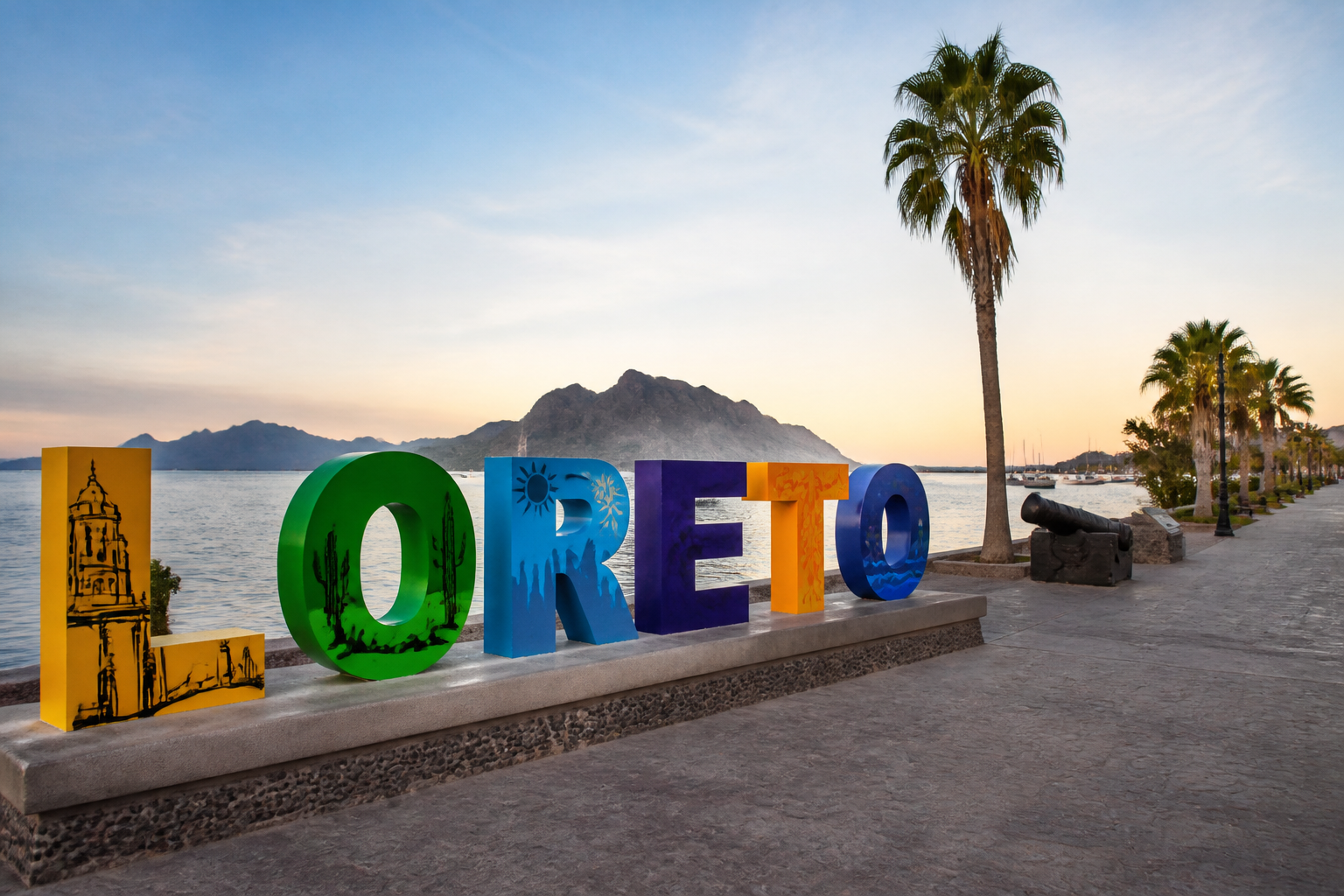
# Loreto, Mexico: Quiet Beaches, Big Sea Views, and the Baja Town I Didn’t Expect to Love
Loreto feels like the kind of Mexican town people used to discover by accident. It has a small airport, a peaceful historic center, a broad blue sea, and just enough restaurants and hotels to make a trip comfortable without turning the whole place into a resort machine.
I came expecting a sleepy stopover and found myself slowing down almost immediately. Mornings began with coffee and the sound of birds around the plaza. Afternoons were spent along the malecón, watching fishing boats head toward the islands. At night, the streets felt local rather than staged for visitors.
Loreto is not the place for all-night parties or endless shopping. You come here for sea kayaking, fresh seafood, mountain scenery, old missions, and the rare pleasure of having room to breathe.
## The Vibe and When to Go
Loreto sits on the eastern coast of Baja California Sur, facing the Sea of Cortez. The landscape is wonderfully stark: pale mountains behind town, cactus-covered hillsides, and water that changes from deep navy to bright turquoise depending on the light.
The most comfortable months are generally **November through April**, when days are warm and dry and evenings can be pleasantly cool. This is also the best period for outdoor activities, especially whale watching, hiking, fishing, and boat trips to the islands. Winter mornings may call for a light jacket, but afternoons are usually sunny and inviting.
**May and June** can be excellent if you enjoy warmer weather and want fewer visitors. Summer brings heat and humidity, with temperatures often becoming uncomfortable in the middle of the day. Late summer and early fall can also bring tropical storms, so I would check the forecast carefully before booking outdoor excursions.
The town is busiest around holidays and during the winter escape season. Even then, Loreto usually feels far calmer than Cabo San Lucas or Cancún.
## My Favorite Things to Do in Loreto
### 1. Walk the Malecón at Sunrise or Sunset
The malecón is Loreto’s easiest pleasure. It runs beside the water with views toward Isla Coronado and the other islands of Loreto Bay.
I liked walking there early, before the heat arrived, when local fishermen were preparing their boats and the promenade was mostly quiet. At sunset, families gathered along the seawall, and pelicans hovered near the fishing boats hoping for scraps.
Bring water and a hat during the day. There is shade in places, but not nearly enough for a long midday walk. A small café or paleta stop along the way makes the stroll even better.
### 2. Visit the Mission and Wander the Old Center
The Misión de Nuestra Señora de Loreto Conchó is the heart of town. It was founded in the late 1600s and became the first Spanish mission in the Californias. The stone church is modest compared with grand cathedrals elsewhere in Mexico, but that is part of its charm.
I recommend visiting in the morning, then wandering slowly through the surrounding streets. The historic center is compact, with low buildings, small restaurants, local shops, and quiet corners where you can watch daily life carry on.
The mission museum is useful if you want more context about the region’s complicated colonial history. Give yourself at least an hour rather than rushing in for a quick photograph.
### 3. Take a Boat to the Islands
A boat trip into Loreto Bay National Marine Park was the highlight of my visit. The islands are rugged and beautifully bare, with clear water, sea lions, seabirds, and small coves that look made for swimming.
**Isla Coronado** is one of the popular choices for a day trip, while Isla Danzante and Isla Carmen offer different scenery and quieter stretches of coast. Depending on the season, you may see dolphins, whales, rays, or turtles.
Tours leave from the marina or the waterfront, and the quality can vary. Ask exactly what is included: boat size, lunch, snorkeling gear, park fees, and time on the island. A smaller boat usually gives you a more personal experience, though it can make for a bumpier ride.
Pack reef-safe sunscreen, a dry bag, water, and a light layer. The sun feels strong even when the breeze is cool.
### 4. Drive Up to San Javier
The mountain village of San Javier is about an hour from Loreto by road. The drive itself is part of the experience, with dry hills, cactus, and wide views over the valley.
The mission at San Javier is beautifully restored and sits in a peaceful setting far from the coast. I enjoyed the quiet more than anything else. There were no crowds when I visited, just birds, dusty paths, and the occasional local vehicle passing through.
You can hire a taxi for the day, join a small tour, or rent a car. The road is paved, but mountain curves and poor phone service make it smart to leave early and avoid driving back after dark. Bring snacks and extra water because services in the village are limited.
## Practical Travel Advice
### Getting There and Visa Requirements
Loreto International Airport (**LTO**) receives domestic flights from cities such as La Paz, Tijuana, and Los Angeles, along with seasonal or changing service from other North American cities. Routes can vary significantly by season, so compare dates rather than assuming a daily nonstop flight exists.
If you cannot fly directly, connecting through Los Angeles, Phoenix, Dallas, Mexico City, or another Mexican hub may be necessary. I would leave extra connection time when changing airports or airlines in Mexico.
Citizens of the United States and Canada generally do not need a tourist visa for short visits to Mexico. Travelers from many other countries are also visa-exempt, but requirements depend on nationality. Your passport should be valid for the length of your stay, and Mexican immigration may ask for proof of onward travel, accommodation, or sufficient funds.
Air travelers receive an immigration admission record rather than always filling out the old paper tourist card. Check the Mexican government or your nearest Mexican consulate before traveling, since entry procedures can change.
### Where to Stay
**Historic center:** Best if you want restaurants, the plaza, the mission, and evening walks close by. This is where I would stay for a first visit without a rental car.
**Near the malecón:** Good for sea views, morning walks, and easy access to boat operators. It can be a little quieter at night, depending on the exact hotel.
**Loreto Bay:** A better fit for travelers wanting resort facilities, golf, pools, and a more secluded setting. It is outside the center, so plan on taxis or a rental car.
**Budget guesthouses and small inns:** Look around the town center and just inland from the waterfront. The best value often comes from simple family-run places rather than large resorts.
### Getting Around
Loreto is easy to explore on foot if you stay near the plaza and malecón. For San Javier, beaches outside town, or Loreto Bay, you will need a taxi, tour, or rental car.
There is no large urban public transit system, and rideshare availability can be limited or nonexistent compared with bigger Mexican cities. Ask your hotel to call a licensed taxi and agree on the fare before leaving. Some drivers will wait for you during a day trip, which can be practical if you negotiate the full price in advance.
A rental car gives you the most freedom, especially if you want to visit San Javier, remote beaches, or viewpoints. Take photographs of the car before leaving the rental lot, check the insurance details carefully, and avoid assuming that your credit-card coverage automatically applies in Mexico.
## Realistic Costs
Prices vary by season, but these are reasonable planning numbers, excluding international airfare.
### Budget travel: about **900–1,600 MXN per person per day**
This might cover:
– A simple guesthouse or shared room
– Breakfast at a local café
– Tacos, burritos, or a casual seafood meal
– Walking and occasional taxi rides
– Free sightseeing around town
Boat tours, car rentals, and organized excursions will push the daily total higher.
### Mid-range travel: about **2,500–4,500 MXN per person per day**
This could include:
– A comfortable hotel room shared by two people
– Breakfast and one sit-down meal
– A few taxis
– Drinks or snacks
– Occasional paid activities
A full-day island excursion may cost roughly **1,500–3,500 MXN per person**, depending on the boat, group size, lunch, and included equipment. Confirm the total price before booking.
Mexico uses the **Mexican peso**, and small businesses may offer a poor exchange rate for U.S. dollars. I used pesos whenever possible. Cards are accepted at many hotels and established restaurants, but cash remains important for taxis, small cafés, tips, and market purchases.
For restaurants, **10–15%** is a normal tip when service is good. Check whether a service charge has already been included. I also tipped boat crews, guides, hotel staff, and drivers when they were helpful.
## A Few Tips That Saved Me Money
– **Book island tours locally, but ask several operators.** Hotel desks are convenient, though their prices may include a commission. Compare what each trip actually includes rather than choosing the cheapest headline price.
– **Carry small peso notes.** Taxi drivers and small restaurants may not have change for large bills.
– **Eat lunch like a local.** Look for set meals, taco stands, and busy family restaurants away from the waterfront. The food is often better value than the most visible tourist-facing places.
– **Bring reef-safe sunscreen and basic beach supplies.** Buying them in a resort area can be surprisingly expensive.
– **Do outdoor activities early.** The morning is cooler, the light is beautiful, and boat operators may have more flexibility before the wind picks up.
– **Do not expect a big-city nightlife scene.** Restaurants can close earlier than visitors expect, especially outside the busiest season. If you find a place you like, eat before the last minute.
Loreto stayed with me because it felt comfortable without feeling manufactured. You can spend the morning on a boat, the afternoon eating fish tacos beneath a fan, and the evening walking past the mission with the mountains turning pink behind town. It is a quieter kind of Mexican escape—one that rewards curiosity, patience, and a willingness to trade convenience for character.
KEYWORDS: Loreto Mexico, Sea of Cortez